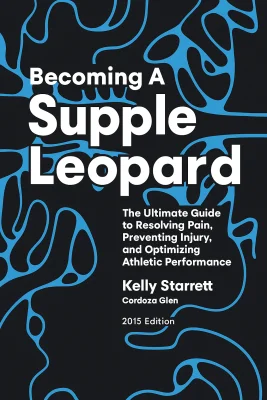
Becoming A Supple Leopard
The Ultimate Guide to Resolving Pain, Preventing Injury, and Optimizing Athletic Performance(Hardback) - 2015 Edition
Categories
Sports, Fitness
Content Type
Book
Binding
Hardcover
Year
2014
Publisher
Victory Belt Publishing
Language
English
ASIN
B01M2YFYK9
File Download
PDF | EPUB
Becoming A Supple Leopard Plot Summary
Introduction
# Movement as Medicine: Transform Your Body Into a Supple Leopard We are living in an extraordinary time for human physical potential. Never before have we had such a clear understanding of how the body moves, adapts, and thrives. Yet paradoxically, we're also witnessing an epidemic of movement dysfunction, chronic pain, and preventable injuries that rob people of their athletic potential and quality of life. The convergence of modern technology, interdisciplinary knowledge sharing, and systematic movement analysis has created unprecedented opportunities to unlock human performance. This comprehensive system transforms how you think about movement, mobility, and physical maintenance. By understanding fundamental principles of spinal mechanics, joint stability, and tissue health, you can move from merely surviving your daily activities to thriving in any physical challenge life presents.
Chapter 1: Master Spinal Mechanics for Powerful Movement Foundation
The foundation of all human movement begins with one critical element: spinal organization. Your spine serves as the chassis for the powerful engines of your hips and shoulders. When this chassis is compromised, everything downstream suffers. A braced neutral spine means your ears align over your shoulders, your ribcage balances over your pelvis, and you engage your trunk musculature to stabilize this organized position. Consider the powerlifter preparing to squat 800 pounds. Before he even thinks about the weight, he must establish perfect spinal mechanics. His survival depends on it. The moment his spine deviates from neutral, force bleeds from his system, and catastrophic injury becomes inevitable. This same principle applies whether you're lifting a barbell or lifting a child from their crib. The powerlifter's success comes from mastering the bracing sequence: feet positioned directly under hips, external rotation from the hips by screwing feet into the ground, pelvis set in neutral by activating the glutes, ribcage locked in place by engaging the abdominals, and shoulders drawn back into stable external rotation. This sequence becomes automatic through practice, creating a foundation that supports any movement demand. To master this yourself, begin with the two-hand rule. Place one thumb on your sternum and the other on your pubic bone, creating parallel planes. If your hands move apart, you're overextended. If they move together, you're rounded forward. This simple feedback system teaches you to recognize and maintain optimal spinal position throughout your day. Practice the bracing sequence every time you stand up, sit down, or prepare for any physical task. Start with 20 percent abdominal tension for basic positions, increasing to match movement demands. Remember, your tissues are like obedient dogs - with consistency and time, they will adapt to whatever positions you practice most frequently. The goal isn't perfection but consciousness. Every moment you spend in organized positions is an investment in your movement future, building the foundation for pain-free, powerful movement that serves you for life.
Chapter 2: Generate Torque and Stability Through Strategic Tension
Torque is the turning force that transforms loose, unstable joints into tight, powerful levers. When you create rotational force from your hips and shoulders while keeping your hands or feet anchored, you activate the musculature that stabilizes your joints in optimal positions. Without torque, you're essentially hanging on your tissues, relying on ligaments and tendons to provide stability they weren't designed to handle. Watch an elite gymnast preparing for a handstand. She doesn't simply place her hands on the ground and hope for the best. Instead, she screws her hands into the floor, creating external rotation that winds her shoulders into their sockets, activating the entire kinetic chain from fingertips to core. This torque generation transforms her arms from loose appendages into rigid pillars capable of supporting her entire body weight with precision and control. The gymnast's success demonstrates the two laws of torque in action. When her shoulders are in flexion, she creates external rotation force away from her body. This principle governs most human movements - squatting, pressing, and pulling all require external rotation to create stability. The second law applies when limbs move behind the body, requiring internal rotation toward the center for optimal positioning. To harness torque in your own movement, start with simple applications. When performing a pushup, screw your hands into the ground while keeping your fingers pointed forward. Feel how this external rotation stabilizes your shoulders and engages your entire trunk. For squatting movements, screw your feet into the ground while keeping them straight, driving your knees out to create hip external rotation. The key is matching torque levels to movement demands. A bodyweight squat requires only enough rotational force to maintain good position, while a maximum effort lift demands 100 percent torque capacity. Learning to modulate this tension is a skill that develops through conscious practice and attention to feedback from your body. Remember that hand and foot position dictate your torque capacity. The more you turn your extremities away from neutral, the less rotational force you can generate. This is why maintaining relatively straight foot and hand positions optimizes your ability to create stability and power in any movement situation.
Chapter 3: Perfect Movement Archetypes for Athletic Excellence
Human movement, despite its infinite complexity, can be distilled into seven fundamental shapes that encompass nearly every position your body adopts. These archetypes - four for the shoulders and three for the hips - represent the stable, safe positions that serve as building blocks for all athletic movement. Mastering these shapes gives you a universal language for movement that applies whether you're reaching overhead, squatting down, or transitioning between positions. An Olympic weightlifter demonstrates this principle beautifully during a snatch. She begins in the hang archetype, with arms at her sides gripping the barbell. As she pulls, she transitions through the squat archetype, hinging at her hips while maintaining spinal neutrality. Finally, she receives the weight in the overhead archetype, arms locked above her head with shoulders externally rotated. Three distinct shapes, seamlessly connected, each requiring specific mobility and motor control patterns. The lifter's success comes from understanding that each archetype has specific requirements and common faults. The overhead position demands shoulder external rotation and full flexion range of motion. The squat archetype requires hip external rotation and ankle dorsiflexion. When she can express competency in each individual shape, combining them into complex movements becomes possible. To assess your own archetype competency, use the quick tests provided for each position. Can you raise your arms overhead while keeping your spine neutral and shoulders externally rotated? Can you squat below knee depth while maintaining foot arches and neutral knees? These simple assessments reveal exactly where your movement restrictions lie. When you identify limitations, focus your mobility work on the specific archetypal positions you're trying to improve. If you can't achieve the overhead position, mobilize with your arms overhead. If the squat archetype is restricted, work in squatting positions. This targeted approach ensures your mobility work directly transfers to improved movement capacity. The tunnel concept reinforces this systematic approach - you must enter each movement from a good position to exit in a good position. Poor setup guarantees poor finish, while organized entry creates the conditions for successful movement completion. Practice each archetype until the positions become automatic, building the movement vocabulary that serves all human activity.
Chapter 4: Build Strength Through Progressive Movement Hierarchy
Movement complexity exists on a spectrum, and understanding this hierarchy allows you to build skills systematically while identifying weaknesses in your athletic profile. Category 1 movements maintain connection with the ground throughout their range, allowing continuous torque generation. Category 2 movements include moments of disconnection, like jumping and landing. Category 3 movements combine multiple archetypes with rapid transitions, resembling the demands of sport and combat. A developing athlete's journey illustrates this progression perfectly. She begins with air squats, learning to maintain spinal neutrality while hinging from her hips. The movement is slow and controlled, allowing her to focus on position and technique. As she masters this foundation, she progresses to jump squats, introducing the challenge of landing and immediately stabilizing in good position. Eventually, she advances to Olympic lifts, where she must transition from pulling positions to overhead positions with speed and precision. The athlete's progression reveals why the hierarchy matters. Each category builds upon the previous one, developing the motor control and stability patterns necessary for more complex challenges. Skipping steps or advancing too quickly leads to movement breakdown under stress, exactly when good mechanics matter most for performance and injury prevention. Your own progression should follow this systematic approach. Master category 1 movements first - squat, deadlift, pushup, press, and pull-up. These foundational patterns teach the movement principles while building strength and motor control in safe, controlled environments. Only when you can maintain perfect position under load should you advance to category 2 movements. Scaling allows you to modify movements based on your current capacity. Decrease range of motion, add support points, or reduce load to make movements accessible. Conversely, increase speed, add weight, or combine movements to create greater challenges. The key is maintaining movement quality regardless of the scaling applied. The upright torso principle adds another layer of complexity. The more vertical your spine, the greater the mobility and motor control demands. This explains why overhead squats are more challenging than back squats, and why front squats require more ankle and hip mobility than their posterior-loaded counterparts. Use this principle to systematically increase movement difficulty while building the capacity for real-world demands.
Chapter 5: Implement Systematic Mobility for Lasting Results
Traditional stretching fails because it addresses only one component of movement restriction - muscle length - while ignoring joint mechanics, sliding surface dysfunction, and motor control patterns. True mobility requires a systematic approach that addresses all elements limiting your movement capacity. This means understanding the difference between joint capsule restrictions, tissue adhesions, and motor control errors, then applying appropriate techniques to resolve each limitation. Consider an athlete struggling with shoulder pain during overhead movements. Traditional thinking would focus on stretching the chest and shoulders, hoping to create more range of motion. However, systematic analysis reveals the real problem: thoracic spine restriction preventing proper shoulder blade movement, creating compensatory patterns that stress the shoulder joint. By addressing the thoracic spine first, shoulder mechanics improve automatically, and pain resolves without ever "stretching" the shoulder. The athlete's success comes from following the mobility systems checklist: joint mechanics first, sliding surfaces second, muscle dynamics last. Joint mechanics techniques use bands or compression to restore proper joint positioning. Sliding surface work employs pressure and movement to restore tissue gliding capacity. Muscle dynamics apply tension at end range to improve tissue length when needed. To implement this approach, always test and retest your interventions. Choose a position of restriction, assess your current capacity, apply appropriate techniques, then reassess immediately. If you see improvement, you've identified the right intervention. If not, move to the next system or technique. This feedback loop ensures your mobility time produces measurable results. Program your mobility work by prioritizing painful areas first, then addressing positions of restriction. Spend minimum two minutes per technique, choosing three to four interventions per session. Work consistently - ten to fifteen minutes daily produces far better results than occasional longer sessions. Remember, your tissues adapt to whatever positions you practice most frequently. The seven rules of mobility guide your practice: test and retest everything, take no days off from good positioning, make mobility realistic by working in functional positions, always maintain good mechanics while mobilizing, explore your restrictions within proper form, and avoid making pain faces that create negative associations with movement improvement.
Chapter 6: Design Functional Training for Real-World Performance
Functional movements share three characteristics: they prioritize spinal mechanics, have transferable application to real-world activities, and express full ranges of motion safely and effectively. These movements become diagnostic tools that reveal weaknesses while simultaneously building the strength and motor control patterns that serve you in sport and life. The gym becomes your laboratory for testing and refining movement quality under controlled conditions. A firefighter's training exemplifies this principle. His ability to carry an unconscious person down a ladder depends on the same movement patterns he practices with deadlifts and farmer's walks. The hip hinge pattern that allows him to lift weight safely from the ground translates directly to emergency rescue scenarios. By mastering functional movements in the gym, he builds capacity that serves him when lives depend on his physical competence. The firefighter's success comes from understanding that movement patterns transfer across activities. The squat teaches him to load his hips and maintain spinal neutrality whether he's standing up from a chair or lifting equipment. The press pattern serves him whether he's pushing open a door or moving debris. These universal patterns become the vocabulary of human movement. To build your own movement competency, focus on the fundamental patterns: squat, hinge, push, pull, carry, and gait. Practice these movements with perfect technique before adding complexity or load. Use the movement hierarchy to progress systematically from basic to advanced variations, always prioritizing position quality over task completion. Load order sequencing ensures you engage the right muscles in the right sequence. Initiate movements from your primary engines - hips and shoulders - rather than your secondary joints. This principle applies whether you're performing a deadlift or picking up groceries. The tissues that get loaded first get loaded maximally, so make sure your strongest, most stable joints bear the primary burden. Remember that every repetition is practice, and practice makes permanent. Poor movement patterns practiced repeatedly become your default under stress, fatigue, or emergency conditions. Conversely, perfect practice creates automatic good mechanics that serve you when conscious control becomes impossible. Train with intention, focusing on movement quality rather than just task completion.
Chapter 7: Create Daily Maintenance Rituals for Lifelong Success
Your body is an adaptation machine that responds to whatever demands you place upon it most frequently. Sitting for eight hours daily creates different adaptations than standing and moving regularly. The positions you practice most often become your default patterns, which is why daily maintenance isn't optional - it's essential for long-term movement health and athletic performance. A desk worker's transformation illustrates this principle powerfully. After years of chronic back pain and movement restrictions, she committed to fifteen minutes of daily mobility work targeting the positions that had become adaptively short from prolonged sitting. Within weeks, her pain decreased. Within months, her movement capacity improved dramatically. The key wasn't dramatic interventions but consistent, targeted work addressing her specific restrictions. Her success came from understanding the upstream-downstream approach to problem-solving. Pain rarely occurs at its source - tight calves can cause knee pain, restricted hips can create back problems, and stiff shoulders can generate neck issues. By working above and below problem areas, she addressed the entire kinetic chain rather than just symptoms. To create your own maintenance program, identify your positions of restriction and painful areas. Make a problems list that includes specific, actionable items you can address through movement and mobility work. Understand why each problem needs resolution - this creates the motivation necessary for consistent practice. Implement the three rules for resolving pain: put things in the right place, get stuck things moving, and work upstream and downstream of problems. Use joint mobilizations to restore proper positioning, movement to encourage tissue health, and systematic approaches to address the entire kinetic chain affecting your problem areas. Your daily practice should include position awareness throughout your day, not just dedicated mobility time. Every time you stand, sit, walk, or perform any physical task is an opportunity to practice good mechanics. The bracing sequence becomes automatic through repetition, creating the foundation for pain-free, powerful movement. Remember that consistency trumps intensity in mobility work. Fifteen minutes daily produces better results than occasional hour-long sessions. Your tissues respond to frequent, moderate stimulus better than infrequent, aggressive interventions. Make mobility work as non-negotiable as brushing your teeth - a basic requirement for long-term health and function.
Summary
This systematic approach to human movement and mobility represents more than just exercise techniques - it's a fundamental shift in how you relate to your body and its capabilities. By understanding spinal mechanics, torque generation, archetypal positions, movement hierarchy, systematic mobility, functional patterns, and daily maintenance, you possess the tools to transform not just how you move, but how you live. As emphasized throughout this journey, "Your tissues are like obedient dogs. With consistency and time, they will come around." This powerful truth reminds us that change is always possible, regardless of your current limitations or past movement history. Your body's remarkable capacity for adaptation works in your favor when you provide consistent, intelligent input through proper movement and mobility practices. Start immediately with one simple action: perform the bracing sequence right now, and begin building the movement patterns that will serve you for life.
Best Quote
Review Summary
Strengths: The review highlights the book as an excellent reference for managing injuries and muscle imbalances. It suggests that the book is highly informative and beneficial for self-care when combined with Kelly's online videos. Overall: The reader expresses a highly positive sentiment towards the book, recommending it as the best resource for those interested in injury management and muscle balance. The combination of the book with supplementary online videos is suggested to enhance the learning experience, indicating a strong endorsement for its practical application in personal health management.
About Author

Kelly; Cordoza Glen Starrett
Starrett situates his work at the intersection of physical therapy and athletic performance, emphasizing the importance of movement optimization and injury prevention. Through his literature, he explores how improved mobility and movement mechanics can enhance athletic performance. In his widely acclaimed book, "Becoming a Supple Leopard", coauthored with Glen Cordoza, Starrett provides detailed exercises and mobility techniques designed to diagnose and correct movement problems. This methodical approach, praised for its accessibility and rich visual content, enables readers to restore natural motion patterns while acknowledging the trial-and-error nature inherent in personalizing movement corrections.\n\nMoreover, Starrett extends his exploration of human movement to address the challenges of a sedentary lifestyle in "Deskbound", coauthored with his wife, Juliet Starrett, and Glen Cordoza. Inspired by their nonprofit, StandUp Kids, this book advocates for practical interventions, such as standing desks, to mitigate health issues associated with prolonged sitting. These works are vital resources for fitness enthusiasts and professionals alike, providing actionable insights into body mechanics and posture.\n\nStarrett's contributions have garnered significant recognition, with "Becoming a Supple Leopard" achieving "New York Times" bestseller status. This accomplishment underscores his influence in the fitness and rehabilitation literature, as he bridges the gap between clinical therapy and athletic training. His bio highlights his role not just as an author but as a pioneer in integrating physiotherapy with sports science, benefiting a diverse audience seeking to enhance their physical well-being.
Read moreDownload PDF & EPUB
To save this Black List summary for later, download the free PDF and EPUB. You can print it out, or read offline at your convenience.
Becoming A Supple Leopard
by Kelly; Cordoza Glen Starrett
