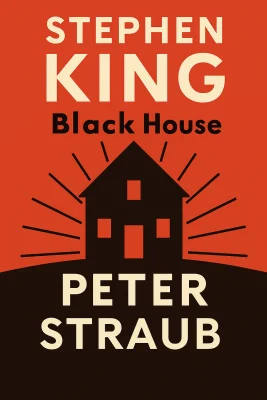
Black House
Categories
Fiction, Audiobook, Horror, Mystery, Thriller, Fantasy, Suspense, Paranormal, Crime, Supernatural
Content Type
Book
Binding
Paperback
Year
2003
Publisher
Ballantine Books
Language
English
ASIN
034547063X
ISBN
034547063X
ISBN13
9780345470638
File Download
PDF | EPUB
Black House Plot Summary
Introduction
# Black House: Doorways Between Worlds and Shadows Within The morning mist rolls off the Mississippi like a living shroud, carrying with it the scent of something far worse than river mud and rotting fish. In French Landing, Wisconsin, children have begun to disappear. Not the usual runaways or custody disputes that small-town police handle with coffee and paperwork, but something that leaves behind only horror and the lingering stench of ancient evil. The killer calls himself the Fisherman, and his letters arrive written in crayon, signed with that terrible name, describing in nauseating detail how young flesh tastes when properly prepared. Jack Sawyer came to this quiet corner of America seeking peace. The former LAPD detective had solved his share of impossible cases, but retirement at thirty-four wasn't about glory—it was about survival. The darkness that follows violent death had nearly consumed him in Los Angeles, and he'd fled to the countryside hoping to forget. But some things refuse to stay buried, and when the Fisherman's crimes begin echoing patterns from another world, another time, Jack discovers that his past as a twelve-year-old traveler between dimensions has marked him as both hunter and prey in a cosmic game where the stakes are nothing less than the survival of all realities.
Chapter 1: The Fisherman's Shadow: Terror Descends on French Landing
The call comes at dawn, pulling Police Chief Dale Gilbertson from dreams that had finally turned peaceful. Ed's Eats sits empty on Highway 35, its windows dark, but the smell hits him before he even opens the door. Inside, nine-year-old Irma Freneau hangs from the ceiling like a broken doll, her small body carved with ritualistic precision. The killer has taken trophies—pieces that speak to appetites too dark for human comprehension. Dale has worn the badge for fifteen years, but nothing prepared him for this scene. Blood patterns spiral across the walls in designs that hurt to look at directly, as if the very geometry offends reality. The air thrums with wrongness, thick enough to choke on. This isn't random violence or even garden-variety psychosis. This is the work of something that views children as livestock. The forensics team works in silence, their usual gallows humor strangled by the sheer malevolence saturating the abandoned restaurant. When they finally bag the evidence and scrub the walls, the wrongness lingers. French Landing's innocence dies with Irma Freneau, replaced by a paranoia that transforms every shadow into a potential threat. The letter arrives three days later, delivered to the police station in a manila envelope decorated with fake stamps cut from sugar packets. Inside, crayon scrawls describe how the little girl sat in the killer's lap, how she hugged him before he made his choice. The signature burns itself into Dale's memory: "Your friend, The Fisherman." The name spreads through town like a contagion, whispered in grocery store aisles and behind locked doors where parents clutch their children closer and wonder who among their neighbors might be harboring such darkness.
Chapter 2: Reluctant Hero: Jack Sawyer's Return from Exile
Jack Sawyer's sanctuary sits thirty miles from French Landing, a farmhouse surrounded by rolling hills where the only sounds should be wind through corn and the distant hum of tractors. He'd bought the place with his LAPD pension, seeking the kind of peace that only comes from complete isolation. His nearest neighbor is Henry Leyden, a blind DJ whose multiple radio personalities provide the only human contact Jack can tolerate these days. The breakdown in Los Angeles had been spectacular and public—a decorated detective reduced to screaming incoherence at a crime scene involving a carousel and a dead man's bald head. The department shrinks called it PTSD, but Jack knew better. Some cases leave marks that go deeper than trauma, scars that connect to memories of traveling between worlds as a twelve-year-old boy on an impossible quest. When Dale Gilbertson calls begging for help with the Fisherman murders, Jack's refusal is immediate and absolute. He's paid his dues to law enforcement and society. The darkness that once consumed his days as a homicide detective has been carefully contained, locked away where it cannot touch his hard-won peace. But the darkness is patient, and it remembers the boy who once carried light into the deepest shadows. The package arrives on his doorstep like a declaration of war—a shoebox wrapped in brown paper, sealed with red wax and decorated with those same fake stamps. Inside, nestled among black crow feathers that seem to absorb light, lies a child's sneaker and something far worse. The smell hits him like a physical blow: rotting meat, ancient evil, and underneath it all, the distinctive ozone scent of dimensional barriers wearing thin. The Fisherman knows who he is, knows what he represents. The game has begun whether Jack wants to play or not.
Chapter 3: Crossing Thresholds: When Reality Bleeds Through
The transition happens without warning as Jack flees across his own field, overwhelmed by the horror of the Fisherman's gift. One moment he's running through Wisconsin stubble, the next he's kneeling in grass that reaches his chest, breathing air so pure it makes him weep. The Territories haven't changed in thirty years—giant rabbits bound past like kangaroos, their black eyes wide with comic terror, while in the distance smoke rises from what might be a town or something far stranger. But there's wrongness here too, a pulse of evil emanating from the southwest that makes Jack's skull throb with each beat. On a dirt road that parallels Highway 35 in his world, he finds a Milwaukee Brewers baseball cap. The name inked inside makes his blood freeze: TY MARSHALL. The boy whose disappearance will soon tear another family apart is here, somewhere in this parallel world, alive but in terrible danger. The memories flood back like a dam bursting—standing beside a carousel with Speedy Parker, drinking magic wine that flipped him between realities, carrying the Talisman through landscapes of wonder and terror. He'd been twelve then, desperate to save his dying mother. Now he's thirty-four and desperate to save a world that seems determined to destroy itself. The power still flows through him, residual energy from that ancient artifact, marking him as something more than human but less than divine. When Jack returns to his own world, the farmhouse feels like a stage set, all surfaces and no substance. The Fisherman's crimes aren't just happening in French Landing—they're echoing across dimensional boundaries, part of a pattern that stretches back to his childhood and forward to a future too terrible to contemplate. The boy who once saved his mother must now save everyone else, whether he wants to or not.
Chapter 4: The Thunder Five: Unlikely Allies Against Darkness
Beezer St. Pierre looks like the kind of man who eats nails for breakfast and washes them down with motor oil. The leader of a motorcycle gang called the Thunder Five, he wears his grief like armor after his daughter Amy became the Fisherman's second victim. But beneath the leather and attitude burns a father's desperate love and a scholar's keen intelligence that most people never see past the intimidating exterior. The Thunder Five aren't just bikers—they're French Landing's unofficial guardians, men who found brotherhood in society's margins. When Amy died, carved up like the others, they swore an oath that transcended their individual lives. They would find her killer, and they would make him pay. Their investigation runs parallel to the official police work, following leads that badges can't pursue, asking questions that uniforms can't ask. Mouse Baumann, the gang's gentle giant and resident intellectual, discovers something disturbing in his research. Local folklore speaks of a house in the woods where shadows fall wrong and time moves differently. Workers who built it decades ago tell stories of accidents and unnatural phenomena. The house has a name that people whisper reluctantly: Black House. Mouse believes this is where the Fisherman operates, but finding it proves nearly impossible, as if the place actively resists discovery. When Jack agrees to work with them, the Thunder Five gain something they'd lacked—a guide who can navigate between worlds. Jack recognizes in these rough men the same quality he'd seen in the best cops he'd known: an absolute refusal to let evil triumph. They'll need that determination for what lies ahead, because the trail to Black House leads through territories where ordinary courage might not be enough to survive what waits in the darkness between realities.
Chapter 5: Black House: Gateway to the Furnace Lands
The house squats in a Wisconsin clearing like a malignant tumor, its black walls seeming to absorb light rather than reflect it. When the Thunder Five finally find the hidden road that leads to it, they understand why their memories kept slipping away—Black House exists partially outside normal reality, protected by forces that make human minds slide away from its presence like water from glass. Mouse is the first to encounter the house's true nature. As they approach on their motorcycles, something massive and predatory emerges from the surrounding woods—a creature that defies description, part dog, part shadow, part nightmare. It moves with impossible speed and seems to feed on light itself. When it attacks Mouse, the wound begins to spread immediately, not with infection but with something far worse: a corruption that turns flesh to liquid and sanity to screaming chaos. Jack arrives to find Mouse dying by degrees, his body dissolving from within while his mind fights to retain crucial information. With his last coherent moments, Mouse draws a map and delivers a warning that chills them all. Black House is more than the Fisherman's lair—it's a doorway to what he calls the "furnace-lands," a hellish dimension where enslaved children work massive machines in service to an entity known as the Crimson King. The house itself defies architectural logic, its rooms folding in on themselves, corridors leading to places that shouldn't exist. Jack realizes that Charles Burnside, the ancient man who serves as the Fisherman, is merely a caretaker for this interdimensional gateway. The real horror lies beyond, in a realm where Tyler Marshall and countless other children labor in darkness, their psychic energy harvested to power machines designed to destroy the very foundations of reality itself.
Chapter 6: Tyler's Trail: Racing Against Corruption and Time
Tyler Marshall huddles in his cell, trying not to think about the screams echoing through the vast industrial complex that has become his prison. The furnace-lands stretch endlessly around him—a nightmare landscape of belching smokestacks, grinding machinery, and enslaved children who shuffle through their tasks with dead eyes. He's been here long enough to understand the routine: work until you collapse, then work some more, your psychic energy siphoned off to power machines whose purpose remains mercifully unclear. The thing that brought him here wears the face of kindness but radiates malevolence like heat from a furnace. Mr. Munshun, as he calls himself, speaks in riddles about Tyler's "special gift" and the "great work" he will help complete. Tyler doesn't understand the cosmic implications, but he understands enough—he's trapped in hell, and no one is coming to save him. The other children have given up hope, their eyes empty as they perform their endless tasks. Meanwhile, in French Landing, Jack prepares for a journey that might well be his last. The corruption spreading through Mouse's body serves as a preview of what awaits anyone who ventures into the Crimson King's domain unprepared. Jack can feel the Talisman's residual power within him, but will it be enough to protect him in a realm where the very air is poisonous to human life? The clock ticks in more ways than one. Each day Tyler spends in the furnace-lands brings the Crimson King's plan closer to fruition. Each child forced to use their abilities weakens reality's foundations a little more. And somewhere in the darkness between worlds, ancient evils stir, sensing that their moment of ultimate triumph is finally at hand. Jack must move soon, before the trail goes cold and Tyler Marshall joins the ranks of the lost forever.
Chapter 7: The Final Confrontation: Sacrifice and Transformation
In the blood-soaked shed at the heart of the furnace-lands, Tyler Marshall faces a death more horrible than any child should contemplate. Charles Burnside, revealed now in his true monstrous form, prepares to carve the boy into pieces for his own twisted feast. But Tyler is no ordinary child—he possesses psychic abilities that make him invaluable to the Crimson King's plan to destroy the Dark Tower that holds all realities together. The old monster underestimates his prey. When Burnside moves in for the kill, Tyler fights back with a ferocity that surprises them both. Using nothing but his bare hands and desperate courage, the boy disembowels his captor, painting the shed walls with the Fisherman's blood. It's a victory born of necessity and horror, but victory nonetheless. The child who entered this place innocent emerges forever changed, marked by violence but not broken by it. Jack and his allies arrive to find Tyler free but traumatized, standing over Burnside's corpse with blood on his hands and madness threatening to claim his young mind. But their troubles are far from over. Mr. Munshun appears—a creature of impossible proportions, with a face like a serving spoon and a single bulging eye that holds all the malevolence of the Crimson King's court. The battle is brief but decisive, Jack wielding a baseball bat blessed by forces beyond understanding while Beezer's commitment ring blazes with protective fire. The victory comes at a terrible price. As they destroy the abbalah's servant, Jack learns the truth that will haunt him forever—Tyler is more than just another psychic child. He's potentially the most powerful Breaker who has ever lived, capable of destroying not just the Dark Tower but all existence itself. The boy they've saved may one day become the instrument of universal destruction, and only Jack stands between Tyler and that dark destiny.
Chapter 8: Between Worlds: Finding Home in the Territories
The rescue should have been the end, but fate has other plans. At a press conference meant to celebrate their victory, a woman named Wanda Kinderling emerges from the crowd with murder in her heart. She's the mother of Thornberg Kinderling, a serial killer Jack helped capture years earlier in Los Angeles. Her grief has curdled into madness, and she blames Jack for her son's death. The bullets find their mark with terrible precision, each impact like a hammer blow that sends Jack tumbling toward darkness. But death is not the end for Jack Sawyer. As consciousness fades, he feels strong arms lifting him, carrying him away from the chaos and pain. Speedy Parker—his old friend and guide from childhood—has come for him one last time. Together, they cross the boundary between worlds, leaving behind the familiar streets of French Landing for the healing magic of the Territories. The bullets that should have killed him instead transform him into something new, a guardian between realities forever bound to that other world. In the Territories, Jack awakens in a room filled with golden light, his body whole but forever changed. Sophie—the woman he loved in both worlds, queen of the Territories and Tyler's mother's Twinner—sits beside his bed with tears of joy streaming down her face. Outside, he can hear the sounds of a world at peace, children playing in gardens where monsters no longer lurk. The price of his survival is exile from his own world, but it's a price he accepts with the grace of a man who has learned that duty sometimes demands everything. In French Landing, life slowly returns to normal. Dale Gilbertson keeps Jack's secret, telling the world that his friend simply vanished, another mystery in a case full of them. Tyler Marshall returns to his parents, his psychic abilities carefully hidden, his memories of the furnace-lands slowly fading like half-remembered nightmares. But in the Territories, Jack Sawyer has found his true calling as a guardian between worlds, standing watch against the forces that would destroy reality itself.
Summary
Jack Sawyer's journey from reluctant retiree to interdimensional guardian reaches its climax in the furnace-lands, where he faces not just the Fisherman but the cosmic forces that have shaped his entire life. The rescue of Tyler Marshall becomes secondary to a larger mission—preventing the collapse of reality itself. In the end, Jack discovers that some battles can only be won by those willing to sacrifice everything, including their own peace of mind, to protect the innocent. His transformation from detective to guardian represents the ultimate price of heroism: the loss of the life he wanted in service of the life the universe needed him to live. The story serves as a meditation on the nature of evil and the cost of opposing it. Charles Burnside, the doddering old man who served as the Fisherman, represents the banality of evil—how the most monstrous acts can be committed by those who appear harmless. But it also shows that heroism can emerge from unexpected places, whether in the form of a grieving biker gang or a mother's love that transcends dimensional boundaries. In French Landing, as in all places where darkness gathers, the light that drives it back comes not from grand gestures but from ordinary people who refuse to let evil triumph without a fight. Jack's exile to the Territories becomes not a punishment but a reward, a chance to find peace in a world where his sacrifices are understood and his vigil is eternal.
Best Quote
“Ka is a friend to evil as well as good. It embraces both.” ― Stephen King, Black House
Review Summary
Strengths: The book is praised for its effective use of present tense and the engaging role of the narrator, who interacts directly with the reader. The setting in Wisconsin adds a personal touch for the reviewer. The book also features elements typical of Stephen King's work, such as interesting characters, alternate worlds, and connections to "The Talisman" and "The Dark Tower" series. Weaknesses: The narrative is described as large and rambly, with excessive focus on atmospherics and non-essential characters, which detracts from the story's progression and action. Overall: The reviewer enjoyed the book and appreciated its craft, but notes it may not appeal to everyone due to its digressive nature. The book is recommended for fans of Stephen King and those who appreciate detailed storytelling.
About Author

Stephen King
King interrogates the boundaries between the supernatural and the ordinary, using his writing to delve into the dark recesses of human nature. His early life experiences in Maine, marked by familial challenges and economic instability, deeply influenced his narrative style and thematic focus. These experiences led him to explore themes of isolation and fear in works like "Carrie" and "The Shining". His storytelling often revolves around small-town settings infused with supernatural elements, where the horror of the unknown mirrors the inner turmoil of his characters.\n\nStephen King's career, notably marked by his ability to blend horror with elements of suspense and psychological depth, has made a profound impact on literature and popular culture. While his breakthrough book, "Carrie", allowed him to transition from teaching to full-time writing, his subsequent works, such as "Salem's Lot" and "The Dead Zone", further cemented his status as a master of modern horror. Beyond his books, King’s contribution to literature has been recognized through numerous awards, highlighting his influence in transforming horror into a respected literary genre. \n\nFor readers and aspiring writers, King's bio serves as a testament to the power of perseverance and the importance of grounding fantastical narratives in relatable human experiences. His work not only entertains but also offers a lens through which to examine societal fears and personal anxieties. The author’s profound impact on horror and beyond demonstrates the enduring relevance of his storytelling methods, which continue to inspire and captivate audiences worldwide.
Read moreDownload PDF & EPUB
To save this Black List summary for later, download the free PDF and EPUB. You can print it out, or read offline at your convenience.
Black House
by Stephen King
