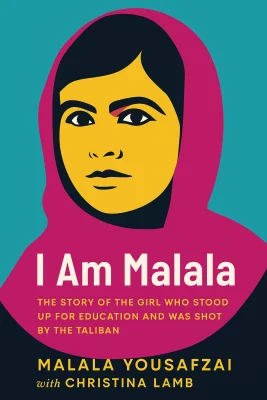
I Am Malala
The Story of the Girl Who Stood Up for Education and Was Shot by the Taliban
Categories
Nonfiction, Biography, History, Memoir, Politics, Audiobook, Feminism, Autobiography, Biography Memoir, Book Club
Content Type
Book
Binding
Hardcover
Year
2013
Publisher
Little, Brown and Company
Language
English
ASIN
0316322407
ISBN
0316322407
ISBN13
9780316322409
File Download
PDF | EPUB
I Am Malala Plot Summary
Introduction
On October 9, 2012, a fifteen-year-old Pakistani girl was shot in the head by Taliban gunmen for the simple act of attending school. The bullet that was meant to silence Malala Yousafzai instead amplified her voice across the globe, transforming a young activist from Swat Valley into a symbol of courage and determination that resonates with millions worldwide. Her story transcends the boundaries of geography and culture, speaking to the universal human right to education and the power of standing up for one's beliefs, even in the face of mortal danger. Malala's journey from the emerald valleys of northern Pakistan to the halls of the United Nations reveals not merely a tale of survival against overwhelming odds, but a masterclass in moral courage and unwavering conviction. Her life offers profound insights into the transformative power of education, the strength that can emerge from the most challenging circumstances, and the remarkable capacity of young people to effect meaningful change in the world. Through her experiences, we witness how one person's dedication to a cause greater than themselves can inspire global movements and challenge entrenched systems of oppression.
Chapter 1: The Valley of Dreams: Childhood in Swat
In the breathtaking Swat Valley of northern Pakistan, where snow-capped peaks touch azure skies and emerald fields stretch toward ancient Buddhist ruins, Malala Yousafzai entered the world in 1997. Born into a culture where the arrival of daughters is often met with silence rather than celebration, her birth was different. Her father, Ziauddin, defied tradition by adding her name to the family tree with pride, recognizing something special in his newborn daughter's determined spirit. The Swat Valley, often called the "Switzerland of the East," provided an idyllic backdrop for Malala's early years. This was a land rich in history and natural beauty, where Alexander the Great had once marched and Buddhist monks had found enlightenment. The valley's streams ran crystal clear, its orchards bore the sweetest fruits, and its people maintained a proud tradition of hospitality and honor according to the ancient Pashtun code of Pashtunwali. Malala's childhood was shaped by two powerful influences: her father's unwavering belief in education and her mother's practical wisdom and spiritual strength. Ziauddin, who had overcome a severe stutter to become an eloquent advocate for learning, established the Khushal School with dreams of providing quality education to all children, regardless of gender or economic status. From her earliest days, Malala was immersed in this world of learning, literally growing up within the school walls where knowledge was treasured above all else. The warmth of extended family gatherings, the rhythm of daily prayers, and the comfort of familiar traditions created a foundation of security and belonging. Yet even in these early years, Malala displayed an unusual curiosity about the world beyond her valley's borders, an inquisitiveness that would later fuel her passion for global advocacy. Her childhood was marked by the simple joys of playing cricket on rooftops, listening to her father's stories of great heroes, and dreaming of a future where every child could experience the magic of learning. This peaceful existence in paradise would not last forever, but it provided Malala with deep roots in her cultural identity and an unshakeable belief in the power of education to transform lives. The values instilled during these formative years in Swat would sustain her through the darkest times ahead.
Chapter 2: When Education Became Forbidden: The Taliban's Rise
The serenity of Swat Valley began to fracture in 2007 when a charismatic but dangerous mullah named Fazlullah launched his illegal radio station from a small village near Mingora. Initially presenting himself as an Islamic reformer, this "Radio Mullah" gradually revealed a far more sinister agenda. His nightly broadcasts, which began with seemingly benign advice about proper religious practices and moral behavior, slowly transformed into vehicles of fear and oppression. As Fazlullah's influence grew, the Taliban's interpretation of Islam began to suffocate the valley's traditional way of life. Music was banned, televisions were burned in public bonfires, and women were forced into increasingly restrictive roles. The militants established their own courts, meting out brutal punishments including public floggings and executions, turning Swat's central square into a place of terror where bodies would be dumped as warnings to others. The most devastating blow came when Fazlullah declared that girls' education was forbidden. Schools across the valley were destroyed in nighttime bombings, their ruins serving as stark reminders of the Taliban's campaign against learning. Teachers fled, families kept their daughters hidden, and the dreams of an entire generation of girls hung in the balance. The Pakistan military's initial response proved inadequate, creating a power vacuum that the militants eagerly filled. For eleven-year-old Malala, this period represented her first real encounter with injustice on a massive scale. Watching her friends disappear from school one by one, seeing the fear in her teachers' eyes, and witnessing the transformation of her beloved valley into a place of violence and oppression, she began to understand that remaining silent was not an option. The contrast between the Taliban's brutal reality and her father's vision of education as a fundamental right became the crucible in which her activist spirit was forged. The rise of the Taliban in Swat demonstrated how quickly extremism can consume a peaceful society, but it also revealed the extraordinary courage that ordinary people can summon when their deepest values are threatened. For Malala, this period marked the beginning of her transformation from a bright schoolgirl into a voice of resistance.
Chapter 3: Speaking Truth to Power: The BBC Diary
As the Taliban tightened their grip on Swat Valley and the deadline for closing all girls' schools approached, an opportunity emerged that would change everything. When a BBC correspondent sought a female student to document life under Taliban rule, eleven-year-old Malala stepped forward with the same courage that would define her throughout her life. Writing under the pseudonym "Gul Makai," she began chronicling the daily reality of living in fear while refusing to abandon her education. Her diary entries revealed the psychological warfare that the Taliban waged against the people of Swat. She wrote of nightmares filled with helicopters and militants, of the eerie silence that had fallen over once-bustling streets, and of the constant fear that pervaded even the most ordinary activities. Yet through her young voice came not just accounts of terror, but also glimpses of defiance and hope. She described her determination to continue learning despite the risks, and her refusal to let fear completely eclipse her dreams. The power of Malala's words lay not only in their honesty but in their accessibility. Through her eyes, the world could see the human cost of extremism in deeply personal terms. Her observations about hiding school books under shawls, attending secret classes, and maintaining friendships amid chaos resonated far beyond Pakistan's borders. The diary entries captured both the vulnerability of childhood and the strength of conviction, creating a narrative that was impossible to ignore. As her identity as Gul Makai became an open secret, Malala found herself transitioning from anonymous chronicler to public advocate. Television interviews followed, then speaking engagements where she articulated with remarkable eloquence why education was not a privilege to be granted or withheld by militants, but a fundamental human right. Her voice carried the authority of lived experience, making her arguments all the more compelling. This period established the foundation for everything that would follow. Through the BBC diary, Malala learned that words could be as powerful as weapons, that truth-telling was both dangerous and necessary, and that even young people could influence the course of history. The skills she developed as a writer and speaker during these months would prove invaluable in the global advocacy that awaited her.
Chapter 4: The Day Everything Changed: Surviving the Attack
October 9, 2012 began like any other school day for fifteen-year-old Malala. She had spent the morning taking a Pakistan Studies exam, chatting with friends, and looking forward to the afternoon journey home. The familiar yellow school bus was crowded with twenty girls, their voices filling the air with the typical mixture of complaints about tests and excited gossip about teenage concerns. As the bus wound through the narrow streets of Mingora, past army checkpoints and the remnants of Taliban-destroyed buildings, none of the passengers could have imagined that they were about to become part of history. When two young men stopped the vehicle and demanded to know "Who is Malala?" the question hung in the air like a death sentence. In that moment, years of Taliban threats crystallized into terrifying reality. The assassin's three bullets were meant to end not just a life, but a movement. The first struck Malala in the head, the impact so severe that doctors would later marvel at her survival. The attack also wounded two of her classmates, Shazia and Kainat, innocent victims caught in the crossfire of ideological hatred. The immediate aftermath was chaos. Blood, screaming, desperate drives to hospitals, and the growing realization that something momentous had occurred. As news of the shooting spread across Pakistan and then around the world, it became clear that this was more than just another act of Taliban violence. This was an attack on the very idea that girls deserved education, that young people could challenge injustice, and that hope could triumph over fear. The medical response that followed was nothing short of extraordinary. From the local hospital in Mingora to the sophisticated neurosurgery suites in Peshawar and later Birmingham, a chain of dedicated professionals fought to save Malala's life. The bullet's path had been millimeters from proving fatal, and the subsequent brain swelling threatened to complete what the Taliban had started. Emergency surgery to remove part of her skull gave her brain room to heal, while advanced medical care addressed the multiple complications that arose. What emerged from this brush with death was not a broken victim, but a survivor whose voice would prove even more powerful than before. The attack that was intended to silence Malala instead launched her onto the global stage with an authority that no bullet could diminish.
Chapter 5: Rising from Darkness: Recovery and Global Platform
The girl who awakened in a Birmingham hospital sixteen days after the shooting faced a world transformed beyond recognition. Malala's physical recovery was remarkable but incomplete: her smile was crooked, her hearing damaged, and part of her skull missing. Yet the bullet that had scrambled her brain's neural pathways could not touch the core of who she was. Her first coherent thoughts were not about her own suffering, but about her father's safety and her determination to return to school. The months that followed revealed both the vulnerability of the human body and the extraordinary resilience of the human spirit. Through painful physiotherapy sessions, multiple surgeries, and the slow process of relearning basic functions, Malala maintained an optimism that astonished her medical team. Her concerns centered not on her own limitations, but on the cost of her treatment and when she could resume her education. The girl who had once prayed to grow taller had been made "tall as the sky" by circumstance, but she remained grounded in her essential values. Birmingham Children's Hospital became an unexpected second home, where Pakistani traditions of hospitality merged with British medical excellence. The staff, initially prepared to treat a critically injured child, found themselves caring for someone whose presence transformed their understanding of courage. Cards and gifts poured in from around the world, tangible evidence that Malala's message had reached millions of hearts. Each letter from a schoolchild, each message of support from world leaders, reinforced that her suffering had not been in vain. The global response to the attack was unprecedented. From the United Nations General Assembly to village schools in remote corners of Africa, people recognized in Malala's story a universal struggle for human rights and dignity. Her recovery became a symbol of hope for anyone facing seemingly impossible odds. World leaders who had never heard of Swat Valley suddenly spoke eloquently about the importance of girls' education, while children who had never questioned their right to learn began to understand how precious that gift truly was. As Malala regained her strength, she also gained clarity about her purpose. The attack had given her a platform that no advocacy campaign could have created. With this platform came responsibility: to speak for the millions of girls still denied education, to challenge the forces of extremism wherever they appeared, and to prove that darkness could never permanently extinguish light.
Chapter 6: One Girl's Mission: Fighting for Education Worldwide
Malala's transformation from local activist to global advocate was both dramatic and natural. The girl who had once struggled to be heard above the Taliban's radio broadcasts now found world leaders hanging on her every word. Yet this international attention never altered her fundamental message: every child, regardless of gender, geography, or economic circumstances, deserved the right to education. Her first major address to the United Nations on her sixteenth birthday marked a pivotal moment in her evolution as a speaker. Standing before the General Assembly where so many world leaders had delivered historic speeches, Malala spoke with the moral authority that comes from having faced death for one's principles. Her words were not those of a victim seeking sympathy, but of a survivor demanding action. When she declared that "one child, one teacher, one book, and one pen can change the world," she was offering not just a slogan, but a practical formula for transformation. The establishment of the Malala Fund provided a concrete mechanism for translating inspiration into action. Rather than simply calling for change, Malala began creating the infrastructure necessary to make that change real. The Fund's approach recognized that sustainable progress in education requires local leadership, cultural sensitivity, and long-term commitment. By supporting grassroots organizations and innovative approaches to learning, the Fund embodied Malala's understanding that lasting change comes from within communities, not from external mandates. Her advocacy extended beyond simple calls for access to education. Malala consistently emphasized quality education that empowers students to think critically, solve problems creatively, and engage meaningfully with the world around them. She understood that true education is transformative, not just informational. This vision reflected her own experience in her father's school, where learning was presented as an adventure rather than a chore. The impact of Malala's mission was measurable in changed policies, increased funding for girls' education, and growing awareness of the challenges facing marginalized children worldwide. But perhaps more importantly, her example inspired countless young people to find their own voices and champion their own causes. She had proven that age was no barrier to influence, that individual action could create global movements, and that the most powerful weapon against injustice was the courage to speak truth regardless of the consequences.
Chapter 7: Creating Lasting Change: The Malala Fund
The establishment of the Malala Fund represented a crucial evolution in Malala's advocacy from symbolic inspiration to practical action. Recognizing that her global platform created both opportunity and responsibility, she channeled the tremendous goodwill generated by her story into a systematic effort to address the educational barriers facing millions of children worldwide. The Fund's creation marked her transition from a powerful voice calling for change to an organizational leader capable of creating that change. The Fund's approach reflected the wisdom Malala had gained from her own experiences. Rather than imposing solutions from outside, it prioritized supporting local advocates and organizations who understood their communities' specific needs and cultural contexts. This strategy acknowledged that sustainable progress in education requires deep roots in local soil, not transplanted programs that might flourish briefly before withering away. The Fund invested in proven leaders who had been working in the educational trenches long before Malala's name became known globally. Geographic diversity became a hallmark of the Fund's work, spanning from rural Nigeria where Boko Haram had terrorized schools, to Lebanon where Syrian refugee children struggled to access learning opportunities, to Afghanistan where the Taliban's return threatened to undo decades of progress in girls' education. Each context presented unique challenges, but the underlying principle remained constant: education as a fundamental human right that transcends political boundaries, religious differences, and economic limitations. The Fund's programs extended beyond simply building schools or providing scholarships. They addressed the complex web of factors that keep children out of classrooms: poverty that forces families to choose between education and survival, cultural norms that devalue girls' learning, inadequate teacher training, and the absence of safe learning environments. By taking a holistic approach, the Fund recognized that sustainable educational progress requires addressing root causes rather than just symptoms. Perhaps most importantly, the Malala Fund embodied the principle of amplifying young voices rather than speaking for them. Through its various programs, the organization consistently elevated young advocates from around the world, providing them with platforms, resources, and networks to advance their own educational missions. This approach ensured that the movement for educational equity would continue growing and evolving long after Malala herself had moved on to other endeavors.
Summary
Malala Yousafzai's extraordinary journey from a spirited schoolgirl in Pakistan's Swat Valley to a global icon of courage and educational advocacy demonstrates that the most profound changes in human history often begin with a single individual's refusal to accept injustice. Her story transcends the particulars of Taliban oppression or Pakistani politics to illuminate universal truths about human dignity, the transformative power of education, and the remarkable strength that emerges when conscience compels action regardless of personal cost. The lessons embedded in Malala's experience offer practical wisdom for anyone seeking to create positive change in the world. Her example shows that effective advocacy requires not just passion but also strategic thinking, cultural sensitivity, and the patience to build sustainable movements rather than seeking quick victories. Her transition from individual activist to organizational leader illustrates how personal trauma can be transformed into collective healing, and how the most powerful response to hatred is often the expansion of love and opportunity for others. For young people everywhere, her story provides both inspiration and instruction: that age need not be a barrier to influence, that speaking truth requires courage but creates possibility, and that education remains humanity's most reliable path from darkness toward light.
Best Quote
“We realize the importance of our voices only when we are silenced.” ― Malala Yousafzai, I Am Malala: The Story of the Girl Who Stood Up for Education and Was Shot by the Taliban
Review Summary
Strengths: The review highlights the book's ability to evoke gratitude for freedoms often taken for granted. It praises Malala's courage, tenacity, and her advocacy for girls' education. The narrative is described as both heartbreaking and inspiring, with an appreciation for the historical context provided about Pakistan and the Pashtuns. Overall: The reader expresses admiration for Malala's bravery and the book's impactful storytelling. The review suggests a strong recommendation for the book, emphasizing its emotional depth and educational value regarding Pakistan's socio-political issues.
About Author
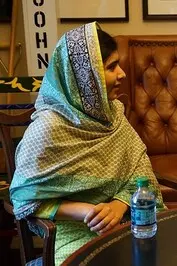
Malala Yousafzai
Yousafzai traces her path as a symbol of resilience and a staunch advocate for educational equality, emerging from the oppressive climate of the Swat Valley in Pakistan. Her narrative is characterized by a commitment to the universal right to education, a theme vividly illustrated in her acclaimed book, "I Am Malala: The Girl Who Stood Up for Education and Was Shot by the Taliban." This memoir not only offers a personal account of her defiance against the Taliban's regressive edicts but also underscores her belief in the transformative power of education. Beyond recounting her own experiences, Yousafzai uses her writing to highlight broader social issues, thereby mobilizing global support for educational rights.\n\nIn her work, Yousafzai adeptly blends personal storytelling with social commentary, a method that has galvanized a worldwide movement for girls' education. Her book, "We Are Displaced: My Journey and Stories from Refugee Girls Around the World," further broadens her narrative scope by intertwining stories of displacement with the resilience of refugee girls. This focus not only amplifies marginalized voices but also challenges the status quo regarding children's rights. The author’s literary contributions serve as a conduit for change, aiming to provoke critical discourse and inspire action.\n\nReaders of Yousafzai's works, which are grounded in a profound empathy and unwavering dedication to social justice, benefit from an expanded understanding of global educational inequities. Her bio reflects not only her journey and milestones, such as becoming the youngest Nobel Peace Prize laureate, but also her broader impact on advocacy and human rights. Through her poignant narratives, Yousafzai connects with audiences worldwide, fostering a shared commitment to the fight for educational access for all, especially girls.
Read moreDownload PDF & EPUB
To save this Black List summary for later, download the free PDF and EPUB. You can print it out, or read offline at your convenience.
I Am Malala
by Malala Yousafzai
