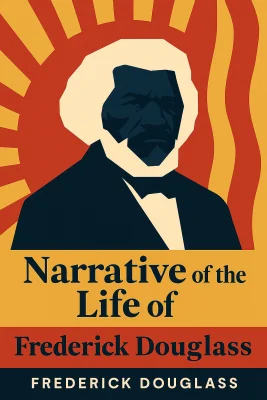
Narrative of the Life of Frederick Douglass
Categories
Nonfiction, Biography, History, Memoir, Classics, Autobiography, School, African American, American History, Read For School
Content Type
Book
Binding
Paperback
Year
2004
Publisher
Prestwick House Inc.
Language
English
ISBN13
9781580495769
File Download
PDF | EPUB
Narrative of the Life of Frederick Douglass Plot Summary
Introduction
In the sweltering heat of a Maryland plantation, a young enslaved boy gazed upon ships sailing freely across Chesapeake Bay, their white sails embodying the liberty he desperately craved. That boy would grow into one of America's most powerful voices against slavery, transforming personal anguish into universal truth. Frederick Douglass emerged from the brutal institution of slavery to become an orator whose words could move audiences to tears and action, a writer whose autobiography shattered myths about enslaved people's humanity, and a leader who helped reshape American consciousness about freedom and equality. Born into bondage around 1818, Douglass lived through slavery's worst cruelties yet refused to be broken by them. His journey reveals three profound dimensions of the human experience: the transformative power of education as a pathway from oppression to empowerment, the courage required to confront injustice even when the odds seem insurmountable, and the moral imperative to speak truth in the face of widespread hypocrisy. Through his extraordinary life, we witness not just one man's escape from physical chains, but his evolution into a champion whose legacy continues to inspire those who fight for justice and human dignity.
Chapter 1: Birth into Bondage: Early Childhood
Frederick Douglass entered the world without even knowing his birth date, a deliberate cruelty designed to strip enslaved people of their basic human identity. Born in Tuckahoe, Maryland, likely in 1818, he was separated from his mother, Harriet Bailey, as an infant—a common practice meant to sever the natural bonds between parent and child. His mother, forced to work on a distant farm, could only visit him under cover of darkness, walking twelve miles on foot after her grueling day's labor. These brief, shadowy encounters left young Frederick with barely any memory of maternal love, yet they planted seeds of longing that would later fuel his understanding of slavery's psychological devastation. The plantation where Frederick spent his early years was a microcosm of slavery's systematic dehumanization. Enslaved children received no shoes, stockings, or adequate clothing, surviving Maryland winters wrapped in coarse linen shirts that barely covered their knees. Food was distributed like slop to animals, with children scrambling around a wooden trough, eating with their hands or makeshift utensils. Frederick learned to sleep on the cold, damp floor, sometimes crawling into a corn sack for warmth, his feet cracking from frost so severely that a pen could fit in the wounds. Violence formed the backdrop of his childhood education. His first glimpse into slavery's true nature came when he witnessed his Aunt Hester being brutally whipped by their master, Captain Anthony. Hidden in a closet, the young boy watched in terror as the overseer stripped her naked and lashed her until blood flowed, her screams echoing through the night. This traumatic scene, which Douglass later called "the blood-stained gate, the entrance to the hell of slavery," shattered any childhood innocence and revealed the arbitrary cruelty that governed enslaved lives. Yet even in this environment of calculated brutality, Frederick displayed remarkable resilience and intelligence. His connection with Master Daniel Lloyd provided some protection from other children's harassment, while his quick wit and adaptability caught the attention of various overseers. The plantation's complex hierarchy, with its multiple farms, hundreds of enslaved people, and layers of supervision, taught him early lessons about power dynamics that would later inform his analysis of slavery as a system. These formative years, though marked by deprivation and trauma, were also shaping a mind that would eventually articulate slavery's contradictions with unprecedented clarity and force.
Chapter 2: Literacy as Liberation: The Power of Knowledge
Frederick's life transformed dramatically when he was sent to Baltimore at age eight to serve in the household of Hugh and Sophia Auld. This move, which he later called "the first plain manifestation of divine Providence," introduced him to a world where knowledge became both weapon and shield. Sophia Auld, initially kind and inexperienced with slavery, began teaching Frederick the alphabet—an act of inadvertent rebellion against the system's foundational principle that ignorance was essential for maintaining bondage. The lesson that would change Frederick's life forever came not from his teacher, but from his master's angry prohibition. When Hugh Auld discovered his wife's instruction, he furiously declared that learning would make Frederick "unfit" for slavery, "discontented and unhappy." These words, intended as warning, became Frederick's roadmap to freedom. He immediately understood that literacy was the pathway from slavery to liberty, and he resolved to acquire this forbidden knowledge at any cost. With ingenious determination, Frederick transformed Baltimore's streets into his classroom. He befriended white children in the neighborhood, trading pieces of bread for reading lessons. During errands, he would hurry through his tasks to steal moments of instruction from willing playmates who saw no harm in helping him learn. He studied the letters carved on ships' timber at the local shipyard, copying them onto fences and walls with chalk. When Master Thomas's copybooks lay abandoned after school, Frederick would practice writing in the blank spaces, gradually mastering the art of forming letters and words. Books became his secret rebellion. "The Columbian Orator," with its powerful dialogue between master and slave, opened Frederick's eyes to the philosophical arguments against slavery. The enslaved person in the story successfully argued for his freedom through reason and moral persuasion—a revelation that armed Frederick with intellectual weapons for his own eventual battles. As his reading expanded, so did his anguish. Knowledge brought awareness of his degraded condition without offering immediate escape, leading him to sometimes curse literacy as a burden that made him uniquely conscious of his suffering. This tension between enlightenment and torment reflected slavery's deeper contradiction: the system required intelligent human beings to perform complex tasks, yet demanded their simultaneous intellectual submission. Frederick's growing literacy made him increasingly "unmanageable" in Hugh Auld's prophetic words, transforming him from a piece of property into a thinking, questioning human being who would no longer accept bondage as natural or justified.
Chapter 3: Resistance and Rebellion: Confronting Covey
When Frederick was sixteen, his perceived rebelliousness led Thomas Auld to hire him out to Edward Covey, a poor farmer with a fearsome reputation as a "negro-breaker." Covey specialized in crushing the spirits of young enslaved men through relentless brutality, and slaveholders sent their most defiant property to him for psychological destruction. Frederick's year with Covey would become a crucible that either broke him completely or forged him into someone unbreakable. Covey's method was systematic torment. He worked his charges from before dawn until after dark, allowed minimal time for meals, and maintained an atmosphere of constant surveillance and unpredictable violence. Known as "the snake" among the enslaved, Covey would crawl through cornfields to spy on workers, appearing suddenly with curses and whip in hand. Frederick endured weekly beatings for months, his back constantly sore, his spirit systematically crushed until he felt transformed "from a man into a brute." The breaking point came on a sweltering August day in 1833. Overcome by heat exhaustion while fanning wheat, Frederick collapsed and could not continue working. Covey responded by kicking him and striking his head with a hickory slat, opening a wound that bled profusely. When Frederick sought protection from Thomas Auld, his legal master coldly refused, sending him back to Covey with threats of worse punishment if he continued complaining. The climactic confrontation occurred on a Monday morning when Covey attempted to tie Frederick up for another beating. Something fundamental shifted in Frederick's consciousness—a moment he would later describe as divinely inspired resistance. Instead of submitting, he grabbed Covey by the throat and declared he would no longer be treated like an animal. For nearly two hours, the sixteen-year-old enslaved youth and the adult slave-breaker wrestled, with Frederick holding his own and drawing blood from his tormentor. This physical confrontation marked Frederick's psychological rebirth. Covey never laid hands on him again, understanding that his reputation would suffer if word spread that a teenage slave had successfully resisted him. For Frederick, the battle represented something far more profound than physical victory. He had reclaimed his manhood and self-respect, proving to himself that he possessed the courage to fight back against seemingly insurmountable odds. The experience rekindled "the few expiring embers of freedom" in his soul and convinced him that while he might remain enslaved in form, he would never again be a slave in spirit.
Chapter 4: The Path to Freedom: Escape and New Identity
After his transformative year with Covey, Frederick spent time with William Freeland, a relatively humane master who allowed him to establish a secret school for fellow enslaved people. Teaching literacy to his companions deepened Frederick's commitment to freedom, but it also intensified his longing for escape. In 1835, he organized an elaborate plan involving five other enslaved men to steal a canoe and sail up Chesapeake Bay toward Pennsylvania. The conspiracy was betrayed, landing the conspirators in jail where slave traders circled like vultures, evaluating their potential value. Frederick's three years in jail awaiting his fate proved transformative in unexpected ways. The experience of near-sale to the Deep South strengthened his resolve, while his separation from his co-conspirators taught him the painful costs of failed resistance. When Thomas Auld surprisingly sent him back to Baltimore instead of selling him South, Frederick understood this might be his final opportunity to escape before growing too old or being moved beyond reach of Northern freedom. Baltimore provided the perfect environment for planning a more sophisticated escape. Working as a skilled ship caulker, Frederick earned substantial wages that Hugh Auld claimed entirely while giving Frederick small allowances. This economic exploitation crystallized Frederick's understanding of slavery as theft, driving home the injustice of laboring without compensation. When Hugh Auld restricted Frederick's movements after a minor defiance, Frederick realized that even relative freedom under slavery remained precarious and revocable. On September 3, 1838, Frederick executed his carefully planned escape. Using borrowed papers identifying him as a free black sailor and dressed in a sailor's outfit, he boarded a train bound for the North. The journey required extraordinary nerve as he passed inspection by conductors while knowing that discovery meant certain return to bondage and likely sale to the brutal plantations of the Deep South. Each mile toward freedom heightened both his hope and terror. Reaching New York City, Frederick experienced the intoxicating yet terrifying sensation of freedom. Like "the unarmed mariner rescued by a friendly man-of-war from the pursuit of a pirate," he felt simultaneously liberated and vulnerable. The city teemed with slave catchers and kidnappers who could legally seize him and return him South for reward money. This paradox of freedom—being legally free yet constantly hunted—revealed the incomplete nature of escape for fugitive slaves in America. His marriage to Anna Murray, a free black woman who had aided his escape, and their journey to New Bedford, Massachusetts, marked not just Frederick's physical liberation but his transformation into Frederick Douglass, a new identity for his new life.
Chapter 5: Finding Voice: Becoming an Abolitionist Leader
In New Bedford, Frederick discovered a thriving community of free black Americans whose prosperity challenged every stereotype about African American capabilities. Working initially at menial jobs due to white workers' prejudice, he found intellectual nourishment in "The Liberator," William Lloyd Garrison's antislavery newspaper. The publication became his "meat and drink," connecting him to a broader movement for abolition and helping him understand his personal experience within the larger context of American slavery's systematic injustices. Frederick's emergence as a public speaker began almost accidentally at an 1841 antislavery convention in Nantucket. Encouraged by William Coffin, who had heard him speak at a local gathering, Frederick reluctantly addressed the predominantly white audience. His authenticity and eloquence proved mesmerizing—here was not merely another antislavery advocate, but someone who had lived slavery's horrors and could testify with unassailable authority. William Lloyd Garrison, deeply moved by Frederick's presentation, immediately compared it to Patrick Henry's revolutionary rhetoric. The Massachusetts Anti-Slavery Society quickly recognized Frederick's extraordinary potential and hired him as a traveling lecturer. However, his powerful oratory created an unexpected problem: audiences began doubting that someone so articulate and intelligent could have ever been enslaved. These doubts, rooted in racist assumptions about enslaved people's intellectual capabilities, prompted Frederick to write his autobiography despite warnings that revealing his identity would expose him to recapture. Frederick's speaking career flourished as he developed his distinctive rhetorical style, combining personal testimony with broader moral arguments. He possessed what Garrison called "that union of head and heart" essential for changing minds and moving consciences. His speeches blended devastating logic with emotional appeal, using irony, mimicry, and Biblical references to expose slavery's contradictions. When describing masters who preached Christianity while brutalizing enslaved people, or the grotesque spectacle of selling human beings to buy Bibles for "heathen" abroad, Frederick wielded moral indignation like a sword. As his reputation grew, Frederick began asserting intellectual independence from white abolitionists who sometimes treated him as a symbol rather than a thinking person. Some advisors suggested he limit himself to personal narrative, leaving analysis to white speakers. Frederick rejected such restrictions, understanding that true equality required claiming his right to think, analyze, and lead. This tension reflected broader questions about the antislavery movement's racial dynamics and Frederick's own evolution from escaped slave to independent intellectual leader.
Chapter 6: Moral Clarity: Confronting Religious Hypocrisy
Throughout his life, Frederick Douglass maintained a complex relationship with religion, drawing sharp distinctions between authentic Christianity and the corrupt version practiced by slaveholders. His experiences with religious masters like Thomas Auld and Edward Covey convinced him that professed piety often intensified rather than softened slaveholder cruelty. Thomas Auld's conversion at a Methodist camp meeting made him more brutal, not more compassionate, as he found religious justification for whipping enslaved people who allegedly violated Biblical commands about servant obedience. Frederick's critique of religious hypocrisy became one of his most powerful rhetorical weapons. He observed ministers who preached divine love while buying and selling human beings, church members who funded missions to convert distant "heathens" while keeping fellow Christians in bondage, and congregations that welcomed slaveholders while excluding their victims. The appendix to his 1845 Narrative explicitly distinguished between "the Christianity of Christ" and "the Christianity of this land," arguing that true faith demanded rejecting slavery as fundamentally incompatible with Christian principles. This religious analysis gave Frederick's antislavery message unique moral authority. Unlike secular abolitionists who could be dismissed as political radicals, Frederick spoke as someone deeply familiar with Biblical teachings who could expose the theological contradictions underlying American slavery. He frequently quoted Scripture to demonstrate that slaveholders violated Christianity's core commandments about human dignity, compassion, and justice. His famous declaration that he loved "the pure, peaceable, and impartial Christianity of Christ" while hating "the corrupt, slaveholding, women-whipping, cradle-plundering" religion of America resonated powerfully with religious audiences. Frederick's moral clarity extended beyond slavery to broader questions of American hypocrisy. He consistently pointed out contradictions between American democratic ideals and racial oppression, between Constitutional promises of equality and legal discrimination, between Christian professions of universal love and systematic dehumanization of African Americans. This prophetic voice, calling America to live up to its own stated principles, established Frederick as more than an antislavery advocate—he became a moral conscience challenging the nation's fundamental integrity. His approach proved especially effective because it avoided attacking religion itself while exposing religious pretense. By positioning himself as defending true Christianity against its perversion, Frederick appealed to Americans' religious sensibilities while demanding they confront the gap between profession and practice. This strategy helped transform him from an escaped slave telling his story into a moral teacher challenging America's soul.
Chapter 7: Legacy of Courage: Transforming America
Frederick Douglass's impact extended far beyond his own escape from bondage, fundamentally reshaping American consciousness about race, freedom, and human dignity. His three autobiographies, countless speeches, and decades of activism helped destroy the intellectual foundations supporting slavery by proving African Americans' full humanity and capability. When doubters questioned whether someone so articulate could have ever been enslaved, Frederick's response was to reveal his identity and challenge the racist assumptions underlying their skepticism. During the Civil War, Frederick became a crucial advisor to President Lincoln, advocating for emancipation and the recruitment of black soldiers. His arguments helped transform a war initially fought to preserve the Union into a moral crusade against slavery itself. When Lincoln hesitated about arming African Americans, Frederick's persistence and reasoning eventually convinced the administration to authorize black military service, with Frederick personally recruiting soldiers and seeing his own sons serve in the Union Army. After emancipation, Frederick continued fighting for true equality rather than mere legal freedom. He understood that ending slavery was only the first step toward justice, and he spent his later years advocating for voting rights, educational opportunities, and economic advancement for former slaves. His appointments to government positions—including United States Marshal for the District of Columbia and Minister to Haiti—demonstrated African Americans' capacity for leadership while breaking barriers for future generations. Frederick's intellectual legacy proved equally transformative. His writings and speeches established him as one of America's greatest orators and authors, proving that literary and rhetorical excellence knew no racial boundaries. His analysis of slavery's psychological effects, his insights into the relationship between literacy and freedom, and his understanding of oppression's mechanisms influenced generations of civil rights leaders and continue resonating with contemporary movements for social justice. Perhaps Frederick's greatest achievement was demonstrating that individuals could transcend seemingly insurmountable circumstances through courage, intelligence, and moral conviction. His journey from nameless slave to internationally respected leader provided a template for personal transformation while challenging society to expand its definitions of human potential. Frederick Douglass proved that neither birth circumstances nor social prejudice could ultimately contain the human spirit's capacity for growth, achievement, and moral leadership.
Summary
Frederick Douglass embodied the revolutionary truth that knowledge, courage, and moral clarity could transform both individual lives and entire societies, proving that no system of oppression could permanently contain the human soul's yearning for dignity and justice. His extraordinary journey from Maryland plantation to international prominence demonstrated that authentic change required not just legal freedom but the courage to claim full humanity despite social resistance and personal risk. From his experiences, we learn that education remains the most powerful tool for liberation, that confronting injustice demands both strategic thinking and moral courage, and that true leadership requires speaking uncomfortable truths even when audiences prefer comforting illusions. His legacy calls us to examine our own assumptions about human potential, to challenge systems that deny others their full dignity, and to use whatever privileges we possess in service of expanding freedom for all. Frederick Douglass reminds us that individual transformation and social progress remain inextricably linked, inspiring anyone seeking to overcome obstacles while working toward a more just world.
Best Quote
“I therefore hate the corrupt, slaveholding, women-whipping, cradle-plundering, partial and hypocritical Christianity of the land... I look upon it as the climax of all misnomers, the boldest of all frauds, and the grossest of all libels. Never was there a clearer case of 'stealing the livery of the court of heaven to serve the devil in.' I am filled with unutterable loathing when I contemplate the religious pomp and show, together with the horrible inconsistencies, which every where surround me. We have men-stealers for ministers, women-whippers for missionaries, and cradle-plunderers for church members. The man who wields the blood-clotted cowskin during the week fills the pulpit on Sunday, and claims to be a minister of the meek and lowly Jesus. . . . The slave auctioneer’s bell and the church-going bell chime in with each other, and the bitter cries of the heart-broken slave are drowned in the religious shouts of his pious master. Revivals of religion and revivals in the slave-trade go hand in hand together. The slave prison and the church stand near each other. The clanking of fetters and the rattling of chains in the prison, and the pious psalm and solemn prayer in the church, may be heard at the same time. The dealers in the bodies of men erect their stand in the presence of the pulpit, and they mutually help each other. The dealer gives his blood-stained gold to support the pulpit, and the pulpit, in return, covers his infernal business with the garb of Christianity. Here we have religion and robbery the allies of each other—devils dressed in angels’ robes, and hell presenting the semblance of paradise.” ― Frederick Douglass, Narrative of the Life of Frederick Douglass
Review Summary
Strengths: The review highlights Frederick Douglass's autobiography as a transformative and impactful read, praising Douglass's intellect, character, and strength. The reviewer appreciates the quality of prose, balance between details and pace, and the compelling tone used by Douglass. The narrative's ability to convey the horrors of slavery is emphasized as particularly powerful. Overall: The reader expresses profound admiration for Frederick Douglass, describing the autobiography as a life-changing experience and placing it among their all-time favorite books. The review strongly recommends the book, especially for its insightful portrayal of Douglass's life and the moral clarity it provides on the issue of slavery.
About Author

Frederick Douglass
Douglass interrogates the pervasive injustices of slavery and advocates for societal transformation through education and civil rights. His work embodies the belief that knowledge is a fundamental tool for liberation; therefore, he pursued self-education even while enslaved, which later fueled his prolific writing and speaking career. Central to Douglass's philosophy is the idea that self-determination is critical for both individual and collective freedom. His compelling narratives, such as "Narrative of the Life of Frederick Douglass, an American Slave," illustrate the brutal realities of slavery while advocating for equality and human dignity. \n\nAs a prominent abolitionist, Douglass extended his influence by engaging with key social issues beyond slavery, such as women's suffrage. Notably, he was the only man to publicly support Elizabeth Cady Stanton's call for women's voting rights at the Seneca Falls Convention in 1848. This advocacy was paralleled in his editorial work with "The North Star," where he emphasized intersectional social justice. Douglass's contributions were not limited to writing; he held significant public roles, including U.S. Marshal for the District of Columbia and Minister Resident to Haiti, underscoring his impact on both domestic and international stages. His life and work remain integral to understanding the fight for equality, offering rich insights for readers interested in the historical interplay of race, education, and justice.
Read moreDownload PDF & EPUB
To save this Black List summary for later, download the free PDF and EPUB. You can print it out, or read offline at your convenience.
Narrative of the Life of Frederick Douglass
by Frederick Douglass
