
Frederick Douglass
Douglass interrogates the pervasive injustices of slavery and advocates for societal transformation through education and civil rights. His work embodies the belief that knowledge is a fundamental tool for liberation; therefore, he pursued self-education even while enslaved, which later fueled his prolific writing and speaking career. Central to Douglass's philosophy is the idea that self-determination is critical for both individual and collective freedom. His compelling narratives, such as "Narrative of the Life of Frederick Douglass, an American Slave," illustrate the brutal realities of slavery while advocating for equality and human dignity. \n\nAs a prominent abolitionist, Douglass extended his influence by engaging with key social issues beyond slavery, such as women's suffrage. Notably, he was the only man to publicly support Elizabeth Cady Stanton's call for women's voting rights at the Seneca Falls Convention in 1848. This advocacy was paralleled in his editorial work with "The North Star," where he emphasized intersectional social justice. Douglass's contributions were not limited to writing; he held significant public roles, including U.S. Marshal for the District of Columbia and Minister Resident to Haiti, underscoring his impact on both domestic and international stages. His life and work remain integral to understanding the fight for equality, offering rich insights for readers interested in the historical interplay of race, education, and justice.
Books by Frederick Douglass
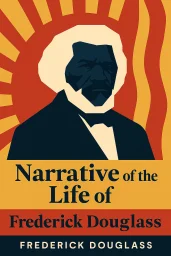
Narrative of the Life of Frederick Douglass
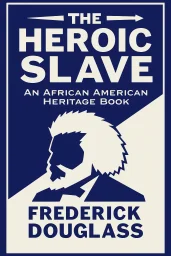
The Heroic Slave
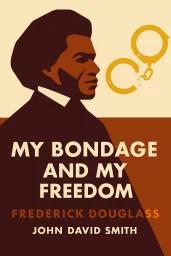
My Bondage and My Freedom
Popular Authors

Robin Sharma
5 books

James Clear
2 books

Sarah Knight
4 books

Daniel Goleman
9 books

Stanley D. Rosenberg
1 books

Anthony Scaramucci
1 books


Niall Kishtainy
1 books
J. Richard Gott
1 books

Trevor Moawad
2 books

Mark McNeilly
1 books

Lara Love Hardin
4 books
