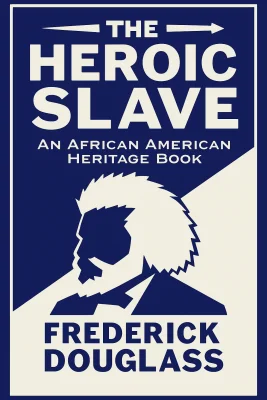
The Heroic Slave
Categories
Nonfiction, Short Stories, History, Classics, School, 19th Century, African American, College, Read For School, Civil War
Content Type
Book
Binding
Paperback
Year
2008
Publisher
Wilder Publications
Language
English
ISBN13
9781604592368
File Download
PDF | EPUB
The Heroic Slave Plot Summary
Introduction
# The Washington Who Seized His Freedom: A Slave Ship's Transformation The autumn mist clung to the James River as the brig Creole prepared for her final voyage in October 1841. Below deck, one hundred and thirty-five souls waited in chains, their destination the slave markets of New Orleans. Among them sat a man whose very name seemed to mock his bondage—Madison Washington. His broad shoulders bore the scars of countless lashings, yet his eyes burned with something the slavers had failed to break: an unquenchable thirst for freedom. This forgotten son of Virginia loved liberty as fiercely as any founding father, deserved it as deeply as Jefferson himself, and would soon prove his willingness to fight for it with a valor that matched the greatest revolutionary heroes. What began as another routine voyage in America's brutal slave trade would explode into the most successful slave rebellion in maritime history, transforming a vessel of human misery into a ship of liberation and igniting a diplomatic firestorm that would shake two great nations to their foundations.
Chapter 1: Chains and Contradictions: Madison Washington in Virginia's Shadow
The iron shackles bit deep into Madison's wrists as the Creole rocked gently at Richmond's wharf. Captain Robert Ensor supervised the loading of human cargo with the casual brutality of a man who had reduced souls to ledger entries. The enslaved men were crammed into the forward hold like cordwood, while women received slightly more freedom in their separate quarters. The stench of fear and desperation filled the cramped spaces below deck. Madison Washington stood apart from his fellow captives, not just in physical stature but in the quiet intelligence that burned behind his eyes. At thirty years old, he possessed the bearing of a natural leader, his powerful frame speaking of years spent in Virginia's tobacco fields. But those who had purchased him from the Richmond slave market knew nothing of his true history—that this man had once tasted freedom's sweet air in the forests of Canada. The irony cut deeper than any overseer's whip. Virginia, that proud mother of statesmen, had birthed men whose names echoed through history's halls. Patrick Henry, Thomas Jefferson, George Washington—all had fought for liberty with valor and conviction. Yet here, in the chattel records of that same commonwealth, another Washington languished, his heroism unsung, his courage unrecorded. The contradiction was as sharp as the shackles that bound him. As the Creole prepared to depart, Madison felt the weight of three small files hidden in his clothing. A mysterious benefactor at the Richmond wharf had slipped them into his pocket with a whispered blessing. The tools were crude but sufficient for his purpose. Freedom would not be granted—it would have to be seized. The name Madison Washington would either die in these chains or rise to join the pantheon of American revolutionaries. There would be no middle ground.
Chapter 2: The Vow in the Forest: A Northern Witness to Southern Resolve
Five years earlier, on a sabbath morning in 1835, a northern traveler named Listwell had drawn his horse to drink from a sparkling brook near a Virginia pine forest. The distant church bells rang across the countryside when Listwell caught the sound of a human voice engaged in earnest conversation. Curious, he dismounted and crept closer, concealing himself behind a fallen tree. There stood Madison Washington, tall and powerful, his torn sleeves revealing arms like polished iron. His face, though marked by suffering, held a nobility that commanded respect. Madison spoke to the empty forest as if addressing his own soul, his voice rich and melodious yet edged with steel. "What is life to me?" Madison's words cut through the morning air. "I am a slave—born a slave, an abject slave. Even before I drew breath, the scourge was plaited for my back, the fetters forged for my limbs." He gestured toward a snake that slithered past. "That miserable reptile is freer than I. When I raised my hand to strike it, it darted beyond my reach. I dare not do as much." But then Madison's voice hardened with resolve. "Liberty I will have, or die in the attempt to gain it. These trusty legs, these sinewy arms shall place me among the free. Tom escaped—so can I. The North Star will not be less kind to me than to him. My resolution is fixed. I shall be free." Listwell watched, transfixed, as Madison's face transformed. The future gleamed before him, and for that moment, he stood free in spirit if not in body. The hidden observer felt something shift in his own heart as those words rang through the chambers of his soul. From this hour, Listwell knew he would never again remain neutral in the great struggle between bondage and freedom.
Chapter 3: Freedom Tasted and Lost: The Tragic Return to Bondage
Winter winds howled around Listwell's Ohio home in 1840 when fate brought the two men together again. A heavy knock at the door revealed a tall figure with a bundle, seeking shelter from the bitter cold. Recognition flashed between them instantly—Madison Washington had kept his promise to seek freedom. By the warmth of Listwell's fire, Madison told his tale of escape and exile. He had indeed fled Virginia, following the North Star through treacherous swamps and hostile territory. For five long years, he had lived like a hunted animal in the Great Dismal Swamp, sustained only by secret meetings with his beloved wife Susan. She would steal away in darkness, bringing food and hope to her hidden husband. "I had partly become contented with my life in the wilderness," Madison explained, his voice heavy with memory. "But then fire swept through my refuge, a terrible conflagration that consumed everything. Bears and wolves fled alongside me as the very heavens seemed to rain down flame. I ran before that wall of destruction, and it drove me here, to your door." Listwell and his wife welcomed Madison with open arms, spiriting him to Cleveland where a steamer carried him across Lake Erie to Canadian freedom. From Windsor, Madison wrote of breathing "an atmosphere too pure for slaves, slave-hunters, or slave-holders." Yet freedom without Susan proved a hollow victory. Against all counsel, he resolved to return to Virginia and rescue his wife. The mission ended in tragedy and recapture. Under cover of darkness, Madison had climbed to Susan's window, but her startled scream awakened the plantation. Dogs bayed, rifles cracked, and in the chaos that followed, Susan fell dead by his side, struck down by her master's bullet. Madison fought like a man possessed over her lifeless body until overwhelming numbers brought him down. Sixty lashes tore his back to ribbons before he was sold as a "dangerous slave" to the New Orleans market.
Chapter 4: Conspiracy in the Hold: Planning Revolution Beneath Deck
The Creole departed Richmond's harbor on October 27, 1841, her holds packed with tobacco, hemp, and human cargo. For nine days, the ship sailed south through increasingly rough seas while Madison worked in darkness. The rasp of metal on metal was masked by the ship's creaking timbers as he filed away at chains and shackles, preparing for the moment when desperation would transform into action. Madison selected his allies with the care of a general choosing his staff. Eighteen other men joined his conspiracy, drawn to his commanding presence and unwavering courage. They called him their "general-in-chief," trusting absolutely in his leadership. Each night, he freed more shackles, distributed makeshift weapons, and refined their plan of attack. The ship's officers—Captain Ensor, First Mate Gifford, and the slave trader Merritt—noticed nothing amiss. The human cargo remained quiet and obedient, giving no sign of the storm brewing beneath deck. They congratulated themselves on their prisoners' docility, unaware that Madison Washington was no ordinary slave. His years of freedom had only strengthened his resolve, and his wife's death had transformed grief into steely determination. Madison knew that when the moment came, there would be no retreat. The conspiracy had grown beyond the point where discovery could be survived. Freedom or death—those were the only choices left. He was no longer the broken man the slave traders had purchased in Richmond. He had become a force of nature, gathering strength like a hurricane preparing to strike. The ship's routine continued unchanged. Meals were distributed, chains were checked, and the crew maintained their casual vigilance. But in the suffocating darkness of the hold, revolution was taking shape. Madison Washington, who had once vowed his freedom to an empty Virginia forest, was about to make that promise a reality for himself and 134 other souls.
Chapter 5: Mutiny at Sea: From Cargo to Captain in One Bloody Night
On the evening of November 7th, 1841, roughly 130 miles northeast of the Bahamas, the moment Madison had prepared for finally arrived. Merritt, the slave overseer, discovered Madison in the women's quarters and descended with his lamp to investigate. As the trader approached, Madison struck with lightning speed. "Yes, sir, it is me," Madison replied to Merritt's shocked recognition, then leaped toward the hatchway despite both Merritt and Gifford trying to restrain him. Breaking free, he bounded onto the deck and shouted to his fellow conspirators: "We have begun, and must go through! Rush, boys, rush aft, and we have them!" The deck erupted in chaos. Nineteen slaves, their shackles already filed through, poured from the hold like avenging spirits. John Hewell, one of the slave traders, grabbed a musket and fired into the crowd before the rebels overwhelmed him. Clubs and handspikes flashed in the moonlight as the slaves fought for their lives and freedom. Madison commanded the battle with tactical brilliance. When the French helmsman cowered in terror, Madison spared his life, declaring they would not kill him because he could not speak English. He showed similar mercy to Captain Ensor's wife and child, ordering them protected rather than harmed. Within minutes, the rebels controlled the ship. Captain Ensor and his officers fled to the rigging, wounded and helpless. Hewell lay dead on the deck, his body soon committed to the waves. A violent squall struck the ship, threatening to send them all to the bottom. While terrified sailors clung to the rigging, Madison took the helm himself, his keen eye fixed on the compass as mountainous waves crashed over the bow. He rode out the storm with the composure of a seasoned mariner, proving himself master of both men and nature. Madison Washington, the slave, now stood master of an American vessel on the high seas.
Chapter 6: Nassau's Sanctuary: British Justice Meets American Property
When dawn broke on November 9th, the Creole limped into Nassau harbor, her human cargo no longer property but refugees seeking sanctuary. The British authorities faced an unprecedented situation that would test the very foundations of international law. Under British law, slavery had been abolished throughout the empire in 1834, but the Creole was an American vessel carrying American slaves under American law. Acting with careful deliberation, the Nassau magistrates detained nineteen of the rebels, including Madison, on charges of mutiny and murder. This decision reflected complex legal reality—while British law recognized no property rights in human beings, it still acknowledged that crimes committed aboard foreign vessels fell under maritime law. The remaining 116 former slaves were declared free and allowed to disperse throughout the Bahamas. The British decision was both pragmatic and principled. By detaining only those directly involved in the violent uprising, they acknowledged American concerns about lawlessness on the high seas while simultaneously refusing to recognize the fundamental legitimacy of slavery. The freed slaves who walked onto Nassau's shores represented a living challenge to the American system of bondage. Madison Washington and his followers had achieved something unprecedented—a successful slave revolt that resulted in freedom rather than death. The American consul raged and threatened, demanding the return of "stolen property." Secretary of State Daniel Webster wrote angry letters to the British government, characterizing Madison as a murderer and pirate. Southern newspapers screamed for war, unable to accept that their "peculiar institution" had been dealt such a devastating blow. But the British lion would not yield. Governor Cockburn of the Bahamas stood firm, declaring that no human being could be considered property under British law. The former slaves scattered throughout the Caribbean, some finding work in Nassau, others sailing to Jamaica to begin new lives. They had struck a blow for freedom that would echo through the halls of Congress and inspire abolitionists on both sides of the Atlantic.
Chapter 7: Diplomatic Storms: When Two Nations' Principles Collide
The news of the Creole rebellion reached Washington in December 1841, igniting a diplomatic crisis that would test the relationship between America and Britain. Secretary of State Daniel Webster found himself in an impossible position, compelled to demand the return of human beings as property while simultaneously upholding America's reputation as a beacon of freedom. Webster's response was swift and uncompromising. In a series of diplomatic notes to British Foreign Secretary Lord Aberdeen, he characterized the rebellion as piracy and murder, demanding both the return of the freed slaves and compensation for their loss. Webster argued that the Creole had been forced into British waters against the captain's will, making it a case of distress at sea rather than voluntary entry into British jurisdiction. The British response was equally firm but more morally consistent. Lord Palmerston declared that Britain recognized no act as criminal when committed in pursuit of the natural right to freedom. The British position was clear: while they regretted any loss of life, they could not and would not treat human beings as property to be returned to their oppressors. Congressional debates over the Creole case revealed deep divisions within American society. Southern representatives like John C. Calhoun demanded aggressive action to force British compliance, arguing that national honor required protecting citizens' property rights regardless of where those rights were challenged. When Congressman Joshua Giddings of Ohio introduced resolutions praising the Creole rebels, he was formally censured and resigned from Congress, only to be triumphantly reelected by his constituents. The diplomatic exchanges revealed the fundamental contradiction at the heart of American democracy. How could a nation founded on the principle that "all men are created equal" demand the return of human beings to bondage? The British, having abolished slavery throughout their empire, could claim moral consistency in their refusal to cooperate with American demands. The crisis exposed the hypocrisy that lay beneath America's claims to be the world's champion of liberty and justice.
Chapter 8: Waves of Legacy: How One Rebellion Changed Two Empires
The resolution of the Creole case established important precedents that would influence international law and the global struggle against slavery for decades to come. The British refusal to return the freed slaves sent a clear message that slavery would not be recognized or supported in British territories, regardless of the legal claims of foreign slaveholders. This position encouraged enslaved people throughout the Americas to view British territories as potential havens of freedom. Years later, when Tom Grant, the Creole's former overseer, told the story in a Richmond tavern, he spoke with grudging admiration of the man who had bested him. "The fellow loomed up before me," Grant admitted to his drinking companions. "I forgot his blackness in the dignity of his manner and the eloquence of his speech. It seemed as if the souls of both the great dead whose names he bore had entered him." For the enslaved people of America, the Creole rebellion became a powerful symbol of successful resistance. Madison Washington and his fellow rebels had proven that enslaved people possessed both the intelligence to plan complex operations and the courage to risk everything for freedom. Their success inspired other acts of resistance and helped fuel the growing abolitionist movement in the North. The case also demonstrated the growing international isolation of slavery as an institution. While the United States continued to defend slavery as a legitimate form of property, most other Western nations had either abolished the institution entirely or were moving in that direction. The Creole affair highlighted America's increasingly awkward position as a nation that proclaimed liberty while practicing bondage. The diplomatic negotiations that followed eventually resulted in a compromise that satisfied neither side completely but allowed both nations to avoid more serious conflict. The United States agreed to accept British sovereignty over their territorial waters while Britain agreed to cooperate more fully in suppressing the international slave trade. The freed slaves remained free, but future cases would be handled through established diplomatic channels rather than unilateral action by local authorities.
Summary
The Creole rebellion stands as one of the most successful slave revolts in American history, transforming 135 enslaved people into free citizens through courage, planning, and the moral support of the British Empire. Madison Washington proved that heroism knew no color, and that the desire for liberty burned as fiercely in the breast of a slave as in any founding father. His name, once mocked as unfit for a slave, now rang out as a symbol of resistance and hope that transcended national boundaries. The diplomatic crisis that followed revealed the fundamental contradictions at the heart of American democracy and helped accelerate the growing international consensus against slavery. The waves that carried the Creole to freedom also carried the seeds of slavery's eventual destruction, as the rebellion demonstrated that human bondage could not be maintained indefinitely against the natural human desire for liberty. In the end, Madison Washington achieved something that eluded many of his more famous namesakes—he lived to see his revolution succeed, breathing free air under foreign skies while his legend took root in American soil, inspiring generations of freedom fighters who would follow in his wake toward the inevitable triumph of human dignity over human bondage.
Best Quote
“Gustavo Solivellas dice: "Es más fácil criar niños fuertes que reparar hombres rotos" (Frederick Douglas)” ― Frederick Douglass, The Heroic Slave
Review Summary
Strengths: The review highlights the historical significance of Frederick Douglass's only work of fiction, "The Heroic Slave," noting its compelling nature due to the author and subject. It is praised for its boldness and progressiveness, especially considering the racial context of the 19th century. The narrative includes a powerful passage reflecting on racial equality. Weaknesses: The review points out the challenging 19th-century writing style, characterized by lengthy descriptions and direct addresses to the reader, which may not appeal to modern readers. The narrative pacing is described as abrupt, with miraculous encounters that may feel forced. Overall: The reader finds the book historically significant and bold for its time, though less engaging due to its writing style. It is recommended for those interested in historical fiction and abolitionist literature, despite some stylistic challenges.
About Author

Frederick Douglass
Douglass interrogates the pervasive injustices of slavery and advocates for societal transformation through education and civil rights. His work embodies the belief that knowledge is a fundamental tool for liberation; therefore, he pursued self-education even while enslaved, which later fueled his prolific writing and speaking career. Central to Douglass's philosophy is the idea that self-determination is critical for both individual and collective freedom. His compelling narratives, such as "Narrative of the Life of Frederick Douglass, an American Slave," illustrate the brutal realities of slavery while advocating for equality and human dignity. \n\nAs a prominent abolitionist, Douglass extended his influence by engaging with key social issues beyond slavery, such as women's suffrage. Notably, he was the only man to publicly support Elizabeth Cady Stanton's call for women's voting rights at the Seneca Falls Convention in 1848. This advocacy was paralleled in his editorial work with "The North Star," where he emphasized intersectional social justice. Douglass's contributions were not limited to writing; he held significant public roles, including U.S. Marshal for the District of Columbia and Minister Resident to Haiti, underscoring his impact on both domestic and international stages. His life and work remain integral to understanding the fight for equality, offering rich insights for readers interested in the historical interplay of race, education, and justice.
Read moreDownload PDF & EPUB
To save this Black List summary for later, download the free PDF and EPUB. You can print it out, or read offline at your convenience.
The Heroic Slave
by Frederick Douglass
