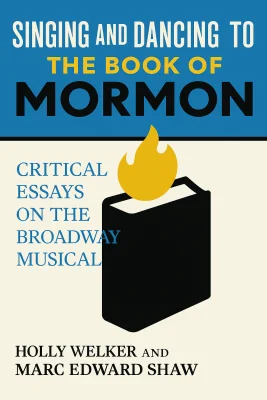
Singing and Dancing to The Book of Mormon
Critical Essays on the Broadway Musical
Categories
Content Type
Book
Binding
Hardcover
Year
2016
Publisher
Rowman & Littlefield Publishers
Language
English
ISBN13
9781442266766
File Download
PDF | EPUB
Singing and Dancing to The Book of Mormon Plot Summary
Introduction
Religious expression in contemporary American society exists within a complex web of reverence and skepticism, faith and doubt, cultural celebration and critical examination. This tension becomes particularly pronounced when examining how popular culture engages with religious traditions, especially those considered "outsider" faiths within mainstream American discourse. The intersection of theatrical performance, religious satire, and cultural commentary reveals deeper questions about authenticity, representation, and the boundaries of acceptable critique in a pluralistic society. The analytical framework employed here draws upon multiple disciplines—theatrical studies, religious sociology, feminist criticism, and postcolonial theory—to examine how cultural productions both reflect and shape public understanding of religious identity and practice. Through careful examination of performance, narrative structure, and audience reception, we can discern patterns of inclusion and exclusion, empowerment and marginalization that extend far beyond the confines of entertainment. The following exploration invites readers to consider how seemingly lighthearted cultural products participate in larger conversations about American identity, global consciousness, and the ongoing negotiation between tradition and modernity.
Chapter 1: Mormon Identities: Representations and Realities
The theatrical portrayal of Mormon missionaries reveals a fascinating paradox at the heart of American religious representation. While maintaining a generally affectionate tone toward the faith and its practitioners, the depiction simultaneously exposes the gap between institutional Mormon self-presentation and external perceptions. The missionaries appear as earnest, well-intentioned young men whose cultural insularity and naive optimism make them both sympathetic and comic figures. The accuracy of specific Mormon cultural details—from missionary training procedures to dietary restrictions—demonstrates extensive research and genuine engagement with the subject matter. Yet this attention to authenticity serves a dual purpose: it legitimizes the satire while highlighting the sometimes absurd aspects of religious literalism. The portrayal suggests that Mormonism's American origins and relatively recent historical development make it particularly suitable for contemporary cultural examination. The evolution from earlier, more hostile depictions of Mormons in American popular culture to this more nuanced representation reflects broader changes in Mormon social acceptance and cultural integration. No longer relegated to the role of exotic outsiders or stock villains, Mormons now occupy a position sufficiently mainstream to warrant good-natured ribbing rather than outright hostility. This shift reveals how American religious pluralism has expanded to accommodate previously marginalized traditions. The theatrical representation ultimately argues for a kind of religious negative capability—the ability to hold multiple perspectives on faith simultaneously without demanding resolution. The missionaries' journey from rigid orthodoxy to creative adaptation suggests that authentic religious practice might require flexibility and cultural sensitivity rather than doctrinal purity. This transformation reflects broader questions about how American religious traditions adapt to global contexts and diverse populations.
Chapter 2: Theatricality and Religious Expression in American Culture
The inherent theatricality of Mormon culture—from elaborate pageants to synchronized missionary presentations—creates a natural affinity with musical theater conventions. The performance traditions within Mormonism, including testimony bearing and dramatic reenactments of scriptural narratives, demonstrate how religious expression frequently employs theatrical elements to communicate spiritual truths and maintain community bonds. This convergence of religious and theatrical performance illuminates deeper questions about authenticity and artifice in both spheres. The line between genuine spiritual expression and performative display becomes increasingly blurred, suggesting that all religious practice contains elements of conscious presentation and audience awareness. The Mormon emphasis on outward conformity and coordinated public messaging creates particularly rich material for theatrical exploration. The Broadway musical tradition's historical engagement with American values and cultural tensions provides an ideal framework for examining religious themes. Musical theater's capacity to simultaneously celebrate and critique its subjects mirrors the complex relationship many Americans maintain with organized religion—appreciative of its communal benefits while skeptical of its institutional claims and restrictions. The integration of sacred and secular musical traditions within the performance creates moments of genuine spiritual resonance alongside obvious parody. This juxtaposition suggests that theatrical treatment of religious themes need not diminish their essential power or meaning. Instead, performance can serve as a vehicle for exploring the full range of human responses to religious experience, from reverent devotion to irreverent questioning.
Chapter 3: The Politics of Satire: Questioning Power Through Parody
Satirical engagement with religious institutions operates within a complex framework of cultural permission and social boundaries. The successful lampooning of Mormon practices and beliefs depends upon the religion's position within American society—sufficiently mainstream to be familiar yet distinct enough to provide material for humor. This positioning reflects broader patterns of cultural inclusion and exclusion that determine which groups may be safely mocked and which remain protected by social taboos. The carnivalesque tradition of temporarily inverting social hierarchies and challenging authority through humor provides historical precedent for religious satire. The temporary suspension of reverence allows audiences to examine familiar institutions from new perspectives while maintaining ultimate respect for the underlying human needs that religious communities serve. This balance requires careful navigation between legitimate criticism and destructive ridicule. The satirical treatment reveals anxieties about religious authority and institutional control that extend beyond any single faith tradition. The portrayal of mission presidents, church hierarchy, and doctrinal enforcement speaks to broader concerns about how religious institutions manage dissent and maintain orthodoxy. The suggestion that creative interpretation and personal adaptation might produce better outcomes than rigid adherence challenges traditional models of religious authority. The effectiveness of religious satire depends upon shared cultural knowledge and common reference points that create community among audiences. The jokes succeed only when viewers possess sufficient familiarity with the target to appreciate the distortions and exaggerations. This requirement creates an interesting dynamic where satirical treatment actually depends upon and reinforces cultural literacy about religious traditions, potentially increasing rather than diminishing their cultural significance.
Chapter 4: Negative Capability: Embracing Complexity in Faith Narratives
The concept of negative capability—the capacity to remain in uncertainty and doubt without irritably reaching after fact and reason—provides a valuable framework for understanding contemporary approaches to religious narrative and belief. Rather than demanding resolution between competing truth claims or simple dismissal of religious perspectives, this approach allows for simultaneous appreciation and skepticism, engagement and distance. The narrative arc demonstrates how rigid certainty often proves less effective than flexible adaptation in addressing real human needs. The missionaries' journey from doctrinal orthodoxy to creative interpretation suggests that authentic faith might require intellectual humility and cultural sensitivity rather than unwavering adherence to prescribed formulas. This transformation challenges both religious fundamentalism and secular dismissal of spiritual concerns. The theatrical medium itself embodies negative capability by creating spaces where multiple perspectives can coexist without demanding synthesis or resolution. Audiences can appreciate the genuine devotion and community service of religious practitioners while simultaneously recognizing the limitations and contradictions of institutional religion. This double consciousness reflects the complex relationship many contemporary Americans maintain with religious traditions. The embrace of metaphorical rather than literal interpretation of religious narratives opens possibilities for creative engagement with sacred texts and traditions. The suggestion that stories derive their power from their capacity to inspire positive action rather than their historical accuracy provides a model for postmodern religious engagement that preserves meaningful content while acknowledging contemporary intellectual challenges to traditional belief systems.
Chapter 5: Gendered Perspectives: The Erasure and Agency of Female Characters
The conspicuous absence of Mormon women from the narrative reflects both historical patterns of male-dominated missionary work and contemporary gender dynamics within religious institutions. The erasure of female religious authority and agency parallels broader patterns of women's marginalization within hierarchical religious structures, revealing how supposedly universal spiritual messages often exclude female perspectives and experiences. The central African female character serves multiple symbolic functions—representing both the need for Western intervention and the capacity for indigenous agency and wisdom. This dual positioning reflects complex colonial and postcolonial dynamics where women of color bear particular burdens of representation while their actual experiences and perspectives remain largely unexplored. The character's primary narrative function involves providing motivation and stakes for male protagonists rather than developing independent agency or subjectivity. The eroticization of religious conversion through baptismal imagery reveals how women's bodies become sites where religious and sexual politics intersect. The metaphorical equation of spiritual transformation with sexual experience both trivializes religious commitment and reduces female spiritual experience to its relationship with male desire and authority. This conflation reflects broader patterns where women's religious agency remains mediated through masculine institutional structures. The final transformation of African women into Mormon missionaries wearing masculine attire suggests both empowerment and assimilation into male-dominated religious hierarchies. The ambiguous nature of this conclusion raises questions about whether authentic female religious authority requires adopting masculine models or developing alternative forms of spiritual leadership that honor women's distinct experiences and perspectives.
Chapter 6: Postsecular Perspectives: Finding Middle Ground in Religious Discourse
The postsecular approach seeks to transcend simple opposition between religious faith and secular skepticism by acknowledging the continuing relevance of spiritual questions and communities while maintaining critical distance from institutional religious claims. This perspective allows for appreciation of religion's social and psychological functions without requiring acceptance of its metaphysical assertions or authoritarian structures. The narrative trajectory demonstrates how traditional religious communities might evolve to address contemporary concerns while preserving essential spiritual and social functions. The transformation from orthodox doctrine to creative interpretation suggests possibilities for religious adaptation that maintains community bonds and ethical commitment while abandoning literalistic constraints that conflict with contemporary knowledge and values. The emphasis on local community formation and mutual aid reflects postsecular recognition that religious traditions often provide irreplaceable resources for human flourishing that secular alternatives struggle to replicate. The celebration of improvised spiritual communities suggests that authentic religious life might emerge more readily from grassroots creativity than institutional authority, challenging traditional models of religious legitimacy and authenticity. The integration of diverse cultural and narrative traditions within a cohesive spiritual framework provides a model for religious pluralism that honors multiple wisdom traditions without demanding theological synthesis. This approach suggests possibilities for interfaith dialogue and cooperation that transcend doctrinal differences while maintaining respect for distinct cultural and spiritual contributions to human understanding and community formation.
Chapter 7: Cross-Cultural Critique: Western Representations of African Identities
The theatrical representation of African culture and experience reveals persistent patterns of Western othering and colonial imagination that reduce complex societies to simplified stereotypes serving external narrative purposes. The conflation of diverse African experiences into generic images of poverty, violence, and primitive spirituality reflects continued Western inability or unwillingness to engage African realities with appropriate complexity and specificity. The deployment of female genital cutting as a primary threat requiring Western intervention follows established colonial patterns where intimate violence against women serves to justify external interference while obscuring Western complicity in creating or exacerbating the conditions that enable such practices. This selective focus on particular forms of gender-based violence while ignoring others reveals how humanitarian concerns often mask cultural imperialism and racial superiority. The ease with which Western interventions supposedly resolve complex social problems reflects deep-seated assumptions about Western cultural and moral superiority that persist despite decades of postcolonial critique. The narrative suggestion that American popular culture provides more effective solutions to African challenges than indigenous knowledge systems and social movements demonstrates remarkable ignorance of actual African agency and accomplishment in addressing social problems. The ultimate celebration of cultural synthesis through the adoption of Western religious and narrative frameworks fails to acknowledge power imbalances that make such "exchange" fundamentally unequal. The absence of meaningful African cultural contribution to the final spiritual synthesis reveals how apparent multiculturalism often masks continued cultural imperialism where non-Western traditions serve primarily as exotic decoration for essentially Western projects and priorities.
Summary
The theatrical exploration of religious identity and cross-cultural encounter reveals the persistent challenge of representing cultural others with authenticity and respect while maintaining entertainment value and critical perspective. The simultaneous success and failure of this cultural production demonstrates both the possibilities and limitations of popular culture as a vehicle for religious and cultural dialogue in contemporary American society. The embrace of negative capability—the willingness to sustain multiple perspectives on complex issues without demanding premature resolution—offers valuable resources for navigating religious and cultural difference in increasingly diverse societies. This approach suggests possibilities for respectful engagement across difference that neither dismisses legitimate concerns about religious authority and cultural imperialism nor abandons appreciation for the genuine human needs that spiritual communities attempt to address.
Best Quote
Review Summary
Strengths: The book offers a rich and diverse perspective on "The Book of Mormon" musical, featuring contributions from excellent scholars. It provides new interpretations and a brilliant analysis of race, class, gender, culture, and Mormonism. The essays encourage readers to reconsider their assumptions about storytelling and enhance the experience of re-listening to the musical's soundtrack with insightful critiques and commentary. Overall: The review conveys a highly positive sentiment, recommending the book as a fantastic read for both fans of the musical and those interested in literature and Broadway. It is praised for its insightful and thought-provoking analysis.
About Author

Holly Welker
Welker interrogates the nuances of personal and cultural identity through her writing, particularly focusing on the complexities of faith and religion. As an author, her body of work spans poetry, fiction, and creative nonfiction, often exploring themes like the impact of a religious upbringing on family and community. Her essays and poems blend lyrical prose with narrative honesty, making them accessible while resonating deeply on an emotional level. She delves into the intricate dynamics of leaving a religious tradition, specifically Mormonism, which adds a profound layer to her narratives about identity and belonging.\n\nWelker's method includes editing essay collections that candidly discuss relationships and religious themes, such as "Baring Witness: 36 Mormon Women Talk Candidly about Love, Sex, and Marriage". These works invite readers to engage with personal narratives and reflect on their own experiences of faith, loss, and identity. Her engagement with diverse platforms like "The New York Times" and "The Iowa Review" underscores her broad influence across both literary and cultural discourses. This integration of personal insight and cultural critique makes her writings particularly beneficial for readers interested in the intersections of religion and personal identity.\n\nHer contributions have garnered significant acclaim, evidenced by her inclusion in anthologies such as "Best American Essays". As an award-winning poet and essayist, Welker continues to impact the literary and cultural landscape, offering readers a lens to better understand the intertwining of storytelling, personal history, and identity. This bio highlights how her work, grounded in introspection and honesty, provides valuable perspectives on the complexities of modern life.
Read moreDownload PDF & EPUB
To save this Black List summary for later, download the free PDF and EPUB. You can print it out, or read offline at your convenience.
Singing and Dancing to The Book of Mormon
by Holly Welker
