Categories
Fiction, Audiobook, Historical Fiction, China, Asia, Adult, Book Club, Historical, Adult Fiction, Asian Literature
Content Type
Book
Binding
Kindle Edition
Year
2018
Publisher
Random House
Language
English
ASIN
B000FCK71U
File Download
PDF | EPUB
Snow Flower and the Secret Fan Plot Summary
Introduction
# Bound by Silk and Sorrow: A Tale of Sisterhood Lost and Found In the mountains of nineteenth-century China, an eighty-year-old woman sits alone with a painted fan, her gnarled fingers tracing delicate characters across its silk surface. The script is nu shu, the secret language known only to women, hidden from men's eyes for centuries. Each stroke tells a story of love and betrayal, of bonds forged in childhood and shattered by pride. Lily's weathered hands shake as she reads the record of her most precious relationship—with Snow Flower, her laotong, her sworn sister for life. The fan holds forty years of correspondence, messages written in flowing characters that dance like spider silk across the painted surface. But tonight, as Lily prepares to join her ancestors, she must confront the truth of what she destroyed through her own stubborn heart. In a world where women existed only to serve men, where daughters were worthless branches on the family tree, the bond between laotong transcended even marriage. It was chosen love, deeper than blood, meant to last beyond death itself. Yet Lily's story speaks of how even the most sacred promises can crumble under the weight of deception, jealousy, and wounded pride.
Chapter 1: Golden Lilies and Sacred Vows: The Birth of Laotong
The pain begins at dawn on Lily's seventh birthday. Her mother kneels beside the bed they share in their cramped home in Puwei Village, long strips of white cloth in her hands. This is the day Lily's feet will be broken and bound, reshaped into the golden lilies that will determine her worth as a woman. Her cousin Beautiful Moon and younger sister Third Sister will undergo the ritual alongside her, their screams echoing through the upstairs women's chamber. Lily watches her mother fold her four smallest toes under her foot, then wrap the binding tight, forcing toe and heel to meet while leaving only the big toe to bear weight. The agony is immediate and absolute—daggers shooting up her legs as delicate bones begin their deliberate breaking. Third Sister fights and screams, but Lily endures in silence, knowing her family's future depends on perfect golden lilies. For weeks they walk endless circuits across the chamber floor, their broken bones grinding with each step. When Third Sister's feet become infected, red streaks crawl up her legs like poisonous vines. Despite the doctor's herbs and prayers, she dies within days, her small body unable to fight the corruption. The household mourns, but the binding continues. Lily's feet heal into perfect three-inch lilies, each step a testament to her mother's skill and her own endurance. A year later, Madame Wang the matchmaker arrives with extraordinary news. She has found a laotong match for Lily—a girl of identical age and foot size, born under the same astrological signs. Snow Flower comes from Tongkou Village, her family's status far exceeding Lily's humble origins. At their first meeting in the Temple of Gupo, Lily finds herself face to face with the most beautiful girl she has ever seen. Snow Flower's skin is porcelain white, her eyes perfect almonds, her manner refined beyond anything Lily has known. They sign their laotong contract on thick paper, promising eternal fidelity in flowing nu shu characters. Snow Flower's brush moves with elegant precision as she writes their sacred vows: "We will be true to each other. We will comfort each other with kind words. Never a step apart, never a harsh word between us. We will be old sames until we die." As they press their seals to the contract, Lily feels her heart expand with possibilities she never dared imagine.
Chapter 2: Threads of Deception: Discovering Hidden Truths
For ten years, Snow Flower visits Lily's humble home, bringing stories of her elegant life in Tongkou. She speaks of her scholar great-grandfather, her refined mother, their beautiful house with carved balustrades and painted walls. Through letters written in nu shu on their shared fan, she paints pictures of a world where women practice calligraphy and poetry, where servants handle menial tasks, where beauty and learning flourish behind latticed windows. In the upstairs women's chamber, Snow Flower teaches Lily the flowing strokes of their secret script. Her brush dances across silk fans and embroidered handkerchiefs, each character a code that men dismiss as mere decoration. They write poems about mandarin ducks and phoenixes, symbols of paired love and fidelity. Snow Flower's education surpasses Lily's—she knows classical poetry and embroiders patterns of stunning complexity. But as their wedding day approaches, cracks appear in Snow Flower's perfect facade. She grows quiet and withdrawn, her usual brightness dimmed by unnamed sorrow. When Lily presses about their future visits, Snow Flower's responses become vague and evasive. Strange odors permeate her family's house, and her father never appears during visits. The truth, when it finally emerges, shatters everything Lily believed about her dearest friend. Snow Flower's family has fallen from grace years before their meeting. Her father, weak and pleasure-seeking, squandered their fortune on opium and gambling debts. One by one, the servants fled, the beautiful furnishings were sold to pay creditors. By the time Lily discovers the deception, Snow Flower's once-grand home has become a hollow shell, reeking of her father's addiction and decay. The revelation cuts deeper than any physical pain Lily has endured. Her mother, her aunt, even Madame Wang—they all knew the truth and chose to hide it from her. Snow Flower's visits to Puwei were acts of charity, not friendship between equals. Her refined clothes were her mother's dowry garments, recut and reshaped to maintain the illusion of prosperity. Everything Lily believed about their relationship was built on lies and pity, and the knowledge poisons her heart like slow-acting venom.
Chapter 3: Divergent Destinies: Marriage and the Great Divide
Lily's wedding to the Lu family heir unfolds with all the ceremony she dreamed of—elaborate rituals, precious gifts, a flower-sitting chair decorated with silk and flowers. She enters Tongkou as first daughter-in-law of the most powerful family in the county, her perfect golden lilies ensuring high status. The Lu household exceeds even Snow Flower's descriptions: elegant rooms, fine furniture, servants for menial tasks, and the respect that comes with marrying into scholarly nobility. Snow Flower's fate proves far crueler. Her husband's family are butchers—the most polluted profession imaginable, dealing in death and blood. No amount of wealth can cleanse the spiritual contamination of their trade. When Lily attends Snow Flower's third-day wedding ceremony in the rough village of Jintian, she finds herself surrounded by coarse women who mock the refined nu shu writing they can barely read. The social gulf between them has become an unbridgeable chasm. Lily's mother-in-law forbids contact with "the butcher's wife," fearing contamination by association. The same matchmaker who orchestrated their laotong bond now counsels Lily to break the contract, to join a sworn sisterhood with women of her own elevated station. The practical advantages are clear—why cling to a relationship that can only damage her reputation? Yet love defies practical considerations. Despite the prohibition, Lily and Snow Flower continue their correspondence in secret, using servants as messengers, pouring their hearts onto paper in flowing nu shu characters. Snow Flower's letters reveal a harsh reality—her husband beats her regularly, his mother treats her with contempt, and their home reeks of blood from the butcher's trade. She becomes a vegetarian, unable to stomach the meat that sustains her new family. When both women give birth to sons, their positions in their husbands' families become secure. Sons are a woman's greatest achievement, guaranteeing her place and ensuring care in old age. Yet even in this shared joy, the poison of resentment spreads through Lily's heart. Her son's one-month celebration is a grand affair with elaborate banquets and gifts from prominent families. Snow Flower is not invited, the slight cutting deeper than any blade.
Chapter 4: Winter of Survival: Testing Bonds in the Mountains
The Taiping Rebellion erupts across southern China, bringing war to their peaceful county. Imperial troops clash with rebels in the valleys below, forcing entire villages to flee into the mountains. Lily, visiting Snow Flower when the crisis begins, finds herself trapped with the butcher's family as they join the desperate exodus of refugees climbing treacherous paths to safety. The winter of 1852 becomes a test of endurance beyond imagination. Ten thousand people huddle in mountain camps, surviving on dwindling supplies while snow falls relentlessly. Lily's silk clothes provide little protection against bitter cold. Her bound feet, designed for indoor elegance, bleed and crack on rocky terrain. Many women fall to their deaths from icy precipices, their screams echoing through the valleys. Snow Flower's husband emerges as an unlikely hero, his butcher's skills proving invaluable for hunting and preparing food. He shows tenderness toward his wife that surprises Lily, protecting Snow Flower from the worst hardships. But tragedy strikes when their youngest son, the bright boy who was the family's joy, dies in his sleep from cold and hunger. The butcher's grief transforms into rage, and he begins beating Snow Flower with renewed fury. Under the strain of loss and privation, Snow Flower miscarries another child. The violence of her husband's assault causes her to hemorrhage black blood onto frozen ground. Lily tends to her laotong with help from three sworn sisters from Snow Flower's village, women who show kindness that contrasts sharply with her husband's brutality. These women have formed their own support network, accepting Snow Flower without judgment. As weeks stretch into months, Lily watches Snow Flower retreat into herself, walking daily to cliff edges as if contemplating flight into the void below. The mountains that once seemed protective now feel like a prison where death stalks the weak and desperate. Only their shared memories and the promise of return keep both women anchored to life, their bond tested by suffering that strips away all pretense and reveals the raw truth of their devotion.
Chapter 5: The Letter of Shame: When Pride Destroys Love
After three months in the mountains, the refugees descend to find their villages intact but their lives forever changed. The epidemic that preceded rebellion has claimed many, including Lily's parents and mother-in-law. As the new Lady Lu, Lily assumes greater responsibility and status, while Snow Flower returns to her unchanged misery in the butcher's house. For several years, their friendship continues despite the growing gulf between their circumstances. Lily's wealth and position increase as her husband's salt trading business prospers, while Snow Flower's situation deteriorates. Her health fails from repeated pregnancies and miscarriages, and her husband's violence escalates. Yet she finds solace in teaching nu shu to the three sworn sisters from the mountains, women who listen without judgment to her sorrows. The breaking point comes when Snow Flower writes on their fan that she has found comfort with these sworn sisters, women who accept her as she is rather than trying to change her. To Lily, this feels like ultimate betrayal—her laotong choosing other women over their sacred bond. The pain of abandonment mingles with wounded pride and jealousy, creating a toxic mixture of emotions that demands release. At a wedding celebration in Tongkou, Lily confronts Snow Flower in the most public and humiliating way possible. She performs a Letter of Vituperation, a traditional form of accusation that allows women to air grievances in ritualized verse. But Lily's attack goes far beyond convention, revealing every shameful detail of Snow Flower's life—her family's disgrace, her husband's profession, her sexual appetite, her lies and deceptions. Snow Flower responds with her own letter, defending her need for companionship and questioning why Lily cannot accept her as she is. Her gentle words cannot match the venom of Lily's assault. The public humiliation destroys what remains of Snow Flower's reputation, making her a cautionary tale told throughout the county. Their laotong bond, once sacred and unbreakable, lies in ruins, shattered by words as sharp as knives and twice as cutting.
Chapter 6: Deathbed Confessions: The Price of Forgiveness
Eight years pass in silence. Lily rises to become the most respected woman in the county, her Letter of Vituperation remembered as a masterpiece of moral instruction. She teaches nu shu to young women, writes autobiographies for illiterate wives, and serves as an example of proper feminine virtue. Yet beneath her success lies a hollowness that no achievement can fill, a void shaped like the friendship she destroyed. The summons comes from Snow Flower's daughter—her mother is dying, calling out for her laotong in final delirium. Lily finds Snow Flower transformed into an ancient crone, her body consumed by a tumor that has been growing for years. The disease began long before their public confrontation, perhaps even during their time in the mountains. Snow Flower has been dying slowly while Lily nursed her wounded pride in comfortable ignorance. In the two weeks that remain, Lily tends to Snow Flower with desperate devotion, trying to compress a lifetime of love into these final moments. She bathes her laotong's wasted body, feeds her spoonfuls of bitter medicine, and lies beside her through long nights. They revisit their shared fan, reading aloud the messages of their youth, remembering when they were girls who believed their bond could transcend any obstacle. The three sworn sisters reveal the truth that shatters Lily's remaining illusions. Snow Flower never betrayed their laotong relationship—she simply found women who would listen to her pain without trying to fix or change her. Her message on the fan spoke of friendship, not sisterhood, of women who accepted her weakness rather than demanding strength she did not possess. Lily's jealousy and pride had blinded her to the subtle meanings of their secret script. As Snow Flower draws her final breaths, Lily realizes the magnitude of her failure. She had loved Snow Flower as a man loves, demanding perfection and obedience rather than offering acceptance and understanding. Her laotong dies whispering forgiveness, but Lily must live with the knowledge that she destroyed the most precious relationship of her life through her own cruelty and blindness. The fan closes on their story, its painted surface stained with tears that come forty years too late.
Chapter 7: Legacy in Secret Script: Redemption Through Memory
In her final years, Lily arranges for Snow Flower's granddaughter to marry into the Lu family, ensuring their bloodlines will merge despite the tragedy that separated them. She teaches the girl nu shu and tells her stories of her grandmother's beauty and grace, trying to preserve the memory of the woman she loved and betrayed. Through this act of redemption, she hopes to honor the bond that once meant more to her than life itself. The painted fan sits before her now, its silk surface bearing witness to four decades of correspondence between two women who promised to be sisters forever. In the flowing characters of nu shu, their story unfolds—childhood vows made in temple shadows, secrets shared in upstairs chambers, love tested by deception and hardship, pride that proved stronger than devotion. Lily traces each message with trembling fingers, reading the record of her greatest joy and deepest regret. As she prepares to burn these pages and send her confession to the afterworld, Lily understands that some bonds transcend death itself. The secret language of women survives in hidden fans and embroidered handkerchiefs, carrying forward the voices of countless wives and mothers who found solace in shared suffering. Their words speak across centuries of the enduring power of female friendship, of love that transcends social barriers, and of the terrible cost of pride and misunderstanding. In the end, her story becomes a testament to the bonds that define us and the regrets that haunt us, written in characters that only women can read, preserved forever in the secret chambers of the heart.
Summary
The fan burns slowly in the brazier, its painted silk curling into ash that rises toward the latticed window. With it goes the last record of a love that began in childhood innocence and ended in bitter regret. Lily watches the flames consume forty years of correspondence, each nu shu character disappearing like a whispered secret carried away on the wind. She has lived to be eighty, long enough to understand that wisdom often comes too late to heal the wounds we inflict on those we love most. In the mountains of southern China, where mist still clings to ancient villages and women's voices still carry secrets through latticed windows, the story of Lily and Snow Flower becomes legend. Their tale speaks to every woman who has loved and lost, who has chosen pride over forgiveness, who has discovered too late that the bonds of the heart are more fragile than silk and more precious than gold. The secret language endures, passed from mother to daughter, carrying forward the eternal truth that love, once broken, leaves scars that time cannot heal—but forgiveness, even when it comes at the end of life, can still light the way home.
Best Quote
“Read a thousand books, and your words will flow like a river.” ― Lisa See, Snow Flower and the Secret Fan
Review Summary
Strengths: The book provides interesting insights into Chinese cultural practices such as footbinding and the unique 'nu shu' language developed by women. It offers a poignant depiction of 19th-century Chinese culture, particularly focusing on sisterhood and the concept of 'laotong.' Weaknesses: The narrative is criticized for being boring and lacking compelling storytelling. The characterization is deemed shallow, relying on clichéd methods to depict intimacy. The reviewer also notes a missed opportunity to explore the depth of female friendships. Overall: The reader expresses disappointment with the book, citing a lack of engaging story and depth in character relationships. The recommendation is not favorable, as the book fails to meet the reader's expectations for a complex narrative.
About Author

Lisa See
See charts intricate narratives that delve into the complexities of Chinese and Chinese-American histories, with a particular focus on familial and female relationships. Her books frequently examine cultural identity and women's roles, enriched by thorough research and vivid historical settings. In works such as "Snow Flower and the Secret Fan" and "Peony in Love", See intertwines personal drama with cultural exploration, offering readers a window into underrepresented narratives. Her method of embedding rich historical detail within the personal stories of her characters allows for a nuanced exploration of these themes.\n\nFor readers, See’s works provide not only a captivating literary experience but also an educational journey through the layers of Chinese culture and history. Her ability to illuminate the often-overlooked stories within these communities fosters a deeper understanding and appreciation for the intricacies of cultural heritage and female solidarity. Those interested in exploring the intersections of history, culture, and personal identity will find her books especially rewarding.\n\nLisa See’s notable contributions to literature have been recognized with awards such as the Golden Spike Award and the Historymaker’s Award. Beyond her bestselling books, she continues to engage audiences with her thoughtful examination of cultural and personal narratives, maintaining a strong connection with readers and literary communities.
Read moreDownload PDF & EPUB
To save this Black List summary for later, download the free PDF and EPUB. You can print it out, or read offline at your convenience.

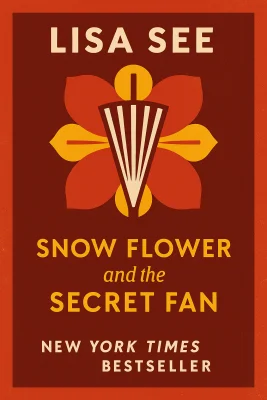
Snow Flower and the Secret Fan
by Lisa See
