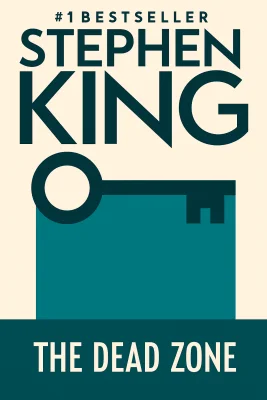
The Dead Zone
Categories
Fiction, Science Fiction, Audiobook, Horror, Mystery, Thriller, Fantasy, Suspense, Paranormal, Supernatural
Content Type
Book
Binding
Mass Market Paperback
Year
1980
Publisher
Signet/New American Library
Language
English
ASIN
B000JD7X5S
ISBN
0451155750
ISBN13
9780451155757
File Download
PDF | EPUB
The Dead Zone Plot Summary
Introduction
# The Dead Zone: Visions of Sacrifice and Salvation The wheel of fortune spins in the harsh carnival lights, clicking past red and black squares while Johnny Smith places his final bet. Nineteen. Everything rides on nineteen. The crowd holds its breath as the wheel slows, tick-tick-tick, until it settles with mechanical finality on his number. Five hundred and forty dollars. More money than he's ever won, but something cold crawls up Sarah Bracknell's spine as she watches her boyfriend collect his winnings. There's something different in Johnny's eyes tonight, something that makes her think of masks and hidden faces. Hours later, headlights crest the hill ahead—two cars racing side by side, one in the wrong lane. The taxi driver screams before the impact sends Johnny flying through the windshield into the black water of Carson's Bog. When he finally awakens, four and a half years have vanished like smoke, and the world has changed in ways he never imagined. But Johnny has changed too, in ways that will make him wish he had never opened his eyes at all. The dead zone in his brain has awakened something that connects him to the hidden currents of human destiny, and with that connection comes a burden too terrible for any one man to bear.
Chapter 1: The Wheel Stops Turning: Accident and the Long Sleep
The Halloween mask leers from the darkness of Johnny's apartment—half Jekyll, half Hyde, glowing with sickly phosphorescent paint. Sarah screams before the lights come on and Johnny's familiar laugh fills the room. He's twenty-seven, a high school English teacher in Cleaves Mills, Maine, and tonight he's taking his girlfriend to the county fair. The last fair of the season, the signs promise. The last chance for spinning wheels and rigged games. At the Wheel of Fortune booth, Johnny feels something electric in his fingertips as he places his bets. Small at first, then larger, then everything he has on a single number. The crowd gathers as he wins again and again, his eyes taking on a strange violet cast in the harsh carnival lighting. When the wheel stops on nineteen for the final time, even the pitchman looks nervous counting out the bills. Sarah's stomach rebels from a bad hot dog, and by the time they reach her place in Veazie, she knows the evening is ruined. Johnny calls a cab, kisses her goodnight, and disappears into the October darkness. The taxi driver is a middle-aged man with strong opinions about the younger generation, talking about his son's long hair and a world gone to hell. Johnny half-listens, fingering the wad of bills in his pocket, thinking about Sarah and the strange certainty that had guided his hand at the wheel. Then the headlights appear over the hill—two cars racing side by side, one in the wrong lane, coming straight at them. The taxi driver has just enough time to scream before the impact sends Johnny flying through the windshield in a shower of glass and twisted metal. He lands in the cold water of Carson's Bog, twenty-five feet from the burning wreckage, and sinks into a darkness deeper than sleep. The wheel of fortune has stopped spinning, and Johnny Smith's old life ends in the black water beneath the stars.
Chapter 2: Awakening to the Burden: The Gift of Unwanted Sight
The voice comes from far away, calling his name through layers of fog and confusion. Johnny opens his eyes to find a nurse adjusting his pillow—Marie, though he doesn't know how he knows her name. She freezes when she realizes he's awake, really awake, not just the vacant staring they've seen before. Four and a half years have passed like a single night, but Johnny feels the weight of every lost day pressing down on his chest. Dr. Sam Weizak, a neurologist with kind eyes and a thick accent, explains the impossible. The year is 1975, not 1970. Nixon has resigned in disgrace, the Vietnam War has ended, and Sarah Bracknell is now Sarah Hazlett, mother to another man's child. Johnny's body is a stranger's body—thin, twisted, weak as a child's. His mother has died calling his name, and his father has aged into an old man bent under the weight of medical bills and lost hope. The physical therapy is agony conducted by Eileen Magown, a small woman with fierce green eyes and no patience for self-pity. She pushes Johnny through exercises that leave him gasping and sweating, rebuilding muscle tone one agonizing repetition at a time. But during one session, something impossible happens. When Johnny grabs her hand, he suddenly knows with absolute certainty that her house is on fire. The knowledge hits him like lightning, complete and undeniable. Against all logic and disbelief, he insists she call the fire department. The flames they find consuming her kitchen curtains prove that Johnny Smith has awakened from his coma with more than just his life restored. The dead zone in his brain—the area damaged by his accident—has somehow awakened an ability that defies medical explanation. He can see things that others cannot, touch objects and people and know their secrets, their futures, their hidden truths. Dr. Weizak calls it a wild talent, something beyond current scientific understanding. Johnny just calls it a curse that will follow him to his grave.
Chapter 3: Touching Darkness: The Castle Rock Murders
Sheriff George Bannerman's voice on the phone carries the weight of desperation and sleepless nights. Six women have been murdered in Castle Rock over five years, all raped and strangled by a killer who leaves no clues and strikes only in the dark months of late fall and winter. The latest victim is nine-year-old Mary Kate Hendrasen, found dead on the town common where children walk to the library. Bannerman has no leads, no suspects, only a growing sense of dread that hangs over his community like fog. Johnny wants to refuse. He has built a quiet life tutoring students, far from the media circus and the endless stream of people who want him to find their lost relatives or predict their futures. But the image of the dead child haunts him, and reluctantly he agrees to meet Bannerman in the blizzard-swept town where terror has taken root. The sheriff is a decent man pushed beyond his limits, his face etched with the kind of exhaustion that comes from hunting monsters in the dark. At the snow-covered bandstand where Mary Kate died, Johnny kneels and presses his bare hands to the wooden bench where the killer had waited. The visions that flood through him are nauseating in their clarity—a man in a vinyl raincoat, his face hidden by a hood, watching children pass by with predatory patience. The killer thinks of himself as slick, untouchable, invisible to the law. But Johnny sees deeper, into the twisted psychology that drives the murders. The revelation that follows shatters Bannerman's world like glass. The killer isn't a stranger lurking in the shadows—he's Frank Dodd, a respected deputy sheriff who has been part of the investigation from the beginning. Frank is like a son to Bannerman, a clean-cut young officer who lives quietly with his sick mother and dreams of becoming chief of police. But Johnny's visions are never wrong, and when they arrive at the Dodd house that night, they find Frank sitting dead in the bathroom, his throat cut from ear to ear. Around his neck hangs a cardboard sign with two words scrawled in lipstick: "I CONFESS." The monster has judged himself, but not before claiming six innocent lives and destroying the faith of everyone who trusted him.
Chapter 4: Glimpsing the Apocalypse: Stillson's Terrible Future
The political rally in Ridgeway, New Hampshire, draws Johnny like a moth to flame, though he can't explain why. Greg Stillson stands on a makeshift platform in his construction helmet and army fatigue shirt, whipping the crowd into a frenzy with a bizarre combination of populist rhetoric and carnival showmanship. He throws hot dogs into the cheering masses while promising to solve America's problems with the same manic energy. The crowd loves him—this insurance salesman turned politician who speaks their language and shares their frustrations. Johnny watches from the edge of the crowd, studying Stillson's wild gestures and pumping fists. There's something dangerous in the man's charisma, something that can bend people to his will through sheer force of personality. His platform is absurd—throw all the politicians out, send pollution to outer space, make it rain on command—yet the polls show him leading his opponents by a commanding margin. When Stillson spots Johnny in the crowd and bounds over with his hand extended, Johnny knows he should run. The moment their hands touch, the world explodes into visions more terrible than any Johnny has ever experienced. He sees Stillson as President of the United States, older and mostly bald, taking the oath of office from a terrified Chief Justice. But this is no ordinary inauguration. Nuclear missiles are already in flight, cities are burning, and civilization is collapsing into radioactive ash. In the vision, Stillson has started World War III, and in his madness, he seems to revel in the destruction he has unleashed. The vision leaves Johnny shaken and confused, blood trickling from his nose as he staggers away from the rally. Stillson appears to be nothing more than a harmless political clown, but Johnny's gift has never lied to him before. The images of nuclear holocaust are too vivid to dismiss, too specific to be mere fantasy. As Stillson's political career flourishes and his path to higher office seems inevitable, Johnny realizes that he alone possesses the knowledge of what this man will become. The weight of six billion lives settles on his shoulders like a shroud, and he knows that the most terrible choice of his life is approaching with the inevitability of a falling star.
Chapter 5: The Weight of Tomorrow: Knowledge as Curse
Johnny's health deteriorates as the weight of his terrible knowledge presses down upon him like a physical force. The headaches grow worse, his vision blurs, and he finds himself asking the same question over and over: If you could travel back in time and kill Hitler before he rose to power, would you do it? The moral implications of his situation consume him as he struggles with the possibility that murder might be the only way to save humanity from nuclear annihilation. He seeks opinions from friends and acquaintances, disguising his real purpose behind hypothetical questions about historical figures and moral choices. Some say they would kill Hitler without hesitation, that one life weighed against millions is no choice at all. Others argue that assassination is always wrong, that there has to be another way, that the ends can never justify such means. But Johnny knows that conventional methods will never work against Stillson. The man's political momentum is unstoppable, his charisma undeniable. A visit to a neurologist in Phoenix confirms Johnny's worst fears. The psychic episodes have been caused by a brain tumor growing in the same area damaged by his accident years earlier. The dead zone that gave him his terrible gift is killing him slowly, one vision at a time. Without surgery, he has perhaps a year to live. With surgery, he might survive but lose his psychic abilities entirely—and with them, his only weapon against the coming apocalypse. Johnny refuses the operation, knowing that his curse is humanity's only hope. Time is running out, and Stillson's rise continues unchecked. The man who once threw hot dogs to crowds now commands the loyalty of millions, his America Now party attracting followers from across the political spectrum. Johnny watches the polls and the news coverage with growing desperation, knowing that each passing day brings the world closer to the nuclear fire he has witnessed. The burden of foreknowledge has become unbearable, but abandoning it would be the ultimate betrayal of every soul who will die in the flames he has seen.
Chapter 6: Between Evil and Evil: The Impossible Choice
The rifle feels cold and alien in Johnny's hands as he assembles it in the darkness of the Jackson town hall gallery. He has spent the night hidden in the building, waiting for Greg Stillson to arrive for one of his regular constituent meetings. Below, townspeople file into their seats, chattering excitedly about their congressman's latest promises and pronouncements. They see him as their champion, their voice in Washington, their hope for a better future. They have no idea that their hero will one day reduce the world to radioactive ash. Johnny's hands shake as he loads the rifle and takes aim at the podium below. He has become something he never wanted to be—an assassin, a killer, a man who would murder another human being in cold blood. But the alternative is unthinkable. In his visions, he has seen the mushroom clouds rising over American cities, felt the heat of nuclear fire consuming millions of innocent lives. One death to prevent the deaths of billions—the mathematics of genocide reduced to its simplest terms. When Stillson enters the hall to thunderous applause, Johnny's finger tightens on the trigger. But as he prepares to fire, something unexpected happens. Stillson's security team spots the rifle barrel and opens fire on Johnny's position. In the chaos that follows, bullets shatter the gallery railing and send splinters flying like shrapnel. Johnny is hit multiple times, his body jerking under the impact, but he maintains his aim even as his blood spatters the floor. Then Stillson does something that changes everything. As the gunfire erupts around him, the congressman grabs a small boy from the crowd and uses him as a human shield. The child's mother screams in horror as Stillson backs toward the exit, holding her son in front of him like armor. Johnny hesitates, unable to fire while an innocent child is in danger. In that moment of hesitation, more bullets find their mark, and he falls from the gallery to the floor below, his back and legs shattered by the impact. As he lies dying in a spreading pool of his own blood, Johnny reaches out and touches Stillson's ankle one final time, desperate to know if his sacrifice has meant anything at all.
Chapter 7: The Final Vision: Sacrifice and Salvation
The last vision floods through Johnny's dying mind like a revelation of light cutting through darkness. He sees the photograph that will destroy Greg Stillson—the image of a congressman cowering behind a four-year-old boy, using a child as a human shield while bullets fly around them. The picture captures everything that Stillson really is beneath his populist facade: a coward who would sacrifice anyone to save his own skin, a man whose true nature is finally revealed in a moment of pure terror. Within days of the shooting, Stillson's support evaporates like morning mist. Voters recoil from the image of their supposed champion hiding behind an innocent child. His America Now party collapses, his congressional career ends in disgrace, and he retreats into obscurity, never to hold public office again. The path to the presidency that Johnny saw in his visions crumbles to dust, and with it dies the future of nuclear holocaust that would have consumed the world. Johnny dies knowing that he has succeeded, but not in the way he expected. He didn't have to become a killer to save humanity—he only had to force Stillson to reveal his true nature in public. The photograph does what bullets could not, destroying the man's credibility and ending his political ambitions forever. As Johnny's vision fades and his breathing stops, he sees one final image: children playing in a world that will never burn, their laughter echoing through a future he has purchased with his life. The wheel of fortune has stopped spinning at last, but this time it has landed on salvation rather than destruction. Johnny Smith, the reluctant prophet who carried an impossible burden, has finally found peace in the knowledge that his sacrifice was not in vain. The dead zone in his brain falls silent forever, its terrible gift exhausted in one final act of heroism that will never be fully understood by those it saved.
Summary
Johnny Smith's journey from small-town teacher to reluctant prophet cost him everything he once held dear—his health, his love, his simple dreams of an ordinary life. The accident that stole four and a half years from him also awakened a terrible gift that connected him to the hidden currents of human destiny. Each vision, each unwanted glimpse into the darkness of human nature, prepared him for a choice that would test not just his supernatural abilities but his fundamental humanity. The dead zone in his brain became both curse and salvation, a neurological accident that gave him the power to see the future and the terrible responsibility to change it. In the end, Johnny discovered that some knowledge is too dangerous to possess and too important to ignore. His mother's dying words echoed through his final moments: "Do your duty, John." The hardest duty of all was learning that salvation sometimes requires sacrifice, that preventing evil might demand becoming something you never wanted to be. The wheel of fortune that brought him luck at a county fair became a wheel of fate, spinning him toward a destiny he never chose but could not escape. His legacy lives on in a world that will never burn, in children who will never know the nuclear fire he died to prevent, in the simple truth that one man's sacrifice can change the course of history itself.
Best Quote
“Some things were better lost than found.” ― Stephen King, The Dead Zone
Review Summary
Strengths: The review highlights the engaging and captivating nature of "The Dead Zone," noting its ability to be read in one sitting due to its enthralling and thought-provoking content. The book is praised for being accessible, not overly lengthy, and standalone, making it a suitable entry point for new Stephen King readers. The audiobook narration by James Franco is also commended for its quality. Overall: The reader expresses a strong positive sentiment, recommending "The Dead Zone" as a must-read Stephen King novel. It is described as a brilliant, underrated work that remains relevant, particularly in the current political climate. The review suggests it as an excellent starting point for those new to King's oeuvre.
About Author

Stephen King
King interrogates the boundaries between the supernatural and the ordinary, using his writing to delve into the dark recesses of human nature. His early life experiences in Maine, marked by familial challenges and economic instability, deeply influenced his narrative style and thematic focus. These experiences led him to explore themes of isolation and fear in works like "Carrie" and "The Shining". His storytelling often revolves around small-town settings infused with supernatural elements, where the horror of the unknown mirrors the inner turmoil of his characters.\n\nStephen King's career, notably marked by his ability to blend horror with elements of suspense and psychological depth, has made a profound impact on literature and popular culture. While his breakthrough book, "Carrie", allowed him to transition from teaching to full-time writing, his subsequent works, such as "Salem's Lot" and "The Dead Zone", further cemented his status as a master of modern horror. Beyond his books, King’s contribution to literature has been recognized through numerous awards, highlighting his influence in transforming horror into a respected literary genre. \n\nFor readers and aspiring writers, King's bio serves as a testament to the power of perseverance and the importance of grounding fantastical narratives in relatable human experiences. His work not only entertains but also offers a lens through which to examine societal fears and personal anxieties. The author’s profound impact on horror and beyond demonstrates the enduring relevance of his storytelling methods, which continue to inspire and captivate audiences worldwide.
Read moreDownload PDF & EPUB
To save this Black List summary for later, download the free PDF and EPUB. You can print it out, or read offline at your convenience.
The Dead Zone
by Stephen King
