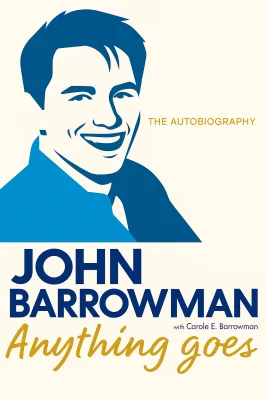
Anything Goes
Categories
Nonfiction, Biography, Memoir, Adult, Autobiography, Biography Memoir, Humor, LGBT, Queer, Doctor Who
Content Type
Book
Binding
Hardcover
Year
2008
Publisher
Michael O'Mara
Language
English
ISBN13
9781843172895
File Download
PDF | EPUB
Anything Goes Plot Summary
Introduction
Picture this: a young man from Glasgow stands frozen on a bustling London street, phone pressed to his ear, as the life-changing words echo through the receiver: "John, they want you to be Captain Jack!" What follows is pure theatrical magic – a spontaneous dance of joy, a gravity-defying leap up a wall, and the kind of uninhibited celebration that would become the signature of John Barrowman's extraordinary life. From his humble beginnings as a crying baby in Mount Vernon to becoming one of Britain's most beloved entertainers, Barrowman's journey reads like the musical theatre productions he has graced with his presence. His story reveals the making of a performer who refused to accept limitations, whether imposed by geography, industry expectations, or societal norms. Through his experiences, readers will discover the power of unwavering self-belief, the importance of embracing one's authentic identity, and the transformative magic that happens when talent meets relentless determination. This is a tale of how one man's refusal to conform became his greatest strength, inspiring countless others to live boldly and love freely.
Chapter 1: From Glasgow to America: The Early Years
John Scot Barrowman entered the world on March 11, 1967, in Glasgow, Scotland, announcing his arrival with such persistent, ear-piercing cries that his family joked he nearly shattered every window in Mount Vernon. Born with a blue-tinted mouth due to medical treatment for an infection, young John was met with less than enthusiastic reactions from his older siblings, Carole and Andrew, who declared he looked like "Sooty" and generally resembled something unpleasant. Despite his dramatic entrance, John's early years were filled with the warmth of a close-knit Scottish family. His father, also named John, worked as a skilled draughtsman at Rolls-Royce, while his mother Marion possessed a beautiful singing voice that would frequently fill their home during family gatherings and neighborhood parties. The Barrowman household was renowned for its entertainment, with their custom-built extension serving as the social hub of Mount Vernon, where young John first discovered his love for performing. The family dynamics were shaped by strong personalities, including John's formidable grandmother, Murn, whose fierce protectiveness became legendary when she marched into John's classroom to physically discipline a teacher who had been hitting her grandson. This incident perfectly captured the Barrowman family's core philosophy: unwavering loyalty and the courage to stand up for what's right, regardless of social expectations. Music and performance were woven into the fabric of daily life. John's mother worked at a local record shop, where three-year-old John would stand on the counter after school, belting out popular songs for delighted customers. His renditions of novelty hits like "Milly, Molly, Mandy" drew regular audiences, marking his first taste of the spotlight that would define his future. When John was nine, his father accepted a position with Caterpillar Inc. in Illinois, forever changing the family's trajectory. The transition from Scotland to America represented more than just a geographical move; it was a cultural metamorphosis that would shape John's unique identity as someone who belonged fully to both worlds, carrying the warmth of Scottish hospitality alongside American ambition.
Chapter 2: Breaking into Theatre: A Star is Born
The American chapter of John's life began in Aurora, Illinois, where the family settled into suburban life with swimming pools, basement rec rooms, and endless summer days. Despite initial challenges with his Scottish accent making him a target for bullies, John discovered something remarkable about himself: he could adapt, switching between dialects with ease while maintaining his authentic core identity. High school became John's proving ground, though not without obstacles. The "Dues and Don't Syndrome" emerged early, with established students resisting his natural talent and charisma. When told he couldn't join the swing choir as a freshman, John persisted, eventually winning over peers through sheer determination and undeniable ability. His breakthrough came when music teacher David Dankwart heard him singing in a practice room and immediately recognized his potential. The transformation was swift and spectacular. John landed the lead role of Barnaby in "Hello Dolly!" during his freshman year, shocking upperclassmen who expected to follow traditional hierarchies. This success opened doors to Forensic Competition, where his dramatic duet performance of "The Lion in Winter" became legendary. Despite a complete memory lapse mid-performance, John's instinctive theatrical flair – including spontaneous grunting, sighing, and table-pounding – captivated judges and audiences alike. His high school years established patterns that would define his career: fearless risk-taking, the ability to turn potential disasters into triumphs, and an infectious enthusiasm that won over even the most skeptical observers. Whether performing at Burns Suppers with his parents or commanding standing ovations in school concerts, John demonstrated that authentic passion could overcome any technical imperfection. The culmination came with his teacher Beverly Holt's encouragement to audition for the Joliet Drama Guild's production of "Anything Goes." This community theatre experience, initially met with John's resistance, became the foundation for everything that followed. As Beverly wisely noted, sometimes you need to play in mediocre productions to truly appreciate great theatre, and every experience – good or bad – contributes to an artist's education.
Chapter 3: Captain Jack and TV Stardom
The phone call that changed everything came in the summer of 2005, delivered by John's manager Gavin Barker with characteristic excitement: casting directors had found their Captain Jack. This wasn't just any role – it was a character in the revamped "Doctor Who" series that would catapult John from West End leading man to international television icon. The audition process itself revealed John's versatility and instinctive understanding of character development. Asked to read a scene where Captain Jack reveals he's not who he appears to be, John made a bold choice: he began as an American but switched to Scottish, then English accents to show the character's deceptive nature. This spontaneous interpretation impressed Russell T. Davies and the production team, demonstrating that John possessed not just technical skill but genuine creative insight. Captain Jack Harkness emerged as something unprecedented in science fiction television: a pansexual, morally complex character who challenged traditional heroic archetypes. Jack's flirtations with both male and female characters, his mysterious past, and his immortality created a character that resonated with audiences seeking more nuanced representation. John's portrayal balanced charm with danger, humor with heartbreak, making Jack both accessible and enigmatic. The transition from theatre to television required significant adjustments. The intimate connection between performer and audience that defined John's stage work had to be reimagined for cameras and eventual broadcast to millions. His first day on the "Doctor Who" set, working alongside Christopher Eccleston and Billie Piper, demanded quick adaptation to television's technical demands while maintaining the character's essential magnetism. Captain Jack's popularity led directly to "Torchwood," the adult-oriented spin-off series where John could explore darker themes and more complex relationships. As the show's lead, he carried responsibility for its success while navigating mature storylines involving sexuality, violence, and moral ambiguity. The Cardiff-based production became John's artistic home, allowing him to develop Jack's character across multiple seasons while building lasting friendships with his co-stars. This television success represented more than career advancement; it positioned John as a role model for LGBTQ+ audiences worldwide. His willingness to portray Jack's sexuality honestly and without apology, combined with his own openness about his personal life, created a powerful example of living authentically in the public eye.
Chapter 4: Personal Relationships and Coming Out
Long before Captain Jack made pansexuality a mainstream conversation topic, John was navigating his own journey of sexual discovery and acceptance. His first awareness came early, around age nine, when his reaction to magazines revealed his true orientation. Unlike many young gay men of his generation, John's path to self-acceptance was remarkably smooth, supported by parents who valued their children's happiness above social conventions. The summer of 1987 brought John's first serious gay relationship with Spanish flamenco dancer Paco Perez-Arevelo during the London production of "Matador." This relationship, though conducted somewhat secretively due to John's ongoing connection with college girlfriend Marilyn, marked his full embrace of his authentic identity. The situation reached its climax when Marilyn made an unexpected visit to London, forcing John to confront the truth about his relationships and his future. The resolution came through honest conversation rather than dramatic confrontation. Marilyn had traveled to London precisely because she suspected John's true nature and wanted to address their relationship directly. This mature handling of a potentially explosive situation demonstrated the mutual respect that characterized John's approach to all his relationships, romantic or otherwise. John's formal coming out to his family in 1992 was prompted by health concerns rather than relationship pressures. Fearing he might have contracted HIV, he returned home to share two pieces of news: his sexuality and his need for medical testing. His parents' response was immediate and unequivocal: their love was unconditional, and they were hurt only by his suggestion that being gay might change their relationship. This experience reinforced John's belief that honesty, though sometimes difficult, creates stronger bonds than secrecy. His family's acceptance provided the foundation for his later public advocacy and his role as a positive example for young LGBTQ+ individuals struggling with their own identity questions. The pattern established with his family – direct communication, mutual respect, and unconditional love – would characterize all of John's significant relationships, creating a support network that sustained him through the challenges of a public career while maintaining his essential humanity and accessibility.
Chapter 5: Performance Style and Professional Philosophy
John's approach to performance was forged in the crucible of live theatre, where spontaneity, authenticity, and direct audience connection reign supreme. His philosophy centered on the belief that entertainment should lift spirits and create joy, whether through a perfectly executed song or an unexpected moment of genuine humanity. This commitment to emotional honesty became his trademark across all media. His theatrical background provided unique advantages when transitioning to television. Musical theatre performers understand "heightened reality," as director Trevor Nunn observed, making them naturally suited to genres like science fiction where ordinary rules don't apply. John's ability to sell fantastical concepts with complete conviction made Captain Jack's outrageous adventures believable and compelling. Risk-taking became John's professional hallmark, inherited from his father's family of "wee rascals" who never met a challenge they wouldn't accept. This manifested in career choices that others might have avoided: agreeing to reality television appearances, accepting roles in B-movies, taking on judging responsibilities that invited public criticism. His reasoning was simple: if you're working as an actor, you're successful as an actor. The integration of humor into even serious moments distinguished John's performances. His instinctive understanding that laughter creates connection allowed him to find comedy in dramatic situations without undermining their emotional impact. This skill proved invaluable in "Torchwood," where moments of levity provided necessary relief from the show's darker themes. John's commitment to supporting emerging talent reflected his belief in paying forward the opportunities he'd received. His work on talent shows like "Any Dream Will Do" and "How Do You Solve a Problem Like Maria?" wasn't about building his own profile but about extending helping hands to the next generation of performers. This generosity of spirit characterized his approach to established colleagues as well, creating lasting friendships across the entertainment industry. His professional relationships were built on mutual respect and genuine care for others' success. Stories of on-set camaraderie, backstage support, and long-term friendships illustrate John's understanding that sustainable careers in entertainment depend on treating others well and maintaining authenticity even under public scrutiny.
Chapter 6: Family, Friends and Finding Balance
The foundation of John's emotional stability came from his unwavering commitment to family relationships, particularly his special bond with his niece Clare. Born prematurely as a surviving twin, Clare represented resilience and determination – qualities that resonated deeply with John's own approach to life's challenges. Their relationship evolved from uncle-niece to something more like siblings, built on shared adventures, mutual support, and genuine affection. John's relationship with his nephew Turner showcased his playful side and his understanding that childhood should include wonder, mischief, and unforgettable experiences. Their various deals – from eating dog food for money to jumping into freezing pools – might seem irresponsible to outsiders, but they reflected John's commitment to creating magical memories and teaching fearlessness through example. The integration of his chosen family with his biological one reached its pinnacle when Scott became not just John's partner but a beloved member of the entire Barrowman clan. Scott's ability to fit seamlessly into family traditions, from New Year's Eve performances to holiday gatherings, demonstrated the importance of finding someone who enhances rather than competes with existing relationships. Professional friendships evolved into lasting personal connections, creating an extended family of colleagues who supported each other through career ups and downs. Relationships with people like Beverly Holt, who remained John's musical director and close friend decades after their first meeting, illustrated his ability to maintain meaningful connections across geographical and professional changes. The "Torchwood" cast became another family unit, with nicknames, inside jokes, and genuine care for each other's wellbeing. These relationships sustained the demanding shooting schedules and emotional intensity of the show's storylines, creating an environment where creativity could flourish alongside personal growth. John's approach to friendship was characterized by loyalty, generosity, and the willingness to show up during difficult times. Whether supporting friends through personal crises or celebrating their successes, he demonstrated that meaningful relationships require consistent investment and genuine care for others' happiness and growth.
Chapter 7: Legacy and Cultural Impact
John Barrowman's cultural significance extends far beyond his entertainment career achievements. As one of the first openly gay leading men in mainstream British television, he shattered barriers and created representation that had been virtually nonexistent in science fiction. Captain Jack's pansexuality, portrayed without shame or sensationalism, provided visibility for LGBTQ+ audiences who had rarely seen themselves reflected in heroic characters. His willingness to discuss his sexuality openly in interviews and public appearances helped normalize gay identity during a period when many entertainers still felt compelled to remain closeted. By living authentically while maintaining a successful career, John provided a powerful example that sexual orientation need not limit professional opportunities or public acceptance. The impact rippled through fan communities worldwide. Letters from young people struggling with their identity, parents seeking to understand their children, and individuals finding courage to live authentically testified to John's influence beyond entertainment. His message was simple but revolutionary: being different isn't just acceptable, it's a superpower. His advocacy work with organizations like Stonewall demonstrated commitment to LGBTQ+ rights beyond mere visibility. By accepting awards, speaking at events, and supporting legislative changes, John used his platform to advance equality and challenge discrimination. His involvement helped bridge the gap between entertainment and activism. The Cardiff production base for both "Doctor Who" and "Torchwood" created economic and cultural benefits for Wales, with John serving as an enthusiastic ambassador for the region. His choice to make Cardiff his home and celebrate his civil partnership there reinforced connections between his personal values and professional commitments. Future generations of performers, particularly LGBTQ+ artists, inherit a landscape that John helped reshape. His career proves that authenticity attracts rather than repels audiences, that diversity strengthens rather than weakens storytelling, and that entertainment at its best both reflects and shapes social progress.
Summary
John Barrowman's life demonstrates that the greatest performances happen not just on stage or screen, but in the courage to live authentically despite societal expectations or professional pressures. His journey from a crying baby in Glasgow to an internationally beloved entertainer illustrates the power of embracing one's true nature while never losing sight of the values instilled by family, community, and genuine human connection. The lessons embedded in John's story transcend the entertainment industry: take risks that align with your values, treat others with kindness and respect regardless of their status, and remember that success means nothing if it requires sacrificing your essential self. His legacy reminds us that the most important audience for our life's performance is ultimately ourselves, and the greatest applause comes from knowing we've remained true to who we are while lifting others along the way.
Best Quote
“Cut! Go again."And again, and again, and again. Finally, after the fourth of fifth take I yelled down the hill to the director: "This isn't a fucking marathon! If we're going to go again, tell him on the bloody bike to slow down."David turned to me and said, "Having a bit of trouble, Captain?""That's all right for you to say," I laughed breathlessly, "but I'm carrying a rucksack on my back with your fucking hand in a glass jar inside” ― John Barrowman, Anything Goes
Review Summary
Strengths: The audiobook is praised for John Barrowman's engaging narration, including his laughter, singing, and use of accents, which enhance the storytelling. The book is described as charming, humorous, and full of anecdotes, providing insight into Barrowman's life and career. His sense of humor, wit, and love for musical theater are highlighted as positive aspects. Weaknesses: The book's limitations as a written work are noted, with criticisms of Barrowman's writing style, including overuse of footnotes and simplistic explanations. Some readers felt the book lacked depth in addressing struggles and was somewhat self-aggrandizing. Overall: The general sentiment is positive, particularly for fans of John Barrowman, who appreciate his lively personality and storytelling. The audiobook is recommended for its entertainment value, though some may find the writing style lacking in depth.
About Author

John Barrowman
Barrowman considers the complexities of identity and cultural duality through his varied career as an actor, singer, and author. His Scottish roots and American upbringing contribute to a bi-dialectal identity, which he navigates with ease in his performances. This unique blend of cultural influences is evident in his acting roles, most notably as Captain Jack Harkness in "Doctor Who" and its spin-off "Torchwood". His career is a testament to his ability to adapt and thrive in both British and American entertainment industries, while his writing reflects a similar versatility.\n\nIn his books, Barrowman often explores themes of identity and belonging, enriched by his experiences in the entertainment industry and as a member of the LGBT community. His memoirs, such as "Anything Goes: The Autobiography", provide candid insights into his personal life and career, blending humor with reflection. Meanwhile, his young adult fiction, co-written with his sister Carole, like the "Hollow Earth" series, showcases imaginative storytelling filled with adventure and mythology. This range in writing style not only engages readers but also bridges diverse genres, appealing to fans of both autobiographies and fantasy fiction.\n\nBarrowman's contributions to literature and television extend beyond entertainment, offering readers and viewers alike an opportunity to reflect on themes of identity and cultural navigation. His work has been recognized with an appointment as Member of the Order of the British Empire (MBE) for services to drama and charity, highlighting his impact both on and off the screen. His dynamic bio continues to inspire those interested in the intersections of personal identity and public life.
Read moreDownload PDF & EPUB
To save this Black List summary for later, download the free PDF and EPUB. You can print it out, or read offline at your convenience.

Anything Goes
by John Barrowman
