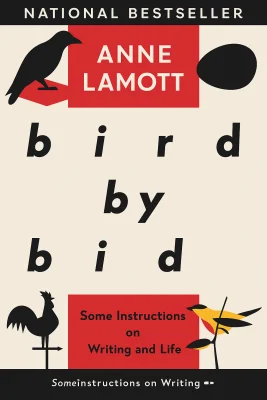
Categories
Nonfiction, Self Help, Biography, Memoir, Writing, Reference, Audiobook, Essays, Humor, Crafts
Content Type
Book
Binding
Paperback
Year
1995
Publisher
Anchor
Language
English
File Download
PDF | EPUB
Bird by Bird Plot Summary
Introduction
A student once sat in a writing workshop, paralyzed by the blank page before her. She had stories to tell—memories of her grandmother's kitchen, fragments of conversations overheard on buses, dreams that felt more real than her waking life. But every time she tried to begin, the enormity of transforming these precious moments into coherent prose overwhelmed her. The cursor blinked mockingly, and she wondered if she was fooling herself to think she could ever be a writer. This moment of creative paralysis is one that countless aspiring writers know intimately. Writing feels simultaneously like the most natural human impulse—after all, we all have stories—and the most impossible task. How do we bridge the gap between the rich, chaotic world of our inner lives and the disciplined craft of putting words on paper? How do we move from wanting to write to actually writing, from dreaming of publication to finding our authentic voice? This exploration of the writing life offers both practical wisdom and emotional support for anyone who has ever felt called to put pen to paper, revealing that the path to becoming a writer is less about talent and more about showing up with courage, compassion, and a willingness to embrace the beautiful mess of the creative process.
Chapter 1: The Writer's Journey: From First Drafts to Final Publication
There's something almost mystical about watching a story come to life on the page, but the reality of how it happens is both more mundane and more miraculous than most people imagine. Consider the writer who sits down each morning at nine o'clock, stares at yesterday's work, and feels the familiar wave of panic wash over her. Her mind immediately begins its daily inventory of disasters: the bills that need paying, the phone calls that should be returned, the nagging suspicion that she might have a serious medical condition based on a minor ache in her neck. These thoughts swirl like vultures, circling the vulnerable creative spirit trying to emerge. Yet something remarkable happens when she forces herself to stay in the chair. She picks up an imaginary one-inch picture frame—a tool for narrowing focus to manageable proportions—and peers through it at her story world. Maybe today she'll only describe the morning light falling across a character's kitchen table, or capture the way someone's voice sounds when they're trying not to cry. She doesn't need to solve the entire plot or write the perfect opening chapter. She just needs to see what's directly in front of her, like driving at night with headlights that illuminate only the next few feet of road. The creative process unfolds like a Polaroid photograph developing in slow motion. At first, there's just a gray-green murkiness where your story lives, shapes that might become characters or scenes or themes. You can't force the image to appear faster than it wants to, can't shake it or hold it up to bright light. You simply have to wait, stay present with the uncertainty, and trust that gradually the picture will become clear. Sometimes what emerges is completely different from what you expected—that background detail you barely noticed becomes the heart of your story, or a minor character steps forward and demands to be heard. This patient attention to the developing image teaches us that writing is fundamentally about learning to see clearly, to pay attention with the intensity of someone whose life depends on noticing details. Every conversation overheard in a coffee shop, every unexpected emotion that surfaces during an ordinary moment, every memory that suddenly becomes vivid again—all of this becomes raw material for the ongoing project of understanding what it means to be human. The writer's job is to be present for these revelations and to find ways to share them that help others feel less alone in their own experience of being alive.
Chapter 2: Perfectionism and the Art of Writing Badly First
A food reviewer sits down to write what should be a simple restaurant critique, but perfectionism has turned her into a frozen statue of anxiety. She tries to craft the perfect opening line, then crosses it out. The second attempt feels clunky, the third pretentious. By the fourth try, she's convinced that not only is she a terrible writer, but she's probably developed a brain tumor that's affecting her cognitive abilities. The small mouth sore on her tongue has clearly become cancer, and soon she'll need major surgery that will leave her unable to speak, let alone write restaurant reviews. This spiral of catastrophic thinking is perfectionism's favorite weapon—it turns the natural difficulty of writing into evidence of personal inadequacy and impending doom. But here's what that reviewer learned to do instead: she gave herself permission to write what she privately called a "shitty first draft." She let herself ramble for pages about the restaurant's atmosphere, quoted her dining companions even when they sounded ridiculous, and described every dish in overwrought detail that made her cringe. The writing was terrible, self-indulgent, and far too long. It was also alive with genuine observation and unexpected insights buried among the chaos. The magic happened the next day when she returned to this mess with a colored pen. Suddenly she could see what worked and what didn't. The real lead was hiding on page two, not in her labored opening. The best description came from a throwaway comment her friend had made. By giving herself permission to write badly first, she had created raw material that contained everything she needed for a good second draft. The perfectionist voice that insisted every sentence be publication-ready from the first attempt had been keeping her from discovering what she actually wanted to say. Understanding this process changes everything about how we approach creative work. Perfectionism isn't about having high standards—it's about being so terrified of making mistakes that we never allow ourselves to learn through experimentation. It's the voice of the oppressor, the internal critic that would rather we produce nothing than risk producing something imperfect. But mess and clutter are signs that life is being lived, that real work is happening. When we embrace the beautiful chaos of first drafts, we open ourselves to surprise, discovery, and the kind of authentic expression that connects with readers on a deep level.
Chapter 3: Finding Your Voice: Authenticity in a Noisy World
Every semester, when a new book captures the literary world's attention, half of a writing class suddenly begins imitating that author's style. If it's a magical realism novel, students start writing about characters with mysterious powers and family curses spanning generations. If it's spare, minimalist fiction, everyone begins crafting stories about people driving around in Volkswagens having quiet epiphanies. While this imitation is a natural part of learning to write, it's also a form of creative costume party where everyone shows up dressed as someone else. The problem with borrowing another writer's voice is that it removes you one step further from your own direct experience of life. You end up writing about what you think should be meaningful rather than what actually moves you. A student might spend months crafting a story in the style of their literary hero, producing something technically competent but emotionally hollow, when what they really need to write about is their grandmother's habit of saving plastic bags, or the specific way their ex-husband cleared his throat when he was about to lie, or their secret terror of being discovered as fundamentally inadequate despite their professional success. Your authentic voice emerges not from studying other writers' techniques, but from the willingness to tell the truth about your own experience, even when that truth feels ordinary or embarrassing or too revealing. It comes from being brave enough to open the one door in your psyche that you've been told not to go through—the door that leads to your actual feelings, your real fears, your genuine curiosity about how life works. Behind that door lies everything that makes your perspective unique and necessary. Finding your voice requires writing as if your parents are dead, as if the people who shaped your earliest understanding of what's acceptable to say and think no longer have power over your creative expression. It means risking disapproval, risking being seen as too emotional or too strange or too honest. But this vulnerability is precisely what allows readers to recognize their own humanity reflected in your work. When you write from your own deep places—the secret fears, the unexpected joys, the complicated relationships with love and loss and meaning—you create the possibility for genuine connection across the isolation that separates us from one another.
Chapter 4: The Creative Process: Characters, Dialogue and Plot
Creating believable characters begins with understanding that each person, real or fictional, tends to their own emotional acre in a specific way. Some people plant neat rows of vegetables and install security systems; others let their plot grow wild with brambles and unexpected flowers; still others maintain elaborate gardens that look perfect from the outside but hide desperate attempts to control what cannot be controlled. When you're developing a character, you need to discover what their particular acre looks like and how they've learned to inhabit their small piece of emotional territory. The mistake many writers make is trying to force their characters to do things that serve the plot rather than listening to what the characters themselves want to do. Real people act out of their own internal logic, even when that logic seems self-destructive or irrational to outside observers. A character who has spent years building walls around their heart isn't going to suddenly become open and trusting because your story needs a happy ending. But they might, if pushed to their limits, make one small gesture of connection that feels true to who they are—and that gesture might be more moving than any dramatic transformation. Plot grows organically from character in the same way that a garden grows from soil conditions and weather patterns. When you know your characters deeply enough—their wounds, their hopes, what they're most afraid of losing—you begin to see what they might do when life puts pressure on them. The tension that drives a story forward comes not from elaborate external circumstances but from the internal contradictions that make people interesting. The woman who claims to value independence above everything but secretly longs to be taken care of; the man who presents himself as confident and successful while battling crushing self-doubt; the teenager who acts rebellious but desperately wants approval. Dialogue becomes authentic when you stop trying to make characters say clever things and start listening for the rhythms and evasions that reveal how they really think and feel. Real conversation is full of interruptions, misunderstandings, and the things people can't quite bring themselves to say directly. Characters reveal themselves not just through what they admit but through what they avoid, what they repeat, what makes them change the subject. When you capture this complexity of human communication, readers feel like they're eavesdropping on real people rather than watching puppets recite lines designed to advance the plot.
Chapter 5: Beyond Publication: Writing as a Path to Self-Discovery
The fantasy of publication often sustains beginning writers through months or years of struggle, but it can also become a dangerous distraction from the real rewards of writing. There's a persistent myth that getting published will solve all of a writer's problems—that seeing their name in print will finally prove they have value, that success will bring lasting happiness and security. The reality is more complex and, ultimately, more meaningful than this simple transaction between effort and external validation. Consider the writer who spent years crafting stories about her father's death from brain cancer, driven not by dreams of literary fame but by the urgent need to preserve something precious that would otherwise be lost. She wanted her father to read these stories while his mind was still intact, wanted him to see how their family's experience of facing mortality together was being transformed into something that might help other families in similar circumstances. The writing became a love letter, a way of saying that his life and their shared struggle had meaning that would outlast his physical presence in the world. This same impulse drives much of the most important writing—the desire to bear witness, to make sense of experience, to create something that matters regardless of whether it ever finds a traditional publisher. The mother documenting the chaos and wonder of raising a child, the immigrant recording the specific texture of displacement and adaptation, the person in recovery exploring how transformation actually feels from the inside—all of these writers are engaged in the essential human project of trying to understand what their lives mean. The deeper reward of writing lies not in external recognition but in the gradual development of the capacity to pay attention with the intensity of someone whose life depends on noticing details. Writers learn to see the world more clearly, to recognize the extraordinary within the ordinary, to find language for experiences that might otherwise remain wordless and private. This heightened awareness becomes a way of living more fully, of inhabiting your own life with greater consciousness and compassion. Even if no one else ever reads what you write, you have given yourself the gift of becoming someone who truly sees.
Chapter 6: Community and Support: Finding Your Tribe
Writing is often described as a solitary profession, but the most successful writers understand that creativity flourishes within supportive communities. The image of the tortured artist working in complete isolation may be romantic, but it's also largely false. Even the most introverted writers need connection, feedback, and the encouragement that comes from spending time with others who understand the peculiar challenges and joys of the creative life. A writing group that has been meeting monthly for four years demonstrates how these creative communities function at their best. The members started as strangers in a workshop, drawn together by their shared desire to improve their craft and find their voices. Over time, they've become something like a chosen family, supporting each other through creative droughts, celebrating small victories, and providing the honest feedback that helps each writer grow. They've learned to be tender with one another's work while still offering the kind of constructive criticism that pushes everyone to dig deeper and aim higher. What makes these relationships special is not just the practical support they provide but the way they combat the isolation that can make writing feel impossible. When you're struggling with a difficult passage or questioning whether your work has any value, it helps enormously to have someone who can remind you that these doubts are part of the process, not evidence that you should give up. Fellow writers understand the particular kind of vulnerability involved in sharing your inner world with others, and they know how to offer encouragement without false praise or discouragement without cruelty. The most important thing a writing community provides is permission to keep working even when the work feels pointless or self-indulgent. There will always be moments when you question whether the world needs another story, another poem, another memoir. But when you're part of a group of people who believe in the value of trying to capture human experience in words, who understand that this work matters even when it's difficult and imperfect, you're more likely to persist through the inevitable periods of doubt and frustration that are part of every writer's journey.
Chapter 7: The Spiritual Dimensions of Writing Practice
There's something sacred about the daily practice of sitting down with words and trying to make sense of the human experience through language. Writers often describe their best working sessions in terms that sound almost mystical—moments when they feel like they're taking dictation from some source beyond their conscious mind, when the right words seem to arrive without effort, when they lose themselves completely in the flow of creating something larger than themselves. This transcendent aspect of writing has less to do with divine inspiration than with the discipline of showing up consistently and paying attention with extraordinary care. When you commit to the practice of writing regularly, you develop a heightened awareness of the world around you and within you. Every conversation becomes potential material, every emotion a subject for exploration, every memory a possible entry point into larger truths about what it means to be alive in this particular moment in history. The spiritual dimension of writing also involves learning to trust processes that can't be controlled or rushed. Stories develop like Polaroid photographs, gradually revealing their true nature over time. Characters emerge from the unconscious with their own agendas and desires. Themes surface unexpectedly, connecting disparate elements in ways that surprise even the writer. This requires a kind of faith—not religious faith necessarily, but confidence that if you keep showing up and doing the work, something meaningful will emerge from the apparent chaos of creation. Writing becomes a practice of presence, a way of staying awake to the richness and complexity of ordinary experience. It teaches you to notice the specific texture of light at different times of day, the particular way grief moves through your body, the exact quality of silence in a room where someone has just told a difficult truth. This quality of attention is itself transformative, regardless of whether the resulting work ever finds readers. When you commit to seeing clearly and expressing what you see as honestly as possible, you participate in the ancient human project of trying to understand and articulate what our brief time here actually means.
Summary
The journey of becoming a writer reveals itself to be less about achieving external success and more about developing the capacity to live with greater awareness, compassion, and authenticity. Through the daily practice of sitting with blank pages and trying to transform the raw material of experience into coherent expression, writers learn to pay attention with the intensity of people whose lives depend on noticing details. They discover that the willingness to write badly at first is the only path to eventual clarity, and that finding one's authentic voice requires the courage to tell the truth about experiences that might otherwise remain hidden or unexamined. The most profound reward of writing lies not in publication or recognition but in the gradual transformation of the writer themselves. When you commit to capturing human experience in words—your own and that of the characters who emerge from your imagination—you develop a richer relationship with your own life and a deeper understanding of what connects us all beneath the surface differences that can make us feel isolated from one another. Whether you write for an audience of thousands or an audience of one person you love, whether your work finds its way into bookstores or remains in private notebooks, the act of writing with dedication and honesty is itself a form of service to the larger project of human understanding. In learning to see clearly and express what you see with precision and heart, you become someone who helps illuminate the mystery and beauty of being alive.
Best Quote
“For some of us, books are as important as almost anything else on earth. What a miracle it is that out of these small, flat, rigid squares of paper unfolds world after world after world, worlds that sing to you, comfort and quiet or excite you. Books help us understand who we are and how we are to behave. They show us what community and friendship mean; they show us how to live and die.” ― Anne Lamott, Bird by Bird
Review Summary
Strengths: The review highlights the writer's personal journey with writing, showcasing a relatable struggle with writer's block and the eventual development of a writing rhythm. The inclusion of quotes from Hemingway and Lamott adds depth and context to the writer's experience. The review also reflects a genuine passion for writing, despite challenges. Weaknesses: The review does not explicitly mention any specific strengths or weaknesses of Anne Lamott's book, "Bird by Bird," which is the supposed focus. It primarily centers on the reviewer's personal writing journey rather than providing a detailed analysis of the book itself. Overall: The review conveys a personal and introspective narrative about the challenges and joys of writing. While it offers insight into the writer's mindset and aspirations, it lacks a focused critique of Lamott's book. The reader's sentiment is positive but leans more towards self-reflection than a direct recommendation of the book.
About Author

Anne Lamott
Lamott reframes the challenges of personal growth and spiritual exploration through a lens of humor and introspection. Drawing on her own experiences with single motherhood, alcoholism, and an unconventional Christian faith, she crafts narratives that are as enlightening as they are entertaining. Her early work, "Hard Laughter," set the stage for a career filled with poignant and relatable storytelling. This book, along with her popular guide "Bird by Bird: Some Instructions on Writing and Life," underscores her belief in the transformative power of writing, offering readers not just practical advice but also deep philosophical insights.\n\nIn her books, Lamott tackles complex themes such as faith, resilience, and the quest for meaning, using a style characterized by self-deprecating humor and sincerity. Titles like "Stitches: A Handbook on Meaning, Hope, and Repair" delve into healing and the human spirit's capacity for recovery. Meanwhile, works like "Dusk, Night, Dawn: On Revival and Courage" explore the nuances of finding courage in difficult times. Her unique approach makes her books accessible to a wide audience, connecting deeply with those who seek both solace and inspiration in the written word. Lamott’s writing provides a mirror to her readers' lives, helping them navigate their own personal and spiritual journeys.\n\nAnne Lamott's contributions to literature extend beyond her written works; she also influences through public speaking and teaching, known for her candid, compassionate storytelling. Her accolades, including a Guggenheim Fellowship, further cement her reputation as a significant figure in contemporary literature. This bio captures how her work resonates with readers, offering not only insights into the human condition but also a source of hope and understanding, making her a beloved figure in the literary community.
Read moreDownload PDF & EPUB
To save this Black List summary for later, download the free PDF and EPUB. You can print it out, or read offline at your convenience.
Bird by Bird
by Anne Lamott
