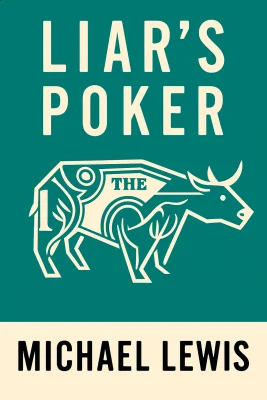
Categories
Business, Nonfiction, Finance, Biography, History, Economics, Memoir, Politics, Audiobook, Money
Content Type
Book
Binding
Paperback
Year
2010
Publisher
W. W. Norton & Company
Language
English
ASIN
039333869X
ISBN
039333869X
ISBN13
9780393338690
File Download
PDF | EPUB
Liar's Poker Plot Summary
Introduction
# Masters of Money: Wall Street's Most Dangerous Game Imagine walking into a room where fortunes worth more than entire countries' GDP are won and lost with a single phone call, where young graduates transform overnight from idealistic students into predators who can smell financial weakness from across an ocean. Picture yourself surrounded by people who speak in a coded language of numbers and fear, where your worth as a human being is reduced to a single figure printed on a year-end bonus statement, and where the line between genius and madness dissolves in the intoxicating pursuit of money that seems to materialize from thin air. This is the hidden world of high-stakes finance during one of its most explosive and transformative periods, when bond trading became the new gold rush and ordinary people wielded extraordinary power over global markets. Through the eyes of someone who lived inside this machine, you'll discover how financial markets really operate beneath their polished exterior, understand the psychological forces that drive both spectacular success and catastrophic failure, and learn how individual ambition can reshape entire industries while creating a culture so seductive and destructive that it eventually consumes itself. You'll gain insights into how power actually works in competitive environments, recognize the warning signs of toxic organizational cultures, and understand why the pursuit of wealth can both elevate and corrupt the human spirit in ways that will forever change how you view success, ambition, and the true cost of achieving your dreams.
Chapter 1: From Mailroom to Millions: The Ranieri Revolution
In 1968, a pudgy Italian-American kid from Brooklyn named Lewis Ranieri walked into Salomon Brothers wearing polyester suits and carrying his lunch in a brown paper bag. Starting in the mailroom at nineteen years old, nobody could have predicted that this back-office clerk would revolutionize American finance and create a trillion-dollar market that would fundamentally reshape how every American buys a home. Ranieri's journey from sorting mail to commanding one of Wall Street's most powerful trading desks reads like a fever dream of American capitalism, where raw talent and street smarts could still triumph over pedigree and connections. Ranieri's breakthrough came when he was assigned to the firm's sleepy utility bond department, a forgotten corner where securities backed by electric companies gathered dust. But Ranieri possessed something rare on Wall Street: the ability to see golden opportunity where others saw only mind-numbing tedium. When the government created Ginnie Mae, an agency that guaranteed home mortgages, Ranieri immediately recognized that these new mortgage-backed securities were fundamentally mispriced by the market. While other traders dismissed them as too complicated and unpredictable, Ranieri saw complexity as his competitive advantage. The transformation wasn't immediate or glamorous. Ranieri spent years crisscrossing America like a traveling evangelist, preaching what he called "the gospel according to Ranieri" to skeptical pension fund managers and insurance company executives. He would tell anyone who would listen that mortgages were "so cheap your teeth hurt," explaining with missionary zeal why they should abandon their comfortable corporate bonds for these strange new securities backed by American homeowners. His pitch was revolutionary in its simplicity: why settle for lower yields when you could get higher returns on securities backed by the full faith and credit of the U.S. government? By the mid-1980s, Ranieri's mortgage department was generating nearly half of Salomon Brothers' total revenues, transforming the former mailroom clerk into one of the most powerful men on Wall Street. His traders, known throughout the firm for their working-class roots and enormous appetites for both food and risk, were making hundreds of millions of dollars annually. Ranieri himself had become a populist champion who genuinely believed he was democratizing homeownership, looking down from airplanes at rows of suburban houses and seeing mortgages that would eventually flow through his trading desk. The lesson here cuts to the heart of how real wealth is created in any rapidly changing industry. Ranieri succeeded not by following conventional wisdom or chasing the most glamorous opportunities, but by diving deep into something others found boring or incomprehensible. While his Harvard MBA colleagues pursued prestigious merger deals, he mastered the unglamorous mathematics of prepayment speeds and yield curves. True opportunity often lies hidden in plain sight, disguised as complexity or tedium that others are too lazy, proud, or impatient to tackle. The key is recognizing that sustainable competitive advantages come from developing expertise in areas that others avoid, then having the persistence to evangelize your vision until the world catches up to your understanding.
Chapter 2: Blowing Up Customers: The Art of Financial Warfare
Nothing could have prepared a young trainee for the sickening realization that he had just cost a trusting customer sixty thousand dollars with a single, seemingly innocent phone call. The AT&T bond incident became a brutal rite of passage, a harsh introduction to the moral ambiguity that defined every relationship on Wall Street. It began with what appeared to be a golden opportunity: a senior corporate bond trader approached with an urgent tip, claiming that AT&T's thirty-year bonds were dramatically undervalued compared to Treasury securities. The pitch was seductive in its apparent simplicity: buy the AT&T bonds, short the Treasuries, and profit handsomely when the market inevitably corrected this obvious pricing error. Herman, a tall German banker with a thick accent and unshakeable confidence in American financial markets, became the unwitting victim of this elaborate scheme. He controlled twenty million dollars in trading authority and harbored dreams of making his mark in the sophisticated world of U.S. bond trading. When the trade was proposed during their regular morning call, Herman barely hesitated: "I haf nefer done dis ding before, but it sounds like a gut idea. Do tree million." Within hours, the transaction was executed, and Herman proudly owned three million dollars worth of AT&T bonds that the Salomon trader had been desperately trying to unload for months like toxic waste. The next morning brought the harsh reckoning that would haunt both parties for years to come. The AT&T bonds, far from being undervalued gems waiting to be discovered, were underwater positions that had been sitting on Salomon's books, slowly bleeding money with each passing day. When Herman called for his routine price update, his cheerful confidence evaporated into a primal scream of anguish that echoed across the Atlantic telephone connection. The bonds had dropped two full points overnight, instantly wiping out sixty thousand dollars of his bank's carefully managed capital. For weeks afterward, Herman would call each morning with increasingly bitter sarcasm: "Dis bond iss a really great idea, Michael. Haf you any more great ideas up your sleef?" The trader's justification was as cold as it was logically unassailable: "Who do you work for, this guy or Salomon Brothers?" This question crystallized the fundamental moral conflict that haunted every salesperson on Wall Street, forcing them to choose between serving their clients' interests and their firm's relentless demand for profits. Herman eventually lost his prestigious position when the mounting losses reached $140,000, becoming another casualty in the endless war between Wall Street's profit-generating machine and the outside world's naive trust in financial expertise. This story reveals an uncomfortable but crucial truth about how financial markets really operate beneath their polished veneer of professionalism and expertise. The game is often rigged in favor of the house, and information asymmetry serves as the house's most powerful weapon against unsuspecting customers. For anyone dealing with financial institutions, the lesson is both simple and essential: never assume that the person selling you something has your best interests at heart, no matter how charming, knowledgeable, or trustworthy they may appear. Their paycheck depends on moving products out the door, not on your long-term financial well-being, creating an inherent conflict of interest that no amount of regulation can fully eliminate.
Chapter 3: Information Is Power: How Data Becomes Dollars
Howie Rubin represented the new breed of Wall Street warrior: Harvard MBA, former Las Vegas card counter, and mathematical genius who could calculate complex probabilities while simultaneously eating a cheeseburger and fielding urgent calls from six different salesmen. In his first year out of Salomon's training program, Rubin generated twenty-five million dollars in profits by doing something that seemed almost magical: predicting with uncanny accuracy when American homeowners would prepay their mortgages. He had transformed the American homeowner into a laboratory rat, studying their behavioral patterns with scientific precision to exploit their most intimate financial decisions. Rubin's background as a professional blackjack card counter proved to be perfect preparation for the complex world of mortgage trading. In both arenas, success depended entirely on processing vast amounts of historical data to identify fleeting situations where the mathematical odds favored the player over the house. Just as he had memorized every card dealt at the blackjack table to know precisely when to make large bets, Rubin now analyzed mortgage prepayment patterns to identify bonds that were likely to be repaid early at full face value, even though they were trading in the market at significant discounts. The key to Rubin's extraordinary success was information asymmetry on a massive scale. While other investors could see only the bonds' current market prices and basic characteristics, Rubin understood the complex behavioral psychology of the homeowners whose monthly payments supported those securities. He knew that homeowners in certain geographic regions were statistically more likely to refinance their mortgages, that loans of particular dollar amounts exhibited different prepayment characteristics, and that the length of time a mortgage had been outstanding dramatically affected the probability of early repayment. This superior understanding allowed him to buy bonds at sixty cents on the dollar that he knew had a high probability of being repaid at one hundred cents on the dollar within a matter of months. The profits seemed almost risk-free and were certainly spectacular, but Rubin's success also illustrated the inherently temporary nature of information advantages in competitive markets. As his legendary profits became the talk of Salomon Brothers, competing firms began hiring away his colleagues and reverse-engineering his proprietary methods. The mortgage market gradually became more efficient as knowledge spread throughout the industry, reducing the opportunities for easy profits and forcing traders to develop increasingly sophisticated techniques to maintain their edge. The lesson for anyone seeking sustainable competitive advantage is both clear and sobering: information is only valuable as long as it remains exclusive to you and your organization. The most successful individuals and companies are those who can consistently identify new sources of superior information and exploit them aggressively before competitors inevitably catch up. This requires a commitment to constant learning, careful observation of patterns that others miss, and the wisdom to recognize when your current advantage is disappearing so you can begin developing the next one before it's too late.
Chapter 4: The Brotherhood Code: Loyalty in a Cutthroat World
The culture that Lewis Ranieri built within Salomon Brothers was founded on an unwritten covenant of mutual loyalty and protection that transcended the typical employer-employee relationship. This sacred bond was forged early in Ranieri's career when, as a nineteen-year-old mailroom clerk facing a devastating ten-thousand-dollar hospital bill for his wife's emergency treatment, he desperately approached a senior partner for help. Without hesitation, committee meetings, or bureaucratic procedures, the partner simply said the bill would be taken care of. Salomon Brothers paid the entire amount immediately, asking nothing in return except Ranieri's continued dedication to the firm and its mission. This extraordinary act of corporate generosity created a lifelong devotion that fundamentally shaped Ranieri's approach to leadership and team building. He constructed his mortgage department as an extended family, fiercely protecting his people from hostile political forces within the firm while ensuring their unwavering loyalty through both substantial financial rewards and genuine personal attention to their individual needs. When trader Bill Esposito needed nineteen thousand dollars to complete a crucial house purchase, Ranieri personally arranged for Salomon Brothers to provide the funds without question. When his traders were systematically underpaid relative to their enormous contributions to the firm's bottom line, Ranieri fought the compensation committee with the ferocity of a protective father defending his children. The covenant operated as a two-way street with clearly understood obligations on both sides. Ranieri's people were expected to put the department's collective interests above their own personal advancement opportunities, working longer hours than their counterparts, taking greater risks with their careers, and defending each other against criticism from other divisions within the firm. In return, they shared in unprecedented profits that made them wealthy beyond their wildest dreams and enjoyed the protection of one of Wall Street's most powerful and politically connected figures. The mortgage department became legendary throughout Salomon Brothers as a place where loyalty was rewarded handsomely and betrayal was simply unthinkable. However, this intensely personal, family-like culture ultimately proved incompatible with the increasingly corporate structure that emerged after Salomon Brothers went public in 1981. As the firm grew larger, more bureaucratic, and more focused on standardized policies rather than individual relationships, the personal bonds that had sustained Ranieri's mortgage department came into direct conflict with centralized control and political considerations. New management viewed Ranieri's independent power base as a dangerous threat to their authority and began systematically undermining his influence. The end came suddenly and brutally in July 1987, when Chairman John Gutfreund fired Ranieri without warning, claiming he had become "too big for Salomon Brothers" and posed a risk to the firm's stability. Within months, virtually every member of the original mortgage trading team had been dismissed or had quit in disgust, scattering their invaluable expertise across Wall Street as competitors eagerly hired away Salomon's most talented and experienced traders. The department that had generated hundreds of millions in profits and revolutionized American finance was systematically dismantled, its innovations and relationships destroyed by corporate politics and personal jealousy. This betrayal of the sacred covenant illustrates a fundamental tension in organizational management that extends far beyond Wall Street: the inevitable conflict between personal loyalty and institutional efficiency. While family-like cultures can generate extraordinary performance, innovation, and employee dedication, they can also become obstacles to necessary change when circumstances require new approaches, fresh leadership, or different strategic directions. The challenge for any leader is maintaining the motivational benefits of strong personal relationships while avoiding the insularity, resistance to change, and political complications that often accompany them.
Chapter 5: When Predators Circle: The Perelman Takeover Attack
September 24, 1987, began like any other routine day on the Salomon Brothers trading floor, with traders hunched in their characteristic positions, fingers plugged in their ears, whispering bond prices to institutional investors around the globe. But the comfortable routine shattered instantly when someone shouted "We're in play!" across the vast trading floor, sending shock waves through the heart of Wall Street's most powerful firm. News screens flashed the impossible and terrifying headline: Ronald Perelman, the diminutive but ruthless cosmetics mogul who had conquered Revlon with borrowed money and predatory tactics, was making a serious bid to acquire a controlling stake in Salomon Brothers itself. The delicious irony was lost on no one who understood Wall Street's complex web of relationships and long-standing feuds. Perelman's financial backing came directly from Drexel Burnham Lambert and Michael Milken, the junk bond king who had been locked in a bitter personal and professional war with Salomon's Chairman John Gutfreund ever since a breakfast meeting that ended with Milken being unceremoniously escorted from the building by security guards. Now Milken had discovered the perfect weapon for his revenge: a hostile takeover that would strip Gutfreund of everything he had spent decades building and hand control of Salomon Brothers to someone with no loyalty to its traditions or leadership. The phones immediately lit up like a Christmas tree as customers called from around the world to gawk at the unprecedented spectacle of big, bad Salomon Brothers finally meeting a force that was demonstrably bigger, badder, and more ruthless than itself. For years, Salomon had been the predator, using its superior capital and trading expertise to dominate smaller competitors and extract profits from less sophisticated clients. Now the firm found itself in the unfamiliar and deeply uncomfortable position of being the prey, with its own survival hanging in the balance of a financial chess match it had never expected to play. Gutfreund's response revealed both his strategic brilliance and his desperate capacity for self-preservation at any cost. Rather than fight Perelman directly through expensive legal battles or attempt to negotiate a face-saving deal, he orchestrated one of the most expensive rescue operations in Wall Street history. Warren Buffett, the legendary investor from Omaha who commanded universal respect for his integrity and financial acumen, agreed to lend Salomon $700 million in exchange for convertible preferred shares that essentially gave him a free nine-year option on the company's future performance. If Salomon recovered and prospered, Buffett could convert his bonds to common stock and participate in the upside. If Salomon failed or continued to struggle, he would simply collect his guaranteed 9 percent annual interest and walk away completely unharmed. The Buffett deal successfully saved Gutfreund's job and preserved Salomon's independence, but it came at an enormous cost to existing shareholders who were forced to subsidize this expensive insurance policy. A quick mathematical analysis revealed that Buffett's convertible preferred shares were worth at least 18 percent more than he actually paid for them, representing a $126 million gift from Salomon's shareholders to preserve the existing management structure and avoid the uncertainty of new ownership. Gutfreund attempted to justify this massive expense by claiming that Perelman's notorious reputation as a corporate raider would irreparably damage client relationships, but this argument rang hollow given that Salomon had maintained profitable business relationships with far more controversial figures, including South African mining companies during the height of apartheid. The Perelman episode brutally exposed fundamental weaknesses in Salomon's strategy and leadership that had been building for years beneath the surface of apparent success. While the firm's management had been consumed by internal power struggles and political maneuvering, they had systematically missed opportunities in the fastest-growing and most profitable segments of Wall Street, including junk bonds, merger advisory work, and international expansion. Competitors like Drexel had built dominant market positions while Salomon's leaders focused on protecting their individual territories from each other rather than protecting the firm from external threats that would ultimately prove far more dangerous than any internal rivalry.
Chapter 6: Black Monday: When Markets Collapse and Fortunes Vanish
October 19, 1987, began with hurricane winds both literally and figuratively battering the global financial system. In London, the first major hurricane in over a century had knocked out power lines, shattered office windows, and toppled ancient trees, forcing traders to navigate flooded streets and debris-filled roads just to reach their desks and discover what horrors awaited them in the markets. But the real storm was brewing in the financial markets themselves, where the Dow Jones Industrial Average was about to experience the largest single-day decline in its entire history, falling over 500 points and wiping out $500 billion in market value in a matter of hours that felt like an eternity to those watching their fortunes evaporate. From a privileged front-row seat next to Chairman John Gutfreund on Salomon's forty-first floor executive level, the crash unfolded like a surreal theater performance where tragedy and comedy merged into something unprecedented in financial history. The equity department, normally the most confident and aggressive group in the building, descended into complete chaos as traders began screaming "Jeeee-Sas Christ!" for no particular reason other than to express their helpless amazement at watching their beloved stock market die before their eyes. One exceptionally lucky trader who had shorted S&P futures over the weekend made $27 million as the market collapsed, but his euphoria was unique and almost obscene given the surrounding devastation. Meanwhile, the bond market was experiencing its own version of irrational exuberance as investors fled the carnage in stocks and sought refuge in the perceived safety of government securities. As stock prices plummeted minute by minute, terrified investors poured money into Treasury bonds, driving prices through the roof and generating massive windfall profits for bond traders who had been struggling with mediocre performance all year. The underlying logic was simple but powerful: lower stock prices meant less personal wealth, which meant reduced consumer spending, which meant slower economic growth, which meant lower interest rates, which meant higher bond prices and enormous profits for those positioned correctly. The crash exposed the absurdity of Salomon's recent strategic decisions with brutal and undeniable clarity. The firm had fired its entire money market department just the previous week, eliminating precisely the capability it needed most as panicked funds poured out of stocks and into short-term bank deposits and Treasury bills. The equity department, which had stubbornly refused to cut a single employee despite months of poor performance, was now facing a market that had essentially ceased to function in any rational manner. Most painfully, the firm's first major venture into junk bond underwriting, the Southland Corporation bonds that were supposed to demonstrate Salomon's new capabilities, collapsed along with everything else as investors dumped any security connected to corporate America. Gutfreund seemed almost energized by the surrounding chaos, rediscovering his legendary trading instincts as he sprinted across the floor making crucial strategic decisions and barking orders to department heads. At one particularly dramatic moment, he bought 300,000 shares of Salomon Brothers stock for his personal account, a move that initially seemed like insider trading until observers realized he was actually making a brilliant contrarian investment. Salomon's stock had fallen so precipitously that it was trading below the firm's liquidation value, making it an extraordinary bargain for anyone with the courage and capital to buy when others were selling in blind panic. The crash delivered a harsh but invaluable lesson about the fundamental illusion of control that pervades all financial markets, no matter how sophisticated the participants or advanced their risk management systems. Despite all of Salomon's mathematical models, strategic planning committees, and experienced leadership, the firm was ultimately at the complete mercy of forces far beyond its ability to predict, control, or even understand. Sometimes, no amount of skill, preparation, or strategic thinking can overcome the simple bad luck of being in the wrong place at the wrong time when history decides to remind everyone that markets can be far more irrational and destructive than anyone wants to believe.
Chapter 7: Learning to Leave: Why Success Isn't Just Money
The final realization arrived not with dramatic crisis or moral outrage, but with a quiet, almost melancholy recognition that the money game had somehow lost its meaning and transformative power. After two years of generating millions in revenue for Salomon Brothers and earning bonuses that exceeded most people's lifetime earnings, the golden handcuffs had mysteriously transformed into invisible chains that felt heavier with each passing day. The firm had just broken its traditional compensation bands to pay selected employees more than ever before in its history, a desperate attempt to purchase loyalty during the worst year in recent memory, but loyalty, it turned out, could not be bought with money alone. The annual bonus meeting followed the familiar ritual of corporate seduction that had been perfected over decades of practice. The sales manager shuffled through carefully prepared papers and delivered a masterfully crafted speech about exceptional performance in challenging circumstances, comparing the recipient favorably to legendary traders and even claiming he had outperformed the mythical Human Piranha himself in several key metrics. The psychological manipulation was both transparent and effective, designed to make the employee feel deeply grateful for the firm's extraordinary generosity while simultaneously committed to its future success and profitability. But something fundamental had shifted in the relationship between financial reward and personal satisfaction, something that no amount of money could repair or replace. The core belief that had driven an entire generation of Wall Street warriors, the assumption that the amount of money one earns serves as a rough but reliable guide to one's contribution to society and personal worth, had crumbled under the weight of too much contradictory evidence. How could someone honestly claim to contribute $225,000 worth of genuine value to society by moving abstract numbers around on computer screens? How could the same skills and knowledge that made some customers wealthy also make others poor, depending entirely on which side of any particular trade they happened to find themselves? The decision to leave came not from disillusionment with Wall Street's moral compromises or anger at its treatment of customers, but from a simpler and more profound recognition: the adventure was over, and each day had become nothing more than showing up to repeat what had already been accomplished countless times before. The money remained excellent, the future prospects even more promising, but the intellectual and emotional challenge that had once made the work exciting had completely evaporated. It was like being trapped in a video game where you had already achieved the highest possible score but couldn't find the switch to turn off the machine and move on to something new. Alexander, the master trader who had served as mentor and guide through the complexities of bond trading, offered the most compelling philosophical argument for making the unexpected choice to leave: the best decisions in life are often the most unpredictable ones, the choices that cut directly against conventional wisdom and comfortable assumptions about career advancement. Every major decision he had forced himself to make precisely because it seemed unexpected and counterintuitive had ultimately turned out to be beneficial in ways he could never have anticipated. It was a powerful case for embracing unpredictability in an age of careful career planning and risk management, a reminder that sometimes the biggest risk is playing it safe and following the path that everyone else considers obviously correct. The deeper lesson transcends Wall Street and speaks directly to anyone who has achieved significant success in a field that no longer challenges, fulfills, or inspires them to grow. Money is undoubtedly a powerful motivator and provides genuine security and freedom, but it can also become a sophisticated trap that keeps talented people locked in situations long after they have outgrown them intellectually and emotionally. True freedom comes from recognizing when you no longer need what once seemed absolutely essential, and having the courage to walk away from financial security and social status in search of something more meaningful and personally satisfying, even when you cannot yet clearly define what that something might be or guarantee that you will find it.
Summary
The ultimate truth about Wall Street's golden age is that extraordinary success often contains the seeds of its own destruction, and the very advantages that create dominance inevitably attract the competition and attention that will eventually erode them. First, recognize that all competitive advantages are temporary, so exploit them aggressively while they last and constantly search for the next opportunity before your current edge disappears. Second, never trust anyone whose paycheck depends on your making a particular financial decision, and always ask who truly benefits when someone offers you a "great opportunity" that seems too good to be true. Finally, define success for yourself before others define it for you, because the metrics that drive organizations are rarely the same ones that create genuine personal fulfillment. The moment you realize you no longer need what once seemed essential is the moment you become truly free to choose your own path forward, regardless of what others consider the obviously safe or profitable choice.
Best Quote
“Those who know don't tell and those who tell don't know.” ― Michael Lewis, Liar's Poker: Rising Through the Wreckage on Wall Street
Review Summary
Strengths: The review highlights Michael Lewis's engaging writing style and his deep understanding of the subject matter, making the book an entertaining and non-dry read. The book is recommended for its eye-opening insights into the behavior of Wall Street brokers and its relevance to ongoing financial market issues. Weaknesses: The reviewer notes that while "Liar's Poker" is Lewis's most famous work, it lacks the intrigue of his other books, possibly due to its autobiographical nature rather than exploring a mystery or sociological study. Overall: The review conveys a generally positive sentiment, recommending the book for its entertaining portrayal of Wall Street's excesses, though it may not be as captivating as Lewis's other works.
About Author

Michael Lewis
Lewis interrogates the complexities of finance, economics, and human behavior with a distinctive narrative style that combines investigative journalism and storytelling. His early experiences on Wall Street during the 1980s provided the backdrop for his debut book, "Liar's Poker", which revealed the excesses of investment banking. Lewis’s exploration of finance extends to his work "The Big Short", where he demystifies the 2008 financial crisis by focusing on the individuals who foresaw the collapse. These themes of risk, systemic flaws, and human ingenuity are recurrent across his works, offering readers insights into the intersection of economics and psychology.\n\nWhile Lewis is renowned for examining financial systems, his writing transcends traditional economic narratives by emphasizing human stories within complex systems. "Moneyball" shifts the focus to sports, illustrating how data analytics revolutionized baseball. Meanwhile, "The Blind Side" goes beyond a sports biography to explore themes of social mobility and opportunity. Lewis's method of connecting abstract concepts with compelling stories ensures his books are accessible to a broad audience, bridging gaps between technical jargon and everyday understanding. His bio reflects a commitment to elucidating intricate subjects with clarity and wit, making his works valuable for readers seeking both entertainment and enlightenment.\n\nThe author has earned critical acclaim, with multiple titles reaching the New York Times Best Seller List and adaptations into major motion pictures. His work is recognized not only for its storytelling prowess but also for its impact on popular culture and the public's understanding of economic phenomena. Lewis’s contributions continue to illuminate the forces shaping modern finance and society, providing a nuanced lens through which readers can view the world.
Read moreDownload PDF & EPUB
To save this Black List summary for later, download the free PDF and EPUB. You can print it out, or read offline at your convenience.
Liar's Poker
by Michael Lewis
