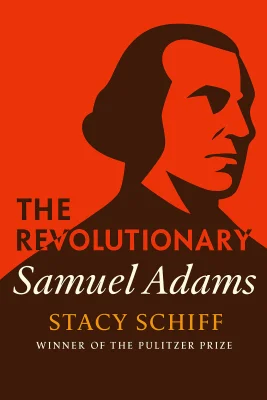
The Revolutionary
Samuel Adams
Categories
Nonfiction, Biography, History, Politics, Audiobook, Biography Memoir, Book Club, Historical, American History, American Revolution
Content Type
Book
Binding
Hardcover
Year
2022
Publisher
Little, Brown and Company
Language
English
ASIN
0316441112
ISBN
0316441112
ISBN13
9780316441117
File Download
PDF | EPUB
The Revolutionary Plot Summary
Introduction
In the winter of 1773, as British tea ships sat anchored in Boston Harbor, a transformation was underway that would forever alter the course of history. While most colonists still considered themselves loyal British subjects, one man had spent nearly a decade methodically building the foundation for what would become the American Revolution. Samuel Adams—failed businessman, masterful propagandist, and political genius—stood at the center of this brewing storm, orchestrating resistance through an intricate network of committees, newspapers, and public demonstrations that would ultimately birth a nation. The story of America's path to independence is often told through battles and declarations, but the true revolution began years earlier in the minds of ordinary colonists who gradually came to see themselves not as British subjects but as Americans deserving of self-governance. This remarkable transformation of political consciousness didn't happen spontaneously—it was carefully engineered by Adams and his allies through years of patient organizing, strategic propaganda, and escalating acts of resistance. By examining how this unlikely revolutionary turned tax disputes into a movement for independence, we gain profound insights into how political change actually happens, how public opinion is shaped, and how ordinary citizens can be mobilized to challenge established power. For anyone seeking to understand the true mechanics of revolution or the deeper origins of American democracy, this journey through Adams's revolutionary playbook offers lessons that remain startlingly relevant today.
Chapter 1: The Making of a Revolutionary: Adams's Early Years (1722-1764)
Samuel Adams entered the world in 1722 in Boston, Massachusetts, born into a family of moderate prosperity and strong Puritan values. His father, a successful maltster who provided ingredients for Boston's breweries, ensured young Samuel received the finest education available in colonial America. After attending Boston Latin School, Adams entered Harvard College at age fourteen, where he absorbed both classical learning and Enlightenment political philosophy. This education would later provide the intellectual foundation for his revolutionary ideas, particularly his understanding of ancient republics and theories of natural rights. Despite his privileged education, Adams's early adult life was marked by a series of failures that would have relegated most men to obscurity. His attempt to follow his father into the malting business ended in financial disaster. He briefly studied law but never practiced. When his father loaned him £1,000 to start a business venture, he quickly lost the entire sum. By his thirties, Adams appeared destined to become nothing more than a footnote in Boston's commercial history—a Harvard-educated man who couldn't seem to find his place in the world. Yet these apparent failures were shaping a revolutionary leader in unexpected ways. A pivotal moment in Adams's development came in 1748 when the British Parliament effectively destroyed his father's Land Bank, a financial institution created to provide paper currency to Massachusetts farmers and merchants. The bank's dissolution financially ruined the Adams family and instilled in Samuel a deep resentment toward arbitrary British authority. This personal catastrophe transformed abstract political principles into deeply felt grievances. As he later wrote to a friend, "I have long since learned that a man may have the most honest heart, while his conduct, from a too sudden passion, may be reprehensible." By 1756, the struggling Adams had secured a position as Boston's tax collector—an ironic role for a future revolutionary. His performance was notably poor; he often failed to collect from struggling neighbors, accumulating significant personal debt to the town treasury. Yet this seeming failure revealed a crucial aspect of Adams's character: his genuine sympathy for ordinary people's economic struggles and his willingness to place principle above personal gain. These qualities would later make him an effective champion of the common man against distant British authority. The turning point in Adams's life came with the conclusion of the French and Indian War in 1763. Britain, saddled with enormous war debt, looked to its American colonies as a source of revenue. The Sugar Act of 1764 and subsequent legislation awakened Adams's political consciousness and gave him a cause worthy of his talents. At forty-two years old—an age when most men of his era were well-established in their careers—Adams finally found his true calling as a political organizer and agitator. His years of apparent failure had prepared him perfectly for this role, giving him both intimate knowledge of ordinary Bostonians' struggles and a profound personal grievance against British authority. These formative experiences shaped Adams's revolutionary worldview in crucial ways. His financial failures fostered an indifference to material wealth that made him incorruptible. His family's ruin at the hands of Parliament taught him that distant government could destroy colonial livelihoods with the stroke of a pen. His years as a tax collector showed him how economic policies affected real people. By 1764, as imperial tensions began to rise, these experiences had created in Adams a unique combination of intellectual sophistication, personal grievance, and common touch that would make him the perfect architect of revolution.
Chapter 2: Organizing Resistance: From Stamp Act to Boston Massacre (1765-1770)
The passage of the Stamp Act in March 1765 marked the beginning of organized colonial resistance, with Samuel Adams emerging as its most effective strategist. The Act required colonists to purchase special stamped paper for legal documents, newspapers, and other printed materials—a direct tax on internal colonial activities rather than just external trade. Adams immediately recognized this as a constitutional violation, arguing that taxation without representation reduced free subjects to "the miserable state of tributary slaves." Through his position on Boston's Board of Selectmen and his writings in the Boston Gazette, Adams transformed a tax dispute into a fundamental question about liberty and self-governance. Adams's genius lay not in original political philosophy but in his ability to translate abstract principles into terms ordinary colonists could understand and feel emotionally. When stamp distributor Andrew Oliver arrived in Boston, Adams helped organize a demonstration where an effigy of Oliver was hung from the "Liberty Tree" before being ceremonially beheaded and burned. Though Adams maintained plausible deniability about the violence that followed, he skillfully managed its aftermath, condemning excesses while defending the underlying cause. This pattern—orchestrating resistance while maintaining a veneer of respectability—would become his trademark approach. The creation of the Sons of Liberty in 1765 demonstrated Adams's organizational talents. This network of artisans, merchants, and laborers coordinated resistance across social classes and eventually across colonial boundaries. Adams understood that successful resistance required unity, writing that "when the people are united, no force can overcome them." He orchestrated boycotts of British goods, arranged public ceremonies that reinforced patriotic sentiment, and established communication channels with like-minded patriots in other colonies. These networks would prove crucial for coordinated resistance in the years ahead. When Parliament repealed the Stamp Act in 1766 but passed the Declaratory Act asserting its right to legislate for the colonies "in all cases whatsoever," Adams refused to join the general celebration. He warned that Parliament had merely "buried one Act and laid the foundation for another." His skepticism proved justified when the Townshend Acts of 1767 imposed new duties on glass, paint, paper, and tea. Adams responded by drafting the Massachusetts Circular Letter, which articulated constitutional objections to taxation without representation and invited other colonies to join in peaceful resistance. When British authorities demanded the letter be rescinded, the Massachusetts House refused by a vote of 92 to 17—a defiant stand Adams had orchestrated. The arrival of British troops in Boston in October 1768 provided Adams with his most powerful propaganda opportunity yet. He portrayed the soldiers as an occupying force sent to intimidate colonists into submission, publishing accounts of military misconduct in the "Journal of Occurrences." On March 5, 1770, tensions exploded when British soldiers fired into a crowd, killing five colonists in what Adams immediately labeled the "Boston Massacre." He commissioned Paul Revere to create an engraving depicting the event as a deliberate slaughter—an image that circulated throughout the colonies, cementing the perception of British brutality. The period from 1765 to 1770 revealed Adams's remarkable political instincts. He understood when to push forward and when to step back, allowing tensions to subside temporarily while preserving the networks and arguments that would fuel future resistance. He recognized that abstract principles needed emotional symbols—like the Liberty Tree or the Boston Massacre victims—to mobilize ordinary people. Most importantly, he began to see that colonial grievances transcended specific policies and pointed toward more fundamental questions about governance and sovereignty. By 1770, Adams had transformed isolated complaints about taxation into a coherent narrative of liberty threatened by tyranny—a narrative that would eventually justify revolution.
Chapter 3: Networks of Rebellion: Committees of Correspondence (1770-1773)
The partial repeal of the Townshend duties in April 1770 (maintaining only the tax on tea) created a lull in colonial resistance. Many merchants abandoned non-importation agreements, and revolutionary fervor temporarily subsided. During this relatively quiet period, Samuel Adams faced political isolation as former allies like John Hancock briefly distanced themselves from his radical positions. Governor Thomas Hutchinson, who had replaced Bernard, believed he had finally marginalized the troublesome agitator. Yet Adams proved remarkably resilient, using this period to develop what would become his most significant contribution to revolutionary infrastructure—the Committees of Correspondence. In November 1772, responding to a seemingly minor controversy about judges' salaries being paid directly by the Crown rather than colonial legislatures, Adams proposed that Boston establish a committee to state the rights of colonists, enumerate violations of those rights, and communicate with other towns. Twenty-one men were appointed to this committee, with Adams as its driving force. The committee promptly produced "The Votes and Proceedings," which articulated colonial rights and grievances in clear, persuasive language. This document was sent to every town in Massachusetts, inviting them to form their own committees and respond. The response was overwhelming. Within months, more than half of Massachusetts towns had established their own committees and endorsed Boston's positions. Adams had created what historian Pauline Maier called a "shadow government"—a network of communication and organization that operated independently of royal authority. As he explained to a friend, the committees would ensure that "an awakened continent may sympathize with us, as well as the whole body of this people with any particular part which may be called to suffer." This system would prove crucial when new crises emerged. The committee system soon expanded beyond Massachusetts. In March 1773, the Virginia House of Burgesses, led by Thomas Jefferson and Patrick Henry, established an intercolonial Committee of Correspondence. Other colonies quickly followed suit. By the end of 1773, a continental network existed that could rapidly share information and coordinate resistance across colonial boundaries. This infrastructure represented Adams's genius for organization—he had created a revolutionary communication system that could function even when traditional political institutions were suppressed by royal governors. During this period, Adams maintained revolutionary sentiment through annual commemorations of the Boston Massacre. Each March 5, he arranged for a prominent speaker to deliver an oration recounting British tyranny and celebrating American liberty. These ceremonies served multiple purposes: they kept grievances fresh in public memory, they provided opportunities to articulate revolutionary principles, and they created a sense of shared identity among colonists. Adams understood that revolutions require not just grievances but also rituals and symbols that foster collective consciousness. By 1773, Adams had created the organizational infrastructure necessary for coordinated resistance. The Committees of Correspondence represented a remarkable innovation—a decentralized network that could mobilize public opinion, share information, and maintain vigilance even in periods of apparent calm. When Parliament passed the Tea Act in May 1773, this network would enable a swift, coordinated response that would push the colonies closer to independence. Adams had demonstrated that effective resistance required not just passionate rhetoric but also patient organization—a lesson that would influence revolutionary movements for centuries to come.
Chapter 4: The Point of No Return: Tea, Coercion, and Continental Unity (1773-1774)
The Tea Act of May 1773 represented a pivotal moment in colonial relations with Britain. Though the act actually lowered the price of tea by eliminating middlemen, Samuel Adams immediately recognized a more insidious threat—by making tea more affordable while maintaining the Townshend duty, Parliament hoped to trick colonists into accepting the principle of taxation without representation. Through his Committees of Correspondence, Adams framed the issue not as one of price but of principle, writing that accepting the tea would be "a direct stroke at the liberties of America" and would "render all our former struggles ridiculous." When tea ships arrived in Boston harbor in November 1773, Adams orchestrated a series of town meetings that demanded the vessels return to England without unloading their cargo. Governor Hutchinson, whose own sons were among the designated tea consignees, refused to allow the ships to depart without paying duties. This created a standoff as the twenty-day deadline approached, after which customs officials could seize the tea. On December 16, 1773, after a massive town meeting at the Old South Meeting House, a group of men disguised as Mohawk Indians boarded the ships and destroyed 342 chests of tea worth approximately £10,000. The Boston Tea Party, as it would later be called, demonstrated Adams's tactical brilliance. Though he likely planned the destruction, he carefully avoided direct participation, maintaining plausible deniability. The event was precisely calibrated—no property besides the tea was damaged, no participants were identified, and no violence was directed at individuals. Adams described this destruction of private property as necessary to protect liberty, portraying it as a last resort after all legal remedies had been exhausted. In private correspondence, he celebrated the action, writing that it "must have important consequences." The British response was swift and severe. Parliament passed the Coercive Acts (called the Intolerable Acts by colonists) in 1774, closing Boston Harbor, revoking Massachusetts' charter, placing the colony under military rule, and requiring colonists to quarter troops. Rather than isolating Massachusetts as intended, these punitive measures united the colonies in sympathy. Adams's Committees of Correspondence ensured that news of Boston's plight spread rapidly throughout America, generating donations of food and supplies from as far away as South Carolina. As Adams had predicted years earlier, an "awakened continent" now sympathized with Massachusetts. The First Continental Congress, which convened in Philadelphia in September 1774, represented the culmination of Adams's decade-long effort to build colonial unity. Though he maintained a low profile during the proceedings, his influence was evident in the Congress's endorsement of the Suffolk Resolves, which declared the Coercive Acts unconstitutional and recommended military preparations. Adams worked behind the scenes to forge alliances between New England and Virginia delegates, creating the coalition that would eventually support independence. The Congress established the Continental Association, a coordinated boycott of British goods, and scheduled a Second Continental Congress for May 1775 if grievances remained unresolved. By early 1775, Massachusetts was effectively under military occupation, with General Thomas Gage serving as governor. Adams, now marked for arrest as a traitor, continued organizing resistance through the Provincial Congress—an extralegal body that functioned as a shadow government. When British troops marched to Lexington and Concord on April 19, 1775, seeking to arrest Adams and John Hancock and to seize colonial munitions, the ensuing battles marked the beginning of armed conflict. Adams, who narrowly escaped capture, reportedly declared it "a glorious day"—recognizing that armed resistance had finally made reconciliation impossible. The point of no return had been reached, and the revolution Adams had spent years preparing for had finally begun.
Chapter 5: From Resistance to Independence: Adams's Final Victory (1775-1776)
The battles of Lexington and Concord transformed colonial resistance into outright rebellion. Samuel Adams, having narrowly escaped British arrest, made his way to the Second Continental Congress in Philadelphia, where he arrived in May 1775 to a hero's welcome. Though the majority of delegates still hoped for reconciliation with Britain, Adams worked tirelessly behind the scenes to build support for independence, believing that the time for half-measures had passed. As he wrote to a colleague, "Is not America already independent? Why then not declare it?" Adams's approach in Congress revealed his political maturity. Rather than pushing openly for independence—which would have alienated moderate delegates—he allowed Virginians like Richard Henry Lee and Thomas Jefferson to take the lead publicly while he maneuvered in private conversations. He recognized that independence would be more palatable coming from the southern colonies than from already-radical Massachusetts. This strategic restraint represented a significant evolution for a man previously known for his fiery rhetoric, demonstrating his understanding that achieving independence required building a broad coalition. The deteriorating military situation gradually shifted congressional opinion toward Adams's position. The British reinforcement of Boston, the Battle of Bunker Hill in June 1775, and King George III's October proclamation declaring the colonies in rebellion all undermined hopes for reconciliation. Adams supported the formation of the Continental Army under George Washington's command, recognizing that military resistance required centralized leadership—despite his general suspicion of concentrated power. He also worked to secure foreign assistance, understanding that American independence would require international recognition and support. By early 1776, Thomas Paine's "Common Sense" had electrified public opinion with its direct attack on monarchy and hereditary rule. Adams, who had reviewed the pamphlet before publication, recognized its transformative impact and wrote supporting pieces in Philadelphia newspapers. The pamphlet's popularity indicated that the public was finally catching up to the position Adams had held for years—that independence was not just necessary but inevitable. As he wrote to a friend, "The eyes of the people have been opened, and they see the chains which are forged for them." On June 7, 1776, Richard Henry Lee introduced a resolution declaring the colonies "free and independent states," setting in motion the process that would culminate in the Declaration of Independence. Adams served on the committee for confederation while his cousin John joined Jefferson on the committee drafting the declaration. The document's emphasis on natural rights, the social contract, and the right of revolution reflected principles Samuel Adams had been articulating for over a decade in his newspaper essays. When independence was finally declared on July 4, 1776, it represented the culmination of Adams's life's work. The man who had begun organizing resistance to British policies in the early 1760s had lived to see his vision of American independence realized. Though others would receive more credit for the declaration itself, Adams had created the political conditions that made it possible through years of patient organizing, persuasive writing, and strategic thinking. As he wrote to a friend that summer, the colonies had achieved "the most important revolution that ever took place in the world"—a revolution he had done more than perhaps any other individual to bring about. The failed businessman and tax collector had transformed himself into the architect of American independence, forever changing the course of world history.
Chapter 6: Legacy of Liberty: Adams's Revolutionary Playbook and Modern Influence
The declaration of independence marked both the pinnacle of Samuel Adams's influence and the beginning of his gradual fade from national prominence. While he continued to serve in the Continental Congress until 1781, his skills as a revolutionary agitator proved less suited to the challenges of nation-building. The man who had excelled at tearing down British authority struggled with the complexities of constructing a new government. As John Adams observed, his cousin was "born and tempered a wedge of steel to split the knot of lignum vitae that tied America to England," but this singular purpose had been fulfilled. Adams maintained his principled stance on issues of republican virtue throughout the war years and beyond. He opposed generous peace terms for Loyalists, believing those who had sided with Britain should not easily reclaim American citizenship. He resisted efforts to provide lifetime pensions for Continental Army officers, seeing them as creating a privileged military class. When Shays' Rebellion erupted in 1786, Adams surprised many by supporting its suppression, drawing a sharp distinction between rebellion against an unrepresentative foreign government and rebellion against a democratically elected one. This apparent contradiction reflected his fundamental belief in the rule of law within a properly constituted republic. Adams initially opposed the Constitution of 1787, concerned about its centralization of power and lack of explicit protections for individual rights. "I stumble at the threshold," he wrote, "I meet with a national government, instead of a federal union of sovereign states." However, after securing promises of amendments (which would become the Bill of Rights), he supported ratification in the Massachusetts convention—a crucial endorsement that helped secure the document's approval. His later years as lieutenant governor (1789-1793) and then governor (1794-1797) of Massachusetts were marked by increasing political conservatism as he sought to preserve traditional New England values against emerging democratic forces. By the time Adams retired from public life in 1797, he had become something of a relic—respected for his revolutionary service but increasingly out of step with the nation he had helped create. He watched with dismay as commercial interests gained prominence and republican simplicity gave way to growing luxury. Yet he never wavered in his belief that education and civic virtue were essential to maintaining liberty. "If virtue and knowledge are diffused among the people," he wrote, "they will never be enslaved." When he died on October 2, 1803, local newspapers celebrated him as the "Father of the American Revolution," but his national reputation quickly faded as more prominent founders captured the historical imagination. Adams's revolutionary playbook, however, has had a lasting impact far beyond his personal fame. His techniques of organizing resistance—committees, boycotts, propaganda, public demonstrations—established patterns that would be followed by generations of American activists. His understanding that political change requires both principled idealism and practical organization has influenced movements from abolitionism to civil rights. His recognition that revolutions begin not with battles but with transformations in how people think about themselves and their rights remains a profound insight into political change. In our own era of political polarization and democratic fragility, Adams offers important lessons about civic engagement, the power of persistent activism, and the responsibility of citizens to remain vigilant against the abuse of power. As he understood, liberty is never permanently secured but must be constantly defended by an engaged citizenry. "The liberties of our country, the freedom of our civil constitution," he wrote, "are worth defending against all hazards: And it is our duty to defend them against all attacks." This call to democratic vigilance may be Samuel Adams's most enduring legacy—a reminder that the price of liberty is indeed eternal vigilance.
Summary
Samuel Adams emerges from this narrative as the indispensable architect of American independence, a revolutionary genius whose political skills transformed colonial grievances into a movement for liberty. Unlike more celebrated founders who drafted declarations or led armies, Adams worked primarily behind the scenes, creating the organizational infrastructure and public sentiment that made revolution possible. His genius lay in understanding that political change requires both ideas and organization—both stirring principles and practical methods for mobilizing ordinary people. Through the Committees of Correspondence, the Boston Tea Party, and countless newspaper essays, Adams demonstrated how a determined minority could gradually transform public opinion and create the conditions for revolutionary change. The story of Adams holds profound lessons for our own turbulent times. First, it reminds us that democracy requires active citizen participation rather than passive acceptance of authority—that the people themselves must remain vigilant defenders of their rights. Second, it demonstrates that political change rarely happens spontaneously but requires patient organizing, strategic thinking, and the building of coalitions across different groups. Finally, Adams's life reveals that revolutions begin not with battles but with transformations in how people understand themselves and their relationship to power. At a moment when democratic institutions face challenges worldwide, Adams's revolutionary playbook offers a timeless reminder that liberty must be constantly defended and that ordinary citizens, working together with determination and strategic vision, can indeed change the course of history. The man once feared by British authorities as America's most dangerous revolutionary still has much to teach us about the ongoing struggle to preserve and extend the promise of self-governance.
Best Quote
“To have a villainous ruler imposed on you was a misfortune. To elect him yourself was a disgrace.” ― Stacy Schiff, The Revolutionary: Samuel Adams
Review Summary
Strengths: Schiff's portrayal of Samuel Adams is both engaging and meticulously researched, offering a fresh perspective on a pivotal historical figure. Her narrative style is accessible and dynamic, making complex historical content come alive. The book's exploration of themes like persuasion and propaganda, alongside Adams's strategic mind, provides profound insights into his role in the American Revolution. The detailed research and vivid depiction of the historical context are particularly noteworthy. Weaknesses: Occasionally, the dense historical detail can slow the narrative pace. Some readers feel that the focus on Adams sometimes sidelines other figures and broader events, which might limit its appeal for those seeking a comprehensive overview of the American Revolution. Overall Sentiment: The book receives widespread acclaim for its engaging and informative portrayal of Samuel Adams, with many readers captivated by its fresh perspective on the revolutionary era. Key Takeaway: "The Revolutionary" highlights Samuel Adams's crucial contributions and offers a nuanced portrait of his role as a revolutionary leader, emphasizing his influence on the formation of the United States.
About Author

Stacy Schiff
Schiff illuminates the complex lives of historical figures, employing a narrative style that blends rigorous research with engaging storytelling. Her biographies, such as "Véra (Mrs. Vladimir Nabokov)" and "The Revolutionary: Samuel Adams," demonstrate her commitment to exploring the intricacies of influential personalities. Whereas "Véra" uncovers the deep partnership between Véra and Vladimir Nabokov, earning Schiff a Pulitzer Prize, "The Revolutionary" offers new perspectives on Samuel Adams's role in the American Revolution. Through these works, Schiff situates her readers at pivotal moments in history, enhancing their understanding of cultural and political dynamics.\n\nIn her bio of Benjamin Franklin, titled "A Great Improvisation: Franklin, France, and the Birth of America," Schiff highlights Franklin's diplomatic efforts, an approach that garnered the George Washington Book Prize. Schiff’s focus on themes such as power and identity allows readers to appreciate the resilience and influence of her subjects. By merging historical facts with narrative elegance, her books attract both scholars and general readers who seek to understand the nuanced lives of historical figures.\n\nThe author’s work is recognized not only for its depth but also for its impact on biographical literature. Her ability to weave scholarly precision with compelling prose has earned her fellowships from the Guggenheim Foundation and the National Endowment for the Humanities. Therefore, readers who engage with Schiff's biographies gain a richer appreciation of the human dimensions behind historical events, benefitting from her incisive analysis and vivid storytelling.
Read moreDownload PDF & EPUB
To save this Black List summary for later, download the free PDF and EPUB. You can print it out, or read offline at your convenience.
The Revolutionary
by Stacy Schiff
