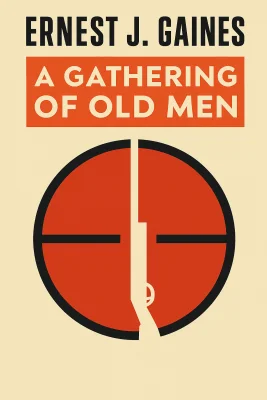
A Gathering of Old Men
Categories
Fiction, Classics, Historical Fiction, Literature, School, African American, Novels, Race, Literary Fiction, Southern
Content Type
Book
Binding
Paperback
Year
1992
Publisher
Vintage
Language
English
ASIN
0679738908
ISBN
0679738908
ISBN13
9780679738909
File Download
PDF | EPUB
A Gathering of Old Men Plot Summary
Introduction
The Louisiana sun hung heavy over Marshall Quarters that October afternoon when Charlie Biggs finally ran out of places to hide. For fifty years, the massive black man had bent his back to every insult, swallowed every curse, and turned the other cheek to every blow. But when Beau Boutan raised that shotgun in old Mathu's yard, something ancient and terrible stirred in the dying community of sharecroppers' shacks and overgrown gardens. What began as one man's desperate stand against a lifetime of humiliation would become something far more dangerous. Before the sun set on that blood-soaked day, eighteen elderly black men would gather with loaded shotguns, each claiming responsibility for killing the white landowner's son. They had lived their entire lives in fear, watching their world disappear one demolished house at a time. Now, with their backs against the wall and nothing left to lose, they would finally make their stand. But Sheriff Mapes knew what they didn't—that Fix Boutan and his vigilante crew were already loading their trucks, and the old ways of Louisiana justice were about to collide with something the parish had never seen before.
Chapter 1: The Shot That Shattered Silence: A Death at Marshall Quarters
The confrontation started in the cane fields where Charlie Biggs had spent decades loading trailers under the merciless sun. Beau Boutan, heir to generations of Cajun landowners, sat on his tractor hurling the familiar stream of curses. But this time, when the fifty-year-old field hand dared to speak back, something shifted in the oppressive heat. The white man climbed down with a stalk of sugar cane, swinging it like a weapon, confident in the natural order that had governed this corner of Louisiana for over a century. Charlie grabbed his own stalk and fought back. The crack of cane against skull echoed across the empty field as Beau went down, blood streaming from his head. For a terrifying moment, Charlie thought he had killed him. He ran through the rows toward the quarters, toward the only sanctuary he had ever known—old Mathu's house. Mathu stood on his sagging porch, eighty-two years old and straight as a fence post, his weathered hands steady on the double-barrel shotgun he kept by his door. He was the last of his kind in Marshall Quarters, the only black man who had never bowed his head to the Boutan family. When Charlie stumbled into his yard, babbling about running north, Mathu's voice cut through the panic like a blade. "You run from Beau Boutan, I'll beat you myself. I'm an old man, but I'm more man than you." The sound of the tractor engine grew louder as Beau came hunting through the quarters, his own shotgun loaded and ready. He jumped the ditch into Mathu's yard with murder in his eyes, certain that the black man cowering behind the old house would never dare raise a weapon against him. Charlie took Mathu's gun with trembling hands, warned Beau to stop, but the Cajun kept coming with that familiar grin of absolute certainty. When Beau raised his shotgun toward the porch, Charlie finally pulled the trigger. The blast echoed through the empty quarters like a cannon shot, and Beau Boutan crumpled into the weeds, his reign of terror ended by a man who had never fought back in his life.
Chapter 2: The Gathering Storm: Old Men with Shotguns
News of the killing spread through the back roads and forgotten bayous with supernatural speed. Within hours, they began arriving at Marshall Quarters—men so old the parish had almost forgotten they existed. They came carrying shotguns that hadn't been fired in decades, their faces set with the grim determination of soldiers reporting for their final battle. Clatoo arrived first in his garden truck, followed by Mat Brown and Chimley Banks, fishing poles still in their hands from the river. They were joined by Yank Battley, the ancient horse-breaker whose trade had vanished with the tractors, and Johnny Paul, whose weathered eyes still searched the empty quarters for houses that no longer stood. One by one, they filed into Mathu's yard, each man claiming responsibility for Beau's death. Young Snookum, barely ten years old, had spread the word at Candy Marshall's command. She stood in the yard like a general marshaling her troops, her short-cropped hair and khaki clothes giving her the appearance of a field commander. These men had worked her family's land for generations, and she would not let them face Fix Boutan's vengeance alone. But as the old men gathered with their antique weapons, loading shells they had saved since World War II, even Candy began to understand the magnitude of what she had set in motion. The Reverend Jameson pleaded with them to disperse, his bald head gleaming with nervous sweat as he begged them to remember their families, their souls, their mortality. But the old men paid him no mind. They had spent their entire lives being careful, being smart, being afraid. Today, with their backs pressed against the cemetery where their ancestors lay buried, they had finally decided to stand and fight. As the afternoon shadows lengthened across the blood-stained grass where Beau's body had fallen, they waited for the storm they knew was coming.
Chapter 3: Confronting Authority: Sheriff Mapes and the Wall of Solidarity
Sheriff Mapes arrived with the weariness of a man who had seen too much in his decades of keeping the peace in St. Raphael Parish. He was a mountain of a man, his ash-gray eyes taking in the unprecedented sight of eighteen black men with shotguns standing guard over a white man's corpse. His young deputy Griffin clutched his pistol with trembling hands, but Mapes knew immediately that traditional methods would not work here. One by one, he called the old men forward for questioning, and one by one, they confessed to the killing. Uncle Billy Washington, so elderly he could barely hold his gun steady, claimed the shot was his. When Mapes struck him across the face for lying, the sound cracked through the yard like a whip, but Billy only grinned with blood on his lips and repeated his confession. Gable Rauand, dignified in his brown sports coat despite the circumstances, took his beating without flinching and dared Mapes to strike the other cheek. As Mapes worked his way through the line of suspects, their stories poured out like water through a broken dam. Johnny Paul spoke of the vanished world of his childhood, when the quarters buzzed with life and families tended gardens full of four-o'clocks and palm-of-Christians. Tucker Tomas wept as he confessed to watching his brother Silas beaten to death for the crime of outworking a white man's tractor with nothing but mules and determination. Each man carried decades of suppressed rage, humiliation, and grief, and now it all came flooding out in Mathu's dusty yard. When the old preacher tried to restore order, the gathered men formed a line behind Candy, ready to take their own beating rather than give up their newfound solidarity. For the first time in his career, Sheriff Mapes found himself facing not individual suspects but a united front. These old men had discovered something more powerful than fear—they had found their dignity, and they would not surrender it, not even at gunpoint.
Chapter 4: Charlie's Return: The True Face of Courage
As darkness fell over the quarters, Charlie Biggs emerged from the swamps where he had spent the day wrestling with his conscience. The massive man filled the doorway of Mathu's house like a force of nature, his clothes torn from running through thorns and his face transformed by something his neighbors had never seen before—the complete absence of fear. He sat on the sagging bed and asked to be called by his proper name, Mr. Biggs, his voice carrying the weight of five decades of suppressed manhood. Sheriff Mapes, recognizing the change in him, agreed without hesitation. Charlie began to speak, his words flowing like a river finally breaking through a dam, telling the truth about a lifetime of beatings and humiliations that had ended that afternoon in the cane field. The confession filled the cramped room with the power of absolute honesty. Charlie described the wall that had surrounded Marshall Plantation, invisible but impenetrable, that had turned him back every time he tried to run. He spoke of hearing a voice calling him home as the sun set, a voice that demanded he return and face the consequences of his first act of rebellion. The old men listened in awe as this gentle giant, who had never raised his voice to anyone, claimed his place as a man willing to die for his dignity. When he finished speaking, Charlie stood and shook hands with each of the old men who had come to protect him. They had given him the greatest gift possible—they had shown him he was not alone. Now he was ready to face the electric chair if necessary, because he would face it as a man, not as the cowering field hand he had been that morning. Sheriff Mapes prepared to escort him to jail, but their exit was interrupted by a voice from the darkness outside. "Hand him over, Mapes," Luke Will called from the road, and everyone in the house understood that the night's real battle was just beginning.
Chapter 5: The Final Stand: Blood on the Quarters Road
Luke Will and his crew of vigilantes had come expecting to find a lone black man cowering in the darkness, but instead they faced a fortress of determined old men with loaded shotguns. When Sheriff Mapes tried to negotiate, Luke Will's rifle cracked through the night air, dropping the big lawman in the dirt with a bullet through his arm. The quarters erupted in gunfire as the old men poured out of Mathu's house, scattering into the weeds and gardens they knew better than their enemies could imagine. Charlie led the charge with Mathu's double-barrel, his massive frame moving through the darkness like an avenging spirit. The old men spread out along the ditch banks and behind abandoned houses, their voices rising in rebel yells that echoed their grandfathers' cries from forgotten wars. Coot Brooks wore his World War I uniform into battle, finally getting the chance to use his military training on home soil. Dirty Red and Rooster Jackson flanked the enemy from the garden plots, while Mat Brown and Chimley Banks provided covering fire from behind Rufe's old mulberry tree. The firefight raged through the quarters as muzzle flashes lit up the night like deadly fireflies. Luke Will's men found themselves trapped behind the tractor and cane trailers, surrounded by voices that seemed to come from everywhere and nowhere. Young Leroy Hall, barely out of his teens, whimpered in the ditch with a bullet wound while his older companions realized they had walked into a trap set by men who had nothing left to lose. When Charlie finally stood up in the road, walking straight toward Luke Will's position with his shotgun ready, the vigilante leader knew the game was over. Charlie took the fatal shots without breaking stride, his massive body absorbing the bullets as he closed the distance. In the end, both men lay dead in the dust, their blood mixing in the Louisiana dirt that had claimed so many others before them.
Chapter 6: Justice and Reckoning: The Aftermath of Defiance
The trial that followed became a circus of the absurd, with defendants on both sides limping into court with bandages, slings, and the unmistakable odor of Lifebuoy soap and mothballs. Judge Ford Reynolds presided over testimony that ranged from heartbreaking to hilarious, as the old men used their moment in the spotlight to tell stories that had been suppressed for decades. The national media descended on the small Louisiana courthouse, drawn by the unprecedented spectacle of elderly black men standing trial for armed rebellion. Sheriff Mapes became the reluctant star of the proceedings when he was forced to admit that he had spent the entire gunfight sitting helplessly in Mathu's yard with a bullet in his arm. His humiliation was complete when the defense attorney made him confess his exact position during the battle, prompting him to growl into the microphone that he had been "sitting on my ass in the middle of the walk." The courtroom erupted in laughter that could be heard three blocks away. The verdict reflected the strange nature of the case. Judge Reynolds sentenced all the surviving defendants to five years' probation with one peculiar condition—none of them could come within ten feet of a firearm for the rest of their natural lives. For men who had lived by hunting and farming, it was like being told they could never breathe Louisiana air again. But they accepted the sentence with dignity, knowing they had already won something far more valuable than their freedom. Gil Boutan, the LSU football star who had refused to join his father's lynch mob, led his team to victory over Ole Miss just days after his brother's funeral. His partnership with his black teammate Cal proved that the old ways were dying, even in the deepest corners of the South. Fix Boutan sat in the courthouse surrounded by his remaining sons, watching the world he had known crumble into history.
Chapter 7: Legacy of Resistance: What Remains When the Dust Settles
The quarters at Marshall fell silent after the trial, but the silence carried a different weight than the emptiness that had haunted the place for decades. The old men returned to their scattered homes across the parish, their shotguns confiscated but their spirits transformed by those few hours when they had finally stood together as men. The story of their rebellion spread through the black communities like wildfire, inspiring a generation that had grown up believing change was impossible. Candy Marshall found herself facing a truth she had avoided for years—that her role as protector of "her people" had been nothing more than an extension of the plantation system her family had always maintained. When Mathu pulled her hands from his arms and walked into that house to face his destiny, he had freed himself not just from her protection but from the entire weight of history that had kept him bound to her family's land. The old man spent his remaining years in quiet dignity, no longer the guardian of Marshall Quarters but simply a man who had lived long enough to see justice done. The cemetery where generations of slaves and sharecroppers lay buried remained untouched, protected now by the blood that had been shed in its defense. The weeds still grew high around the abandoned houses, but they no longer seemed like symbols of defeat. They had become monuments to a community that had refused to disappear quietly into the Louisiana night. In the end, eighteen old men with empty shotguns had accomplished what decades of civil rights legislation could not—they had reclaimed their manhood and written their own ending to a story that had been told for them far too long.
Summary
The gathering at Marshall Quarters began as one man's desperate attempt to find courage after fifty years of fear, but it became something far greater—a final reckoning with the ghosts of the antebellum South. Charlie Biggs and Luke Will died as representatives of old hatreds, but their deaths marked the end of an era when violence could maintain the racial order through intimidation alone. The eighteen old men who stood trial together had transformed themselves from victims into actors in their own destiny, proving that dignity could not be legislated but had to be claimed at gunpoint. Ernest Gaines crafted more than just a story of racial confrontation; he created an elegy for a dying way of life and a battle hymn for human dignity in the face of impossible odds. The quarters may have fallen silent, but the echo of those shotgun blasts continues to reverberate through the American consciousness, reminding us that true change comes not from laws or good intentions but from ordinary people who finally decide they have bent low enough. In the end, the greatest victory was not that justice was served, but that a community of forgotten men remembered who they were before it was too late.
Best Quote
“Sometimes you got to hurt something to help something. Sometimes you have to plow under one thing in order for something else to grow.” ― Ernest J. Gaines, A Gathering of Old Men
Review Summary
Strengths: The review highlights the compelling narrative set in 1970s Louisiana, involving a murder mystery with racial tensions. The story's potential as a play is noted due to its limited settings and dramatic elements. The author's background and cultural influences enrich the setting and character development. Weaknesses: The review suggests that "Gathering" is not as strong as the author's previous work, "A Lesson Before Dying." Specific weaknesses in storytelling or character development are not detailed, but the comparison implies a lesser impact. Overall: The reader enjoyed the book but found it less impactful than the author's previous work. The narrative's cultural depth and dramatic potential are appreciated, making it a recommended read for those interested in racially charged historical fiction.
About Author

Ernest J. Gaines
Gaines interrogates the complexities of African American life in the rural South, using his narratives to explore themes of dignity, community, and identity. His works, frequently taught in college classrooms and translated into multiple languages, delve into the struggles and resilience of Black communities. In his celebrated book "A Lesson Before Dying," Gaines investigates the moral and existential dilemmas faced by an innocent Black man condemned to death, thereby highlighting issues of justice and humanity. Beyond this notable work, his stories often reflect the oral traditions and historical contexts of Louisiana, providing readers with a vivid portrayal of cultural and social landscapes.\n\nBy employing rich character development and setting, Gaines connects readers with the emotional depth of his narratives, offering insights into the human condition. His method of intertwining personal stories with broader social themes allows readers to engage deeply with the material, promoting empathy and understanding. This approach benefits students, scholars, and general readers alike, enriching their perspectives on race, history, and personal agency. Gaines’s influence is further underscored by his accolades, including the National Book Critics Circle Award for fiction and his induction into the French Ordre des Arts et des Lettres as a Chevalier, affirming his significant impact on both American and international literary landscapes.\n\nThis short bio encapsulates the achievements and thematic contributions of Gaines as an influential American author. Through his fiction, he extends the dialogue on social justice and cultural identity, marking his place as a vital voice in literature. As a MacArthur Foundation fellow and recipient of the National Humanities Medal, Gaines's work remains relevant, offering timeless narratives that resonate with readers worldwide. His unique ability to reflect the complexities of life through nuanced storytelling ensures his legacy endures in the literary canon.
Read moreDownload PDF & EPUB
To save this Black List summary for later, download the free PDF and EPUB. You can print it out, or read offline at your convenience.

A Gathering of Old Men
by Ernest J. Gaines
