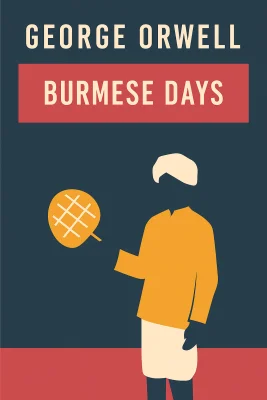
Burmese Days
Categories
Fiction, Classics, Travel, Historical Fiction, Literature, Asia, Historical, 20th Century, Novels, British Literature
Content Type
Book
Binding
Hardcover
Year
2005
Publisher
1st World Library
Language
English
ISBN13
9781421808307
File Download
PDF | EPUB
Burmese Days Plot Summary
Introduction
# Shadows of Empire: Conscience and Conformity in Colonial Burma The Burmese sun hammers down on Kyauktada like a forge, baking the colonial outpost into submission. In the Europeans' Club, where whiskey flows and racial hatred festers, John Flory sits with his purple birthmark turned toward the shadows. Fifteen years in Burma's timber camps have hollowed him out, leaving only shame and a dangerous friendship with Dr. Veraswami, the Indian Civil Surgeon whose crime is believing too deeply in British justice. When word arrives that the Club must admit a native member, the announcement detonates like a grenade in their white sanctuary. U Po Kyin, the corpulent Burmese magistrate, sees his chance for ultimate revenge against the doctor who stands between him and power. Into this powder keg steps Elizabeth Lackersteen, young and beautiful, carrying promises of redemption that will destroy every man who reaches for them. In the suffocating heat of empire's dying days, conscience and cowardice dance their eternal waltz toward tragedy.
Chapter 1: The Outsider Within: Flory's Isolation in Colonial Society
The European Club squats like a white tumor against the alien landscape, its corrugated roof gleaming under the merciless sun. Inside, five men nurse their drinks and prejudices with equal devotion. Ellis spits venom about natives with casual cruelty. Westfield dreams of glorious battles against rebels who never materialize. Mr. Macgregor maintains imperial dignity while counting pension days. Flory sits among them but apart, his birthmark a map of shame across half his face. When Ellis launches into his nightly tirade about Oriental inferiority, silence burns Flory's throat like acid. He thinks of Dr. Veraswami waiting across town, eager to discuss Dickens and Darwin with the passion of a true believer in European civilization. The schism in Flory's soul runs deeper than his disfigured face. By day he commands timber operations with sahib authority. By night he visits Ma Hla May, his Burmese mistress, finding temporary escape in arms that offer transaction without sentiment. The arrangement suits them both until it doesn't. When Flory slips away to visit the doctor, he crosses more than dusty roads. Veraswami's house, with its medical journals and tended garden, represents everything Flory has lost: intellectual companionship, moral purpose, genuine human connection. They discuss literature while the doctor's family remains hidden in inner rooms, observing protocols that govern such dangerous friendships. The doctor speaks of British justice with touching faith, never suspecting his friend lacks courage to defend him when it matters. Anonymous letters have begun circulating, poisoning minds against Veraswami with accusations of sedition and corruption. Flory feels the familiar coward's chill but tells himself survival requires compromise. In whiskey-soaked nights, he wonders if any part of his soul remains worth saving.
Chapter 2: Forbidden Bonds: Friendship Across the Racial Divide
Morning heat presses down like a physical weight as Flory approaches Veraswami's bungalow, shame burning in his chest. The anonymous letters have done their work, turning friend against friend with surgical precision. He finds the doctor in his surgery, treating villagers with the patient dedication that makes him beloved among the Burmese. Veraswami's face lights with genuine pleasure despite knowing of the signed notice branding him unworthy of European society. This forgiveness, offered without condition, cuts deeper than any accusation. The doctor understands colonial pressures, the invisible chains binding even well-meaning Europeans to racial hierarchies. He harbors no resentment, only sad acceptance. But beneath his gentle exterior, Veraswami fights for his life. He knows U Po Kyin orchestrates his destruction, using the brewing rebellion as final weapon in his character assassination campaign. Once uprising begins, every anonymous accusation will seem prophetic, every whispered rumor accepted truth. His only hope lies in Club membership, the one thing that could make him untouchable. Flory listens with growing horror and determination. The injustice crystallizes his resolve. He will propose Veraswami's name at the next meeting, consequences damned. It's a small act of courage perhaps, but in suffocating colonial Burma, even small acts carry revolutionary weight. The doctor weeps with gratitude though both men know the real battle approaches. U Po Kyin's web tightens daily, his manufactured rebellion gathering momentum in nearby villages. Time runs short, and in this forgotten corner of empire, good men rarely survive the machinations of evil ones. Still, friendship demands its price, and Flory finally seems willing to pay it.
Chapter 3: The Serpent's Design: U Po Kyin's Campaign of Destruction
In his sprawling house near the bazaar, U Po Kyin sits like a bloated spider, plotting Veraswami's destruction with patient malice. Sub-divisional Magistrate, bribe collector, orchestrator of schemes within schemes, he has spent thirty years perfecting corruption's art. His vast body, draped in silk and fed on finest delicacies, manifests his appetite for power. The directive requiring native Club membership hands U Po Kyin unprecedented opportunity. If Veraswami gains admission to European society's sacred precincts, U Po Kyin's ambitions face eternal thwarting. The Club represents ultimate prize, acceptance into the ruling class that excludes him despite wealth and influence. His campaign begins with anonymous letters, crafted to exploit European paranoia about native disloyalty. The doctor stands accused of sedition, secret nationalism, using his position to undermine British authority. Each letter plants doubt seeds in racial prejudice's fertile soil. But letters prove insufficient. U Po Kyin requires dramatic demonstration of the doctor's supposed treachery. With Ba Sein's help, he organizes fake rebellion in nearby Thongwa village. Peasants receive recruitment promises of magical protection, makeshift weapons, encouragement to believe in overthrowing British rule. The rebellion is designed for spectacular failure, with U Po Kyin positioned to claim suppression credit. In the aftermath, Veraswami's reputation will die by association, his loyalty forever suspect. Ma Kin, U Po Kyin's wife, watches with growing unease, understanding karmic implications of each treacherous act. But U Po Kyin dismisses her concerns, confident he can purchase salvation with pagodas built once earthly ambitions are satisfied.
Chapter 4: Love and Prejudice: Elizabeth's Arrival and Cultural Collision
Elizabeth Lackersteen steps from the train like a vision from another world, her pale English skin and modern dress stark against sun-baked landscape. Twenty-two, recently orphaned, utterly unprepared for colonial Burma's suffocating reality. Her aunt greets her with desperate enthusiasm, seeing in her niece the solution to all social problems. Mr. Lackersteen presents different problems entirely. Years of heat, whiskey, and moral decay have reduced him to sweating, lecherous wreck viewing his niece's arrival with predatory interest. Elizabeth quickly learns to avoid dark corners and empty rooms, her innocence no match for his persistent pawing. Flory encounters Elizabeth on the Club veranda during her first morning, and the sight transforms his world. Here is youth, beauty, civilization itself. When he speaks of books and music, of the England they both remember, his voice loses colonial drawl and recovers something approaching original accent. Elizabeth listens with polite interest, though his intensity unsettles her. Their first expedition together, a shooting trip into jungle depths, reveals both possibility and peril of their connection. Elizabeth proves surprisingly adept with rifles, her excitement at bringing down pigeons infectious and genuine. When they encounter a leopard and work together to kill it, Flory sees fierce joy transform her face. Standing over the dead cat in green twilight, they seem perfectly matched. But the moment passes, illusion shattered by Elizabeth's casual racism, her reflexive disgust at anything native or foreign. What he sees as cultural richness, she experiences as threatening chaos. The chasm between them widens with each shared experience, Flory's love unable to bridge the gulf of fundamental incomprehension.
Chapter 5: The Moment of Truth: Club Politics and Moral Cowardice
The Club meeting convenes on a sweltering evening, air thick with humidity and tension. Mr. Macgregor, resplendent in white dinner jacket, calls the gathering to order with state affairs gravity. The agenda contains one item of real importance: admitting a native member to their sanctuary. Ellis erupts before discussion properly begins, face flushed with whiskey and outrage. The very idea of sharing their refuge with a "nigger" strikes him as abomination beyond endurance. He pounds tables, spittle flying as he denounces Rangoon officials' weakness. Westfield and Lackersteen nod agreement, united in preserving racial purity. Flory sits in silence, hands trembling as he contemplates approaching truth. He has promised Veraswami support, given his word to propose the doctor's name when time comes. But hostility radiating from companions feels almost physical, and courage ebbs like water from cracked vessels. Macgregor explains political realities with diplomatic precision. The Commissioner's directive cannot be ignored indefinitely, but if the Club unanimously opposes native membership, the matter can be quietly dropped. All eyes turn to Flory, the only member whose position remains unclear. When Flory finally speaks, his voice barely rises above the punkah's whirring. "I propose Dr. Veraswami as a member of this Club." The words fall into silence like stones into still water, creating shock and fury ripples. Ellis leaps up, face contorted with rage, hurling betrayal accusations. Other members stare at Flory as if he has committed obscene exposure, their disgust palpable and complete. The die is cast, and battle lines are drawn for the final confrontation.
Chapter 6: Public Disgrace: The Price of Colonial Hypocrisy
The church service proceeds with usual dreary ritual, Europeans sweating in formal clothes while Macgregor's voice drones through liturgy. Elizabeth sits across the aisle from Flory, her profile serene in golden light filtering through open doors. For a moment, watching her bent head and folded hands, Flory imagines different endings to their story. The interruption comes like thunderclap. Ma Hla May bursts through church doors, face painted white with powder, hair disheveled, screaming accusations in mixed Burmese and broken English. She points directly at Flory, voice rising to shriek as she details their relationship for all to hear. The congregation sits frozen in horror as she describes intimacies, financial arrangements, promises made and broken. Flory's face turns old bone color, birthmark standing out like brand. He cannot deny accusations because they are essentially true, cannot defend himself without making matters worse. Elizabeth stares with undisguised revulsion, seeing not the man who loves her but creature degraded by association with this screaming harridan. The scene ends when Eurasian Christians drag Ma Hla May from church, but damage proves irreparable. Flory sits motionless as service concludes, unable to meet anyone's eyes, his social death complete. Other Europeans file out with disgust and embarrassment while Elizabeth hurries away without backward glance. Later, when Flory attempts explanation, to salvage something from reputation's wreckage, Elizabeth's rejection is absolute. She will not listen to love protestations, will not consider understanding pleas. The man who kissed her under frangipani trees has been revealed as something loathsome, and her instinctive revulsion admits no appeal. She would rather face spinsterhood, poverty, even her uncle's continued advances, than bind herself to a man so publicly disgraced.
Chapter 7: The Final Escape: Tragedy and the Collapse of Conscience
Rains have come at last, turning Kyauktada's dusty streets into mud rivers and bringing temporary relief from crushing heat. But for Flory, weather offers no comfort. Lieutenant Verrall has departed without warning, taking early trains to avoid creditors and leaving Elizabeth devastated. In abandonment's aftermath, she might have turned to Flory for consolation, but Ma Hla May's public denunciation makes such reconciliation impossible. Flory returns to his bungalow after the church service, his world reduced to bedroom dimensions. Familiar objects mock him with their persistence. Ko S'la, his faithful servant, hovers anxiously in doorways, sensing disaster but powerless to prevent it. Even Flo, his spaniel, seems to understand something terrible approaches. The decision, when it comes, feels less like choice than inevitability. Flory has endured fifteen years of exile, sustained by hope that someday his real life would begin. Elizabeth's arrival had seemed to offer that possibility, but her rejection has closed the last door. There will be no redemption, no escape from colonial existence's half-life. He shoots Flo first, unable to bear the thought of leaving her to uncertain fate. The little dog approaches trustingly, tail wagging despite fear, and dies instantly. Then Flory turns the gun on himself, pressing muzzle against his heart. Ko S'la finds him minutes later, neat hole in shirt barely visible, face peaceful at last with birthmark already fading. Dr. Veraswami arrives too late, bicycle thrown down in flower beds as he rushes to answer summons. When he sees his friend's body, the composed physician breaks down completely, weeping with child's abandon. He arranges for death to be recorded as accidental, sparing Flory's memory suicide's stigma, but everyone understands the truth. In Burma, such endings are common enough to occasion little surprise.
Summary
Flory's death spreads ripples like circles in ponds, touching every life he influenced. Dr. Veraswami, deprived of white protection, falls victim to U Po Kyin's machinations and finds himself transferred to lesser posts in Mandalay. Ko S'la struggles to maintain family on reduced wages while Ma Hla May descends into prostitution and poverty. U Po Kyin achieves Club membership dreams and government honors, only to die of apoplexy before building pagodas that might have purchased salvation. Elizabeth discovers survival requires adaptation. When Macgregor proposes marriage, she accepts with relief rather than passion, recognizing security that Verrall's charm could never provide. She transforms into perfect colonial wife, efficient and ruthless, utterly committed to maintaining racial hierarchies that define her world. The Burma that killed Flory continues unchanged, its sun as merciless, social divisions as rigid as ever. Only the cemetery gains new headstones, inscriptions recording accidental deaths that fooled no one. In the end, empire's greatest tragedy is not its cruelty but its waste, the squandering of human possibility in service to systems that diminish everyone they touch.
Best Quote
“Beauty is meaningless until it is shared.” ― George Orwell, Burmese Days
Review Summary
Strengths: The review highlights Orwell's superb writing and well-developed characterizations, noting that his talent is evident even in his first book. The setting and themes of corruption and imperial bigotry are effectively portrayed, drawing from Orwell's personal experiences in Burma. Weaknesses: The review criticizes the characters as unlikeable and vapid, particularly focusing on the club members and the love interest. The narrative is described as revolving around a boring club with little happening beyond arguments and drinking. Overall: The reader finds the book insightful in its depiction of colonial society but critiques the characters' depth and appeal. The review suggests a nuanced appreciation for Orwell's writing despite the unappealing character portrayals.
About Author
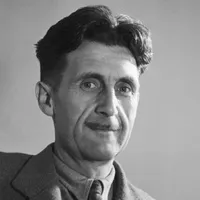
George Orwell
Orwell probes the intricate dynamics of power and social justice through a lens sharpened by personal experience and historical context. Known for his unwavering critique of authoritarianism and advocacy for democratic socialism, Orwell's works delve into the oppressive mechanisms of totalitarian regimes, as vividly portrayed in "Nineteen Eighty-Four." His early roles as a colonial police officer in Burma and his voluntary immersion into poverty informed his perspective, contributing to a body of work rich in political and social critique. This duality—an eye for societal truths rooted in lived experience—enables Orwell to expose the fragility of freedom, whether in allegorical or dystopian narratives.\n\nIn addition to his celebrated novels, Orwell's lesser-known book "The Road to Wigan Pier" sheds light on the harsh realities of working-class life in industrial England, complementing his exploration of social injustices. Meanwhile, essays such as "Shooting an Elephant" reflect on imperialism's moral complexities. Through clear and precise prose, Orwell engages with profound questions, situating his narratives in a broader discourse on power and liberty. This approach not only challenges readers to contemplate the societal forces shaping their lives but also underscores the perennial relevance of his themes in contemporary political thought.\n\nReaders across generations benefit from Orwell's work as it transcends mere storytelling to offer critical insights into the human condition. His writings encourage critical reflection on the current state of society, serving as a stark reminder of the consequences of unchecked authority and the erosion of individual liberty. As a result, his legacy endures, inviting both academic and casual readers to reflect on the intersection of power, truth, and freedom in their own lives. Through his incisive prose and insightful commentary, Orwell remains an essential figure in literature and political discourse, ensuring his continued influence and relevance.
Read moreDownload PDF & EPUB
To save this Black List summary for later, download the free PDF and EPUB. You can print it out, or read offline at your convenience.

Burmese Days
by George Orwell
