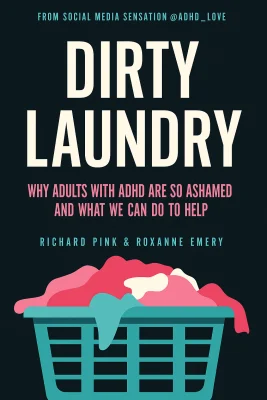
DIRTY LAUNDRY
Why adults with ADHD are so ashamed and what we can do to help
Categories
Nonfiction, Self Help, Psychology, Health, Memoir, Mental Health, Adhd, Audiobook, Personal Development, Disability
Content Type
Book
Binding
Paperback
Year
2023
Publisher
Ten Speed Press
Language
English
ASIN
0593835530
ISBN
0593835530
ISBN13
9780593835531
File Download
PDF | EPUB
DIRTY LAUNDRY Plot Summary
Introduction
The waiting room was hushed, save for the rhythmic tapping of fingers against knees. Sarah sat clutching her diagnosis papers, tears welling in her eyes - not from sadness, but profound relief. "This explains everything," she whispered to her partner, who squeezed her hand in silent understanding. After thirty-seven years of feeling broken, Sarah finally had a name for the chaos that had defined her existence: ADHD. The journey of understanding ADHD extends far beyond clinical definitions and medication management. It's about recognizing the beautiful complexity of neurodivergent minds and creating spaces where they can thrive rather than merely survive. For too long, we've focused on the "disorder" aspect while overlooking the remarkable gifts that come with this different way of processing the world. This exploration isn't just for those with ADHD but equally for the people who love them - partners, family members, and friends who sometimes struggle to understand why simple tasks can seem impossible, why emotions run so deep, or why focus is simultaneously elusive and overwhelming. Through compassionate understanding, we discover that ADHD isn't something to be fixed but rather a different operating system requiring specific environments and support to unleash its unique potential.
Chapter 1: The Hidden Struggles Behind ADHD Symptoms
"I'll be home in five minutes," Roxanne texted her husband Rich, genuinely believing it. Forty-five minutes later, she finally walked through the door, surprised to find him frustrated. In her mind, "five minutes" and "forty-five minutes" meant the same thing - just "not now, but soon." This wasn't a deliberate lie; it was time blindness, one of ADHD's most misunderstood symptoms. For thirty years, Rox ran late for everything - work meetings, doctor's appointments, even flights. Once in 2017, she missed a flight from London to LA due to what she called "Google Maps time optimism." The airline staff kindly rebooked her for free on a later flight. With four hours to wait, she stayed in the departure lounge, determined not to repeat her mistake. Yet somehow, she missed the security cutoff for that flight too. When she approached the same airline representative again, the woman laughed kindly and rebooked her for the following day with a gentle reminder: "Please set an alarm." This persistent lateness wasn't from disrespect or carelessness. For someone with ADHD, time exists in two states: "right now" and "not now." Minutes and hours hold little meaning. Despite setting alarms, planning routes, or leaving early, Rox would consistently run late, leading to decades of self-hatred, lost opportunities, and strained relationships. She'd accumulated countless missed trains, appointments, and the financial consequences that came with them - what many in the ADHD community call the "ADHD tax." The diagnosis brought language to describe her experience: time blindness. Understanding this wasn't a character flaw but a neurological difference allowed both Rox and Rich to develop strategies that worked with her brain rather than against it. Rich began asking, "Is that a real five minutes? Or an ADHD five minutes?" They could laugh about it rather than argue. He would call out her magical "time wizard" thinking when she proposed impossible timelines. The transformation didn't come from Rox suddenly becoming perfectly punctual. It came from acceptance, honesty, and removing the crushing weight of shame. By acknowledging this as a neurological difference rather than moral failing, she could build self-compassion and practical strategies. Sometimes the greatest healing begins not with changing the behavior, but with changing how we view ourselves when the behavior occurs.
Chapter 2: Navigating Time and Focus in a Neurotypical World
"Babe, I'm lost," Rox's voice trembled over the phone. "I've walked around the building twice. There is no number 447. I don't know what to do." Rich could hear she was on the verge of tears. They were supposed to meet for a health appointment in London, traveling separately from their respective workplaces. While Rich had found the location easily, Rox was circling the building in growing distress. Rich guided her using visual landmarks - "the building with the bright red door," "the pub with the horse outside" - rather than directions or numbers. When she arrived minutes later, flustered and apologetic, they discovered the building number was hidden on a buzzer. She had passed the correct entrance twice but had been looking for a clearly marked "447" that didn't exist in the way she expected. This experience illustrates another challenging aspect of ADHD: directional dyslexia. For Rox, navigating unfamiliar places often ended with her in tears on a street corner. She recalls a particularly harrowing experience trying to find a friend in a hospital after he had severely injured his thumb. Despite her best efforts with Google Maps, she found herself wandering hospital corridors for thirty minutes before breaking down in tears. A janitor eventually directed her to reception, and she composed herself to support her friend, who never knew how difficult getting there had been for her. Interestingly, Rox has perfect recall for places she's visited repeatedly. Her journey from Sevenoaks to London is memorized in "full-color HD" - which platform side to stand on, which exit to use for coffee. The contrast between her ability to navigate familiar routes and her complete disorientation in new environments highlights the neurological differences at play. Rich, whom Rox describes as "Mr. Human Satnav," can drive somewhere once and remember the way perfectly. He can follow verbal directions with ease - something utterly baffling to Rox. Before her diagnosis, the only explanation she had for her navigational challenges was that she was "stupid" or "worthless," intensifying her shame and anxiety, which in turn made navigation even more difficult. The compassion that came with understanding ADHD transformed their approach. Now when Rox gets lost, she calls Rich, who helps calm her down and guide her. Her difficulties are met with acceptance rather than judgment. They've created a system that works with her brain's needs rather than fighting against them. Perhaps most importantly, they can laugh together when she walks out of their house and immediately turns the wrong way to the local shop - something that still happens regularly after three years. The greatest freedom came not from suddenly developing an internal compass, but from removing the shame that had made getting lost feel like a moral failure.
Chapter 3: The Home Front: Hygiene, Cleaning, and Organizational Challenges
Rich looked over at Rox's phone and noticed she was browsing a hotel that cost £1000 per night. Frustrated after a long day, he snapped, "Can you at least just look at realistic options? This feels like a massive waste of time." Hurt, Rox walked out of the room. Later, over dinner, she explained something that would change how they dealt with her hyperfocus: "I'll never ask to book the thousand-pound-per-night hotel. It just makes me really happy to know all the details of all the available options. It's really fun for me, and if I don't get to do that I feel sad, anxious, and like I've missed out on something." For the first time, Rich understood this behavior wasn't about reckless spending or wasting time. For Rox, this was a joyful research project. Knowing the extreme options allowed her to better judge the value of realistic ones, with the ultimate goal of finding something special within their budget. Her brain wasn't deficient - it was different, finding pleasure and meaning in activities that seemed pointless to neurotypical thinking. This pattern extended to cleaning and organization as well. Rich had never seen a "floordrobe" until Rox moved into his pristinely kept flat - suddenly his immaculate carpet was covered in band T-shirts, coffee-stained tops, and makeup. During their honeymoon phase, he found it endearing, but as time passed, tensions grew. After one particularly frustrating incident when Rox forgot to clean the spare room despite taking a day off specifically for that purpose, Rich found her instead creating a colorful patched denim jacket, with paint splattered on their new wooden table. Without understanding ADHD, these behaviors seemed like laziness or disrespect. In reality, Rox desperately wanted to contribute to household tasks but found them overwhelmingly difficult to complete. Her brain was drawn to novelty and creativity, making mundane cleaning tasks nearly impossible to sustain attention on without support. The diagnosis transformed their approach. Instead of viewing Rox as intentionally lazy, Rich saw someone who genuinely struggled with tasks he found simple. Following her therapist's advice, they started small - celebrating when she took one cup downstairs, put bleach in one toilet, or hung up her coat. For someone who had felt like a failure in this area their entire life, hearing "I'm proud of you" became a powerful healing force. Today, Rox makes the bed almost daily, offers to help with cleaning, and occasionally Rich comes home to a clean kitchen - massive victories that came through practice, patience, and kindness from both of them. The transformation wasn't about Rox suddenly becoming a domestic goddess, but about creating a compassionate environment where growth could happen naturally, without the weight of shame and judgment that had previously made improvement impossible.
Chapter 4: Financial Management and Communication Barriers
There was a loud, persistent knocking at Rox's basement flat door. Instead of answering, she hid under her bed, heart pounding as she heard a man's voice calling her name, followed by the terrifying sound of what seemed like heavy machinery cutting through metal. When the workers finally left, she discovered they had replaced her regular electricity meter with a pay-as-you-go one due to numerous unpaid bills. Rather than explaining this to her landlord or managing the new system, she frequently sat in darkness when she couldn't afford to top up or simply forgot to do so. This wasn't an isolated incident. Rox's financial history included maxed-out credit cards, unpaid bills, county court judgments for debt, and a pattern of changing addresses to escape creditors. She had never opened letters from tax authorities, phone companies, or credit card companies. Even after getting sober in 2018, which eliminated her most reckless spending habits, she still struggled with financial organization and impulse control. When she met Rich, a bank manager, she finally found someone who didn't judge her financial chaos. She honestly shared the full extent of her debt, and instead of walking away, he helped her open letters, write emails, and cut up credit cards. He reflected back to her kindly when her spending became impulsive. Within a couple of years, her credit rating transformed from very poor to excellent. Communication struggles compounded these financial issues. Rox describes herself as "so utterly and heavily invested in what is right in front of me that everything else fades into distant memory." When she left for university, maintaining friendships with hometown friends became nearly impossible despite her intentions. Her attention worked like a flashlight - intensely illuminating whatever was directly before her while everything else disappeared into darkness. This phenomenon, called "object constancy," explains why Rox would forget to reply to messages or miss important events. At 24, she missed a best friend's wedding simply because she hadn't opened the invitation. Despite desperate apologies, the damage was done, and she lost several childhood friendships. Each failure deepened her self-concept as "an awful, selfish human being" undeserving of connection. Learning about object constancy through her ADHD diagnosis brought tears of relief - she wasn't the worst person alive but someone whose brain struggled with remembering things not immediately present. This understanding allowed her to develop strategies that worked with her brain rather than against it. She began explicitly telling friends about her communication difficulties and suggesting in-person meetings instead of text exchanges. The most healing aspect came when she contacted friends who had slipped away, sincerely apologized, and committed to connecting in ways she could actually follow through on. To her surprise, many welcomed her back with understanding. The path forward wasn't about becoming perfect at communication but developing honest relationships that accommodated her neurological differences while still meeting everyone's needs for connection.
Chapter 5: Task Avoidance and Directional Challenges
At university, instead of studying for her own urgent exams, Rox found herself giving an impromptu economics lesson to her struggling friends. Despite needing to cram a year's worth of neglected work into a couple of nights, she became completely distracted when a friend mentioned difficulty with supply-and-demand laws. Within minutes, she was running back to her room to refresh her knowledge, then returning to deliver a passionate, animated lecture that lasted hours - completely abandoning her own critical study plans. This exemplifies ADHD task avoidance - a pattern where whatever is most important becomes precisely what the brain refuses to focus on. If Rox needed to clean her room, she'd suddenly find herself organizing a junk drawer. If an urgent work email required attention, she'd launch into a deep-cleaning frenzy. The brain becomes "physically obsessed" with anything other than the priority task, making conventional productivity advice largely ineffective. This avoidance pattern affected Rox's career trajectory as well. Employers were consistently impressed by her passion and creativity but frustrated by her inability to complete projects. She cycled through jobs until finding songwriting - a career that aligned perfectly with her brain's need for novelty, creativity, and daily completion. Even there, administrative tasks remained challenging, but her core talents could finally shine. Rich observed this task avoidance pattern in their relationship too. Mid-conversation, he would notice her eyes glaze over and go slightly crossed - a sure sign she'd mentally departed. Before understanding ADHD, these moments felt like personal rejection. After her diagnosis, he learned to gently call out these "zone-outs" with humor. Instead of hiding her wandering thoughts from shame, Rox began sharing the fascinating places her mind had traveled: "I was just writing a Christmas song in my head" or "I was thinking how many minutes I need to run in the gym to get curry tonight." Directional challenges compounded these difficulties. Rox would regularly walk the wrong way to their local shop after living in the same house for three years. For her, visual cues work far better than maps or verbal directions. Rich learned to guide her using landmarks rather than street names or numbers when she got lost. Before important appointments, they would plan routes together, ensuring she had enough time for inevitable wrong turns. The transformation in their relationship came not from Rox suddenly developing perfect focus or navigational skills, but from mutual understanding. They stopped taking neurological differences personally and instead built systems that worked for both of them. Rich provided the "map back home" when Rox's wandering hippie mind took the scenic route, while appreciating the creativity and joy that same mind brought to their life together. This balanced partnership allowed both to thrive by embracing their differences rather than fighting against them.
Chapter 6: Impulsivity and the Path to Emotional Connection
"I don't know what's happened to my feelings," Rox confessed tearfully to Rich after they had been together for six months. Following an intense period of romantic bliss, she experienced a terrifying shift in her emotional landscape. For Rich, who had already endured two painful divorces, these words triggered every instinct to run. Yet the therapy he was undergoing for childhood trauma had taught him to respond rather than react. Despite his fear, he chose curiosity and empathy. This conversation became the foundation for their deepest connection. Later, when Rox learned about ADHD's impact on relationships, she showed Rich a TikTok explaining why love and attraction hit people with ADHD so intensely. For the first time, she had language to describe her experience: people can be a hyperfocus, just like activities or interests. This explained Rox's relationship history - ten serious relationships, each lasting about a year, each time believing "this one is different." She would become utterly obsessed with a new partner, merge lives quickly, then feel devastating boredom when the initial intensity faded. Without understanding ADHD, the only explanation she had was that she had "fallen out of love" - leading to a cycle of leaving and starting fresh with someone new. After getting sober in 2018, Rox committed to 18 months of celibacy and intensive therapy before meeting Rich. When the familiar pattern of emotional intensity followed by confusion emerged, instead of running away, she chose radical honesty. Looking into his eyes and admitting "I'm so scared that my feelings are changing" was terrifying, but it opened the door to authentic connection. They made it through this challenging period together, and Rox discovered what existed beyond the initial "treacle sun" of ADHD love - a deeper, more sustainable connection built on honesty and understanding. Now they can laugh about her brain's tendencies, with Rich occasionally checking in: "Any hyperfocuses going on at work?" - their code for "Are you developing feelings for anyone else?" This pattern of impulsivity extended beyond relationships. Rox collected domain names for business ventures that captured her imagination completely - resin making, a record label, gender-neutral clothing. Each time, she saw the full vision instantly and felt compelled to pursue it immediately, regardless of practicality. Most ended up in what she calls the "hobbies graveyard," abandoned when initial enthusiasm waned. Yet their TikTok account ADHD_Love, started on precisely such an impulse at 11:55 pm when Rox had "the glint" in her eye, ultimately led to millions of viewers, a supportive community, and the book you're reading now. This illustrates a beautiful paradox of ADHD: the same impulsivity that can create chaos also drives the persistent creativity that occasionally changes the world. As Rox writes: "Here's to the ADHDers who never give up, even though all the data points tell them they are a failure. Here's to the ones who change the world."
Chapter 7: Finding Balance: The Unexpected Joys of ADHD
Rich discovered a surprising truth about helping his wife with her laundry. Rox loves wearing nylon bodysuits for her "edgy alt-girl look," but the synthetic material is terrible for underarm odor. After noticing the bodysuits still smelled after washing, Rich developed a system of checking (sniffing) them and pre-soaking particularly pungent ones before laundering. One day, Rox caught him at this task and stood watching with tears in her eyes: "I feel equal parts horrendous that you have to do this, and also like the luckiest person in the world to have someone so amazing." This moment captured something profound about living with ADHD - the healing power of being fully seen and loved despite what feels like unlovable messiness. For someone who had spent decades hiding shameful struggles, watching her partner matter-of-factly handle something she found overwhelming was transformative. What seemed like a simple task to Rich represented profound acceptance to Rox. Despite the challenges ADHD presents, there are remarkable gifts that come with this neurological difference. Rox identifies several joys that ADHD has brought to her life: relentless optimism that doesn't see obstacles, quick learning of skills she's passionate about, creative problem-solving, exceptional brainstorming abilities, willingness to take risks, deep empathy born from being misunderstood, boundless creativity, and remarkable calm during crisis situations. Rich has experienced these gifts firsthand. He notes Rox's deep caring nature, her incredible sense of humor that fills their home with laughter, her entrepreneurial vision that launched their social media presence and book, her fascinating interests that have enriched his knowledge, and her remarkable research skills that have led them to hidden gems from restaurants to spas. Their partnership illustrates the beautiful balance that can emerge when neurotypical and neurodivergent minds work together. Rich provides the consistency, organization, and practicality; Rox brings creativity, vision, and passionate engagement. Where he might book a hotel in ten minutes based on price and basic reviews, she dives into hours of research to find something truly special. What initially seemed like opposing approaches became complementary strengths. This balance extends to emotional connection as well. They've developed a relationship where nothing is too shameful to share, where hyperfocus on other people can be discussed openly, and where differences in communication styles are accommodated rather than judged. They've created a home where there's no bullying about personal hygiene but plenty of lighthearted humor: "Babe, you have worn that jumper for seven days straight. Please can I wash it?" The transformation isn't about ADHD symptoms disappearing, but about finding ways to work with rather than against different neurological wiring. For Rox, who once sat alone in a darkened flat contemplating suicide, finding this acceptance has been life-changing. The shame that once felt unbearable has been replaced by self-understanding and genuine connection. As she writes, "With the right support, a neurodivergent brain can be a world-changing brain."
Summary
The journey through ADHD is ultimately about transformation - not of the neurodivergent brain itself, but of how we understand and support it. Throughout these stories, we witness the profound shift that occurs when shame is replaced with compassion, when "disorder" is reframed as "different operating system." The true healing begins not with changing behaviors but with changing the narratives we hold about those behaviors. Time blindness becomes understandable rather than irresponsible. Hyperfocus becomes a superpower rather than an annoyance. Communication difficulties become differences to accommodate rather than character flaws to condemn. For those living with ADHD and those who love them, this journey offers three essential lessons: First, radical acceptance creates the foundation for genuine growth - we cannot shame ourselves or others into becoming more functional. Second, partnership works best when differences are seen as complementary rather than opposing forces - the wandering creative mind balanced by the structured practical one. Finally, authentic connection happens through vulnerability rather than perfection - it's in sharing our most challenging struggles that we find our deepest connections. The chaos of ADHD need not be conquered but rather compassionately embraced, creating space for both struggle and brilliance to coexist in a life of meaning, joy, and genuine connection.
Best Quote
“No one can hate themselves into a version of themselves that they like” ― Richard Pink, Dirty Laundry: Why Adults with ADHD Are So Ashamed and What We Can Do to Help
Review Summary
Strengths: "Authentic and relatable characters are a standout feature, portrayed with sensitivity and depth. The seamless collaboration between the authors results in a cohesive storytelling style. Emotional honesty and the exploration of difficult subjects like mental health offer significant depth. Realistic dialogue enhances the narrative's engagement and emotional resonance." Weaknesses: "Story pacing occasionally drags, with some parts lacking sufficient development. A few readers express a desire for a more consistently engaging flow throughout the book." Overall Sentiment: "The general reception is favorable, with the novel being recommended as a thought-provoking read that balances heartache with hope. The positive aspects significantly outweigh the criticisms, drawing readers into its raw depiction of modern life." Key Takeaway: "Ultimately, 'Dirty Laundry' offers an honest exploration of modern relationships and personal struggles, encouraging reflection on the often-hidden complexities of life."
About Author

Richard Pink
Richard Pink is a content creator, advocate, and co-author of the best-selling book Dirty Laundry. Together with his wife, Roxanne Emery, he created a global community focused on breaking the stigma surrounding ADHD (Attention Deficit Hyperactivity Disorder). Pink does not have ADHD himself, but his perspective as the partner of someone who does has resonated with millions of people. He provides a unique, relatable, and often humorous look at the realities of living with neurodivergence.\n\nHis work began with viral videos that showcased the daily struggles and triumphs of their relationship, which quickly grew into a movement to educate partners and families. In Dirty Laundry, Pink and Emery offer an unfiltered look at the chaos and love that defines their life, providing practical advice for couples navigating similar challenges. Pink’s contribution is vital as it gives a voice to the supportive partner, emphasizing empathy, patience, and communication.
Read moreDownload PDF & EPUB
To save this Black List summary for later, download the free PDF and EPUB. You can print it out, or read offline at your convenience.

DIRTY LAUNDRY
by Richard Pink
