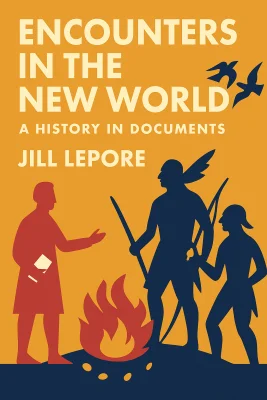
Encounters in the New World
A History in Documents
Categories
Nonfiction, History
Content Type
Book
Binding
Paperback
Year
2002
Publisher
Oxford University Press
Language
English
ASIN
0195154916
ISBN
0195154916
ISBN13
9780195154917
File Download
PDF | EPUB
Encounters in the New World Plot Summary
Introduction
In the autumn of 1492, as Christopher Columbus's small fleet approached the shores of what he believed to be the Indies, neither the European sailors nor the indigenous peoples watching from the coastline could have imagined they were witnessing one of history's most consequential moments. The encounter that followed would reshape entire continents, destroy ancient civilizations, create new societies, and set in motion forces that continue to influence our world today. These first meetings between Europeans, Native Americans, and later Africans represent far more than simple cultural contact. They reveal fundamental questions about human nature, power, survival, and adaptation that resonate across centuries. Through the voices of conquistadors and chiefs, missionaries and medicine men, slaves and settlers, we discover how ordinary individuals navigated extraordinary circumstances, often making choices that would echo through generations. Their stories illuminate not just what happened during this age of encounters, but how different peoples understood their rapidly changing world and sought to maintain their humanity amid unimaginable upheaval.
Chapter 1: First Contact: Indigenous Peoples Meet European Explorers
The initial encounters between Europeans and Native Americans unfolded across a vast timeline stretching from Columbus's 1492 landing through the early decades of the sixteenth century. These first meetings occurred in a world where both sides operated from fundamentally different frameworks of understanding, leading to profound misinterpretations that would shape centuries of interaction. When Europeans first glimpsed Native American societies, they saw them through the lens of their own cultural assumptions and immediate needs. Columbus, expecting to find the civilized kingdoms of Asia, instead encountered peoples he described as living in a "golden age" yet lacking the material markers of civilization he recognized. Similarly, many Native Americans initially interpreted the arrival of these strange, pale visitors through their own spiritual and prophetic traditions. The Aztecs wondered if Cortés might be the returning god Quetzalcoatl, while various Algonquian groups saw signs of manitou, or spiritual power, in European technologies and behaviors. These initial misunderstandings masked deeper currents of mutual assessment and adaptation. Europeans quickly recognized that survival in the New World depended heavily on indigenous knowledge and cooperation. Native Americans, meanwhile, began calculating how these newcomers might serve their own political and economic interests. The Tlaxcalans allied with Cortés against their Aztec enemies, while coastal Algonquians provided crucial assistance to struggling English settlements, often viewing Europeans as potential partners in existing trade and diplomatic networks. Yet beneath these pragmatic accommodations lay seeds of future conflict. Europeans generally perceived Native American societies as lacking legitimate political authority, proper land use, and true religion, justifications that would later support conquest and dispossession. Native Americans, initially impressed by European technology and perhaps their apparent spiritual power, gradually recognized the newcomers' aggressive intentions and cultural arrogance. These first encounters established patterns of misunderstanding, manipulation, and mutual dependency that would define centuries of interaction between the Old World and the New.
Chapter 2: Colonial Expansion and Cross-Cultural Exchange
As European presence expanded from isolated coastal settlements to substantial colonial territories between 1500 and 1650, the nature of encounters shifted from tentative first contact to sustained, complex relationships involving trade, diplomacy, and cultural exchange. This period witnessed the emergence of new societies and hybrid cultures that reflected the ongoing negotiation between European ambitions and indigenous realities. The establishment of permanent European settlements created zones of intensive interaction where peoples from different worlds were forced to develop new ways of living together. In New France, coureurs de bois learned indigenous languages and married into Native American families, creating a mixed society that bridged European and Native American worlds. Spanish missions in the Southwest and California became sites where indigenous peoples selectively adopted elements of European culture while maintaining many traditional practices. Even in more culturally rigid English colonies, daily survival often required adaptation to indigenous knowledge about crops, hunting, and local conditions. Trade networks became the backbone of these expanding colonial relationships, creating unprecedented opportunities for both cooperation and conflict. The fur trade transformed indigenous societies across vast regions, drawing Native American communities into global markets while providing them with European goods that enhanced their material culture and military capabilities. Yet this integration came at enormous cost, disrupting traditional social structures, encouraging over-hunting that depleted game populations, and creating new forms of dependency that would prove difficult to escape. The expansion of colonial territories also intensified struggles over land, resources, and cultural autonomy. As European settlements grew, they increasingly encroached on indigenous territories, leading to a series of violent conflicts from Metacom's War in New England to the Pueblo Revolt in New Mexico. These conflicts revealed the fundamental incompatibility between European concepts of land ownership and resource exploitation and indigenous understandings of territorial use and stewardship. The colonial expansion period thus established both the potential for creative cultural synthesis and the deep structural conflicts that would continue to shape encounters throughout the colonial era.
Chapter 3: Conquest, Resistance and Cultural Transformation
The period from 1519 to 1680 marked the height of European military conquest in the Americas, yet it also revealed the limits of colonial power and the remarkable resilience of indigenous societies. This era of conquest was characterized not by simple European domination, but by complex processes of resistance, adaptation, and cultural transformation that created new forms of colonial society. Spanish conquistadors achieved their most spectacular successes during these decades, toppling the Aztec and Inca empires and establishing colonial control over vast territories. Yet even these dramatic conquests depended heavily on indigenous allies like the Tlaxcalans, who saw Spanish alliance as an opportunity to overthrow their Aztec overlords. The conquistadors' military superiority, while significant, was greatly amplified by Old World diseases that devastated indigenous populations. Smallpox alone may have killed more Native Americans than all European weapons combined, creating a demographic catastrophe that facilitated conquest but also generated profound social and spiritual crises in indigenous communities. Indigenous resistance took many forms, from open warfare to subtle cultural preservation. While some communities like the Zunis fought desperate battles against Spanish incursions, others like many Pueblo peoples developed strategies of accommodation that allowed them to maintain essential cultural practices under the veneer of Christian conversion. The great Pueblo Revolt of 1680 demonstrated that even after generations of colonial rule, indigenous peoples retained both the will and the capacity to challenge European dominance when circumstances permitted. Cultural transformation flowed in multiple directions during this period of intense encounter. Indigenous peoples selectively adopted European technologies, crops, and ideas while adapting them to their own cultural frameworks. Europeans, meanwhile, found their own societies transformed by indigenous influences, from agricultural techniques to political concepts. Perhaps most significantly, the conquest period saw the emergence of new mixed societies and identities, from mestizo populations in Spanish America to the "praying Indians" of New England, that would become central features of colonial American society.
Chapter 4: Slavery and the Atlantic World
The forced migration of millions of Africans to the Americas between 1500 and 1800 created a third major component in New World encounters, fundamentally altering the demographic, economic, and cultural landscape of colonial society. The Atlantic slave trade represented one of history's largest forced migrations, bringing between twelve and twenty million Africans to the Americas and creating new forms of cultural interaction under conditions of extreme exploitation and oppression. The expansion of plantation agriculture, particularly sugar cultivation in the Caribbean and tobacco farming in the Chesapeake, drove the demand for enslaved labor to unprecedented levels. European colonists turned to African slavery not only because of demographic catastrophes among indigenous populations, but also because enslaved Africans brought valuable skills in tropical agriculture and possessed greater resistance to Old World diseases. The middle passage across the Atlantic became a horrific ordeal that claimed the lives of millions, yet those who survived often retained cultural knowledge and social bonds that would prove crucial for building new communities in the Americas. Enslaved Africans developed remarkable strategies for survival and resistance within the constraints of bondage. They created new languages, religions, and cultural practices that drew from multiple African traditions while adapting to American conditions. From the ring shout ceremonies of South Carolina rice plantations to the syncretic religious practices that blended African spirituality with Christianity, enslaved communities forged innovative cultural syntheses that provided both psychological survival mechanisms and forms of covert resistance to their oppressors. The presence of enslaved Africans also transformed European colonial societies in profound ways, creating complex racial hierarchies and new forms of cultural mixture. Free black communities in northern cities developed their own institutions and intellectual traditions, while throughout the Americas, intimate relationships between enslaved women and European men produced mixed populations that challenged colonial racial categories. The African diaspora thus became a major force shaping colonial American culture, contributing essential elements to everything from cuisine and music to agriculture and craftsmanship that would become defining features of American society.
Chapter 5: Religious Encounters and Cultural Adaptation
Religious encounters formed a crucial dimension of New World colonization, as European Christians sought to transform indigenous spiritual practices while themselves being transformed by their encounters with Native American and African belief systems. The period from 1520 to 1750 witnessed sustained efforts at religious conversion that produced complex patterns of accommodation, resistance, and cultural synthesis rather than simple replacement of one set of beliefs with another. Catholic missions, particularly those established by Franciscan and Jesuit priests, became laboratories for cultural encounter and negotiation. In California and the Southwest, Spanish missionaries attempted to recreate European-style Christian communities among indigenous peoples, yet found themselves constantly adapting their methods to local conditions and indigenous responses. Many Native Americans embraced aspects of Christianity while maintaining traditional spiritual practices, creating syncretic religious forms that satisfied missionary requirements while preserving essential cultural elements. The story of Kateri Tekakwitha, the Mohawk woman who became a Catholic saint while maintaining connections to indigenous spiritual traditions, exemplifies the complex religious negotiations of this period. Protestant approaches to indigenous conversion, while different in method, produced similarly complex outcomes. Puritan missionaries like John Eliot attempted to create "praying Indian" communities where converted Native Americans could live according to Christian principles while learning European agricultural and social practices. Yet even these communities retained significant indigenous characteristics, and many Native Americans used Christian education and literacy to preserve and transmit their own cultural knowledge. The translation of Christian texts into indigenous languages often had the unintended consequence of strengthening native linguistic traditions rather than replacing them. African religious traditions added another layer of complexity to colonial spiritual encounters. Enslaved Africans brought diverse religious practices that they adapted to American conditions, often blending African spiritual concepts with Christian symbolism to create new forms of worship that provided both cultural continuity and emotional sustenance. These syncretic traditions influenced broader American religious culture, contributing elements that would later emerge in evangelical Christianity and other American religious movements. The religious dimension of New World encounters thus demonstrates how spiritual beliefs, rather than being simply imposed by dominant cultures, became sites of creative adaptation and resistance that produced genuinely new forms of religious expression.
Chapter 6: Shaping New Identities in Colonial America
By the late colonial period, the centuries of encounter between Europeans, Native Americans, and Africans had created new forms of identity and community that transcended the original boundaries of these three worlds. The period from 1650 to 1800 witnessed the emergence of distinctly American societies that drew from multiple cultural traditions while developing their own unique characteristics and tensions. Colonial American identity formation occurred through both cooperation and conflict, as different groups negotiated their relationships within increasingly complex social hierarchies. European colonists developed distinctly American characteristics as they adapted to new environments and incorporated indigenous and African influences into their daily lives. From architectural styles that reflected local materials and climate to agricultural practices learned from Native Americans, European-American culture became a hybrid creation that differed significantly from its Old World origins. Yet this adaptation often occurred alongside increasing racial prejudice and legal discrimination that sought to maintain European dominance even as cultural boundaries blurred. Native American communities also forged new identities during this period, as they adapted to the presence of European colonies while maintaining their cultural distinctiveness. Many groups developed new political structures and diplomatic practices designed to navigate the complex world of colonial politics. The Iroquois Confederacy's sophisticated diplomacy, which played European powers against each other while maintaining indigenous autonomy, exemplified these adaptive strategies. Other Native American communities created new forms of cultural synthesis, adopting European technologies and ideas while preserving essential traditional values and practices. The emergence of increasingly complex mixed populations throughout colonial America created new categories of identity that challenged existing social hierarchies. From the mestizo populations of Spanish America to the free black communities of northern cities, these new groups developed their own cultural practices and social institutions that drew from multiple traditions. Their presence forced colonial societies to grapple with questions about race, citizenship, and belonging that would continue to shape American history long after the colonial period ended. The age of encounters thus created not just contact between separate worlds, but genuinely new forms of American identity that would provide both the foundation and the fundamental tensions of the emerging United States.
Summary
The encounters between Europeans, Native Americans, and Africans in colonial America reveal a central paradox that continues to shape American society: the simultaneous creation of remarkable cultural innovation and profound structural inequality. Rather than simple stories of conquest or cooperation, these encounters produced complex negotiations over power, identity, and survival that generated both creative cultural syntheses and enduring conflicts over justice and belonging. The historical experiences examined here offer crucial insights for understanding contemporary challenges around cultural diversity, power relationships, and social justice. First, they demonstrate that cultural encounter, even under conditions of extreme inequality, produces innovation and adaptation on all sides rather than simple domination by the powerful. Second, they reveal how individuals and communities can maintain cultural integrity and agency even within oppressive systems through strategic adaptation and resistance. Finally, they show that the most enduring historical changes often emerge not from the intentions of the powerful, but from the creative responses of ordinary people navigating extraordinary circumstances. Understanding these patterns can help us better recognize both the potential for positive cultural exchange and the ongoing need to address historical injustices that continue to influence American society today.
Best Quote
Review Summary
Strengths: The review highlights the book's high-quality paper and the abundance of colored pictures, which likely enhance the visual appeal and engagement for readers. Additionally, the inclusion of first-hand accounts of the New World is noted, suggesting a rich, authentic perspective on the subject matter. Overall: The review conveys a positive sentiment towards the book, appreciating its aesthetic qualities and the depth provided by first-hand narratives. The recommendation level appears to be high, particularly for those interested in visually engaging content and historical accounts of the New World.
About Author

Jill Lepore
Lepore considers the nuanced layers of American history through a critical lens that often reveals the absences and asymmetries in national narratives. Her scholarly work, ranging from her early book "The Name of War" to more recent explorations like "These Truths: A History of the United States," interrogates the construction of historical narratives. Through her method of blending rigorous historical analysis with literary eloquence, Lepore uncovers the ways in which truth, identity, and race have been shaped by both recorded and overlooked events in American history.\n\nHer writing not only engages the scholarly community but also reaches a broader audience through her roles as a professor and a staff writer at The New Yorker. For readers, this multifaceted approach offers a deeper understanding of how history and memory interact to shape national identity. Her book, "The Secret History of Wonder Woman," exemplifies her ability to connect pop culture with historical discourse, thereby expanding the reader’s appreciation of history’s impact on contemporary issues. Meanwhile, Lepore's active role in projects like Amend demonstrates her commitment to reshaping public discourse on constitutional history.\n\nJill Lepore's bio is marked by numerous accolades, including the Bancroft Prize and the Anisfield-Wolf Award, highlighting her significant contributions to historical scholarship. Her work not only enriches academic fields but also informs public understanding, ensuring that diverse narratives are given voice. For those seeking to grasp the complexities of American history, Lepore’s insightful analyses and compelling storytelling provide invaluable perspectives.
Read moreDownload PDF & EPUB
To save this Black List summary for later, download the free PDF and EPUB. You can print it out, or read offline at your convenience.
Encounters in the New World
by Jill Lepore
