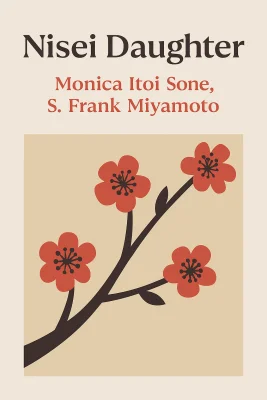
Nisei Daughter
Categories
Nonfiction, Biography, History, Memoir, Biography Memoir, Japan, Historical, World War II, War, Asian American
Content Type
Book
Binding
Paperback
Year
1978
Publisher
University of Washington Press
Language
English
ASIN
0295956887
ISBN
0295956887
ISBN13
9780295956886
File Download
PDF | EPUB
Nisei Daughter Plot Summary
Introduction
In the shadow of Seattle's bustling waterfront, where the clash of cultures created both opportunity and tension, a young Japanese-American girl came of age during one of America's most turbulent periods. Monica Sone's journey from a carefree childhood in her family's Skid Row hotel to the stark barracks of World War II internment camps reveals the profound complexities of growing up between two worlds. Her story illuminates the peculiar challenge faced by second-generation immigrants who found themselves caught between their parents' homeland traditions and their own American dreams. Through Monica's eyes, readers encounter the universal struggle of identity formation magnified by extraordinary circumstances. Her narrative offers insights into the resilience required to maintain dignity in the face of injustice, the courage needed to forge one's path when society offers limited choices, and the wisdom that emerges from learning to embrace rather than reject one's dual heritage. This remarkable account demonstrates how personal growth often emerges from the most challenging circumstances, transforming what initially feels like a burden into a source of strength and understanding.
Chapter 1: Growing Up Japanese-American in Seattle
Monica Sone's early years unfolded in the colorful chaos of Seattle's waterfront district, where her family operated the Carrollton Hotel. This was a world far removed from the genteel neighborhoods where most children grew up, yet it provided her with an unfiltered education in human nature and American diversity. The hotel served as home to an eclectic mix of characters: weathered sailors, migrant workers, and society's forgotten souls who found refuge in the modest accommodations her parents provided with dignity and care. The shocking revelation at age six that she possessed "Japanese blood" marked Monica's first encounter with the complexity of her identity. Until that moment, she had simply been an American child, playing freely among the diverse residents of Skid Row, absorbing the vitality of a port city where cultures mixed and mingled. The announcement came with the unwelcome news that she would attend Japanese language school after her regular classes, forcing her to confront the reality that being Japanese in America carried special obligations and expectations. Her parents, particularly her father, had arrived in America with dreams of legal study and professional success, only to find themselves channeled into the limited opportunities available to Asian immigrants. Yet they built their lives with determination, transforming a run-down hotel into a respectable establishment while raising four children who moved easily between the rough-and-tumble world of the waterfront and the more refined expectations of school and church. This early exposure to America's full spectrum of humanity, from the most marginalized to the most respectable, gave Monica an understanding of her country's complexity that would serve her well in the trials ahead. The family's position straddling two worlds became increasingly apparent as Monica grew older. At home, she was surrounded by the entrepreneurial spirit and practical wisdom of immigrants making their way in a new land, while outside, she was expected to navigate the subtle and not-so-subtle boundaries that defined her place as an Asian-American in the 1930s.
Chapter 2: Cultural Clash and Family Dynamics
The tension between Japanese tradition and American freedom played out daily in the Sone household, creating a constant negotiation between old-world expectations and new-world possibilities. Monica's mother, despite her youth when she arrived in America, carried deep respect for Japanese customs and the poetry that connected her to her homeland. Her father, though more pragmatic in his approach to American life, still expected his children to understand and honor their Japanese heritage through language study and proper deportment. The most vivid example of this cultural balancing act emerged in Monica's passionate desire to become a ballet dancer. Her father's categorical refusal stemmed not from any desire to limit her dreams, but from his association of Western dance with the scandalous burlesque shows that had shocked him as a young immigrant. His gentle but immovable resistance taught Monica about the power of quiet determination over dramatic confrontation, though it also highlighted how cultural misunderstandings could create barriers where none need exist. Family gatherings revealed the intricate social codes that governed Japanese-American life. The elaborate politeness required during visits with families like the Matsuis, where children were expected to sit quietly and refuse multiple offers of food, contrasted sharply with the more relaxed atmosphere Monica enjoyed with her American friends. These experiences taught her to code-switch between cultural contexts, developing the ability to present herself appropriately in widely different social situations. Her mother's struggles with English provided both humor and poignancy to family life. The well-meaning but often disastrous encounters with teachers and shopkeepers demonstrated the challenges faced by immigrant parents trying to advocate for their children while navigating a second language. Yet these same experiences also revealed her mother's resilience and determination to participate fully in American life, refusing to be confined by linguistic limitations. The family's approach to celebrating holidays reflected their bicultural reality, blending American traditions like Thanksgiving and Christmas with Japanese customs like New Year's visits and traditional tea ceremonies. This synthesis created a unique family culture that honored both heritages while forging something distinctly their own.
Chapter 3: First Encounters with Prejudice
Monica's initial encounters with racial prejudice came as jarring interruptions to her largely sheltered childhood. The search for a summer cottage near Alki Beach provided her first direct experience with institutional discrimination, as door after door closed not because of any personal failing, but simply because of her family's Japanese ancestry. The blunt rejection by one woman who declared she didn't want "Japs around here" delivered a shock that reverberated through Monica's understanding of her place in American society. These experiences forced Monica to confront uncomfortable questions about her identity and worth. The internal struggle between feeling ashamed of her Japanese heritage and developing pride in it created a psychological tension that many second-generation Americans have faced. Her mother's wisdom in counseling her to value herself as a human being regardless of others' prejudices provided a crucial foundation for the more severe challenges that lay ahead. The broader political context of Japan's military actions in Asia during the 1930s created additional strain for Japanese-Americans in Seattle. Monica witnessed how international events could suddenly transform neighbors into suspicious strangers, how editorial cartoons depicting hideously caricatured Japanese faces made her squirm with recognition. The Chinese community's decision to wear identification badges distinguishing them from Japanese Americans highlighted how quickly racial solidarity could fracture under political pressure. Within the Japanese-American community itself, debates raged about the proper response to discrimination. Some advocated for quiet acceptance and gradual assimilation, while others argued for more active resistance to unfair treatment. The decision by some young Japanese-Americans to relocate to the Midwest or East Coast in search of better opportunities reflected a growing recognition that the West Coast might never fully accept them as equals. These early encounters with prejudice prepared Monica for the much larger challenge that awaited, though nothing could have fully prepared her for the systematic removal of her entire community from their homes. The seeds of resilience planted during these smaller confrontations would prove essential when the full force of wartime hysteria was unleashed against Japanese-Americans.
Chapter 4: Pearl Harbor and Its Aftermath
The news of Pearl Harbor's bombing struck the Japanese-American community like a physical blow, instantly transforming them from ordinary citizens into objects of suspicion and fear. For Monica's family, the attack represented not only a national tragedy but a personal catastrophe that would fundamentally alter their lives. The immediate reaction within their community varied from shock to resignation, as families understood that their Japanese ancestry had suddenly become a liability of enormous proportions. The FBI raids that followed systematically removed community leaders, leaving behind families uncertain about their loved ones' whereabouts and fearful about their own futures. Monica watched as prominent figures like newspaper editors and business leaders disappeared into detention centers, while their families waited anxiously for any word about their condition. The arbitrary nature of these arrests created a climate of fear that permeated every aspect of daily life. The family's response to this crisis revealed both their pragmatism and their deep love for America despite the injustices being perpetrated against them. The painful decision to burn cherished books, photographs, and cultural artifacts reflected their understanding that possession of anything Japanese could be interpreted as evidence of disloyalty. This destruction of family treasures represented a sacrifice that went far beyond mere material loss, cutting at the heart of their cultural identity. Monica's father maintained his dignity throughout this period, refusing to be provoked into anger or despair even as his business interests were threatened and his family's future became increasingly uncertain. His calm response to the crisis provided stability for his children, though Monica could see the toll it took on both her parents. The waiting became almost unbearable as Executive Order 9066 made clear that their removal from the West Coast was not a matter of if, but when. The community's varied reactions to the formation of the all-Japanese combat unit revealed the complexity of their position. Some saw military service as a chance to prove their loyalty, while others questioned why they should fight for a country that had imprisoned them without trial. These debates reflected the profound moral challenge faced by citizens who had been stripped of their rights but not their obligations.
Chapter 5: Life in the Internment Camps
The journey from Seattle to the temporary assembly center at Puyallup, followed by relocation to the permanent camp at Minidoka, Idaho, represented a descent into a carefully controlled form of exile. The transition from their comfortable family home to a single barracks room marked not just a change in living conditions, but a fundamental alteration in their status as Americans. The armed guards and barbed wire made clear that they were now prisoners, despite never having been charged with any crime. Camp life imposed a strange mixture of hardship and routine that gradually became normalized. The dust storms that plagued Minidoka during Monica's first summer there seemed to symbolize the harsh reality of their new existence, while the bitter cold of winter tested their physical and emotional endurance. Yet within these constraints, the community worked to create as normal a life as possible, establishing schools, churches, and recreational activities that provided structure and meaning to their days. Monica's work at the camp hospital connected her to the broader community's struggles while providing her with a sense of purpose. The artificial economy of the camp, where doctors earned little more than manual laborers, reflected the leveling effect of their shared predicament. Despite the injustices they faced, the internees maintained their dignity through their commitment to productive work and community service. The cultural life that flourished within the camps demonstrated the resilience of the human spirit even under oppressive conditions. From the elaborate wedding celebration for Monica's brother Henry to the quiet moments of beauty found in unexpected places, the internees refused to let their circumstances completely define their existence. They created art, music, and literature that transformed their experience from mere survival into something more meaningful. The gradual opening of opportunities for resettlement in the Midwest and East Coast provided hope for those ready to start over in unfamiliar territory. Monica's decision to accept such an opportunity represented both an escape from camp life and a leap into an uncertain future where she would have to rebuild her identity in yet another new context.
Chapter 6: Finding Freedom in the Midwest
Monica's journey to Chicago and eventually to Wendell College in Indiana marked her entrance into a different kind of America, one where her Asian features attracted curiosity rather than hostility. The kindness of the Richardson family, who had served as missionaries in Asia, provided her with a model of Christian compassion that helped heal some of the wounds inflicted by her wartime experiences. Their acceptance of her as a family member rather than merely a charity case restored her faith in the possibility of genuine interracial friendship. The experience of working for Dr. Moller, the demanding dentist, taught Monica valuable lessons about standing up for her own dignity while representing her community. Her decision to quit despite pressure to remain demonstrated the importance of self-respect over the desire to avoid conflict. This episode marked a crucial step in her development from a person who absorbed prejudice passively to one who actively resisted unfair treatment. College life at Wendell provided Monica with the normalcy she had been denied during her high school years. The international atmosphere of the campus, with students from around the world, placed her Asian identity in a broader context of global citizenship rather than racial otherness. The genuine friendships she formed with students from various backgrounds helped her understand that her wartime experiences, while traumatic, need not define her entire future. The honest conversation with sorority members about their inability to offer her membership due to national restrictions demonstrated how even well-intentioned people could be trapped by institutional prejudices. Yet their willingness to explain the situation directly rather than simply ignoring her showed a level of respect and honesty that pointed toward better possibilities for interracial understanding. Her academic success and growing confidence in psychology as a career field reflected her transformation from a person unsure of her place in American society to one ready to contribute her unique perspective to helping others. The support she received from faculty and administrators proved that institutions could be forces for inclusion when led by people committed to genuine equality.
Chapter 7: Reconciling Dual Heritage
Monica's return visit to the internment camp during her college years provided crucial perspective on how far she had traveled, both physically and emotionally, since her imprisonment. The contrast between the vibrant life she was building in the outside world and the diminished existence of those still confined highlighted the importance of moving forward while honoring the experiences that had shaped her. Her parents' quiet pride in her achievements, despite their own continued hardships, demonstrated the sacrificial love that had sustained their family through its darkest period. The gradual acceptance of her Japanese-American identity represented a fundamental shift from seeing her dual heritage as a burden to recognizing it as a source of strength and insight. Her realization that being born into two cultures was "like getting a real bargain in life, two for the price of one" reflected a mature understanding that difference could be valuable rather than merely problematic. This acceptance freed her to draw on both aspects of her heritage as resources for personal growth and service to others. Her decision to pursue clinical psychology as a career reflected her desire to use her experiences of marginalization and recovery to help others facing similar challenges. The empathy and resilience developed through her own struggles positioned her to understand the psychological needs of people dealing with discrimination, displacement, and identity conflicts. Her academic success proved that the internment experience, while traumatic, had also developed qualities of determination and perspective that served her well in demanding professional training. The eventual reunion of her family members in various parts of the country demonstrated how the forced dispersion had ultimately led to new opportunities and broader horizons. While the cost of these opportunities had been enormous, the family's ability to rebuild their lives in different regions showed the adaptability and strength that had always characterized immigrant communities in America. Monica's final reflection on feeling "like a whole person instead of a sadly split personality" captured the essential achievement of her journey. The integration of her Japanese and American identities created not a compromise between two incompatible worldviews, but a richer and more complex understanding of what it meant to be American in a diverse society.
Summary
Monica Sone's remarkable journey from a confused child questioning her place in America to a confident young woman embracing her bicultural identity offers profound insights into the challenges and possibilities of American life. Her story demonstrates that the most painful experiences can become sources of wisdom and strength when met with courage, dignity, and the support of caring communities. The transformation of what initially felt like a shameful burden into a valued aspect of her identity illustrates the potential for personal growth even under the most difficult circumstances. Her experience provides valuable lessons for anyone struggling with questions of identity, belonging, or recovery from injustice. The importance of maintaining one's dignity while working for change, the power of education and genuine friendship to overcome prejudice, and the possibility of finding meaning in suffering are themes that resonate far beyond the specific context of Japanese-American internment. Monica's story encourages readers to view their own complex identities not as problems to be solved but as resources to be developed and shared with the world.
Best Quote
Review Summary
Strengths: The review highlights the book's ability to provide a personal and historical account of a Nisei's life in Seattle during WWII, including family life, cultural differences between Issei and Nisei, and the experience of internment. The author is praised for her objective narrative and for contextualizing her biography within historical events, making it accessible to a broad audience. The book offers a fresh perspective on Japanese-American identity and the internment experience. Weaknesses: The review notes that the book felt surface-level and lacked depth compared to other internment narratives. Overall: The reader finds the book insightful and appreciates its unique perspective on Japanese-American identity and history, recommending it for its accessible storytelling and historical context.
About Author

Monica Itoi Sone
Sone explores the intricacies of cultural identity and resilience through her autobiographical work, using her own life experiences as a lens to delve into broader societal issues. Her primary focus is on the challenges faced by Japanese Americans, particularly during the turbulent times of World War II internment. In her acclaimed book, "Nisei Daughter", she provides a vivid account of her childhood in Seattle, her family's internment, and her pursuit of education amidst adversity. By blending personal narrative with historical context, Sone offers readers insight into the complexities of cultural duality and the search for belonging.\n\nIn her writing, Sone employs a style characterized by honesty and simplicity, combined with elements of humor and pathos. This approach not only humanizes the Japanese American experience but also invites readers to empathize with the challenges of navigating between two cultures. The themes of racism, internment, and identity are skillfully interwoven with her own story, providing a compelling narrative that continues to resonate in Asian American and Women's Studies.\n\nThe impact of Sone's work is significant, particularly for readers seeking to understand the historical and cultural nuances of the Japanese American experience. Her contributions extend beyond literature into educational curricula, where her story serves as a vital resource for discussions on race, identity, and resilience. As a writer, Sone provides a platform for underrepresented voices, ensuring that the lessons of the past remain relevant and accessible. This short bio underscores the lasting influence of her work, which continues to enlighten and inform new generations of readers.
Read moreDownload PDF & EPUB
To save this Black List summary for later, download the free PDF and EPUB. You can print it out, or read offline at your convenience.
Nisei Daughter
by Monica Itoi Sone
