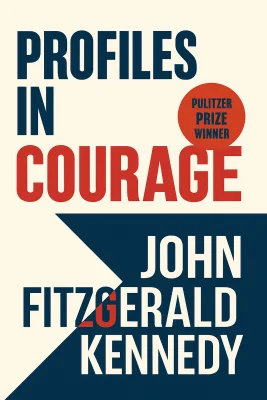
Profiles in Courage
Categories
Nonfiction, Biography, History, Leadership, Politics, Classics, Biography Memoir, Historical, Presidents, American History
Content Type
Book
Binding
Hardcover
Year
2003
Publisher
Harper
Language
English
ASIN
0060530626
ISBN
0060530626
ISBN13
9780060530624
File Download
PDF | EPUB
Profiles in Courage Plot Summary
Introduction
In the dimly lit Senate chamber of 1954, as dawn broke over the Capitol, a lone figure rose to address his weary colleagues. Senator Sam Houston of Texas, the hero of San Jacinto, stood defiant against overwhelming odds, prepared to cast a vote that would end his political career. His deep voice carried words that would echo through history, defending principles he knew his constituents despised. This moment of solitary courage exemplifies the extraordinary moral fiber that has occasionally elevated American politics above mere partisan calculation. The United States Senate has witnessed countless moments when individual conscience clashed with popular opinion, when personal integrity battled political survival. These are the stories of senators who chose principle over popularity, who risked everything they had worked for to defend what they believed was right. Through their experiences, we discover the true meaning of political courage, the price of moral leadership, and the complex relationship between representatives and the people they serve. Their examples illuminate both the nobility possible in democratic governance and the personal sacrifices required to maintain it.
Chapter 1: The Value of Political Courage in Democracy
Political courage represents democracy's greatest virtue and its most demanding test. In a system where survival depends on popular approval, the willingness to defy public opinion requires extraordinary moral strength. The American political system, designed by the founding fathers, intentionally created tensions between immediate popular will and deliberate judgment. Senators, with their six-year terms and state-wide constituencies, were expected to exercise independent judgment even when it conflicted with prevailing sentiment. The pressures facing elected officials extend far beyond simple vote counting. Party loyalty demands conformity to established positions, while regional interests pull representatives toward sectional concerns. Financial supporters expect favorable consideration, and social circles reward those who maintain acceptable opinions. The modern senator navigates between competing loyalties to party, state, nation, and conscience, often finding these obligations in direct conflict. Yet political courage serves a purpose beyond individual nobility. Democracy requires leaders willing to educate rather than merely follow public opinion, to consider long-term consequences over short-term popularity. The willingness of some senators to stand alone has prevented mob rule while preserving constitutional principles. Their examples demonstrate that representative government can rise above the lowest common denominator of popular prejudice. The most profound acts of political courage often appear as betrayal to those who elected the courageous senator. When John Quincy Adams abandoned the Federalist party to support Jefferson's policies, his Massachusetts constituents felt deceived. When Daniel Webster endorsed compromise with slaveholders, abolitionists branded him a traitor. These men discovered that doing right and being understood rarely coincide in the heated atmosphere of political controversy. The institutional framework of the Senate has evolved to both encourage and punish independence. The chamber's traditions of extended debate and individual privilege empower minority voices, yet the realities of modern campaigning make electoral survival increasingly dependent on organized support. Political courage thus becomes more difficult as the costs of independence rise and the rewards for conformity multiply.
Chapter 2: John Quincy Adams: Principle Over Party
John Quincy Adams entered the Senate in 1803 as a young Federalist from Massachusetts, carrying the weight of his father's presidential legacy and the expectations of a party that viewed him as their future leader. Born into America's premier political family, Adams possessed every advantage except the temperament for partisan politics. His rigorous Puritan upbringing instilled a devotion to abstract principle that would repeatedly clash with practical political considerations. From his earliest days in Washington, Adams demonstrated an uncomfortable independence that unsettled both allies and opponents. The Louisiana Purchase provided Adams his first opportunity to place national interest above party loyalty. While fellow Federalists opposed the acquisition as unconstitutional and threatening to New England's political dominance, Adams recognized the purchase as essential to American security and expansion. His support for Jefferson's treaty shocked his Federalist colleagues, who expected party unity against their Democratic-Republican opponents. Adams compounded their dismay by attending a celebration dinner for the purchase, earning him immediate condemnation as a traitor to party principles. Adams' break with his party became irreparable during the Embargo crisis of 1807. When Jefferson imposed a complete trade embargo following British attacks on American shipping, Massachusetts merchants faced economic ruin. The state's Federalist establishment expected Adams to lead opposition to the devastating policy. Instead, Adams supported the embargo as preferable to war, arguing that national honor outweighed regional economic interests. He chaired the Senate committee that drafted the embargo legislation and defended it publicly despite knowing it would destroy his political career. The Massachusetts Federalist Party responded with unprecedented fury. Newspapers branded Adams a renegade and apostate, while former friends shunned him in Boston society. The state legislature elected his successor nine months early, sending an unmistakable message of repudiation. Party leaders instructed Adams to vote for the embargo's repeal, triggering his immediate resignation from the Senate. He preferred political exile to compromising his convictions. Adams' courage lay not merely in defying party expectations but in maintaining intellectual honesty despite enormous pressure to conform. He approached each issue as an independent problem requiring careful analysis rather than reflexive partisan response. His willingness to study, think, and conclude differently from his political sponsors established a precedent for senatorial independence that transcended party boundaries. Though his Senate career ended in apparent failure, Adams had demonstrated that representative government could produce leaders capable of rising above sectional and partisan prejudice.
Chapter 3: Daniel Webster and the 1850 Compromise
Daniel Webster stood at the pinnacle of American oratory when he rose to address the Senate on March 7, 1850, delivering what would become the most controversial speech of his distinguished career. The "Godlike Daniel," renowned for his magnificent voice and commanding presence, faced a nation teetering on the brink of civil war. Southern states threatened secession over California's admission as a free state, while Northern abolitionists demanded no compromise with slavery's expansion. Webster chose this moment to risk his reputation for the Union's preservation. The Seventh of March speech represented a complete reversal of Webster's previous positions. He had consistently opposed slavery's expansion and supported the Wilmot Proviso's prohibition of slavery in new territories. His Massachusetts constituents expected him to maintain this stance, viewing any accommodation with slavery as moral surrender. Instead, Webster endorsed Henry Clay's comprehensive compromise package, including the hated Fugitive Slave Law that would require Northern citizens to assist in capturing runaway slaves. Webster's reasoning reflected his deep constitutional conservatism and genuine fear of disunion. He believed that compromise offered the only alternative to civil war, which would destroy both slavery and freedom. His speech methodically addressed each section's grievances while calling for mutual forbearance and national unity. Webster argued that geography and climate made slavery's expansion into most new territories unlikely, rendering the abstract principle of prohibition less important than preserving the Union itself. The immediate reaction to Webster's speech revealed the political costs of his courage. Massachusetts erupted in denunciation, with former admirers like Ralph Waldo Emerson and John Greenleaf Whittier publishing scathing condemnations of his apparent betrayal. The abolitionist press branded him a traitor, while political opponents gleefully exploited his vulnerability. Webster's Presidential ambitions, long cherished, evaporated as Northern Whigs abandoned him for his compromise position. Yet Webster's sacrifice achieved its intended purpose. His endorsement provided crucial Northern support for the Compromise of 1850, helping prevent immediate secession and civil war. Southern leaders, recognizing that even Massachusetts' most prominent senator supported conciliation, moderated their threats. The compromise bought ten years of peace, during which the North gained strength and unity that proved decisive when war finally came. Webster died before seeing his vindication, sustained only by his conviction that he had chosen Union over personal ambition.
Chapter 4: Southern Patriots: Houston and Benton
Sam Houston and Thomas Hart Benton represented the complex loyalties that divided Southern Democrats before the Civil War. Both men embodied their region's values while maintaining fierce devotion to the Union that ultimately destroyed their political careers. Houston, the hero of Texas independence, and Benton, Missouri's dominant political figure for three decades, chose national unity over sectional solidarity when forced to decide between competing loyalties. Houston's political courage emerged gradually through his opposition to sectional extremism on both sides. As Texas entered the Union, he consistently argued for moderation and compromise, warning that disunion would bring catastrophic war. His vote against the Kansas-Nebraska Act in 1854 marked his complete break with Southern orthodoxy. Houston viewed the Missouri Compromise as a sacred compact that should not be disturbed for partisan advantage. His lonely opposition to reopening the slavery question earned him condemnation throughout the South as a traitor to his section. Benton's independence developed through his longstanding feud with John C. Calhoun over nullification and state sovereignty. Missouri's "Old Bullion" believed in Federal Union and gradual westward expansion, opposing both abolitionist extremism and secessionist threats. When Calhoun's supporters gained control of Missouri's Democratic Party, Benton found himself politically isolated despite thirty years of distinguished service. His refusal to support Calhoun's Southern Address cost him re-election and marked the beginning of his political exile. Both men faced similar pressures as their states embraced sectional militancy. Houston's Texas constituents demanded support for Southern rights and territorial expansion of slavery. Benton's Missouri increasingly identified with Southern interests despite its border state location. Each senator understood that political survival required accommodation with sectional sentiment, yet neither could abandon his devotion to Union. They chose principle over political survival, accepting defeat rather than compromising their fundamental beliefs. The parallel destruction of Houston and Benton's careers illustrated the impossibility of maintaining moderate positions as sectional crisis intensified. Their constituents viewed any deviation from regional orthodoxy as betrayal, while their independence isolated them from potential allies in other sections. Both men ended their careers as political outcasts, sustained only by their conviction that Union transcended all other considerations. Their sacrifices helped preserve border state loyalty during the Civil War, validating their belief that nationalism must triumph over sectionalism.
Chapter 5: Edmund Ross and the Johnson Impeachment
The impeachment trial of President Andrew Johnson in 1868 created the most intense political pressure any group of senators has ever faced. Seven Republican senators held the President's fate in their hands, knowing that conviction would revolutionize American government by making the presidency subordinate to congressional will. Edmund Ross of Kansas, a freshman senator from the most radical Republican state, became the crucial swing vote whose decision would determine whether constitutional government or legislative supremacy would prevail. Ross approached the impeachment trial with genuine uncertainty about Johnson's guilt and deep concern about the precedent conviction would establish. Though he personally disliked the President and opposed his policies, Ross recognized that impeachment for political disagreement would fundamentally alter the constitutional balance between executive and legislative branches. The charges against Johnson, centering on his removal of Secretary of War Edwin Stanton in violation of the Tenure of Office Act, seemed insufficient to justify the extreme remedy of removal from office. The pressure campaign directed against Ross and his six Republican colleagues exceeded anything previously seen in American politics. Party leaders employed threats, bribes, and social ostracism to ensure party loyalty. Kansas newspapers and politicians demanded Ross's vote for conviction, warning that acquittal would end his career and disgrace his state. Professional witnesses claimed Ross had agreed to change his vote for money, while colleagues avoided association with him as though he carried a contagious disease. Ross's decision to vote for acquittal reflected his belief that constitutional principles outweighed partisan considerations. He understood that conviction on insufficient evidence would establish a precedent making future presidents vulnerable to congressional whim. His vote, delivered in a tense Senate chamber before a packed gallery, saved Johnson by a single vote and preserved the independence of the executive branch. The consequences for Ross and his courageous colleagues were swift and devastating. All seven Republican senators who voted for acquittal lost their political careers, facing defeat or retirement at the next election. Ross returned to Kansas to find himself socially ostracized, financially ruined, and politically destroyed. Yet history vindicated his courage when Congress later repealed the Tenure of Office Act and the Supreme Court declared it unconstitutional. Ross had sacrificed his career to maintain the constitutional system that protects American liberty to this day.
Chapter 6: Lamar to Taft: Modern Profiles in Courage
The twentieth century brought new challenges that tested senatorial courage in different ways than the great constitutional crises of the previous era. Lucius Lamar of Mississippi and Robert Taft of Ohio, separated by decades but united in their commitment to principle over popularity, demonstrated that political courage remained relevant in modern America. Both men chose unpopular positions that damaged their careers while advancing important national interests. Lamar's courage manifested in his determination to heal the wounds of Civil War and Reconstruction. As a former Confederate official, he possessed impeccable Southern credentials that made his advocacy of reconciliation particularly significant. His eulogy of abolitionist Charles Sumner in 1874 shocked both North and South but began the process of sectional healing essential to national unity. Later, his vote against free silver despite explicit instructions from the Mississippi legislature cost him tremendous political support but demonstrated that Southern Democrats could place national financial stability above regional economic interests. Taft's political courage emerged in his consistent defense of constitutional principles regardless of popular opinion or political consequences. His criticism of the Nuremberg war crimes trials in 1946, delivered at the height of his influence as "Mr. Republican," exemplified his willingness to defend unpopular positions when fundamental legal principles were at stake. Taft argued that trying Nazi leaders under ex post facto laws violated American constitutional traditions and set dangerous precedents for international justice. Both senators paid significant political prices for their independence. Lamar faced condemnation from Mississippi newspapers and politicians who viewed his reconciliation efforts as betrayal of Southern honor. Taft's Nuremberg speech generated nationwide criticism and may have cost him the 1948 Republican presidential nomination. Each man understood the likely consequences of his actions but proceeded anyway based on his assessment of the national interest. The courage displayed by Lamar and Taft differed from earlier examples in its focus on constitutional and international principles rather than immediate political crises. Their independence reflected deep study and careful reasoning rather than emotional responses to dramatic events. Both men demonstrated that modern senators could maintain philosophical consistency despite the increasing pressures of mass media, organized interest groups, and sophisticated political campaigns. Their examples established important precedents for senatorial independence in the modern era. Lamar showed that sectional reconciliation required leaders willing to transcend regional prejudices, while Taft proved that constitutional principles must be defended even when applying them to unpopular causes. Both men contributed to the Senate's institutional dignity by demonstrating that careful deliberation and principled reasoning could still triumph over political expedience.
Chapter 7: The Meaning of Courage in Public Life
Political courage ultimately stems from the recognition that some principles transcend personal ambition and popular approval. The senators profiled in these pages shared a common willingness to risk everything they had worked to achieve rather than compromise their deepest convictions. Their examples illuminate the essential tension between democratic responsiveness and responsible leadership that lies at the heart of representative government. The nature of political courage has evolved with changing circumstances, but its essence remains constant. John Quincy Adams defied party loyalty when national interest demanded independence. Daniel Webster sacrificed presidential ambitions to preserve the Union. Sam Houston chose nationalism over sectionalism despite representing Texas. Each man understood that leadership sometimes requires advancing unpopular truths rather than reflecting popular prejudices. Their willingness to educate rather than merely represent their constituents distinguished them from ordinary politicians. These examples demonstrate that political courage serves democracy's highest purposes by protecting minority rights, preserving constitutional principles, and maintaining institutional integrity. Without senators willing to resist popular passions, democratic government degenerates into mob rule. The willingness of some legislators to stand alone has prevented the tyranny of temporary majorities while preserving space for reasoned deliberation and principled compromise. The personal costs of political courage remain severe, as modern examples continue to demonstrate. Senators who defy popular opinion face electoral defeat, social ostracism, and historical condemnation from those who mistake independence for betrayal. Yet the alternative—governance by poll numbers and focus groups—reduces representatives to weather vanes responding to every shift in public sentiment. The senators who chose courage over comfort provided examples of what democratic leadership could achieve at its best. Political courage requires no special qualifications beyond the willingness to place principle above personal interest. These stories demonstrate that ordinary individuals can rise to extraordinary moral heights when circumstances demand decisive action. The challenge facing contemporary democracy is whether it can still produce leaders willing to risk their careers for causes larger than themselves, and whether citizens can learn to reward such courage rather than punish it.
Summary
The senators whose stories fill these pages shared one transcendent quality: the moral courage to risk everything they valued for principles they considered more important than personal success. Their examples prove that democratic government at its best can produce leaders who educate and inspire rather than merely reflect popular opinion. From John Quincy Adams's lonely independence to Robert Taft's constitutional consistency, these men demonstrated that representative government depends ultimately on the willingness of some representatives to follow conscience rather than constituency when fundamental principles are at stake. Their legacy offers both inspiration and instruction for contemporary democracy. Political courage requires no special talents beyond intellectual honesty, moral conviction, and the strength to accept severe personal consequences for unpopular positions. Modern citizens seeking authentic leadership should look for candidates willing to risk their careers for important causes, while recognizing that such individuals may advocate positions that challenge comfortable assumptions. The health of democratic institutions depends on our ability to distinguish between principled independence and mere obstinacy, rewarding the former while tempering our demands for perfect agreement with our representatives.
Best Quote
“If by a "Liberal" they mean someone who looks ahead and not behind, someone who welcomes new ideas without rigid reactions, someone who cares about the welfare of the people-their health, their housing, their schools, their jobs, their civil rights and their civil liberties-someone who believes we can break through the stalemate and suspicions that grip us in our policies abroad, if that is what they mean by a "Liberal", then I'm proud to say I'm a "Liberal.” ― John F. Kennedy, Profiles in Courage
Review Summary
Strengths: The review highlights the book's inspirational nature, emphasizing its portrayal of political courage and integrity. It appreciates the historical insights into forgotten political leaders who prioritized principles over personal gain. The book is described as refreshing and hopeful, particularly in the context of modern political disillusionment. Weaknesses: The review notes potential inaccuracies in some chapters and questions the extent of Kennedy's authorship. It also mentions the repetitive use of the word "vituperative," which may be seen as excessive. Overall: The reader finds the book to be an inspiring and hopeful read, especially relevant in today's political climate. Despite concerns about historical accuracy and authorship, it is recommended for both cynics and optimists interested in political courage.
About Author

John Fitzgerald Kennedy
Kennedy delves into the interplay of courage and leadership in political life, most notably in his book "Profiles in Courage", which earned him a Pulitzer Prize. While serving as a U.S. Senator for Massachusetts, Kennedy explored themes of moral and political bravery, reflecting his own complex journey from wartime hero to a transformative political figure. His writings demonstrate a deep engagement with the challenges and responsibilities of leadership, resonating with readers who appreciate an insightful look into the moral dilemmas faced by political leaders.\n\nKennedy's presidency was marked by ambitious projects and pivotal moments in American history. He established the Peace Corps and the Alliance for Progress, aiming to strengthen ties with other nations while fostering peace and development. His administration's navigation of the Cuban Missile Crisis exemplifies his focus on diplomacy and strategic decision-making during the Cold War. For readers interested in historical decision-making under pressure, Kennedy’s initiatives provide a compelling study in balancing global responsibilities with national interests.\n\nIn the wider scope of his career, Kennedy's ability to adapt and innovate in times of crisis continues to offer valuable lessons for contemporary audiences. His bio reflects a leader who, despite numerous personal challenges, made significant strides in areas such as civil rights and space exploration. For those seeking inspiration from a political figure who balanced idealism with pragmatism, Kennedy’s legacy offers a rich narrative of courage and foresight, proving instructive for both historians and those interested in political science.
Read moreDownload PDF & EPUB
To save this Black List summary for later, download the free PDF and EPUB. You can print it out, or read offline at your convenience.
Profiles in Courage
by John Fitzgerald Kennedy
