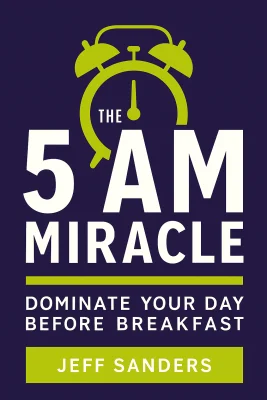
The 5 A.M. Miracle
Dominate Your Day Before Breakfast
Categories
Business, Nonfiction, Self Help, Psychology, Leadership, Productivity, Audiobook, Personal Development, How To
Content Type
Book
Binding
Paperback
Year
2015
Publisher
Ulysses Press
Language
English
File Download
PDF | EPUB
The 5 A.M. Miracle Plot Summary
Introduction
Imagine waking up each morning with a sense of purpose and boundless energy, ready to tackle your most important goals before the world even begins to stir. For many people, mornings represent a chaotic rush or wasted hours, but they hold the potential to transform your entire life. The most successful individuals throughout history have harnessed the power of early mornings to accomplish extraordinary things. The quiet hours of dawn offer a unique opportunity to reclaim control of your life and redirect it toward your grandest aspirations. When you intentionally rise early, you create space for focus, clarity, and consistent progress that simply isn't available amid the distractions of a typical day. This isn't merely about changing when your alarm sounds—it's about embracing a mindset that prioritizes your highest potential and creating a blueprint for achievement that begins with those first precious hours.
Chapter 1: Embrace the 5 AM Mindset
The 5 AM mindset represents far more than just waking up at a specific hour—it embodies an intentional approach to life that begins with taking control of your mornings. At its core, this mindset is about making a conscious decision to prioritize your most important goals before the demands of the day can derail your focus. When you embrace this perspective, you're essentially declaring that your dreams deserve dedicated time and energy. Jeff Sanders, a productivity coach and ultramarathon runner, discovered this transformative power while training for a marathon. Working a full-time job as a career advisor while building a side business as a productivity coach and podcaster, he struggled to find time for his daily runs. Despite his best intentions to exercise after work, something always seemed to get in the way. As Sanders recalls, "It did not seem to matter how I finagled my evening routine; consistently working out after a long day at the office proved to be as challenging as running the marathon itself!" Faced with this challenge, Sanders reluctantly turned to what he considered his worst-case scenario: waking up earlier to run before work. As someone who never identified as a morning person—who hit the snooze button multiple times and refused to smile until after his morning coffee—the prospect of early morning runs felt like "a double kick in the pants." Who would voluntarily wake up early and immediately exercise? Yet this decision became what Sanders describes as "the greatest personal and professional decision I had made in years, and possibly, ever." The early morning hours provided uninterrupted time for his most important priorities, creating a ripple effect throughout his entire day. With his workout completed before most people even woke up, he experienced increased energy, improved focus, and a sense of accomplishment that carried through until bedtime. The beauty of the 5 AM mindset lies in its flexibility. While Sanders advocates for 5:00 AM as an ideal wake-up time, he emphasizes that the specific hour matters less than the intention behind it. Whether you rise at 5:00 AM, 6:30 AM, or even 7:00 AM, the key is creating a consistent morning routine that aligns with your grandest goals. This approach isn't about torturing yourself with sleep deprivation—it's about optimizing your most productive hours and establishing boundaries that protect your highest priorities. To begin embracing this mindset, start by making four key commitments: having a written plan for your day, implementing healthy habits for optimal energy, choosing short-term objectives that support your life's grandest goals, and tracking your progress with accountability measures. These fundamental promises to yourself create the foundation for extraordinary achievement that begins at dawn.
Chapter 2: Design Your Morning Blueprint
Creating your ideal morning routine isn't about following someone else's formula—it's about designing a personalized blueprint that aligns with your unique goals, energy patterns, and life circumstances. Your morning blueprint serves as the architectural framework that transforms good intentions into consistent actions, bridging the gap between who you are and who you aspire to become. Sanders shares how his own morning transformation began with painful memories of high school, when his father would wake him by splashing cold water on his face because he'd hit the snooze button so often. "I would make a mad dash to the bathroom, throw on a few wrinkled clothes, and shove a bowl of cereal down my throat as I ran out the door, only to drive well above the speed limit on the race to my first class," he recalls. This chaotic pattern continued until he realized his mornings could be intentionally designed rather than frantically survived. Through experimentation and refinement, Sanders discovered that no single morning routine works for every situation. Instead, he developed four distinct variations to accommodate different daily demands: The Hustle (for ultra-busy days when time is extremely limited), The 9 to 5 (for typical workdays with moderate time available), The Saunter (for weekends or days off with abundant time), and The Custom (for unique situations requiring special planning). This flexible approach acknowledges the reality that life doesn't follow a perfectly consistent pattern. To design your own morning blueprint, begin by identifying how much time you realistically have available each morning. If you need to leave for work at 8:30 AM and plan to wake at 6:30 AM, you have a two-hour window to work with. Next, align your morning activities with your grandest goals—if you're training for a triathlon, schedule an early swim; if you're learning Portuguese for an upcoming trip to Brazil, dedicate time to language practice. The most effective morning blueprints prioritize energy as their foundation. Sanders emphasizes that "the number one goal of my morning routine is to increase my energy for the day." His personal energy-boosting rituals include drinking a liter of water followed by espresso, exercise, and a nutrient-dense green smoothie. This focus on physical vitality creates the momentum needed for sustained productivity throughout the day. Remember that your morning actually begins the night before. Establish an evening routine with a firm boundary for ending work, reviewing the next day's schedule, putting everything in its place, and creating an ideal sleeping environment. Without adequate sleep and preparation, even the most perfectly designed morning blueprint will falter. Start by designing both routines on paper with as much detail as possible, then refine as you discover what works best for your unique circumstances.
Chapter 3: Create Powerful Habits That Stick
Habits form the backbone of sustainable achievement, turning occasional inspiration into consistent action. While motivation fluctuates daily, well-established habits operate on autopilot, allowing you to make progress on your most important goals even when you don't feel particularly enthusiastic. Creating powerful habits that stick requires understanding both the science of habit formation and the art of personal implementation. Sanders reflects on his childhood habit of falling asleep precisely at 9:00 PM every night—regardless of circumstances. During one particularly exciting high school football game, his mother looked over to find him asleep standing up in the middle of a noisy, crowded stadium. "Like clockwork, I would fall asleep every night at 9:00 p.m. and bounce out of bed at 6:00 a.m. the next morning. You could literally set your watch to my daily routine," he writes. Though this remarkable sleep discipline faded during his teenage years, it demonstrated his innate capacity for strong habit formation. The key insight Sanders shares about habit creation is the concept of "anchor habits" and their resulting "complementary habits." Anchor habits are established actions already integrated into your routine that naturally lead to other beneficial behaviors. For example, waking up early (anchor) creates time for meditation, reading, and exercise (complementary habits); exercising regularly (anchor) encourages better nutrition, hydration, and recovery practices (complementary); and beginning your workday promptly (anchor) facilitates focused productivity, meeting preparation, and project completion (complementary). Through his podcast interviews with high achievers like Dean Karnazes, David Allen, and Bob Proctor, Sanders identified seven foundational habits that consistently appeared in their morning routines: rising early, hydrating immediately upon waking, practicing some form of quiet time (meditation, prayer, or affirmations), consuming nutritious food for breakfast, engaging with inspirational or informative content, exercising, and planning the day with intention. These habits form a powerful framework that anyone can adapt to their personal circumstances. To implement these habits successfully, begin by selecting one core anchor habit that aligns with your current grandest goal. If you're writing a book, your anchor might be sitting at your desk by 6:00 AM each day; if you're improving your health, it might be completing a 30-minute workout before breakfast. Next, identify the complementary habits that naturally flow from this anchor. Finally, create reminders or "triggers" that prompt your anchor habit—placing your running shoes beside your bed, preparing your writing materials the night before, or setting a specific alarm tone associated with your morning routine. Remember that consistency trumps perfection. Sanders acknowledges that he doesn't wake up at exactly 5:00 AM every single day of his life. "If I stay up late, I sleep in. If I need extra rest, I take it," he admits. The goal isn't robotic adherence to an arbitrary schedule but intentional design of your daily patterns to support your most meaningful aspirations.
Chapter 4: Focus on Your Grandest Goals
Grandest goals represent the ambitious dreams that move your soul—the aspirations that would transform your life if accomplished. Unlike vague bucket list items or New Year's resolutions that fade by February, grandest goals become tangible projects with clear action steps and timelines. Focusing on these significant objectives creates purpose and direction that elevates your daily activities from mundane tasks to meaningful progress. Sanders describes how he transitioned from scattered ambitions to focused achievement through what he calls the "Quarter System." After launching his podcast, he found himself overwhelmed by simultaneously building a coaching practice, overhauling his diet and fitness routines, managing a real estate career, and redesigning his website. "The sheer volume of projects I committed to was crazy," he admits. This diffusion of energy left him making minimal progress across too many fronts. The breakthrough came when Sanders realized that long-term planning often fails because it lacks urgency and cannot account for life's unpredictable nature. As Apple CEO Tim Cook once reflected on his MBA 25-year plan: "It was reasonably accurate for all of 18 to 24 months after it was written. Not a single thing on it was accurate after that. Not a single thing. Zero." Instead of annual goal-setting, Sanders adopted a quarterly approach where each three-month period functions as a complete "year" with its own focus and deadlines. To implement this system yourself, begin by clearing your calendar of unnecessary commitments and selecting just two or three grandest goals to focus on this quarter. This painful but essential pruning process eliminates the diffusion of energy that prevents meaningful progress. Next, break down each goal into specific action steps, working backward from the end of the quarter to identify what must happen each week. Finally, schedule these actions in your calendar as non-negotiable appointments with yourself. The power of this approach lies in its concentrated focus and built-in urgency. As Sanders explains, "What most people tend to do is create a New Year's resolution in January and then work like crazy on it in November and December because they procrastinated for over 10 months." The Quarter System creates immediate pressure to make daily progress, eliminating the temptation to postpone important work. This methodology aligns perfectly with early morning routines. By dedicating your first waking hours to focused work on your quarterly goals, you guarantee that life's inevitable distractions won't derail your most important projects. Whether you use this time for writing, exercise, learning, or business development, the combination of early-morning clarity and quarterly deadlines creates powerful momentum toward meaningful achievement.
Chapter 5: Track Your Progress and Celebrate Wins
Consistently tracking your progress provides the feedback loop necessary for long-term success. Without systematic measurement and review, even the most ambitious goals can fade into vague aspirations. Effective tracking creates accountability, highlights patterns, identifies obstacles, and—perhaps most importantly—allows you to celebrate meaningful wins along your journey. Sanders attributes much of his productivity to implementing regular review systems at daily, weekly, monthly, quarterly, and annual intervals. He compares this process to the detailed syllabus his favorite college professor would provide: "His level of detail and clarity was unrivaled and it was nearly impossible to not do well in his class unless you literally did nothing." With clear expectations and regular benchmarks, success becomes almost inevitable. For daily tracking, Sanders recommends creating a simple habits tracker that records your core daily activities. This straightforward spreadsheet lists your essential habits in the left column, your weekly target for each habit, and space to mark your daily completions. Whether you're tracking meditation minutes, water consumption, writing sessions, or exercise, this visual representation provides immediate feedback on your consistency. The key is reviewing this tracker during your evening routine to maintain awareness of your patterns. The weekly review represents the cornerstone of Sanders' tracking system. Every Sunday evening, he follows a seven-step process: reviewing his ideal week template, updating his habits tracker, documenting progress on quarterly goals, completing a weekly review document, posting his top three goals for the upcoming week where he'll see them often, scheduling focused blocks of time for these priorities, and reviewing all commitments for the next few weeks. This 1-2 hour investment provides clarity that dramatically improves his focus and output. To enhance accountability, Sanders partners with Matt Frazier, founder of No Meat Athlete, for weekly check-ins. During their 30-minute video calls, they discuss wins and accomplishments, losses or dropped balls, plans to fix problems, new insights or ideas, goals for the coming week, personal development materials, and skills they're developing. "Accountability has everything to do with exerting a little outside pressure to keep you on your toes," Sanders explains. "It's not about being guilted into doing your work, but rather having the opportunity to discuss your progress with a close friend." Monthly, quarterly, and annual reviews follow similar patterns with progressively broader perspectives. These longer-interval assessments help you identify trends, evaluate your systems, and reconnect with your grandest visions. The quarterly review, coinciding with the completion of your Quarter System cycle, provides an ideal opportunity to celebrate achievements before selecting new goals for the coming three months. Celebration deserves special emphasis within your tracking system. Acknowledging your wins—both large and small—reinforces positive behaviors and creates emotional momentum. Whether you've completed a major project, maintained a daily meditation practice for a month, or simply honored your early wake-up time for a full week, take time to recognize your progress before moving on to the next challenge.
Chapter 6: Implement Advanced Productivity Strategies
Once you've established your morning routine, quarterly goals, and tracking systems, you can amplify your results through advanced productivity strategies. These sophisticated techniques don't replace the fundamentals but rather optimize them, creating compound effects that dramatically increase your output and impact. Sanders describes his personal transformation from amateur to professional through Steven Pressfield's concept of "turning pro." As Pressfield writes, "When we were amateurs, our life was about drama, about denial, and about distraction. Our days were simultaneously full to the bursting point and achingly, heartbreakingly empty." The professional, by contrast, approaches their work with discipline, focus, and intentionality—treating their highest priorities as non-negotiable commitments rather than optional activities. Among the most powerful advanced strategies is what Sanders calls "consolidation"—bringing all your systems into the fewest possible tools. Instead of managing tasks across multiple platforms, notes scattered in various apps, and files in different locations, professionals consolidate everything into dedicated systems. Sanders uses Nozbe for task management, Google Drive for document storage, and Evernote for notes and ideas, creating a streamlined workflow where nothing falls through the cracks. Another game-changing strategy involves working in focused blocks of time completely free from distractions. Sanders schedules 90-minute sessions dedicated to his most important projects, during which he isolates himself physically (often in a library cubby), turns off all notifications, and even uses website-blocking software to prevent impulsive distractions. "For all intents and purposes, when I am in my isolated zone, I don't exist," he explains. "No one can find me and no one can contact me." This deep immersion enables high-quality work that simply isn't possible amid constant interruptions. Sanders also implements a comprehensive system he calls "Equilibrium Zero"—reaching complete closure in four key areas daily: Inbox Zero (processing all emails to an empty inbox), Project Management Zero (finding clean stopping points on all active projects), Desktop Zero (clearing physical workspaces), and Home Base Zero (returning all items to their proper places). This disciplined approach to completion creates mental clarity and ensures you begin each day with a clean slate rather than yesterday's unfinished business. For those ready to push even further, Sanders recommends five additional advanced techniques: scheduling dedicated thinking time for creative problem-solving, using scientifically designed music (like Focus@Will) to enhance concentration, adopting a standing desk to increase energy and alertness, creating a "new vision board" focused on processes rather than outcomes, and experimenting with inversion therapy to improve physical and mental performance. While these advanced strategies might initially seem extreme, they represent the deliberate choices that distinguish extraordinary achievers from those merely going through the motions. As Jim Rohn famously advised, "Don't wish it were easier, wish you were better. Don't ask for less challenge, ask for more skills."
Summary
The journey of early rising transcends the simple act of setting an alarm—it represents a fundamental shift in how you approach your life and priorities. When you choose to wake up with intention and purpose, you create space for extraordinary achievement that simply isn't available amid the chaos of typical days. As Earl Nightingale wisely observed, "You become what you think about," and dedicated morning hours provide the perfect environment for focused thought that shapes your future. Your grandest goals deserve more than wishful thinking or sporadic effort. They require consistent action, strategic planning, and unwavering commitment—precisely what an intentional morning routine delivers. The dawn truly offers a daily opportunity for achievement, providing a clean slate where you can define yourself anew and take meaningful steps toward your highest aspirations. Tomorrow morning, embrace this gift by waking up just fifteen minutes earlier than usual, dedicating that time to one important goal, and experiencing firsthand how small, consistent choices create transformative results.
Best Quote
“Without ambition one starts nothing. Without work one finishes nothing. The prize will not be sent to you. You have to win it. —Ralph Waldo Emerson” ― Jeff Sanders, The 5 A.M. Miracle: Dominate Your Day Before Breakfast
Review Summary
Strengths: The book provides a thought-provoking perspective on self-reliance and the importance of internal motivation. The reviewer appreciates the book's message about the peacefulness and productivity of early mornings.\nWeaknesses: The reviewer criticizes the book for not offering practical, external motivation or support. They express skepticism towards self-help books, finding them often disconnected from reality and insufficient for personal transformation.\nOverall Sentiment: Critical\nKey Takeaway: The reviewer acknowledges the book's intention to guide those seeking change but ultimately concludes that true empowerment and control come from within, not from external sources like self-help books. They emphasize the importance of personal responsibility and internal motivation over external guidance.
About Author

Jeff Sanders
Sanders connects early rising with a productive lifestyle, focusing on helping individuals reclaim their day before breakfast. His methodology emphasizes simplification and prioritization, advocating for a less-is-more approach to productivity. This perspective is evident in his seminal book, "The 5 A.M. Miracle," which guides readers through optimizing their mornings to achieve personal goals. By addressing the needs of high achievers who seek to maximize efficiency, Sanders' work blends motivational insights with practical strategies to foster intentional living.\n\nThe author explores time management and personal development, offering readers pragmatic strategies to balance ambition and serenity. His writing style, marked by clarity and motivational fervor, encourages a seamless integration of health and wellness into productivity practices. Meanwhile, his book "The Free-Time Formula" delves into adapting productivity across life's changing seasons, enhancing personal efficacy through intentional time management. These themes resonate with professionals and entrepreneurs eager to enhance their productivity without sacrificing well-being.\n\nThrough his engaging podcast, "The 5 AM Miracle," Sanders extends his influence beyond books, reaching millions with his compelling message. By inspiring a global audience, his work has positioned him as a leading voice in the realm of self-improvement, providing valuable insights into building a fulfilling and productive existence. With a focus on early rising and a commitment to health, Sanders' bio reflects a dedication to empowering others, making his contributions relevant to those looking to transform their daily routines.
Read moreDownload PDF & EPUB
To save this Black List summary for later, download the free PDF and EPUB. You can print it out, or read offline at your convenience.
The 5 A.M. Miracle
by Jeff Sanders
