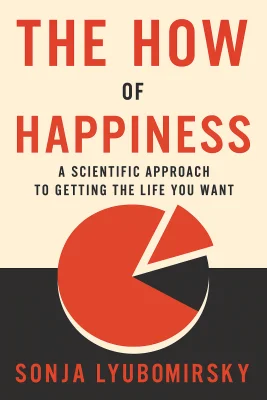
The How of Happiness
A Scientific Approach to Getting the Life You Want
Categories
Nonfiction, Self Help, Psychology, Philosophy, Health, Science, Spirituality, Mental Health, Audiobook, Personal Development
Content Type
Book
Binding
Hardcover
Year
2007
Publisher
Penguin Press HC, The
Language
English
ASIN
159420148X
ISBN
159420148X
ISBN13
9781594201486
File Download
PDF | EPUB
The How of Happiness Plot Summary
Introduction
# The 40 Percent Solution: Your Path to Lasting Happiness What if the key to transforming your life has been within your reach all along, waiting quietly in the choices you make each day? While many people spend years searching for happiness in external achievements, relationships, or circumstances, groundbreaking research reveals a profound truth: nearly half of your well-being stems from intentional activities and daily decisions that remain entirely under your control. This isn't wishful thinking or temporary motivation—it's scientifically-backed evidence that you possess far more power over your emotional landscape than you ever imagined. The journey toward lasting fulfillment doesn't require perfect conditions or dramatic life changes. Instead, it begins with understanding specific, research-proven strategies that can rewire your brain for joy, resilience, and meaning. Whether you're navigating challenging transitions, feeling stuck in familiar patterns, or simply yearning for deeper satisfaction, these evidence-based approaches offer a clear roadmap to authentic happiness that no external circumstance can diminish.
Chapter 1: Discover Your Happiness Set Point and Transform Your Potential
Your emotional well-being operates much like a thermostat, with a genetically determined baseline that influences your natural mood patterns. Research with identical twins reveals that approximately 50 percent of happiness differences between individuals stem from inherited traits, while life circumstances account for merely 10 percent. This discovery might initially seem limiting, but it actually illuminates the most empowering truth of all: 40 percent of your happiness remains completely within your personal control. Consider the fascinating case of Helen and Audrey, identical twins who participated in a landmark happiness study. Despite sharing identical DNA, their lives took dramatically different paths. Helen remained in her hometown of St. Paul, working in a stable job and maintaining familiar routines. Audrey moved to Chicago, pursued a career in graphic design, navigated various relationships, and embraced constant change. Researchers tracked both sisters over a decade, expecting their different experiences to create vastly different happiness levels. The surprising result challenged conventional wisdom about what determines well-being. Despite their contrasting lifestyles, Helen and Audrey maintained remarkably similar happiness levels throughout the study period. This wasn't because they were trapped by genetic destiny, but because neither had learned to harness the substantial portion of happiness that remains under conscious influence. Their story demonstrates that external circumstances, while seemingly important, have far less impact on long-term satisfaction than most people believe. Understanding your personal happiness set point begins with honest self-assessment across different situations and timeframes. Notice your typical emotional patterns during stress, celebration, routine days, and challenging periods. This baseline becomes your starting point for transformation, not a permanent limitation. From this foundation, you can begin implementing specific strategies that work with your natural tendencies rather than against them. The most encouraging aspect of set point research lies in its revelation that happiness functions as a learnable skill. Just as you might improve physical fitness despite genetic predispositions toward certain body types or metabolic rates, you can systematically elevate your emotional well-being through consistent, intentional practice. Your genes provide the starting melody, but your daily choices compose the full symphony of your life experience. Remember that even individuals with lower genetic set points can achieve remarkable happiness levels through dedicated application of proven strategies. The transformation happens not by fighting your nature, but by learning to work skillfully with the 40 percent that remains entirely within your power to influence and change.
Chapter 2: Practice Gratitude to Rewire Your Brain for Joy
Gratitude operates as far more than polite acknowledgment of good fortune—it functions as a master key that unlocks multiple pathways to happiness simultaneously. When you actively cultivate appreciation for what exists in your life, you're engaging in a profound neurological rewiring process that trains your brain to notice abundance rather than scarcity, progress rather than setbacks, and connection rather than isolation. Nicole, a college student participating in a gratitude research study, experienced this transformation firsthand when she decided to write a heartfelt letter to her mother. As she began typing, acknowledging years of support, sacrifice, and unconditional love, something unexpected happened. Her heart rate increased, tears streamed down her face, and she felt overwhelmed not by sadness, but by the sudden recognition of how much love had surrounded her throughout her life. The letter took only twenty minutes to compose, yet its emotional impact lasted for weeks. Days later, when Nicole found herself frustrated and stuck while working on a challenging research paper, she instinctively returned to her gratitude letter. Simply rereading her own words instantly shifted her mood from stress and overwhelm to appreciation and perspective. The practice had created a reliable emotional resource she could access whenever needed, demonstrating how gratitude builds lasting reserves of positive feeling that extend far beyond the initial moment of appreciation. To harness gratitude's transformative power, establish a simple weekly practice that fits naturally into your routine. Choose a consistent day and time to write down three to five specific things for which you feel genuinely thankful. The key lies in specificity and variety—rather than repeatedly noting broad categories like "my family" or "my health," explore particular moments, gestures, or experiences that brought you joy, comfort, or growth. Consider taking your practice deeper by expressing gratitude directly to people who have positively influenced your life. Write detailed letters to mentors, friends, family members, or even strangers who made a difference, describing specifically how their actions affected you and continue to shape your perspective. Whether you send these letters or simply write them for personal reflection, the process of articulating appreciation strengthens both your relationships and your own sense of connection to the goodness that surrounds you. Cultivating optimism works hand in hand with gratitude by directing your mental energy toward positive possibilities rather than dwelling on potential problems or past disappointments. Practice envisioning your best possible future self, writing detailed descriptions of how your life might unfold if circumstances aligned favorably. This exercise isn't about unrealistic fantasy, but about training your mind to recognize opportunities and maintain hope during uncertain times.
Chapter 3: Build Meaningful Connections That Sustain Your Well-Being
Human beings are fundamentally wired for connection, and the quality of your relationships serves as one of the strongest predictors of overall happiness, life satisfaction, and even physical health. Research consistently demonstrates that people with strong social bonds live longer, recover faster from illness, experience greater resilience during challenges, and report significantly higher levels of daily joy and meaning than those who remain socially isolated. John Gottman's groundbreaking research with thousands of married couples reveals the precise behaviors that distinguish thriving relationships from those destined for failure. Through careful observation in his relationship laboratory, he discovered that successful couples maintain a ratio of five positive interactions for every negative one, and they consistently make time for genuine emotional connection despite busy schedules and competing demands. The couples who remained happily married over decades weren't necessarily more naturally compatible—they had developed superior skills for creating and maintaining emotional intimacy. One couple in Gottman's studies transformed their struggling relationship by implementing a deceptively simple daily ritual. Every evening, they committed to spending fifteen uninterrupted minutes sharing the details of their day without distractions from phones, television, or other responsibilities. This seemingly small change created a foundation of understanding and mutual support that helped them weather major life challenges and celebrate successes together. Their investment in consistent daily connection paid enormous dividends in increased satisfaction, trust, and resilience. Begin strengthening your existing relationships by prioritizing undivided attention during your interactions. Put away electronic devices when spending time with loved ones, practice active listening by asking thoughtful follow-up questions, and show genuine curiosity about others' experiences, perspectives, and inner worlds. These simple gestures communicate care and create the emotional safety that allows relationships to deepen naturally over time. Express appreciation and admiration regularly, but ensure your words remain specific and authentic rather than generic. Instead of offering vague compliments, notice particular qualities, actions, or characteristics that you genuinely value in others. Celebrate their successes enthusiastically, offer support during difficulties without trying to fix everything, and remember that sometimes the most powerful gift you can give someone is simply being fully present with them during both joyful and challenging moments. If you're seeking to expand your social circle, focus on activities and environments that naturally align with your interests, values, and authentic self. Shared experiences and common goals create organic foundations for friendship that feel natural rather than forced. Remember that building meaningful connections requires time, consistency, and patience—invest your energy in developing a few deep relationships rather than maintaining superficial contact with many acquaintances.
Chapter 4: Develop Resilient Coping Strategies for Life's Challenges
Life inevitably presents challenges, setbacks, and painful experiences that test your resilience and threaten to derail your well-being. However, your response to these difficulties often matters more than the circumstances themselves. Developing effective coping strategies doesn't eliminate hardship from your life, but it fundamentally transforms your relationship with adversity and can even lead to unexpected growth, wisdom, and increased emotional strength. Lynn faced one of life's most devastating challenges when her beloved husband received a diagnosis of Lou Gehrig's disease. Rather than becoming consumed by bitterness, despair, or overwhelming fear about the future, she made a conscious choice to focus on cherishing their remaining time together and finding meaning within their painful circumstances. "I don't mean to be a Pollyanna," she explained to researchers, "but I had 20 wonderful years with that man. There are people who don't have one day as happy as I had." Lynn's remarkable perspective didn't minimize her genuine pain or deny the harsh reality of her impending loss. Instead, she demonstrated how finding benefit and meaning within trauma can coexist with grief, creating a foundation for healing and continued growth. She described her ongoing sadness as "like the Grand Canyon—there's this big hole, and it hurts like hell, but it's beautiful." This ability to hold both pain and appreciation simultaneously represents mature coping that leads to genuine resilience rather than mere survival. When facing your own challenges, begin by distinguishing clearly between problems you can actively solve and situations you must learn to accept. For controllable issues, break them down into manageable steps and take concrete action, focusing your energy where it can make a real difference. For unchangeable circumstances, redirect your attention toward managing your emotional response and discovering potential meaning or growth opportunities within the experience. Practice expressive writing about traumatic or stressful experiences as a powerful tool for processing difficult emotions. Spend fifteen to twenty minutes writing freely about your deepest thoughts and feelings regarding a challenging situation, exploring how it has affected you, what you might learn from it, and how it connects to your broader life story. This process helps organize chaotic emotions and often reveals insights that promote healing and personal development. Cultivate a strong support network before you actually need it, as relationships require ongoing investment to be available during crisis periods. Strong connections provide crucial resources during difficult times, offering practical assistance, emotional comfort, different perspectives on your challenges, and reminders of your inherent worth and capability. Don't wait until adversity strikes to begin building these essential relationships—they flourish through consistent nurturing during both calm and stormy seasons.
Chapter 5: Master Present-Moment Living Through Flow and Savoring
The present moment represents the only time you can actually experience happiness, yet most people spend their mental energy dwelling on past regrets or worrying about future uncertainties. Learning to fully engage with what's happening right now—whether it's a meaningful conversation, a simple meal, or an absorbing work project—opens up a rich source of satisfaction and joy that remains constantly available to you. Flow represents the pinnacle of present-moment engagement, occurring when you become so completely absorbed in an activity that you lose track of time, self-consciousness, and external distractions. Mihaly Csikszentmihalyi first discovered this phenomenon while studying artists who would paint for hours, ignoring hunger, fatigue, and discomfort, yet would lose interest in their completed works once finished. The process itself provided such complete satisfaction that external rewards became entirely irrelevant. A hospital custodian discovered how to transform routine work into a source of flow by reframing her role and setting personal challenges. Rather than seeing herself as someone who simply emptied trash cans and mopped floors, she began viewing herself as an integral part of a healing team. She set goals for finding more efficient cleaning methods, brightening patients' days through small interactions, and creating the most hygienic environment possible. Her conscious reframing turned mundane tasks into meaningful contributions that engaged her skills and creativity. You can cultivate more flow experiences by seeking the optimal balance between challenge and skill level, where tasks are demanding enough to require full attention but not so difficult as to create anxiety or overwhelm. Identify activities that naturally absorb your focus and provide appropriate challenges for your current abilities. This might include creative pursuits, sports, work projects, or hobbies that demand concentration and offer clear feedback about your progress. Savoring extends present-moment awareness by consciously appreciating positive experiences as they unfold rather than rushing past them toward the next activity. This practice might involve truly tasting your morning coffee instead of drinking it mindlessly, fully enjoying a conversation with a friend rather than planning your response, or taking time to appreciate a beautiful sunset instead of immediately reaching for your phone to capture it. Create regular rituals that anchor your attention in the present moment and build your capacity for mindful awareness. This might include a few minutes of deep breathing before meals, a brief gratitude reflection before sleep, or a mindful walk without podcasts or music. These practices train your attention to return naturally to the here and now, building the mental muscle of presence that serves you throughout each day.
Chapter 6: Pursue Goals That Align with Your Deepest Values
Having meaningful objectives to work toward provides essential structure, direction, and purpose that significantly contributes to happiness and life satisfaction. However, not all goals create equal benefits—the type of aspirations you pursue and how you approach them determines whether they enhance or diminish your overall well-being. The key lies in choosing objectives that align authentically with your deepest values and intrinsic motivations rather than external expectations. Research consistently reveals that people who pursue intrinsic goals—those focused on personal growth, meaningful relationships, and contributing to something larger than themselves—experience far greater satisfaction than those chasing primarily extrinsic rewards like wealth, fame, social status, or material possessions. A successful entrepreneur discovered this principle when he realized his high-paying but emotionally unfulfilling corporate job was simply a means to support his true passions: writing short stories, cultivating his garden, and spending quality time with his children. The transformation occurred when he consciously reframed his work not as an end in itself, but as a tool that enabled his authentic pursuits and deepest values. This shift in perspective allowed him to maintain motivation and energy during difficult periods while keeping his genuine priorities at the center of his decision-making process. His external circumstances remained largely unchanged, but his relationship to his goals completely transformed his daily experience of meaning and satisfaction. Effective goal pursuit requires breaking large aspirations into smaller, manageable steps while maintaining clear connection to the bigger picture and deeper purpose. If your overarching goal involves strengthening family relationships, specific actionable steps might include scheduling weekly phone calls with siblings, planning regular family gatherings, learning about each family member's current interests and challenges, or creating new traditions that bring everyone together. Choose approach goals rather than avoidance goals whenever possible, as this positive framing significantly increases both motivation and success rates. Instead of trying "not to be stressed" or "not to feel overwhelmed," aim to "create more calm and balance in daily life" or "develop better systems for managing responsibilities." This subtle shift directs your energy toward desired outcomes rather than away from unwanted ones, making the journey more enjoyable and the destination more achievable. Commit to your meaningful goals publicly when appropriate, as external accountability dramatically increases follow-through rates and provides additional motivation during challenging periods. Share your aspirations with supportive friends, family members, or mentors who can encourage your progress, celebrate your achievements, and help you stay connected to your deeper purpose when obstacles arise.
Chapter 7: Integrate Mind-Body Practices for Complete Flourishing
True happiness encompasses your entire being, requiring thoughtful attention to both physical health and spiritual well-being. Your body and soul exist in intimate connection, each continuously influencing the other in profound ways that shape your overall experience of life. When you neglect either aspect of your nature, your happiness suffers, but when you nurture both dimensions thoughtfully, you create optimal conditions for flourishing and resilience. The powerful mind-body connection became strikingly apparent to a man who had struggled with persistent depression for several years. Despite trying various medications, therapy approaches, and lifestyle changes, he continued experiencing low moods, fatigue, and mental fog that significantly impacted his quality of life. His breakthrough came when he reluctantly agreed to try a regular exercise program, initially viewing physical activity as just another treatment to endure rather than embrace. Within weeks of beginning daily walks that gradually progressed to jogging, he noticed remarkable improvements in both his emotional state and mental clarity. The physical activity provided far more than biochemical benefits from endorphin release. His morning runs became a form of moving meditation, offering precious time for reflection, stress relief, and connection with nature. He began sleeping more soundly, eating more nutritiously, and feeling genuinely confident in his physical capabilities. This bodily transformation supported his emotional healing in ways that purely mental approaches had been unable to achieve. Establish a regular physical activity routine centered around movement you genuinely enjoy rather than exercise you feel obligated to perform. Whether your preference involves walking, dancing, swimming, cycling, or playing recreational sports, the key lies in consistency rather than intensity. Choose activities you can realistically maintain long-term, and pay careful attention to how different types of movement affect your mood, energy levels, and overall sense of well-being. Nurture your spiritual dimension through practices that connect you meaningfully to something larger than your individual concerns and daily responsibilities. This vital connection might involve traditional religious practices, meditation, contemplative time in nature, creative expression, volunteer service, or philosophical reflection. The specific form matters far less than the genuine sense of transcendence, purpose, and belonging these practices provide. Create sustainable rituals and routines that honor both your physical and spiritual needs while fitting realistically into your actual lifestyle. This integrated approach might include morning meditation or prayer, evening gratitude practices, regular time outdoors, weekly spiritual services, or monthly retreats for deeper reflection. These consistent practices create reliable anchors of meaning and self-care that support your overall well-being even during particularly challenging or chaotic periods.
Summary
The path to authentic happiness lies not in waiting for perfect circumstances or relying solely on genetic predisposition, but in actively engaging with the remarkable 40 percent of your well-being that remains entirely within your personal control. Through consistent practice of gratitude, intentional investment in relationships, development of resilient coping skills, cultivation of present-moment awareness, pursuit of meaningful goals, and integration of mind-body practices, you can create profound and lasting transformation in your daily experience of life. As research clearly demonstrates, "The secret to happiness is not found in seeking more, but in developing the capacity to enjoy less." This profound insight reminds us that genuine fulfillment represents fundamentally an inside job, requiring us to cultivate deep appreciation for what we already possess while working thoughtfully toward what truly matters to our authentic selves. The evidence-based strategies explored here provide a comprehensive roadmap for this transformative journey, offering practical tools that can be adapted to your unique circumstances, personality, and life situation. Begin today by selecting just one approach that resonates with your current needs and committing to practice it consistently for the next week. Whether you start a gratitude journal, reach out to reconnect with an old friend, establish a brief daily meditation practice, or simply take mindful walks in nature, the key lies in taking that crucial first step toward intentional happiness cultivation. Remember that lasting change emerges through small, consistent actions rather than dramatic gestures, and every single moment offers a fresh opportunity to choose practices that genuinely support your well-being and joy.
Best Quote
“[Optimism] is not about providing a recipe for self-deception. The world can be a horrible, cruel place, and at the same time it can be wonderful and abundant. These are both truths. There is not a halfway point; there is only choosing which truth to put in your personal foreground.” ― Sonja Lyubomirsky, The How of Happiness: A Scientific Approach to Getting the Life You Want
Review Summary
Strengths: The reviewer appreciates the author's attempt to incorporate actual scientific research into the self-help happiness genre, noting that the author has relevant qualifications and that the book stands above its peers in this saturated market. Weaknesses: The reviewer criticizes the book for scientific inaccuracies, such as the misinterpretation of statistical data regarding happiness variance and the neglect of interaction terms between situation and behavior. These errors are seen as undermining the book's arguments. The reviewer also describes the book as "sloppy" from a scientific perspective and admits to discontinuing reading by chapter three due to frustration. Overall: The reader's sentiment is negative, primarily due to perceived scientific inaccuracies and methodological flaws. The recommendation level is low, especially for those with a background in empirical psychology.
About Author

Sonja Lyubomirsky
Lyubomirsky interrogates the complex science of happiness, weaving her cross-cultural experiences into a comprehensive framework that illuminates human well-being. Her work is rooted in positive psychology, exploring cognitive and motivational processes that foster lasting happiness. Through books like "The How of Happiness" and "The Myths of Happiness," she offers evidence-based strategies to enhance emotional well-being, challenging conventional beliefs about what should make us happy. These titles have solidified her reputation as a leading authority in her field, demonstrating how empirical research can be translated into practical advice.\n\nCentral to Lyubomirsky's method is the use of empirical research to demystify why certain individuals experience greater happiness. She probes the benefits of gratitude, kindness, and social connections as tools for increasing personal happiness. Her engaging writing style makes complex psychological concepts accessible, allowing readers to apply her insights to their own lives. This focus on practical application ensures that her work resonates with both academic audiences and the general public, broadening the impact of her research. Her contributions have been recognized with numerous awards, including the Templeton Positive Psychology Prize, highlighting her influence in shaping contemporary understanding of well-being. This bio encapsulates her role as a pivotal figure in positive psychology, inspiring those who seek to lead more fulfilling lives.
Read moreDownload PDF & EPUB
To save this Black List summary for later, download the free PDF and EPUB. You can print it out, or read offline at your convenience.
The How of Happiness
by Sonja Lyubomirsky
