
The Ocean at the End of the Lane
Categories
Fiction, Audiobook, Horror, Young Adult, Fantasy, Science Fiction Fantasy, Adult, Book Club, Magical Realism, Paranormal
Content Type
Book
Binding
Paperback
Year
2014
Publisher
William Morrow
Language
English
ASIN
0062255665
ISBN
0062255665
ISBN13
9780062255662
File Download
PDF | EPUB
The Ocean at the End of the Lane Plot Summary
Introduction
The dead man in the car changed everything. Seven-year-old narrator discovers a suicide in his family's stolen Mini Cooper, parked at the end of their country lane. The opal miner from South Africa had lost everything at the casino—his own money, his friends' money, their trust. Now he sits dressed in formal dinner wear, his face cherry-red from carbon monoxide, a garden hose snaking from exhaust to window. This death tears a hole between worlds, allowing ancient things to slip through. When the boy pulls a Victorian sixpence from a dead fish's belly at the Hempstock farm, he unknowingly sets events in motion that will bring monsters into his home. The Hempstocks—three women who have lived on their farm since before the Norman Conquest—understand what's coming. Eleven-year-old Lettie Hempstock becomes the boy's guide and protector as creatures older than civilization begin to hunt him. What started with a desperate man's final gamble becomes a battle for the very fabric of reality itself.
Chapter 1: The Return to Forgotten Shores
Forty years later, he drives back to the house of his childhood after a funeral. The narrow lane draws him like a magnet, past housing estates that devoured the fields he once knew. His parents' house was demolished decades ago, replaced by suburban conformity. He finds himself at the end of the lane, at Hempstock Farm, somehow unchanged. The red-brick farmhouse squats comfortably among its outbuildings, ancient and welcoming. An elderly woman emerges, her gray hair long and wild. She recognizes him immediately, though he struggles to place her face. "You were Lettie's friend," she says with certainty. "From the top of the lane." The words unlock something deep in his memory. She offers tea, but first he asks to see the duck pond. She points him toward the path, knowing he'll remember the way. Behind the farmhouse, past the chicken coop and the old barn, he finds it exactly as it was—a small pond with lily pads and duckweed. Lettie had called it her ocean, he remembers now. She claimed they had traveled across it from the old country, though her mother said the old country had sunk, and her grandmother insisted it had blown up. Sitting on the weathered bench beside the water, the memories begin to surface. The empty birthday party. The black kitten named Fluffy. The opal miner who killed both the cat and himself. Everything that followed rushes back in a flood of terror and wonder, as if he's been holding his breath underwater for forty years and finally surfaces, gasping.
Chapter 2: A Death at the Lane's End
The morning after his seventh birthday party—where no one came—his father finds their white Mini missing. Police discover it abandoned at the lane's end, a suicide scene waiting to be uncovered. The boy accompanies his father and the constable, watches as they pull back the blue blanket in the back seat. The opal miner sits rigid in formal evening wear, his skin an alarming cherry-red. A green garden hose connects the exhaust pipe to the driver's window, sealed in place with mud. The man who had killed the boy's kitten and brought a replacement tomcat named Monster has chosen this remote spot to die alone, ruined by gambling debts and shame. The policeman leads the boy away from the scene, but not before a local farm girl appears. Lettie Hempstock, eleven years old with red-brown hair and sharp gray-blue eyes, offers to take him to safety at her family's farm. She speaks with strange authority about the dead man's motives, as if she can read the suicide note still hidden in his breast pocket. At Hempstock Farm, the boy tastes fresh milk warm from the cow and eats porridge with blackberry jam. The three generations of Hempstock women—Lettie, her mother, and her ancient grandmother—discuss the death with unsettling knowledge. They know about the note before the police find it. They understand that this death has consequences beyond the merely human. Old Mrs. Hempstock examines a silver sixpence from the boy's pocket with the expertise of someone who can see the age of atoms.
Chapter 3: The Girl with an Ocean for a Pond
Strange things begin immediately after the opal miner's death. The boy wakes choking on a silver shilling that materialized in his throat during the night. His sister claims he threw coins at her from the bushes, though he was nowhere near. Throughout the neighborhood, money appears in dreams and in reality, but each gift carries a price of madness and despair. Lettie Hempstock arrives at his house as if summoned. She knows about the dream-money and the worm he pulled from his foot. Together they follow a trail of clues using a dowsing rod cut from hazel—first a blue flower, then black cloth caught on barbed wire, then the headless corpse of a small animal, bright with blood. Their path leads beyond the ordinary world into a landscape of orange skies and twisted metal plants. Here they find the source of the disturbance: a massive creature of gray canvas and rotting cloth, ancient and malevolent. It claims dominion over this realm, boasting of the gifts it brings to simple humans who want only money. Lettie speaks words in the first language, the tongue of creation itself. Her binding song traps the creature in this place, sealing it away from the human world. The boy catches something the creature throws at him—a writhing mass of decay—and feels a sharp pain pierce his foot. Unknown to him, this moment of letting go of Lettie's hand will bring consequences that dwarf everything that came before.
Chapter 4: The Monster in Adult Clothing
The new housekeeper arrives with perfect timing and terrible purpose. Ursula Monkton appears beautiful, professional, and capable—exactly what the boy's mother needs while starting her new job. But the boy sees through her facade immediately, recognizing something in her gray-blue eyes that reminds him of rotting canvas flapping in otherworldly winds. His sister adores the mysterious woman who gives her coins from a gray purse. His father falls under her spell with disturbing completeness. Only the boy resists, refusing to eat her food, sensing the trap closing around his family. When he tries to warn his parents, they dismiss his protests as childish jealousy. Ursula's true nature reveals itself in private moments. She forbids him from leaving the property, appears impossibly in places she couldn't have reached, and threatens him with the attic—not as punishment, but as a prison where she'll keep him like a toy. She knows about the worm-hole she left in his foot, her way back to the world beyond if needed. The boy's father, completely under Ursula's influence, becomes violent when the child refuses to apologize to their beautiful guest. In the bathroom, his father tries to drown him in cold water, holding him under until the boy grabs his necktie and fights for his life. The attack stops only when the boy's grip on the tie threatens to drag his father into the bath as well. That night, locked in his room while Ursula entertains his father downstairs, the boy makes his escape.
Chapter 5: Sanctuary at the Hempstock Farm
Rain-soaked and terrified, the boy flees across the fields toward Hempstock Farm. Ursula Monkton pursues him through the storm, floating above the ground surrounded by crackling lightning. She has shed all pretense of humanity now, revealing herself as something vast and ancient that feeds on suffering and control. The boy stumbles through electric fences and barbed wire, his bare feet cut and bleeding. When Ursula finally corners him in an open field, she toys with him like a cat with a mouse, promising him an eternity of torment in her attic prison. She describes the horrors waiting—the creatures that will pretend to be spiders the size of dogs, the empty clothes that clutch and never let go. Lettie Hempstock arrives like salvation in a red raincoat and oversized Wellington boots. The two powers face each other across the rain-soaked field—ancient hunger against protective love. Lettie names the creature Skarthach of the Keep and orders her off Hempstock land. When Ursula refuses to leave, Lettie calls down the golden light that banishes her into the storm. Safe at last, the boy bathes in the warm kitchen while the Hempstock women plan their next move. They feed him shepherd's pie and spotted dick with custard, but the respite is temporary. Ursula Monkton still controls his parents and sister. The boy begs to stay at the farm forever, but Ginnie Hempstock gently refuses. Some battles must be fought to their conclusion.
Chapter 6: The Hunger That Devours Worlds
The final confrontation comes when Lettie and the boy return to face Ursula Monkton in his childhood bedroom. The monster has transformed the space into something alien—strips of gray cloth hang from the ceiling like molting skin, moving in unfelt breezes. When the cloths attack, they stick to skin like leeches, drawing blood and binding the boy helpless. Lettie reveals that she has been laying a trap. The trail of broken toys she scattered around the property weren't meant to keep Ursula in—they were meant to call something else. The hunger birds answer Lettie's whistle, descending from impossible skies like nightmares given wing. These scavengers of the void exist to clean up messes like Ursula Monkton. The creatures tear Ursula apart with methodical efficiency, devouring every scrap of her false flesh while she screams in languages that predate human speech. But they don't stop with their intended prey. The hunger birds see the doorway still lodged in the boy's heart—the final piece of Ursula's path between worlds. They want it, and him, to complete their cleansing. When the boy realizes the birds will destroy everything to get what they want, he makes the hardest choice of his young life. He breaks free from Lettie's protective grasp and runs toward the creatures, offering himself to save the world. But Lettie tackles him at the last moment, shielding him with her own body as the hunger birds strike. The price of his salvation is measured in her torn and bleeding form.
Chapter 7: Sacrifice and the Waters of Healing
Old Mrs. Hempstock arrives with the power of creation itself blazing around her like silver fire. She drives off the hunger birds with threats that span cosmic law and universal compact. The creatures retreat, but not before forcing them to restore everything they devoured—stars, trees, the very fabric of reality they had begun to consume. But Lettie Hempstock lies broken in her mother's arms, torn by beaks and talons meant for the boy. Ginnie carries her daughter to the pond behind the farmhouse, that small circle of water that somehow contains an entire ocean. She lays Lettie's body on the surface as waves rise from impossible depths. The boy watches from the shore as the ocean claims its daughter. Great waves crash and foam, but when they recede, both Lettie and the supernatural waters have vanished. Only a ordinary duck pond remains, reflecting the moon like any other body of water. Old Mrs. Hempstock explains that Lettie has been given to her ocean, and someday it may give her back—but when, and how, remains unknown. The Hempstocks take the boy home, where his parents wait with altered memories. A small ritual with scissors and red thread has edited away the worst of recent events. His father no longer remembers the bathroom violence; Ursula Monkton becomes simply a housekeeper who left for family reasons. The boy keeps his memories, choosing pain over forgetting, because what happened to him matters.
Summary
Forty years later, sitting beside that same pond, the man understands why he returned. Lettie Hempstock called him back to see what he became, whether her sacrifice was worthwhile. The old women—who haven't aged a day—examine his life with gentle eyes. He has grown a new heart, they tell him, healing slowly from wounds that went deeper than flesh. The kitten he finds waiting at his house a month later has eyes the color of oceans. He names her Ocean without knowing why, and she becomes his companion through the difficult years ahead. She purrs against his cheek at night, a warm reminder of love that transcends understanding. When he eventually leaves his childhood home behind, he carries with him the knowledge that some friendships echo across decades, and some protections never fade. The pond keeps its secrets, but love keeps its promises, rippling outward through time like stones thrown into still water.
Best Quote
“I lived in books more than I lived anywhere else.” ― Neil Gaiman, The Ocean at the End of the Lane
Review Summary
Strengths: The review provides a vivid and engaging narrative, drawing parallels between the reviewer's personal childhood experiences and the protagonist's journey in Neil Gaiman's "The Ocean at the End of the Lane." The description of the characters, particularly Sister Evangelista and the Hempstock family, is detailed and colorful, adding depth to the analysis. Weaknesses: The review lacks a direct critique of the book's literary elements, such as writing style, pacing, or thematic depth. It focuses more on storytelling and personal anecdotes rather than a comprehensive evaluation of the book's merits or shortcomings. Overall: The review offers an intriguing and personal perspective, effectively capturing the essence of the book's plot and characters. However, it falls short of providing a thorough literary critique. The reader's sentiment is positive, suggesting an appreciation for Gaiman's storytelling, but the recommendation level is not explicitly stated.
About Author

Neil Gaiman
Gaiman extends his storytelling prowess by intricately weaving fantastical elements into the fabric of the ordinary, drawing on a rich tapestry of myth and fantasy. Inspired by early influences like C.S. Lewis and J.R.R. Tolkien, Gaiman channels his imaginative spirit into diverse literary forms, including novels, short stories, and graphic novels. His writing, celebrated for its lyrical quality and thematic depth, often probes the complexities of identity and the human condition, while his narratives invite readers to blur the lines between reality and the surreal. This distinctive approach has earned him a loyal global following and prestigious accolades such as the Hugo and Nebula awards.\n\nGaiman's foray into the intersection of copyright and digital culture, exemplified by his book "Information Doesn't Want to Be Free: Laws for the Internet Age," demonstrates his versatility and forward-thinking intellect. This work ventures into the realm of internet rights and freedoms, where Gaiman advocates for a harmonious balance between creative expression and the technological landscape. Meanwhile, his more recognized works like "American Gods" and "The Sandman" series highlight his ability to craft compelling stories that underscore the enduring power of myth in contemporary society. By doing so, Gaiman not only captivates his readers but also challenges them to reconsider the boundaries of their imagination.\n\nThrough his writing, Gaiman impacts readers by bridging the extraordinary with the mundane, thus creating immersive experiences that resonate on both intellectual and emotional levels. His work is particularly appealing to those who cherish fantasy and speculative fiction, offering a unique lens through which to explore modern themes. In this way, Gaiman's literary contributions extend beyond mere entertainment, inspiring a deeper appreciation for storytelling's transformative potential.
Read moreDownload PDF & EPUB
To save this Black List summary for later, download the free PDF and EPUB. You can print it out, or read offline at your convenience.
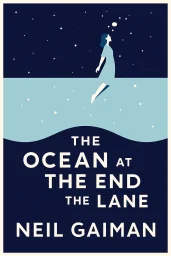
The Ocean at the End of the Lane
by Neil Gaiman
