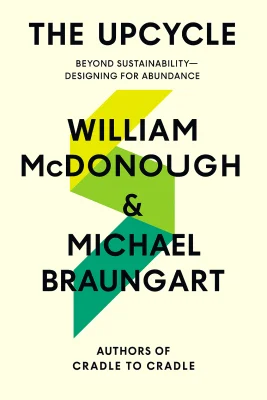
The Upcycle
Beyond Sustainability – Designing for Abundance
Categories
Business, Nonfiction, Science, Economics, Design, Sustainability, Architecture, Environment, Green, Climate Change
Content Type
Book
Binding
Kindle Edition
Year
2013
Publisher
North Point Press
Language
English
ASIN
B009LRWHNQ
ISBN13
9781429969055
File Download
PDF | EPUB
The Upcycle Plot Summary
Introduction
The paradigm shift from eco-efficiency to eco-effectiveness represents a revolutionary approach to environmental design. While traditional sustainability often focuses on reducing negative impacts—doing "less bad"—this approach introduces a fundamentally different perspective: how can human systems generate positive effects? This perspective challenges us to reimagine our relationship with resources, viewing them not as finite materials heading toward disposal, but as nutrients flowing through metabolic systems that can be continuously improved. The concept of upcycling transcends the limitations of conventional sustainability by envisioning products, buildings, and systems designed from the outset to be beneficial rather than merely less harmful. This framework poses essential questions: How might we design materials that nourish biological or technical cycles rather than contaminate them? How can we harness renewable energy that celebrates abundance rather than scarcity? And perhaps most importantly, how can we create systems that leave positive footprints instead of merely reducing negative ones? By approaching these questions through intentional design, we can move beyond minimizing harm to actively regenerating environmental and social value.
Chapter 1: The Mindshift: From Scarcity to Abundance
The prevailing environmental narrative often romanticizes nature while portraying humans as destructive intruders. This mindset leads to a sustainability approach focused primarily on minimizing harm—using less energy, creating less waste, and generally attempting to reduce our ecological footprint. While well-intentioned, this scarcity-based thinking actually limits our ability to imagine truly transformative solutions. It keeps us trapped in a framework where the best we can hope for is to be "less bad" rather than genuinely beneficial. This mindshift requires us to reconsider how we view natural systems. Unlike the mainstream sustainability paradigm that positions humans in opposition to nature, upcycling recognizes humans as potential contributors to ecological health. Consider how trees don't aim for zero emissions—they actively produce oxygen while capturing carbon dioxide, becoming more productive as they grow. Similarly, ant colonies have a biomass five times greater than humans yet manage to thrive through systems that redistribute resources rather than deplete them. The ants haven't minimized their presence; they've optimized their relationship with surrounding ecosystems. The abundance perspective reframes our understanding of problems like carbon emissions. Carbon isn't inherently problematic—it's the building block of life—but becomes problematic when it's in the wrong place. Rather than simply trying to reduce carbon emissions, we can design systems to keep carbon where it belongs: in soil, in useful materials, in living organisms. This represents a fundamental shift from seeing carbon as pollution to recognizing it as a misplaced asset we can recapture and utilize. At its core, this mindshift replaces the traditional eco-efficiency metrics that aim downward toward zero (zero waste, zero emissions) with an upward trajectory toward positive impact. Instead of asking "how can we do less damage?" we ask "how can we do more good?" This creates an abundance model where human systems, like natural ones, can actually improve environmental conditions through their operation. A building might clean the air, purify water, and create habitat. A factory might produce cleaner water than it takes in while generating renewable energy. The abundance framework liberates our thinking from artificial constraints. Rather than assuming a world of 10 billion people must inevitably strain planetary resources, we can envision systems where more people create more beneficial outputs. The key lies in designing regenerative cycles from the outset—not attempting to minimize flaws in fundamentally flawed systems. This represents not just a technical shift but a profound philosophical reorientation toward optimism, creativity, and the celebration of human innovation as a potential force for ecological regeneration.
Chapter 2: Design for Positive Impact: Values Before Metrics
The conventional approach to design and business decision-making typically begins with metrics and benchmarks, focusing on efficiency and cost reduction as primary drivers. However, this approach often relegates values to an afterthought, addressed only after financial considerations have been settled. The transformative shift proposed here inverts this hierarchy: start with clearly articulated values, then develop principles, goals, strategies, tactics, and finally, metrics to measure effectiveness. This sequence ensures that fundamental values guide the entire process rather than being compromised to achieve numerical targets. When organizations begin with metrics—such as "reduce carbon emissions by 20% by 2025"—they limit their vision to incremental improvements within existing systems. This approach constrains innovation because it focuses on being "less bad" rather than reimagining what's possible. By contrast, starting with values—such as "design systems that enhance human and ecological health simultaneously"—opens space for transformative thinking. A building designed with the value of human wellbeing might include windows that open to let in birdsong, even if this slightly reduces energy efficiency metrics. The result is not just a more energy-efficient structure, but one that fundamentally improves the quality of life for its occupants. The value-first approach creates cascading positive effects that metrics-first thinking often misses. Consider the example of a fabric manufacturer who, rather than focusing solely on reducing toxic output, decided to eliminate toxins from the production process entirely. This values-based decision led to unexpected benefits: cleaner water leaving the factory than entering it, the elimination of regulatory paperwork, improved worker safety, reclaimed storage space previously used for hazardous materials, and manufacturing trimmings that could safely nurture soil as mulch. None of these benefits would have emerged from simply trying to reduce toxin levels by incremental percentages. This design philosophy applies across scales and contexts. When NASA designed its Sustainability Base, they began with the value of supporting both human and planetary wellbeing. This led them to use the sun for energy, the earth for cooling, and natural airflow for ventilation—achieving a 90% reduction in energy consumption and 87% reduction in water use compared to conventional buildings. More importantly, the building actually produces more energy than it consumes, contributing excess to the grid. Had they started with a metric like "30% energy reduction," they would have settled for a much less innovative solution. The values-before-metrics approach recognizes that genuine innovation cannot be benchmarked against existing practices. Just as Wikipedia didn't set out to create "200 times as many entries" as Encyclopedia Britannica but instead reimagined information access entirely, transformative design requires us to articulate what we truly value before determining how to measure success. This shift from metrics-driven efficiency to values-driven effectiveness enables us to design solutions that are not just less harmful but actively beneficial—creating abundance rather than merely managing scarcity.
Chapter 3: Energy as Renewable Currency, Not Finite Capital
Energy represents one of humanity's most fundamental design challenges, yet our approach to it has historically been framed through a lens of scarcity rather than abundance. Traditional thinking positions energy as capital—finite resources like coal and oil that we extract, deplete, and ultimately exhaust. This framework has led to geopolitical tensions, environmental degradation, and economic anxieties. However, by reconceptualizing energy as renewable currency rather than finite capital, we open possibilities for systems designed around abundance rather than limitation. The distinction between capital and currency provides a valuable framework for understanding this shift. Currency circulates, lubricating transactions and flowing continuously through systems. Capital, by contrast, represents stored value that diminishes when consumed. Fossil fuels function as earth's capital—ancient sunlight stored as hydrocarbons—yet we treat them as currency, burning them for daily energy needs. Meanwhile, current solar income—the energy delivered to Earth every day through sunshine, wind, and water cycles—represents the true renewable currency that remains largely untapped at scale. The fundamental redesign opportunity lies in transitioning our systems to operate on this renewable currency while preserving our remaining capital for its highest uses. This transition requires reimagining energy not as an isolated resource but as an integrated component of broader systems. Consider the seemingly whimsical example of using wind power to grow strawberries in Denmark during winter. Wind turbines generate electricity that powers LED lights tuned to specific frequencies that plants need for growth. The resulting fresh produce provides nutrition, pleasure, and economic value. In this system, energy isn't consumed and depleted but rather transformed through a series of beneficial interactions—wind becomes electricity becomes light becomes food becomes human wellbeing. This represents energy as currency in perpetual, productive circulation rather than capital being gradually exhausted. The renewable currency model enables previously unimaginable forms of abundance. For instance, biogas systems can capture methane from decomposing organic matter that would otherwise contribute to greenhouse effects, transforming waste into energy while producing natural fertilizer as a byproduct. Small-scale distributed renewable systems, like Dan Juhl's wind cooperatives in Minnesota, create economic resilience for farming communities while producing clean energy. Even traditionally challenging contexts like the desert regions of China could leverage wind power to illuminate underground hydroponic farming systems, creating food security in previously inhospitable environments. Ultimately, this shift from energy as finite capital to renewable currency requires us to recognize that our energy problem is actually a design problem. We don't lack energy—the sun delivers more energy to Earth in one hour than humanity uses in a year—we lack elegant systems to capture, store, and utilize this abundance. By designing energy systems as integrated components of larger beneficial cycles rather than isolated extraction processes, we can create regenerative loops where energy continues to provide value through multiple transformations. This represents not just a technical shift but a conceptual revolution in how we understand energy's role in human and natural systems.
Chapter 4: Materials in the Right Place: Biological and Technical Nutrients
At the core of redesigning our material world lies a fundamental classification: the differentiation between biological and technical nutrients. Biological nutrients are materials that can safely and beneficially return to the biosphere, nourishing soil and supporting new growth. Technical nutrients, by contrast, are synthetic or mineral materials designed to circulate within industrial systems without entering the biosphere. Understanding this distinction allows us to design products and systems where materials remain in their appropriate cycles, providing continuous value rather than becoming waste or pollution. The critical insight here is recognizing that our material problems often stem not from the materials themselves but from having them in the wrong place. Carbon, for instance, is a marvelous building block of life when in soil, plants, or stable products, but becomes problematic when concentrated in the atmosphere. Similarly, technical materials like rare earth metals are valuable resources when maintained in industrial cycles but become pollutants when dispersed into natural systems. This reframing shifts our focus from trying to reduce material use to ensuring materials remain in their appropriate places where they can provide ongoing value. This principle manifests in how we design everyday products. Consider packaging, which constitutes roughly one-third of municipal waste. Traditional approaches focus on making packaging smaller or thinner—being "less bad." A nutrient-based approach instead designs packaging to be either fully compostable (biological nutrients) or completely recyclable into products of equal or higher value (technical nutrients). A compostable food wrapper might contain seeds that grow when discarded, while a technical nutrient like aluminum can be recycled indefinitely without degradation. The key is intentional design that considers not just a product's first use but all its subsequent uses. The management of these nutrient flows represents an emerging economic opportunity. What we currently call "waste management" is evolving into "nutrient management"—the process of capturing, sorting, and redirecting materials to their appropriate cycles. Cities like San Francisco now recover more than 75% of discarded materials, transforming what was once a cost center into a revenue generator. Companies like Van Gansewinkel Groep have transitioned from waste collection to nutrient management, with annual revenues exceeding €1.2 billion. Meanwhile, sewage treatment plants are evolving to recover phosphate as struvite pearls—slow-release fertilizer that farmers value—while capturing methane for energy production. Implementing this approach requires new tools and systems. Materials passports—detailed information about a product's ingredients and properties—enable effective sorting and reprocessing. Intelligent Materials Pools allow businesses to share information about available technical nutrients and coordinate their recapture and reuse. Products designed for disassembly ensure that components can be easily separated and directed to their appropriate cycles. These innovations transform what would be "end of life" in traditional thinking into "nutrients for new life" in the biological and technical metabolisms, creating continuous cycles of materials flowing in their beneficial places.
Chapter 5: Intergenerational Fairness: Celebrating Diversity
Intergenerational fairness represents a fundamental value in regenerative design—the principle that current generations should not deprive future ones of opportunity, health, or resources. This concept goes beyond mere sustainability, which often focuses on preserving what exists. Instead, it asks how we might enrich the world for those who come after us. The Native American concept of considering decisions for their impact on the seventh generation ahead embodies this thinking, as does Thomas Jefferson's notion that "the earth belongs in usufruct to the living"—that we hold resources in trust, not ownership. This principle manifests most powerfully through celebrating diversity rather than merely respecting it. Respect is passive; celebration is active. To celebrate diversity means to actively design for the flourishing of varied biological and cultural systems. Consider the story of Han Sang-hun, who brought sturgeon to Korea and developed methods to harvest caviar without harming the fish. His approach acknowledged that these fish would "live long after I am gone," demonstrating a commitment to designing systems that enrich future possibilities rather than diminish them. Similarly, Bill's design for the Bernheim Arboretum visitors center in Kentucky allows for complete disassembly when future generations decide they want something different—a design that does not impose today's decisions on tomorrow's inhabitants. Celebrating diversity extends to how we manage technical materials. Just as we would never casually discard gold, we should recognize the value of rare technical elements like cobalt, indium, and lithium that enable modern technologies. When products containing these materials are designed without consideration for disassembly and recapture, we create what might be called "intergenerational remote tyranny"—forcing future generations to mine landfills for scattered resources or endure their contaminating effects. By designing products as "material banks" whose components can be easily identified, separated, and reclaimed, we preserve these resources in their highest-value forms for future use. This thinking applies to urban development as well. Cities like Beijing that face rapid population growth can implement designs where new development helps improve existing infrastructure. Rather than building new power plants and water systems that strain resources further, developers might be required to upgrade efficiency in existing buildings as a condition for new construction permits. This "mining the old city" approach could result in a doubling of population with a 25% reduction in resource use—creating abundance through design rather than imposing scarcity through extraction. The principle of intergenerational fairness ultimately asks us to see ourselves as part of a continuum—beneficiaries of past generations' foresight and responsible for extending similar or greater benefits to future ones. This manifests in designs that are not merely sustainable but regenerative, leaving places better than we found them. Like the story of Dersu, the Siberian tribesman who insisted on leaving extra firewood for the next traveler to use the shelter, we can design systems that continuously enhance possibilities rather than gradually diminishing them. This represents not sacrifice but creativity—designing for a future where diversity of all kinds can thrive beyond our own time.
Chapter 6: The Butterfly Effect: Small Changes, Large Transformation
The butterfly effect—where small actions trigger disproportionately large consequences—typically evokes concern about unintended negative impacts. However, this principle can be purposefully redirected toward positive transformation. By designing intentional "butterfly effects," we can create cascading benefits that extend far beyond an initial intervention. This approach requires identifying leverage points where modest changes might catalyze expansive positive outcomes across multiple systems simultaneously. Consider the pharmaceutical laboratory designed in Barcelona with a butterfly hatchery in its lobby. Beyond merely reducing environmental harm, this design actively contributes to regenerating endangered butterfly species. As butterflies are released weekly into the city, cascading effects begin: local gardeners might plant species that attract these butterflies, increasing urban biodiversity; children visiting the releases might develop deeper connections to nature and science; highway verges once barren could be reimagined as butterfly habitats. What began as a simple lobby design choice potentially transforms urban ecology, community connections, and educational opportunities—a positive butterfly effect designed from the outset. This principle manifests powerfully in how materials transform across industries. When the United States Postal Service partnered to create Cradle to Cradle certified shipping materials, they analyzed over 1,300 ingredients across 200 materials from 175 suppliers. This meticulous work to replace problematic substances with beneficial ones created ripple effects throughout supply chains as vendors learned to formulate safer adhesives, inks, and materials. These vendors then offered these innovations to other customers, gradually transforming entire industry segments. One company's commitment to designing positive impacts thus created expansive transformation across interconnected systems. Similar butterfly effects emerge through information sharing. The Cradle to Cradle Products Innovation Institute serves as a catalyst for positive transformation by providing certification protocols that guide continuous improvement. When manufacturers implement these standards, they often discover that systems once considered merely "efficient" can actually be regenerative. Van Houtum's production of toilet paper that safely biodegrades while collecting used hand towels for reprocessing demonstrates how seemingly mundane products can be reimagined as beneficial components in larger systems. The institute's work amplifies these innovations by making successful approaches available to broader networks. The leverage points for creating positive butterfly effects frequently appear at molecular levels where small reformulations can have outsized impacts. Replacing 29 of 30 chemicals used in conventional paper towels with safe alternatives transforms not just the product but the entire system surrounding it—from manufacturing processes to disposal impacts. Similarly, designing a television like Philips' Econova with PVC-free cables and materials intended for disassembly creates cascading benefits in manufacturing, use, and eventual material recovery. These molecular redesigns exemplify how transformation often begins with reconsidering fundamental components rather than merely adjusting visible systems. Ultimately, the butterfly effect principle teaches us that transformation doesn't require controlling entire systems at once. By identifying strategic intervention points and designing positive ripple effects into our creations from the beginning, we can initiate expanding circles of beneficial change. Like the butterfly's seemingly fragile wings creating atmospheric effects far beyond their immediate environment, thoughtfully designed innovations can generate impacts disproportionate to their initial scale—transforming entire industries, ecosystems, and communities through carefully placed, intentional beginnings.
Chapter 7: Cradle to Cradle Implementation: Start Where You Are
Implementing transformative design approaches does not require wholesale system replacement or perfect solutions from the beginning. The most effective path forward embraces the principle of "start where you are"—beginning with available resources, existing systems, and current capabilities while constantly improving toward more beneficial designs. This approach recognizes that meaningful change typically occurs through evolution rather than revolution, with each step building capacity for the next. The implementation journey begins with intention rather than perfection. When companies express clear goals—like "We will be renewably powered as soon as it is cost-effective" or "We will design all products to be safe for biological systems"—they create directional clarity that aligns decisions throughout the organization. These declarations of intent signal to employees, suppliers, and customers that the company is committed to continuous improvement toward beneficial impact. Even before perfect solutions exist, this intentionality creates momentum, encourages innovation, and prepares systems for transformation when opportunities arise. Practical implementation often follows a sequence of inventory, assessment, and optimization. Organizations first inventory what materials and processes they currently use, then assess their impacts and identify alternatives, and finally optimize by implementing improvements where possible while planning for further enhancements. This process acknowledges that transitioning from conventional to regenerative systems happens gradually. A designer who discovers problematic materials in a beloved fabric might begin by identifying safer alternatives for new projects while educating suppliers about desired improvements, gradually shifting the entire supply chain toward healthier options. The certification process provides structure for this evolutionary approach. Beginning with Basic certification, which requires defining 95% of materials in a product down to parts-per-million levels, organizations create a foundation of transparency and awareness. As they progress through Bronze, Silver, Gold, and Platinum levels, they systematically improve material health, material reutilization, renewable energy use, water stewardship, and social fairness. This structured pathway allows organizations to celebrate progress while continuously working toward more comprehensive improvements. Perhaps most importantly, implementation succeeds through collaboration rather than isolation. Organizations encounter different responses to change—from enthusiastic early adopters (the "Ones") to resistant skeptics (the "Sevens")—requiring flexible engagement strategies. External partners provide crucial support through knowledge sharing, technical expertise, and mutual encouragement. The Cradle to Cradle Products Innovation Institute, assessors trained in evaluation methodologies, and communities of practice all help organizations navigate challenges and accelerate progress by learning from others' experiences. This "start where you are" approach ultimately transforms the intimidating scale of global challenges into manageable steps that organizations and individuals can take immediately. As astronaut Buzz Aldrin noted about the Apollo mission, "It was all course correction"—continuous adjustments toward a distant goal rather than a perfect trajectory from the beginning. By embracing this iterative implementation approach, organizations can begin their journey toward regenerative design regardless of their starting point, creating meaningful progress that accumulates into transformative change over time.
Summary
The essence of upcycling lies in its revolutionary reframing: we do not have environmental problems, we have design problems. By intentionally creating systems where materials flow in continuous cycles of use and reuse, where energy comes from renewable sources, and where waste becomes food for new processes, we can move beyond the limitations of traditional sustainability toward a world of designed abundance. This shift from minimizing negative impacts to maximizing positive ones transforms our fundamental relationship with the planet from extraction to regeneration. The implications of this approach extend far beyond environmental considerations, offering a comprehensive framework for reimagining our civilization's fundamental systems. By designing with the clear intention to love all children, of all species, for all time, we create the possibility of a world characterized not by scarcity and constraint but by regenerative abundance. The path forward requires neither miraculous technological breakthroughs nor austere sacrifice, but rather the creative redesign of our existing systems with clearer intention and broader vision. In this redesigned world, human activities can become as beneficial as those of the trees that clean our air, the soil that supports our food, and the countless natural systems that have sustained life for millennia—not by doing less, but by designing better.
Best Quote
“materials,” ― William McDonough, The Upcycle: Beyond Sustainability--Designing for Abundance
Review Summary
Strengths: The review acknowledges the noble goal of the book, which is to design products and processes that benefit the environment. It supports the authors' advocacy for renewable energy, non-toxic materials, and designing for reuse.\nWeaknesses: The reviewer criticizes the book for being a reiteration of the authors' previous work, "Cradle to Cradle," rather than presenting new ideas. The review also points out that the book is somewhat disorganized and criticizes the authors for dismissing environmental regulations, which have been effective in improving air quality.\nOverall Sentiment: Mixed\nKey Takeaway: While the book promotes an admirable vision of environmentally beneficial design, it is criticized for lacking originality and coherence, and for undervaluing the importance of existing environmental regulations.
About Author

William McDonough
McDonough probes sustainable design through the transformative lens of cradle-to-cradle philosophy, prioritizing a harmonious relationship between construction and nature. This approach involves designing products and buildings with materials that can be perpetually reused, therefore creating positive environmental impacts. By mirroring nature's cyclical processes, McDonough challenges traditional industrial practices and advocates for a regenerative approach. His works, such as "Cradle to Cradle: Remaking the Way We Make Things," co-authored with chemist Michael Braungart, encapsulate this vision and provoke broader conversations about ecological responsibility. The clarity of McDonough's prose and his persuasive advocacy for abundance and innovation make complex concepts accessible, thereby cementing his role as a thought leader in sustainable architecture.\n\nThrough his pioneering methods, McDonough situates himself at the intersection of design and sustainability, focusing on the integration of ecological principles into architectural practices. He emphasizes that buildings should not merely minimize harm but actively benefit the environment, much like a tree that generates oxygen. Therefore, his architectural work often features solar, passive energy efficiency, and local responsiveness, as seen in projects like the Adam Joseph Lewis Center at Oberlin College. This innovative perspective benefits architects, designers, and policy-makers who seek practical solutions for sustainable development while also educating a wider audience on the potential for design to foster ecological harmony.\n\nFor readers invested in sustainability, McDonough's bio offers valuable insights into a career dedicated to redefining industrial systems. His co-founding of MBDC, which promotes green chemistry and cradle-to-cradle certification, showcases his commitment to this transformative design ethos. Moreover, McDonough's advisory roles to governments and global organizations, including the World Economic Forum, further amplify the impact of his ideas. Recognized as a "Hero for the Planet" by Time Magazine, he continues to influence the dialogue on sustainability, making his books essential for understanding the future of environmentally conscious design.
Read moreDownload PDF & EPUB
To save this Black List summary for later, download the free PDF and EPUB. You can print it out, or read offline at your convenience.
The Upcycle
by William McDonough
