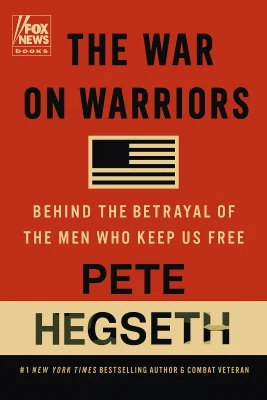
The War on Warriors
Behind the Betrayal of the Men Who Keep Us Free
Categories
Nonfiction, History, Memoir, Leadership, Politics, Audiobook, Military Fiction, Military History, American History, War
Content Type
Book
Binding
Kindle Edition
Year
2024
Publisher
Broadside e-books
Language
English
ASIN
B0CLJ5QSD8
ISBN
0063389444
ISBN13
9780063389441
File Download
PDF | EPUB
The War on Warriors Plot Summary
Introduction
The radio crackled with urgent chatter as Major Pete Hegseth adjusted his riot shield outside the White House in June 2020. After deployments in Cuba, Iraq, and Afghanistan, he found himself facing a different kind of enemy—angry crowds hurling bricks and bottles at National Guard troops protecting America's most sacred institutions. The irony wasn't lost on him: after two decades fighting extremists overseas, he would later be labeled an "extremist" by the very military he had served faithfully. This profound transformation of America's military represents one of the most dangerous threats facing our nation today. While our warriors fought courageously in foreign lands, radical ideologies infiltrated the ranks at home, turning the world's most effective fighting force into a laboratory for social experimentation.本书 reveals how diversity training replaced combat readiness, how political correctness undermined military effectiveness, and how the same leaders who failed in Afghanistan now lecture troops about pronouns and privilege. Yet within this crisis lies hope—a call for patriots to reclaim an institution that remains essential to America's survival and the preservation of freedom for future generations.
Chapter 1: The Warrior's Path: Purpose Beyond Inclusion
In the dusty outposts of Samarra, Iraq, First Lieutenant Pete Hegseth discovered what it meant to find true purpose. Working as an Assistant S5 in Civil Military Operations, he spent exhausting nights analyzing intelligence from local informants, cross-referencing names and locations, building relationships with tribal leaders who held the keys to defeating Al Qaeda cells operating in their neighborhoods. The work was grueling—reviewing endless lists of suspected terrorists, verifying information that could save American lives, coordinating raids that would either capture high-value targets or leave his men empty-handed. The breakthrough came through patience and persistence. Local sheikhs began trusting this young Princeton graduate enough to share actionable intelligence about foreign fighters hiding among their people. Within months, Hegseth's small team had facilitated the capture or killing of dozens of known insurgents. Each successful mission built trust, and trust led to more intelligence, creating a cycle that systematically dismantled terrorist networks in their sector. The nights were long, the coffee was terrible, and the danger was constant, but Hegseth felt truly alive—part of something larger than himself, making a tangible difference in a war that mattered. This experience illuminates a fundamental truth about masculine psychology that modern military leaders have forgotten: men don't seek inclusion as their highest aspiration—they crave purpose. They want to be needed, to solve problems that matter, to be part of missions that test their limits and forge them into something greater than they could become alone. The woke military's obsession with making everyone feel welcomed and celebrated misses this deeper need entirely. When young men see recruitment ads focused on diversity rather than decisive action, they instinctively understand that this institution no longer speaks their language or shares their values.
Chapter 2: Extremists That Never Were: Identity Politics in Uniform
The inauguration of President Biden in January 2021 should have been just another duty assignment for Major Hegseth in the DC National Guard. With over 25,000 troops deployed to protect the nation's capital, every available soldier was needed for this historic moment. Hegseth had received his orders and was prepared to serve, as he had under presidents of both parties throughout his career. Then, without explanation, his orders were suddenly revoked. He was told the unit was "good on numbers" and he was "not needed"—the only soldier out of thousands to receive such treatment. The real reason emerged later through careful investigation: two soldiers had scoured Hegseth's social media, discovered photos of his tattoos, and reported him as a potential "extremist." The tattoo in question was a Jerusalem Cross on his chest—a religious symbol representing Christ's sacrifice and the mission to spread the gospel to the four corners of the world. This ancient Christian emblem, worn by crusaders and displayed in churches for over a thousand years, was somehow interpreted as a sign of white nationalism by military leaders desperate to find domestic terrorists in their ranks. This incident reveals the military's descent into ideological madness. After twenty years of fighting actual extremists—men who beheaded prisoners, enslaved women, and murdered children—America's military leadership now sees Christianity itself as a threat. The same institution that once welcomed warriors of all faiths now scrutinizes crosses as potential hate symbols. The tragic irony is unmistakable: while hunting for imaginary white supremacists, military leaders have created the very division and distrust they claim to combat, pushing out patriots who embody the values that once made America's military the most respected fighting force in the world.
Chapter 3: From Combat Zones to Culture Wars
The transition from foreign battlefields to domestic culture wars represents a fundamental shift in how America's military views its mission and its people. Where once the enemy wore different uniforms and fought under foreign flags, today's military leadership sees threats primarily within its own ranks—specifically among the traditional, patriotic, Christian men who have always formed the backbone of America's fighting forces. This transformation didn't happen overnight but accelerated rapidly under leaders more concerned with political approval than military effectiveness. The same energy that once went into hunting Al Qaeda operatives in Iraq and Afghanistan is now directed toward rooting out "domestic extremists" who might display American flags too prominently or hold traditional views about gender and family. Mandatory training sessions that once focused on combat tactics now emphasize proper pronoun usage and the dangers of "white rage." The warrior ethos that celebrated strength, honor, and brotherhood has been replaced by a therapeutic culture that prioritizes feelings over fighting and seeks to remedy historical grievances rather than prepare for future conflicts. The consequences of this shift extend far beyond PowerPoint presentations and diversity workshops. When military leaders spend more time policing thoughts than training soldiers, readiness inevitably suffers. Units that should be practicing marksmanship are instead attending seminars on unconscious bias. Resources that could improve equipment and training are diverted to consultants who teach officers to see racism in every interaction. Most damaging of all, the young men who would naturally gravitate toward military service now see an institution that doesn't want them—or worse, views them as the primary threat to national security.
Chapter 4: When Warriors Face the Pentagon's New Priorities
The disconnect between Pentagon priorities and battlefield realities becomes starkly apparent when examining how resources and attention are allocated in today's military. While China builds hypersonic missiles and Russia modernizes its nuclear arsenal, American military leaders focus on achieving perfect racial demographics and ensuring transgender soldiers feel affirmed in their gender identity. The same generals who failed to prevent the Taliban from overrunning Afghanistan in days now present themselves as experts on social justice and climate change. Master Sergeant Brian Relation, a decorated Green Beret with ten combat deployments, witnessed this transformation firsthand during his transition from special operations to training roles. After years of hunting high-value targets and conducting the most dangerous missions America asked of its warriors, he found himself walking on eggshells around female cadets at ROTC programs, terrified that any attempt to help them meet physical standards would be interpreted as inappropriate contact. The military that once celebrated his expertise in eliminating America's enemies now treated him as a potential predator for upholding the same standards that kept soldiers alive in combat. This perversion of priorities creates a military that excels at bureaucratic compliance while struggling with basic operational requirements. Aircraft readiness rates decline while diversity metrics improve. Recruitment numbers plummet as sensitivity training hours increase. The same institution that once transformed boys into men through shared hardship and common purpose now fractures them into competing identity groups, each with separate standards and special accommodations. Warriors like Relation recognize that this path leads to defeat not just in culture wars, but in actual wars against enemies who haven't forgotten that strength, not sensitivity, determines victory on the battlefield.
Chapter 5: Women in Combat: Science vs. Social Engineering
The 2015 Marine Corps study on gender integration should have ended the debate about women in combat roles before it truly began. Three hundred male Marines and one hundred female Marines trained together at Twenty-Nine Palms, California, then compared their performance to an all-male unit across 134 combat tasks. The results were devastating for advocates of gender integration: all-male units outperformed mixed-gender units in 93 of the tasks, moved faster with heavy weapons, displayed greater accuracy in firefights, and suffered significantly fewer injuries during training. Perhaps most telling was the injury rate differential—female Marines were injured twice as often as their male counterparts during the same training exercises. These weren't minor sprains or bruises, but serious injuries that would render soldiers non-deployable in actual combat situations. The study also documented seven sexual assault allegations within the integrated unit during just four months of training, creating additional complications that all-male units simply don't face. Every objective measure confirmed what biology and common sense had always suggested: men and women are different, and those differences matter enormously in combat. Rather than acknowledge these findings, military leaders and politicians dismissed the study as flawed or irrelevant. Secretary of the Navy Ray Mabus actually argued that injury rates during training don't predict injury rates during combat—a position so absurd it defies rational response. The real tragedy isn't just that standards have been lowered to accommodate political goals, but that young women are being set up for failure and trauma in roles for which they're physically unsuited. When the shooting starts and lives hang in the balance, reality doesn't care about good intentions or equal opportunity—it cares only about who can carry a wounded teammate to safety and who can put accurate fire on target when everything depends on it.
Chapter 6: The Broken Covenant: Military Leadership's Crisis
The relationship between America and her military has always been covenantal in nature—a sacred agreement that citizens would support their warriors in exchange for protection from those who would destroy their way of life. This covenant was built on mutual respect, shared sacrifice, and common devotion to the Constitution that defines American identity. Military leaders understood their role as guardians not just of territory, but of the principles and values that make America worth defending. Today's military leadership has broken that covenant in pursuit of political favor and cultural approval from elites who fundamentally despise the institution they're supposed to serve. Generals who spent decades building reputations as warriors now scramble to demonstrate their commitment to social justice causes that have nothing to do with national defense. They embrace critical race theory while aircraft sit broken on runways. They celebrate transgender Pride Month while recruitment numbers crater across all branches. They lecture troops about white privilege while China and Russia prepare for conflicts these same leaders seem determined to lose. The cost of this betrayal extends beyond military effectiveness to the very soul of American society. When the institution that once served as the ultimate meritocracy embraces identity politics over individual achievement, it signals that excellence itself is suspect. When generals who swore oaths to the Constitution instead serve the latest fashions of progressive ideology, they teach young Americans that honor is negotiable and duty is conditional. The military that once stood as proof that Americans of all backgrounds could unite around shared principles now demonstrates that even our most sacred institutions can be corrupted when leaders choose personal advancement over institutional integrity.
Chapter 7: Reclaiming the American Fighting Spirit
The path forward requires more than simply changing policies or replacing a few senior leaders—it demands a fundamental recommitment to the principles that made America's military the most effective fighting force in human history. This means returning to merit-based promotion systems that reward competence over demographics. It means eliminating the diversity, equity, and inclusion programs that divide soldiers into competing victim groups. Most importantly, it means recruiting and retaining the kind of men who have always won America's wars: those who seek purpose over comfort, excellence over inclusion, and honor over safety. The young men who built the Greatest Generation didn't need safe spaces or trigger warnings—they needed challenges that tested their limits and forged them into weapons against tyranny. Today's military must rediscover this truth or face inevitable defeat against enemies who never forgot that war is fundamentally about strength, courage, and the will to impose one's values through force. The choice is stark: either America's military returns to its core mission of creating lethal warriors, or it continues its transformation into an armed social work program that will crumble at first contact with serious opposition. Hope remains because the American fighting spirit has never truly died—it has simply been suppressed by leaders more concerned with media approval than military victory. When the right leadership emerges, committed to constitutional principles and unafraid of elite disapproval, that spirit will resurge with a power that will surprise both America's enemies and her critics. The warriors are still out there, waiting for institutions worthy of their sacrifice and leaders worthy of their trust.
Summary
Through personal experience and careful analysis, this account reveals how America's military has been captured by the same radical ideologies that have corrupted universities, corporations, and government agencies. The transformation isn't accidental—it's the deliberate result of leaders who prioritize political compliance over combat effectiveness, diversity metrics over battlefield victory, and social experimentation over the sacred duty to defend the Constitution against all enemies, foreign and domestic. Yet within this crisis lies an urgent call to action for patriots who refuse to surrender the institution that stands between freedom and tyranny. The military can be reclaimed, but only through leaders with the courage to fire generals who have failed, eliminate programs that divide rather than unite, and return to the timeless principles that made America's warriors the envy and terror of the world. The choice facing Americans today is simple: fight for the soul of the military now, or watch helplessly as the last great meritocracy falls to the same forces that have already claimed so much of what we once held dear.
Best Quote
“We need to clean house of woke generals. Currently the Department of Defense has forty-four four-star generals with a total force of 1.2 million serving. In World War II, there were only seven four-star generals and over 21 million were serving. It’s upside down, and ripe for firings—without replacements.” ― Pete Hegseth, The War on Warriors: Behind the Betrayal of the Men Who Keep Us Free
Review Summary
Strengths: The book is described as cathartic and important by a former Navy member, particularly for its insights into military experiences from 2020 onward. It is praised for its detailed critique of perceived issues within the military, such as the influence of "wokeness" and the impact on traditional values. The first half of the book is highlighted for effectively discussing controversial topics. Weaknesses: The book is criticized for its immature tone, particularly in its treatment of women and transgender individuals. It is seen as repetitive, lacking in concrete solutions, and akin to a prolonged editorial. Some readers found it uninsightful and uninformative regarding recent policies. Overall: The book elicits mixed reactions, with some finding it a valuable critique of current military issues, while others see it as lacking depth and maturity. It may appeal to those aligned with conservative viewpoints but is not universally recommended.
About Author

Pete Hegseth
Hegseth navigates the intersection of military experience and literary expression, embedding his conservative political philosophy into narratives that emphasize American values and patriotism. His purpose is to bridge the gap between civilian and military life, using his background as a decorated Army veteran to lend authenticity and depth to his storytelling. By drawing on personal experiences from his deployments in Iraq and Afghanistan, Hegseth delves into themes of resilience, duty, and national identity, making his works a compelling read for those interested in military affairs and conservative thought.\n\nThe author’s notable book, "Modern Warriors: Real Stories from Real Heroes," showcases firsthand accounts from veterans, highlighting the sacrifices and challenges they face. This approach not only honors the individuals but also seeks to foster a deeper understanding of veterans' issues among the civilian population. His narrative style, marked by journalistic precision and emotional depth, appeals to readers seeking clarity and insight into the lives of military personnel. Meanwhile, Hegseth extends these themes into the broader national discourse through his media career, where he provides informed perspectives on national security and education policy, enhancing public awareness and debate.\n\nReaders who engage with Hegseth's work are likely to gain a nuanced understanding of the complexities faced by veterans and the values underpinning American identity. His bio reflects a career dedicated to advocating for veterans’ rights and promoting conservative ideals, making his contributions significant in shaping public discourse. By weaving his military and media experiences into his writing, Hegseth offers a unique viewpoint that resonates with those passionate about national security and the principles of freedom and service.
Read moreDownload PDF & EPUB
To save this Black List summary for later, download the free PDF and EPUB. You can print it out, or read offline at your convenience.

The War on Warriors
by Pete Hegseth
