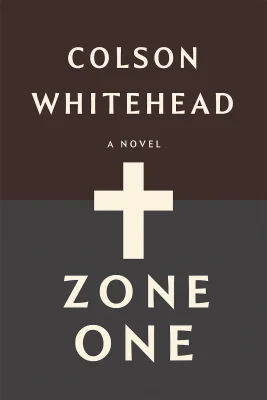
Zone One
Categories
Fiction, Science Fiction, Audiobook, Horror, Fantasy, Novels, Post Apocalyptic, Dystopia, Zombies, Apocalyptic
Content Type
Book
Binding
Hardcover
Year
2011
Publisher
Doubleday
Language
English
ASIN
0385528078
ISBN
0385528078
ISBN13
9780385528078
File Download
PDF | EPUB
Zone One Plot Summary
Introduction
The dead walk the streets of Manhattan, but they are not what Mark Spitz fears most. In the ruins of New York City, a makeshift military operation called Zone One has carved out a fragile foothold of civilization behind concrete walls, trying to reclaim the island block by block from the plague-infected masses. Mark Spitz, a mediocre survivor who has earned his nickname through an unlikely talent for staying alive, works as a "sweeper" with his two-person unit, methodically clearing buildings of the remaining infected. But Zone One harbors two kinds of undead. The violent ones they call "skels" attack with mindless hunger. The others, dubbed "stragglers," stand motionless in places that once held meaning for them—a copy machine, a restaurant booth, a fortune teller's chair—trapped forever in their most precious memories. As the military brass in Buffalo orchestrates grand plans for reconstruction and the return of normal life, Mark Spitz navigates between the infected streets and his own haunted past, sensing that the fragile barricades protecting their small pocket of order are about to fail.
Chapter 1: The Last Normal Man in a Broken World
Mark Spitz had always dreamed of living in New York City, gazing from his Uncle Lloyd's nineteenth-floor apartment windows as a child, mesmerized by the urban landscape below. The building seemed to float above the chaos, a blue-skinned tower promising sophistication and belonging. Now he moved through those same streets with military precision, but the city had become something else entirely. The plague had rewritten the rules of existence. Most people either died or transformed into ravenous skels, shambling horrors driven by insatiable hunger. But Mark Spitz possessed a peculiar gift for survival, not through heroism or exceptional skill, but through his lifelong mastery of the mundane middle ground. He had spent his entire life as aggressively average—B-grade student, adequate employee, forgettable boyfriend—and when the world collapsed into extremes, his mediocrity became armor. Working for the military operation called Zone One, Mark Spitz served as a sweeper alongside his unit members Kaitlyn and Gary. Kaitlyn brought cheerful memories of student council meetings and perfect birthday parties, maintaining an almost supernatural optimism about reconstruction. Gary, a mechanic from Connecticut, carried the grime of his former life under his fingernails like a talisman, speaking for his dead brothers with the pronoun "we." Their job was methodical extermination. They cleared buildings floor by floor, putting down any infected they encountered and dragging the bodies to the street for Disposal. The work had rhythm and purpose, each cleared block another small victory for the American Phoenix—Buffalo's rebranding of humanity's survivors. Behind the concrete wall that sealed off their territory, they maintained the illusion that civilization could be rebuilt one room at a time.
Chapter 2: Memories of Survival in the Wasteland
Before Zone One, Mark Spitz had wandered the wasteland for months, moving from one failed settlement to another. The pattern was always the same: people gathered, built walls, established rules, then watched everything collapse when the barriers failed or madness took hold. He had learned to stash emergency supplies and never grow too attached to any place or person. The memories of that time haunted his dreams. He remembered Mim, encountered in a toy store during a brutal winter. She had been searching for batteries, surviving alone after bandits destroyed her island community off Cape Cod. For a brief season, they created something like happiness in their makeshift shelter, playing board games by candlelight and sharing stories of the world that had been. She spoke of her children with past tense that broke his heart, and they both understood that love in this new world was measured in shared rations and the promise to end each other's suffering if infection came. When spring arrived, Mim vanished during a routine foraging run. Mark Spitz waited seven days before moving on, carrying her memory like shrapnel in his chest. This was the arithmetic of the wasteland: everyone you cared about would disappear, and the only choice was whether to let them drag you down with them or keep walking toward whatever refuge might exist beyond the next hill. The settlements fell with mechanical regularity. Happy Acres, where Mark Spitz had worked inventory and first heard rumors of Buffalo's grand reconstruction plans. Fort Golden Gate, where he operated as part of a highway-clearing crew, methodically removing the vehicular graveyards that choked the major arteries. Each place promised permanence and delivered only another variation on abandonment, teaching him that hope was the most dangerous luxury of all.
Chapter 3: The Illusion of Reconstruction
Zone One represented something different, or so its inhabitants desperately wanted to believe. The military had actually succeeded in carving out a functioning territory, complete with supply lines, communication networks, and official sponsors providing everything from combat gear to breakfast cereals. Buffalo broadcast optimistic updates about agricultural yields and diplomatic summits, painting pictures of a future where the plague would become merely another historical catastrophe to commemorate. Mark Spitz's commanding officer, known only as the Lieutenant, harbored fewer illusions. A veteran of the initial chaos, he conducted informal seminars in the dumpling house that served as their briefing room, mixing whiskey with philosophy as he explored the nature of their predicament. The Lieutenant understood that Zone One was less about genuine reconstruction than about the human need for meaningful work in the face of annihilation. The infected came in two varieties, each posing its own challenge to sanity. The aggressive skels were straightforward enemies, motivated by simple hunger and easily dispatched with proper tactics. Far more disturbing were the stragglers—infected who stood motionless in locations that had once held personal significance. A copy machine operator frozen over his equipment, a fortune teller trapped at her table, a businessman eternally waiting for his subway train. They seemed to inhabit perfect moments from their former lives, immune to external stimuli but somehow more human than their violent counterparts. Buffalo's scientists had no explanation for the straggler phenomenon, dismissing them as malfunctioning plague vectors. But the Lieutenant saw deeper meaning in their paralysis, suggesting they might represent humanity's truest response to catastrophe: retreat into the safety of memory where pain could not follow and loss had not yet occurred.
Chapter 4: Stragglers: Ghosts Frozen in Time
The fortune teller sat at her small round table, hands positioned as if about to reveal destiny in a client's palm. Green streaks colored her black hair, and gothic jewelry adorned her plague-mottled flesh. She belonged to the new generation of mystics who had adapted ancient practices for modern urban life, reading futures that would never arrive for seekers who had become food. Gary couldn't resist the theatrical opportunity. Despite Mark Spitz's protests about disrespect, the mechanic positioned himself in the client's chair and placed his palm in the straggler's cold grasp, conducting a mock séance with theatrical flair. He channeled imaginary spirits, delivering optimistic predictions about their survival and the fate of the Tromanhauser Triplets—three infants born during the plague who had become symbols of hope across the settlements. The comedy turned to horror in an instant. As Gary broke contact with the fortune teller's hand, she suddenly came alive, clamping her jaws around the meat between his thumb and index finger. Her teeth ground through flesh and bone with mechanical persistence while Gary screamed and Kaitlyn's bullets reduced the creature's head to pulp. But the damage was done—Gary had been bitten, infected with the plague that would slowly transform him into one of the walking dead. The attack violated every rule they understood about stragglers. These creatures were supposed to be harmless, lost in their private worlds and incapable of violence. If one could suddenly spring to life and attack, then their entire understanding of the plague's mechanics was wrong. The implications rippled outward like cracks in glass, suggesting that the categories they had built to make sense of the disaster were as fragile as everything else they had tried to preserve.
Chapter 5: Barricades That Cannot Hold
Gary's infection marked the beginning of the end. While Kaitlyn tended his wound and forced antibiotics down his throat, Mark Spitz was dispatched to Fort Wonton for medical supplies. The garrison's headquarters occupied a converted bank overlooking the wall that protected Zone One from the infected masses to the north. As he approached, the volume of gunfire had increased dramatically, suggesting unprecedented numbers of skels were pressing against their defenses. At the medical station, Mark Spitz encountered Ms. Macy, a Buffalo administrator conducting her own reconnaissance. Her presence revealed uncomfortable truths about their operation: Zone One was largely a public relations exercise, designed to demonstrate progress rather than achieve meaningful reconstruction. The planned diplomatic summit was political theater, and the camps that formed the backbone of their supposed civilization were failing across the region. The news grew worse by the hour. Bubbling Brooks, one of the largest settlements, had fallen to the infected. The Tromanhauser Triplets, those symbols of renewal and hope, were scattered—only one confirmed survivor from the attack that had claimed thousands. Communication networks were failing across the entire eastern seaboard, suggesting a coordinated collapse that stretched far beyond their small territory. Standing on the bank's roof, Mark Spitz watched the true scope of their predicament unfold. Broadway had become a river of the dead, flowing southward in numbers that dwarfed anything they had encountered. The wall that protected Zone One was designed to hold back scattered groups of stragglers, not this ocean of infected humanity. As he watched, he could see the concrete barrier beginning to buckle under the immense pressure of accumulated corpses.
Chapter 6: When the Wall Falls
The collapse came without warning, as sudden as thunder after lightning. The steel brackets holding the wall segments together wrenched free under the weight of the dead, and concrete slabs crashed into the street below. The carefully constructed barrier that had protected Zone One became a ramp for the infected to pour into their sanctuary, transforming their ordered world into chaos in minutes. Mark Spitz found himself trapped in the bank with a handful of other survivors as the dead swept through the streets outside. Among them was Ms. Macy, her corporate confidence evaporating as she realized Buffalo would never risk a rescue mission for a failed public relations stunt. The garrison's fallback plan called for evacuation to the Staten Island Ferry Terminal, but reaching it alive seemed increasingly impossible as the infected spread through every street and building. They made their escape attempt in military trucks, grinding through the masses of walking corpses while the city burned around them. Explosions lit the night sky as fuel depots and ammunition stores went up in flames, painting the collapsed buildings in apocalyptic orange. The driver pushed through the infected like surf, their bodies crunching under the wheels as the survivors held on desperately. But escape was an illusion. When Mark Spitz reached the fortune teller's shop where he had left his companions, he found Gary dead by his own hand and Kaitlyn vanished into the chaos. A photograph tucked in Gary's pocket revealed his secret dream of escape to Corsica, a Mediterranean island paradise that would never welcome him. The image captured a street scene of ordinary people conducting ordinary business, unaware they lived in the last moment before their world ended—just as Zone One's inhabitants had been unaware until it was too late.
Chapter 7: The Eternal Sea of the Dead
Alone in the fortune teller's shop, Mark Spitz faced the truth that reconstruction had always been a beautiful lie. The world hadn't paused in its dying to give them time to rebuild; it had merely taken a breath before resuming its decomposition. The infected streaming past his window were not invaders but the rightful inheritors of a civilization that had already ended, whether its former residents admitted it or not. He thought of the Lieutenant's final insight: that the stragglers were not malfunctioning plague victims but the most honest survivors, acknowledging that the world they had loved was gone and choosing to live forever in their memory of it rather than pretend they could rebuild it. The fortune teller at her table, the businessman with his briefcase, all the frozen figures scattered across the Zone—they had found their perfect moments and refused to let go. The horse from the Disposal unit wandered past, pulling its empty cart and filling the night with cheerful bells. Even without human guidance, the animal continued its appointed rounds, gathering the dead for processing that would never come. It was a perfect metaphor for their entire enterprise: motion without progress, purpose without meaning, hope without foundation. Mark Spitz collected his weapons and prepared to leave the shop. The terminal where survivors might gather was miles away through streets now thick with the infected. His chances of survival were minimal, his prospects for rescue nonexistent. But he had been preparing for this moment his entire life, training in the art of the impossible escape through years of mediocrity that had taught him to find the narrow path between extremes.
Summary
In the end, Mark Spitz understood that Zone One had never been about reclaiming the city but about refusing to acknowledge that it was already lost. The American Phoenix, with its optimistic slogans and reconstruction promises, was another kind of straggler—frozen in dreams of a future that would never arrive while the present continued its relentless decay. The wall's collapse was not a catastrophe but a revelation, stripping away the illusions that had allowed them to pretend civilization could be rebuilt on the bones of the old world. As he stepped into the sea of the dead, Mark Spitz carried with him the knowledge that survival was not about reaching safety but about accepting that safety no longer existed. The infected streaming through the streets were not monsters but mirrors, reflecting what humanity had always been beneath its pretensions of order and control. In this city of the walking dead, the only honest response was to keep walking, carrying whatever small portion of the past you could preserve while the future consumed everything else. The world had ended, and they were all residents of the new place now, whether they recognized it or not.
Best Quote
“We never see other people anyway, only the monsters we make of them.” ― Colson Whitehead, Zone One
Review Summary
Strengths: The review highlights the novel's technically proficient language and appealing sentence structure. The reviewer appreciates the slickness and enjoyment derived from the writing style, particularly the clever phrasing and pop-culture references. Weaknesses: The novel is criticized for its lack of depth, emotional engagement, and meaningful plot or character development. The reviewer describes it as "soulless" and "vacuous," comparing it to "prose porn" that prioritizes style over substance. Overall: The reader's sentiment is largely negative, expressing disappointment in the novel's inability to deliver emotional depth or memorable storytelling despite its attractive language. The recommendation level is low, as the novel is seen as lacking the qualities that make literature impactful and memorable.
About Author

Colson Whitehead
Whitehead delves into the complexities of American life through the lenses of race and history, crafting narratives that challenge readers to reflect on societal structures. His writing intertwines historical events with fictional elements, creating a rich tapestry that allows readers to engage with the past while contemplating the present. By employing meticulous research and vivid storytelling, he invites readers to understand how historical injustices continue to echo in contemporary society, as seen in works like "The Underground Railroad" and "The Nickel Boys." These books delve into the brutal realities of racial injustice and the resilience of the human spirit, themes that resonate deeply with audiences seeking to understand and confront these issues.\n\nIn his narrative approach, Whitehead extends beyond mere storytelling to offer a critical examination of American history and its impact on individual lives. He uses parallel timelines and complex character development to weave stories that are both enlightening and engaging. This method not only provides historical context but also fosters empathy and insight, making his work accessible and relevant to a wide audience. As a two-time Pulitzer Prize winner, Whitehead's contributions to literature have earned him critical acclaim, and his innovative narratives continue to influence both readers and writers.\n\nReaders gain from Whitehead's work not just a compelling story but a deeper understanding of the intricacies of race and history in America. His ability to connect the past with the present provides a platform for reflection and discussion, making his books essential for those interested in the socio-political landscape of the United States. Meanwhile, his forthcoming titles, such as "Crook Manifesto," promise to continue this exploration, further solidifying his position as a pivotal voice in contemporary literature.
Read moreDownload PDF & EPUB
To save this Black List summary for later, download the free PDF and EPUB. You can print it out, or read offline at your convenience.
Zone One
by Colson Whitehead
