
Eric Ozawa
Ozawa considers the intricate dynamics of identity and memory through his dual roles as a writer and translator. His work seamlessly integrates original fiction with translations, exploring profound themes of loss, self-discovery, and existential questioning. In his story "O-Bakanaru," featured in "Granta", Ozawa delves into psychological depth and the complexities of mental states tied to searching for truth. Meanwhile, his translation of the "Morisaki Bookshop" series demonstrates his ability to navigate multiple perspectives, thereby enriching the reader's experience of Japanese culture and narrative.\n\nBeyond fiction, Ozawa's contributions to journalism highlight his engagement with significant political and social issues, as evidenced by his coverage of Japan's 2011 nuclear crisis in publications like "The Nation". This blend of literary fiction and reportage allows him to reach audiences interested in both the artistic exploration of human emotions and the factual representation of global events. Readers who appreciate stories that offer both emotional resonance and intellectual inquiry will find his work particularly compelling.\n\nAs a clinical professor at NYU's Tisch School of the Arts, Ozawa extends his impact by shaping the next generation of writers, ensuring that his approach to storytelling and translation continues to influence the literary landscape. His bio, while lacking specific award mentions, suggests a career marked by a commitment to bridging cultures and perspectives, making his books a testament to the power of narrative to connect disparate worlds.
Books by Eric Ozawa
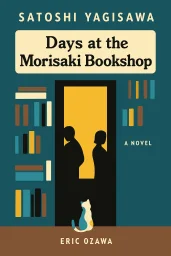
Days at the Morisaki Bookshop
Popular Authors

Robin Sharma
5 books

James Clear
2 books

Sarah Knight
4 books

Daniel Goleman
9 books
Stanley D. Rosenberg
1 books

Anthony Scaramucci
1 books


Niall Kishtainy
1 books
J. Richard Gott
1 books

Trevor Moawad
2 books

Mark McNeilly
1 books

Lara Love Hardin
4 books
