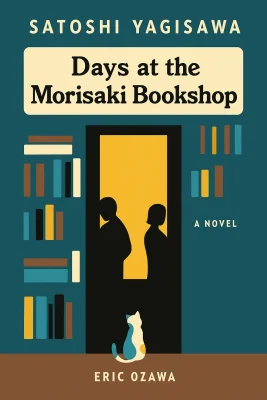
Days at the Morisaki Bookshop
Categories
Fiction, Audiobook, Romance, Japan, Contemporary, Books About Books, Asian Literature, Japanese Literature, Literary Fiction, Cozy
Content Type
Book
Binding
Paperback
Year
2023
Publisher
Harper Perennial
Language
English
ASIN
0063278677
ISBN
0063278677
ISBN13
9780063278677
File Download
PDF | EPUB
Days at the Morisaki Bookshop Plot Summary
Introduction
Rain streaked the windows of a Tokyo restaurant as Takako's world shattered with four simple words: "I'm getting married." The man she'd loved for a year delivered the news like discussing the weather, casually mentioning his fiancée—a coworker who'd been in his life longer than Takako ever was. In that moment, surrounded by glittering city lights, she realized she'd been nothing more than a distraction, a secret tucked away while he built his real life with someone else. What followed was a spiral into darkness so complete that sleep became her only refuge. Days blurred into weeks as Takako withdrew from the world, until a cheerful voice on her voicemail changed everything. Uncle Satoru, the eccentric keeper of a dusty bookshop in Tokyo's literary district of Jimbocho, offered her sanctuary among six thousand forgotten volumes. Little did she know that within those musty pages lay not just stories, but the key to her own rebirth—and that years later, she would return to find love, loss, and the courage to face life's deepest sorrows.
Chapter 1: The Broken Heart's Refuge
The betrayal came dressed in casual conversation over Italian wine. Hideaki's words landed like physical blows—he was marrying someone else, had been with her longer, but suggested they could "still see each other sometimes." The restaurant's romantic atmosphere turned mockingly cruel as Takako sat frozen, temple bells ringing inside her skull while her carefully constructed world crumbled. She stumbled through the following weeks like a ghost haunting her own life. The office became a torture chamber where she encountered both betrayer and bride-to-be daily. His fiancée's radiant smiles felt like daggers, her cheerful greetings a reminder of Takako's invisible wound. Food became impossible, sleep elusive. Her reflection showed a corpse walking among the living. When her resignation was accepted without question, Takako found herself cast adrift in Tokyo's vast indifference. An only child from Kyushu with no close friends in the capital, she retreated to her apartment and surrendered to sleep's merciful oblivion. Days dissolved into unconscious hours as her body's defense mechanism kicked in, protecting her from a reality too painful to endure. The salvation call came from Uncle Satoru, a voice from childhood memories offering refuge in his bookshop. Despite her reservations about his eccentric nature, desperation won. Within weeks, she stood at Jimbocho Station, carrying her few possessions toward a new chapter she never could have imagined. The sun blazed overhead like an angry teenager, marking the passage of time she'd lost to grief.
Chapter 2: Dust and Discovery Among Ancient Spines
The Morisaki Bookshop assaulted her senses immediately—six thousand books crammed into a space barely touched by sunlight, the air thick with decades of literary history. Uncle Satoru, smaller and more weathered than her memories suggested, greeted her with childlike enthusiasm. His thick glasses and rumpled clothes made him look like a character from one of his own books, perpetually disheveled but oddly content. Her second-floor room was a disaster zone of towering book stacks, forcing an exhausting day of manual labor to create livable space. Each pile threatened to topple at the slightest disturbance, transforming her quarters into a precarious cityscape of literature. By evening, she had carved out a small sanctuary among the chaos, though the musty scent of old pages permeated everything. Morning brought her first real challenge—opening the shop alone when her alarm mysteriously failed. She stumbled downstairs in pajamas to find the neighborhood already alive with business, her tardiness a stark introduction to the rhythm of Jimbocho life. The customers who trickled in seemed less interested in expensive purchases than in browsing the cheap paperbacks, leaving her to wonder about the shop's financial survival. Sabu arrived like a force of nature—bald, rotund, and opinions ablaze about the younger generation's literary failures. His passionate rant about modern reading habits left Takako both exhausted and oddly charmed. When Uncle Satoru returned, he explained the delicate art of managing such customers with tea and patient nodding. The revelation that Sabu had been a loyal customer for twenty years offered her first glimpse into the bookshop's hidden community of devoted readers.
Chapter 3: Confrontations and Courage in the Rain
The turning point arrived on a rain-soaked January night when Hideaki's voicemail shattered months of carefully constructed peace. His casual invitation to meet triggered the same devastating spiral that had originally driven her to the bookshop. Sleep no longer provided escape as memories flooded back with cruel intensity, proving that time alone couldn't heal her deepest wounds. Uncle Satoru's intervention came with surprising ferocity. Slightly drunk but determined, he declared war on the man who had wounded his beloved niece. His protective rage was almost comical given his small stature, but his fierce loyalty cut through Takako's defenses. Despite her protests about embarrassment and futility, she found herself agreeing to confront her past rather than flee from it. The taxi ride through Tokyo's neon-streaked night felt like traveling to an execution. At Hideaki's apartment, Uncle Satoru transformed from bumbling bookseller into vengeful guardian, forcing his way inside to deliver righteous judgment. The confrontation was messy and painful—Hideaki's dismissive cruelty, his fiancée's shocked presence, the awkward theater of adult emotions played out in a narrow hallway. But when the moment came to speak, Takako found her voice at last. The words poured out like a dam bursting—her pain, her humanity, her right to be treated with basic decency. Though Hideaki dismissed them and shut the door on their shared past, something fundamental had shifted. Walking back through the rain, Uncle Satoru's arm around her shoulders, she felt lighter than she had in months. The ghost had finally been laid to rest.
Chapter 4: The Unexpected Return of a Ghost
Two years after leaving the bookshop to rebuild her life, Takako received the call that would change everything again. Uncle Satoru's voice was strained with disbelief as he delivered the impossible news: Momoko had returned. His wife, missing for five years without explanation, had simply walked through the shop door as if returning from a brief errand, carrying only a small bag and offering the most casual greeting imaginable. When Takako arrived at the bookshop that autumn evening, she barely recognized the vibrant woman who greeted her. Momoko burst with energy and mischief, her cheerful demeanor a stark contrast to the broken man she'd left behind. Where Uncle Satoru seemed aged and weathered by abandonment, Momoko appeared refreshed and renewed, as if the missing years had been a rejuvenating journey rather than a devastating absence. The reunion dinner became a surreal performance of normalcy. Momoko dominated conversation with rapid-fire observations about neighborhood changes while periodically pinching Uncle Satoru's cheeks—a display of casual intimacy that seemed almost cruel given their history. She spoke of their marriage like ancient history, casually referencing their Paris meeting and early struggles with Uncle Satoru's disapproving family. Yet beneath her cheerful facade, Takako sensed something darker. The woman who claimed to have taken a liking to her young niece years ago now seemed desperate for connection, grabbing Takako's hands with surprising intensity and declaring her desire for friendship. Her stories revealed glimpses of a complex past—working at a mountain inn, surviving on her own for years—but the crucial question remained unasked: why had she come back now?
Chapter 5: Mountaintop Confessions and Hidden Truths
Momoko's invitation to a mountain retreat came with characteristic suddenness, bulldozing through Takako's hesitations with enthusiastic descriptions of scenic views and historic shrines. The journey to Okutama revealed Momoko's unexpected physical prowess—she navigated the challenging hike with mountain goat agility while Takako struggled to keep pace, questioning her decision with every labored breath. The mountain inn felt more like a bohemian boarding house than a proper hotel, managed by relatives who remembered Momoko from her working days there. Young Haru, the innkeeper's helper, revealed that Momoko had spent three years at the inn after leaving Uncle Satoru, working in apparent darkness before eventually moving on to other unknown destinations. The casual revelation added another layer to the mystery of Momoko's missing years. On the mountain peak, surrounded by endless green ranges and crystalline sky, the truth finally emerged. Momoko's confession unfolded like a tragic opera—lost love in Paris, an unwanted pregnancy ending in heartbreak, years of failed attempts to conceive with Uncle Satoru, and a stillborn child that shattered her remaining hopes. The emptiness that followed had grown unbearable, driving her to flee rather than poison their marriage with her unhealing grief. But the deepest revelation was yet to come. In their mountain room's darkness, Momoko shared the real reason for her return—a cancer diagnosis that had stripped away illusions about time and second chances. She'd chosen Takako as her confessor precisely because she could trust her to keep the secret from Uncle Satoru, claiming she didn't want to burden him with her mortality after everything else she'd put him through.
Chapter 6: Breaking Promises to Preserve Love
When Momoko vanished again just days after their return, leaving only a curt note of thanks, Takako's fury burned hotter than her original heartbreak had ever felt. The cowardice of the woman who'd demanded friendship only to use it as a weapon against Uncle Satoru seemed unforgivable. She had manipulated Takako into becoming an unwilling keeper of secrets that could destroy the man who'd saved her own life. Uncle Satoru's resigned acceptance proved even more maddening. He seemed almost to have expected this outcome, as if Momoko's brief return had been borrowed time rather than a genuine reunion. His suggestion that some significant reason must have driven her back revealed his intuitive understanding of his wife's character, even as he claimed helplessness to pursue her again. Takako's decision to break her promise came like a dam bursting. If Momoko wanted to play martyr and disappear into noble suffering, Uncle Satoru deserved the chance to make his own choice about their shared future. The revelation of Momoko's illness hit him with expected shock, but his response surprised them both—rather than devastation, he showed quiet determination to find her before it was too late. The chase that followed became a race against time and stubborn pride. Uncle Satoru's intuition led him to the temple where they'd mourned their lost children, finding Momoko exactly where grief and memory had drawn her. Their reunion wasn't the dramatic reconciliation of fairy tales, but the messy, honest reckoning of two damaged souls choosing love over self-protection. When he returned alone but hopeful, promising that Momoko would eventually come home for real, Takako finally understood that some battles require patience rather than force.
Chapter 7: The Circle of Return and Reconciliation
A full year later, the Morisaki Bookshop had become something new—still cramped and dusty, still home to six thousand forgotten volumes, but now filled with the quiet contentment of a family reunited. Momoko's return had been genuine this time, bringing with her a short haircut and hard-won wisdom about the difference between running away and taking time to heal. Her illness remained a shadow, but one they faced together rather than in isolation. The old rhythms reasserted themselves with comfortable familiarity. Sabu still held court among the book stacks, though now he directed his passionate rants toward a more appreciative audience in Momoko, who managed him with the same skill she applied to Uncle Satoru's cheek-pinching habits. The neighborhood's eccentric community had absorbed her return without missing a beat, as if five years had been merely an extended vacation. Even romance had found its way back to Takako's life. Wada, the quiet publisher who'd waited faithfully at Café Saveur with her forgotten book, had proven that some things were worth the patient faith of true booklovers. Their relationship grew with the slow certainty of well-written literature, built on shared appreciation for stories and the courage to remain open to unexpected plot developments. Standing in the shop's familiar chaos, surrounded by the people who'd become her chosen family, Takako marveled at the journey that had brought them all to this moment. Uncle Satoru and Momoko worked side by side with the easy intimacy of couples who'd survived their own worst mistakes, while the books around them held their eternal vigil—witnesses to human frailty and resilience, keepers of every story that mattered.
Summary
The Morisaki Bookshop stands as proof that healing comes not from forgetting our wounds, but from finding the courage to face them among people who understand that love requires both holding on and letting go. Takako's journey from broken-hearted exile to confident woman mirrors the shop's own resurrection under Uncle Satoru's dedicated care—both testaments to the power of patience and genuine connection. In Jimbocho's labyrinthine streets of literary treasures, three souls discovered that the most important stories aren't always found in books. Sometimes they're written in the daily choice to remain open to surprise, to trust in second chances, and to believe that even the most battered hearts can learn to love again. The musty scent of old pages continues to fill the air, carrying within it the promise that every ending is also a beginning, waiting to be discovered by someone brave enough to turn the page.
Best Quote
“Don’t be afraid to love someone. When you fall in love, I want you to fall in love all the way. Even if it ends in heartache, please don’t live a lonely life without love. I’ve been so worried that because of what happened you’ll give up on falling in love. Love is wonderful. I don’t want you to forget that. Those memories of people you love, they never disappear. They go on warming your heart as long as you live. When you get old like me, you’ll understand.” ― Satoshi Yagisawa, Days at the Morisaki Bookshop
Review Summary
Strengths: The book is praised for its captivating narrative and accessible writing style, likened to "smooth as jazz." The author skillfully crafts an engaging story from a simple plot, and the setting in Tokyo's Jimbocho district is vividly brought to life. The book is considered entertaining and has been adapted into a movie in Japan. Weaknesses: The writing is described as simplistic, with flat characters and shallow relationships. The story's happy ending is perceived as too perfect, and the book did not leave a lasting impression on the reviewer. Overall: The reader found the book entertaining and would recommend it, particularly for those interested in contemporary Japanese literature, despite some reservations about its depth and lasting impact.
About Author

Satoshi Yagisawa
Yagisawa delves into the intersection of personal growth and the solace found in bookshops, crafting narratives that gently explore the quiet yet profound connections between individuals. His debut novel, "Days at the Morisaki Bookshop", not only won the Chiyoda Literature Prize but also set the stage for his exploration of these themes. Yagisawa’s work is celebrated for its introspective tone and evocative settings, capturing the charm and nostalgia of traditional Japanese bookshops. His style is accessible, resonating with readers through the small, meaningful moments that define human experience.\n\nWhile his narratives are rooted in the Japanese cultural milieu, their universal appeal lies in the emotional depth and nuanced portrayal of everyday life. Readers who appreciate character-driven stories will find value in Yagisawa’s ability to convey the beauty and complexity of human relationships. His books, including the sequel "More Days at the Morisaki Bookshop" and "Days at the Torunka Café", extend this exploration, inviting readers into spaces where personal reflection and community intertwine. The author’s works, translated into numerous languages, have reached an international audience, broadening their impact.\n\nYagisawa’s contribution to literature is further recognized through the adaptation of his debut book into a film, demonstrating the broader cultural resonance of his themes. As this short bio highlights, his focus on the intricacies of daily life and personal connection makes his work particularly impactful for those who cherish literature that mirrors the subtleties of real-world interactions. Beyond entertainment, his books offer readers a lens through which to examine their own experiences and relationships, making them a significant addition to contemporary Japanese literature.
Read moreDownload PDF & EPUB
To save this Black List summary for later, download the free PDF and EPUB. You can print it out, or read offline at your convenience.
Days at the Morisaki Bookshop
by Satoshi Yagisawa
