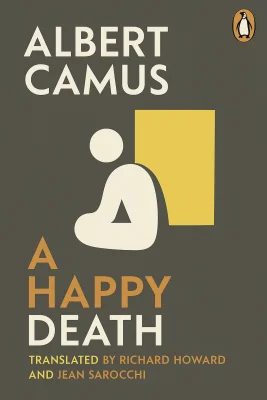
A Happy Death
Categories
Philosophy, Fiction, Classics, Literature, 20th Century, France, Novels, French Literature, Literary Fiction, Nobel Prize
Content Type
Book
Binding
Paperback
Year
2002
Publisher
Penguin Classics
Language
English
File Download
PDF | EPUB
A Happy Death Plot Summary
Introduction
The morning light streamed golden between the pines as Patrice Mersault walked steadily toward the villa, a suitcase in his hand and murder in his heart. By ten o'clock, the housekeeper would be at market, leaving Roland Zagreus alone with his books and his useless legs. The road sloped upward through that primal April morning, every footstep clicking against cold stone, every creak of the suitcase handle marking time toward an act that would transform everything. This is the story of a man who killed for happiness and found it in the shadow of death. Mersault, trapped in the grinding routine of an Algerian clerk's existence, discovers that freedom has a price measured not in conscience but in francs. From the sterile offices of the maritime commission to the sun-drenched heights of the Chenoua mountains, his journey traces the dark mathematics of liberation—how much blood it takes to buy time, how much time it takes to buy peace, and whether a man can die truly happy knowing the weight of what he has done.
Chapter 1: The Fatal Decision: Mersault's Murder of Zagreus
The villa stood empty except for the cripple by the fire. Zagreus sat motionless in his wheelchair, a blanket covering the stumps where his legs had been, reading as he always did. The morning blazed through tall windows, flooding the room with pitiless light that made objects glitter like accusations. When Mersault entered, Zagreus looked up without surprise, his round eyes following every movement as Patrice walked to the chest beside the fireplace. Inside lay exactly what he expected: packets of bills wrapped in newspaper, a black revolver gleaming against white paper, and an envelope containing Zagreus's suicide note. The cripple had made it all so simple, so inevitable. Mersault filled his suitcase methodically, leaving only one packet behind for authenticity. His hands moved with surgical precision, even as sweat beaded on his forehead in the stifling heat from the blazing fireplace. Zagreus watched it all, his stubby fingers still gripping the book—Gracián's *The Courtier*. When Mersault approached with the revolver, the cripple turned toward the window where morning light played across the golden earth. His eyes filled with tears, but he did not turn away when the barrel touched his right temple. The shot echoed once through the perfect silence. The head fell sideways, no longer Zagreus but a wound of brain and blood and splintered bone. Mersault's hands shook as he arranged the scene—placing the gun in the dead man's grip, positioning the suicide note where it would be found. Outside, a horn sounded briefly as the butcher's van passed. By the time the echoes faded, Mersault was walking away through the little square, his suitcase heavy with stolen time, his future purchased with a single bullet and years of patient observation.
Chapter 2: Imprisoned by Routine: A Life Among Shadows
Before the murder, Mersault's existence had been a slow suffocation measured in eight-hour increments. The maritime commission office stretched before him each morning like a catacomb where dead hours putrefied among 414 pigeonholes stuffed with shipping manifests. He translated provision lists from English freighters, checked cargo bills, and dealt with clients who wanted crates shipped to distant ports that existed for him only as names on documents. The smell of tar and melting pitch from the harbor seeped through every window, mixing with the stench of human resignation. His supervisor, Monsieur Langlois, strutted through the office with trousers pasted to his buttocks by sweat, terrorized by lawyers and anyone with aristocratic pretensions. The secretaries—one newly married, one living with her mother, one dignified old lady who despised Langlois—formed the entire cast of Mersault's professional theater of the absurd. At noon, he would eat at Celeste's restaurant with Emmanuel, listening to war stories that may or may not have been true, watching René slowly dying of tuberculosis while customers discussed whether the disease could be cured with time and patience. The conversations always returned to the same themes: who had money, who had lost it, what a real man should be at fifty. Celeste, with his huge mustaches and bitter wisdom, served as chorus to this daily opera of mediocrity. Evenings, Mersault returned to his mother's room above the horse butcher shop, where a sign read "To Man's Noblest Conquest." She had died years before—a beautiful woman reduced to hospital gowns and swollen limbs, blind and groping through their colorless apartment until death finally claimed its due. He had attended her funeral with proper dignity, concerned mainly that there weren't enough cars for the mourners, then hung a "For Rent" sign in the window the next day.
Chapter 3: The Philosophy of Happiness: Money, Time, and Freedom
The conversation with Zagreus had planted the fatal seed on a rain-soaked Sunday afternoon. The cripple spoke with the authority of a man who had lost everything—his legs, his mobility, his chance at the life his wealth could have purchased. But his mind remained sharp as winter air, cutting through romantic notions about money and happiness with surgical precision. "Money doesn't make happiness," Zagreus said, his voice carrying bitter amusement. "But that's because most rich men have no sense of happiness. The real truth is simpler: time can be bought, everything can be bought. To be rich is to have time to be happy, when one deserves to be so." His hands rested on the blanket covering his stumps, living proof of opportunities lost to cruel accident. The philosophy was seductive in its clarity. Poor men spent their lives making money when they should be using money to make time. Mersault worked eight hours daily at soul-crushing labor, returning exhausted to a room that smelled of poverty and death. Meanwhile, two million francs sat moldering in Zagreus's safe, enough to buy decades of freedom from the maritime commission's suffocating routine. "I wouldn't let anything get in my way," the cripple had said, describing his younger self's ruthless accumulation of wealth. "For a man who is well-born, being happy is never complicated. It's enough to take up the general fate with the will for happiness rather than renunciation." The words hung in the air like an invitation, a challenge, a final test of Mersault's commitment to his own liberation. By the time Zagreus showed him the revolver and the suicide note, the crime was already inevitable. The cripple had arranged his own murder with the same methodical precision he had once applied to making his fortune, offering Mersault the keys to a life lived outside the grinding machinery of ordinary existence.
Chapter 4: Wandering Through Exile: Prague to Algiers
The fever began before Mersault reached Prague, as if his body recognized the moral geography of exile. The city revealed itself through a haze of sickness—Gothic spires piercing gray sky, baroque domes glowing with false gold, streets that smelled perpetually of vinegar and cucumbers sold by ancient women from wooden carts. Every corner brought fresh assault to his heightened senses. He found refuge in a hotel room decorated with flyspecked squalor, where yellow flowers bloomed obscenely against gray carpet and broken radiators exposed their brass wounds to the world. The blind accordion player haunted the restaurant where Mersault ate his solitary meals, filling the cellar with melancholy tunes while prostitutes laughed over greasy food and a man with a red star sucked noisily on matchsticks. Prague became a fever dream of displacement and guilt. The cucumber smell followed him everywhere, sharp and accusatory, while his reflection in shop windows showed a man increasingly hollow-eyed and unkempt. He visited monasteries seeking peace in their ancient incense, but found only more evidence of humanity's desperate attempts to negotiate with invisible judges. The dead man in the street provided the final revelation—a body lying in pooled blood while his friend performed a wild dance of grief and confusion around the corpse. The scene crystallized everything Prague represented: a world where violence bloomed suddenly from mundane disputes, where the living honored the dead through gestures that made no sense to rational minds. Mersault fled the next morning, understanding finally that exile was not escape but merely another form of prison. The train carried him south toward redemption, through landscapes that gradually softened from industrial gray to Mediterranean gold. By the time he reached Genoa's bright harbor, his fever had broken and his appetite for life returned with Mediterranean intensity. The Italian sun promised forgiveness, while the sea offered baptism for sins that could never quite be confessed.
Chapter 5: The House Above the World: Community and Solitude
Three young women lived in a villa perched above Algiers Bay, calling their refuge the House above the World. Rose, Claire, and Catherine had made themselves a kingdom of friendship and sunlight, where serious conversation mixed with shameless indulgence and cats named Gula and Cali provided commentary on human pretensions. They welcomed Mersault into their bright conspiracy against ordinary life. The house opened onto terraces where breakfast stretched into philosophical discussions about love, happiness, and the proper way to prepare lentils with fresh cream. Rose, pragmatic behind her round sunglasses, declared that marriage dissolved love through excessive familiarity. Claire, with her Florentine features and enormous appetite, believed in the therapeutic properties of cream-based recipes. Catherine, the self-proclaimed "force of nature," preferred nakedness to intellectual discourse and understood the secret languages of trees and wind. Their days followed rhythms older than clocks—morning sunbaths that left them drunk on warmth and light, afternoon siestas in rooms shuttered against the blazing heat, evenings spent watching the harbor's lights multiply like fallen stars. They treated the world as a character in their ongoing drama, someone whose approval mattered more than social conventions or practical concerns. Mersault found temporary peace in their company, but recognized the fundamental incompatibility between his nature and their generous impulses. Love threatened at every corner—not romantic love, which he could manage and discard, but the deeper affection that comes from being truly known by others. Catherine's frank admiration, Rose's protective instincts, Claire's simple warmth—all represented forms of bondage disguised as gift. The decision to leave came suddenly, crystallized by Catherine's innocent question about why he would abandon happiness for solitude. "There's the risk of being loved, little Catherine, and that would keep me from being happy," he explained, knowing she could not understand how love might poison the very freedom it claimed to celebrate. By evening, he was gone, leaving behind three faces framed in the yellow bus window like a memory of Eden glimpsed and deliberately abandoned.
Chapter 6: Harmony with Nature: Finding Rhythm in Chenoua
The house overlooking the sea stood empty when Mersault first arrived, a simple structure balanced between the Chenoua mountain and the Mediterranean. From his bedroom window, two pine trees framed a narrow view of water where small boats traced silver wakes across blue distances. The village of Tipasa lay visible across the bay, its Roman ruins gleaming gold among the wormwood bushes. At first, solitude felt like sickness. Days stretched interminably without the familiar anchors of work and obligation. He would wake late, eat carelessly, wander from room to room like a ghost haunting his own life. The gate creaked when meals arrived from the village café, marking time's passage in a world suddenly emptied of purpose. He had bought freedom but forgot to purchase meaning. Salvation came through discipline more than inspiration. Morning swims in water that tasted of salt and tar, afternoon walks along beaches where the ruins spoke in languages older than guilt. He learned the village rhythm—pool games with Perez, the one-armed fisherman who rowed with his stump pressed against the oar, conversations with Bernard, the doctor who had retreated from Indochina to this corner of paradise. The seasons became his calendar, more reliable than human appointments. Almond trees bloomed in January, followed by pear and peach in March. Summer brought apricots and the major crops, while autumn delivered grape harvests and the first rains that swelled the streams to torrents. Each year repeated its essential pattern, teaching him the art of patient attention to cycles larger than individual desire. His wife Lucienne visited occasionally, moving through his house like a beautiful sleepwalker whose dreams had nothing to do with his waking life. She wanted permanence, emotional commitment, the ordinary consolations of marriage. He offered her the limited gift of his attention and his body's temporary devotion, knowing it would never be enough for someone who confused possession with love.
Chapter 7: The Conscious End: Embracing a Happy Death
The illness announced itself through weakness and fever, the body finally claiming payment for years of careful neglect. Mersault's lungs filled with fluid while his extremities grew cold and bloodless. His fingernails became pink and curved, giving his hands a twisted, unhealthy appearance that seemed to mock his former physical confidence. Death stalked him through winter nights when breathing became a conscious effort. Bernard confirmed what Mersault already understood—the heart was failing, the next collapse might be final. Ampules of adrenalin provided temporary escape from the dark immersions of unconsciousness, but could not postpone the inevitable conclusion. Lucienne sat beside his bed like a faithful animal, watching her husband navigate the narrow passage between awareness and oblivion. The crucial recognition came through fever and exhaustion: he had lived exactly the life he intended, making every gesture necessary for authentic existence. Fear of death revealed itself as fear of unlived life, the terror of those who had submitted to routine without ever truly choosing their fate. But Mersault had chosen—chosen murder, chosen solitude, chosen the difficult path of conscious happiness over comfortable self-deception. Memory brought Roland Zagreus into the final hours, the cripple's face no longer accusatory but fraternal. Both men had understood that time could be purchased, that happiness required violent commitment to one's deepest nature. The bullet that destroyed Zagreus had also created Mersault, transforming a clerk into someone capable of genuine relationship with the indifferent cosmos. The sea outside his window caught the morning light in patterns that spoke of eternal repetition and renewal. His breath grew shorter, his consciousness more acute. In the gathering darkness behind his eyelids, he felt his body preparing to restore him to the world that had given him temporary form. The last sensation was of overwhelming gratitude—not for forgiveness, which he had never sought, but for the magnificent completeness of a life lived according to its own ruthless logic.
Summary
Patrice Mersault died as he had lived in his final years—alone, conscious, and utterly without apology for the choices that had brought him to that moment. His murder of Roland Zagreus, committed in cold calculation rather than passion, had purchased not merely wealth but the rarest luxury: time enough to discover what happiness might mean for a man willing to claim it at any cost. From the sterile corridors of the maritime commission to the sun-bleached terraces of the House above the World, from the vinegar-scented streets of Prague to the ancient ruins of Tipasa, his journey traced the geography of authentic existence. The novel's final vision transcends moral judgment to embrace something more dangerous: the possibility that consciousness itself might justify any crime, that awareness of one's own nature might constitute the only ethics worth practicing. Mersault's happiness was not innocent—it was earned through violence, sustained through solitude, and completed through the kind of death that few men have the courage to meet with open eyes. In choosing to live deliberately rather than accidentally, he transformed himself from victim of circumstance into author of his own fate, proving that freedom's price, however terrible, remains the only purchase worth making for those strong enough to pay it.
Best Quote
“When I look at my life and its secret colours, I feel like bursting into tears.” ― Albert Camus, A Happy Death
Review Summary
Strengths: The review praises Albert Camus as an unparalleled master in character development and imagery, particularly in depicting nature and urban settings. The book is highlighted as an excellent resource for learning storytelling, memoir, and biography writing. The narrative's exploration of happiness and the protagonist's journey is noted as engaging. Weaknesses: The review suggests a potential bias in the portrayal of disabled characters, implying a preference for able-bodied individuals as more deserving of happiness. This aspect may require careful consideration by readers. Overall: The reviewer holds a highly positive view of Camus, recommending the book as essential reading for its artistic and educational value. The narrative's focus on happiness and its vivid depiction of various settings are particularly commended.
About Author
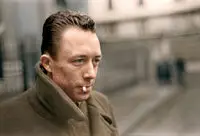
Albert Camus
Camus interrogates the tension between existential absurdity and moral responsibility, situating his works within a framework of human resilience and philosophical inquiry. His book "The Stranger" explores themes of alienation and societal indifference through its protagonist, Meursault, while "The Myth of Sisyphus" confronts the philosophical acceptance of life's inherent absurdity. These texts illustrate Camus' method of using narrative to probe existential questions, which he further develops in "The Plague," where he portrays human solidarity against unyielding natural and societal forces. Meanwhile, his essayistic style combines clarity and precision, emphasizing concrete experiences over abstract theorizing.\n\nFor readers, Camus' literature provides profound insights into human existence, encouraging an examination of personal and societal ethics in the face of life's absurdities. This bio of Camus offers a glimpse into his unique ability to blend narrative and philosophy, crafting stories that resonate with those seeking to understand the complexities of human conscience. His approach benefits individuals interested in existential and absurdist literature, inspiring a critical reflection on moral integrity and the courage to confront existential dilemmas.\n\nBeyond his literary achievements, Camus' recognition as a Nobel laureate underscores his impact on modern literature. His works challenge readers to contemplate the moral imperatives of the human spirit, making them invaluable for both philosophical study and personal growth. His exploration of themes like revolt and solidarity, especially during tumultuous times, situates his contributions as pivotal in understanding not just literature but the human condition itself.
Read moreDownload PDF & EPUB
To save this Black List summary for later, download the free PDF and EPUB. You can print it out, or read offline at your convenience.
A Happy Death
by Albert Camus
