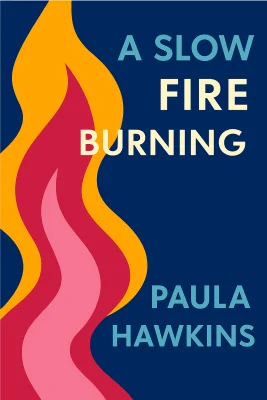
A Slow Fire Burning
Categories
Fiction, Audiobook, Mystery, Thriller, Adult, Book Club, Contemporary, Suspense, Crime, Mystery Thriller
Content Type
Book
Binding
Hardcover
Year
2021
Publisher
Riverhead Books
Language
English
ASIN
073521123X
ISBN
073521123X
ISBN13
9780735211230
File Download
PDF | EPUB
A Slow Fire Burning Plot Summary
Introduction
Blood pools on the narrow boat's floor, reflecting the morning light that filters through grimy windows. Daniel Sutherland lies still, his throat carved open like a grotesque smile, while on the towpath outside, an elderly woman named Miriam Lewis makes the discovery that will unravel three interconnected lives. The young man's death appears straightforward—a violent encounter with Laura Kilbride, a damaged girl with a history of lashing out. But beneath London's placid canal waters run deeper currents of betrayal, guilt, and a fifteen-year-old tragedy that refuses to stay buried. What begins as a simple murder investigation becomes something far more complex when Detective Inspector Barker realizes that everyone connected to Daniel carries their own devastating secrets. His aunt Carla Myerson mourns not only her nephew but also her three-year-old son Ben, killed in a fall that destroyed her marriage and her faith in family. Her ex-husband Theo, a successful novelist, harbors his own dark obsessions about justice and revenge. And somewhere in the shadows lurks the truth about a child's death that was never quite the accident it seemed to be.
Chapter 1: A Body on the Canal: Discovery and Deception
Miriam Lewis wakes to the stench of death drifting from the neighboring boat. The blue-and-white vessel has sat motionless for days, its cabin doors hanging open like a mouth gasping for air. When she finally works up the courage to investigate, she finds Daniel Sutherland sprawled across the blood-soaked floor, his beautiful face frozen in surprise. The police arrive with questions and assumptions. Detective Inspector Barker, tall and tired-looking, takes Miriam's statement while crime scene officers swarm the narrow boat. She tells them about the striking older woman she's seen visiting Daniel—silver hair, expensive clothes, the sort of person you notice in this working-class corner of London. What she doesn't mention is the small key she palmed from the bloody floor, attached to a wooden bird-shaped keyring she recognizes from the local launderette. While photographers document the carnage, Miriam retreats to her own boat, the pristine Lorraine. She's lived on the canal for six years, watching the constant flow of people through her small world. Writers, artists, drifters, criminals—all seeking something on the water that the city streets couldn't provide. But Daniel was different. Young, clean-cut, too polished for canal life. The kind of person who draws attention without trying. The key feels heavy in her pocket as she watches them carry Daniel's body away. Through her window, she sees Carla Myerson's unmistakable silhouette disappearing into the dusk. The woman walked past Daniel's boat three times in the past week, always alone, always carrying that expensive handbag like armor. Miriam opens her notebook—she keeps meticulous records of the canal's comings and goings—and makes a careful entry. Some secrets, she knows, are worth more than others.
Chapter 2: Fractured Lives: The Weight of Past Tragedies
The news reaches Carla Myerson like a physical blow. Detective Barker's words—"Daniel Sutherland," "murdered," "narrow boat"—blur together as her living room tilts and spins. Her nephew, Angela's troubled son, the boy she'd watched grow from a frightened child into something she couldn't quite name. The police ask about next of kin, about family connections, and Carla finds herself unable to explain the tangled web that bound her to Daniel. Theo arrives within minutes, his face flushed from running. Her ex-husband still keeps a key to her house, still responds to her crises as if they were married. He holds her while she cries, his familiar bulk a comfort even as questions multiply between them. The police want to know about Daniel's life, his work, his friends. Neither Carla nor Theo can provide answers—they've been absent from the boy's world for too long. The estrangement began fifteen years ago with another death, another phone call from police. Ben, their three-year-old son, had fallen from a broken balcony while staying with his aunt Angela. The impact onto stone steps below killed him instantly, shattering not just a small body but an entire family. Theo blamed Angela's drinking, her negligence, her fundamental unfitness as a guardian. Carla blamed herself for leaving their precious boy with anyone at all. In the years that followed, grief carved different paths through their lives. Theo retreated into rage and writing, channeling his fury into novels that explored the darker corners of human nature. Carla found herself drawn back to her sister and nephew in secret, trying to rebuild bridges that Theo had burned. She never told him about the clandestine meetings, the money she gave Daniel when he asked, the way she looked into his dark eyes and saw traces of the frightened child who'd witnessed more than any eight-year-old should. Now Daniel is gone too, and the police are asking uncomfortable questions about family dynamics, about money, about who might have wanted him dead. Carla catches Theo's expression when they mention a young woman found with Daniel's blood on her clothes, and she recognizes something flickering behind his eyes. Relief, perhaps. Or calculation.
Chapter 3: False Narratives: Stories We Tell Ourselves and Others
Laura Kilbride knows she's screwed the moment they show her the knife. The blade gleams dully in its plastic evidence bag, dark stains along its edge telling a story she can't quite remember. Detective Inspector Barker—she calls him Egg in her head because of his perfectly bald skull—leans across the interview table with the patience of a man who's heard every lie ever told. The truth is complicated. Laura met Daniel through her friendship with Irene Barnes, an elderly woman she helps with shopping and small tasks. Daniel had come to collect his belongings after his mother Angela's death, and something about his wounded beauty had drawn Laura like a moth to flame. She's always been attracted to broken things, perhaps because she recognizes the damage in herself. Her own breaking began at age ten when a car struck her bicycle on a quiet country road. Fractured skull, traumatic brain injury, months of rehabilitation—the accident stole more than just her physical wholeness. It left her with impulse control problems, inappropriate responses, a hair-trigger temper that could explode without warning. The doctors called it disinhibition. Laura called it being fucked up for life. The night with Daniel started promisingly. Two drinks in a Shoreditch bar, easy conversation, the promise of connection. But something shifted when they reached his boat. The charming facade cracked, revealing something colder underneath. When he pushed her away with casual cruelty—"gimp-fucking isn't really my thing"—Laura's damaged brain chose violence over dignity. She bit him hard enough to draw blood, clawed at his face, fought with the desperate fury of the discarded. What happened after that blurs in her memory. She remembers leaving the boat as dawn broke, tasting copper in her mouth, Daniel's watch heavy in her pocket. She'd taken it out of spite but also hope—a reason to return, to try again. Now that watch sits in evidence bags while detectives build their case around her history of violence, her presence at the scene, the victim's blood on her clothes. Laura knows how this looks. A damaged girl with a criminal record, caught red-handed at a murder scene. The story writes itself, neat and simple. But stories, she's learned, are rarely as clean as they appear.
Chapter 4: The Graphic Truth: Revelations Through Art
Carla discovers the notebook by accident, left behind in Daniel's things after she helps clear out Angela's house. The artwork inside takes her breath away—not for its beauty, but for its terrible clarity. Daniel had talent, real skill with pen and ink, but he'd used it to create something monstrous. The graphic novel tells the story of Ares, god of war, and his troubled family. The characters are recognizable despite their mythological veneer: Angela as a drunken harridan, Carla herself rendered with impossible curves and flowing hair, and at the center of it all, young Ben. Daniel had captured her son's cherubic face perfectly—the dimpled smile, the soft curls, the generous spirit that had lit up every room he entered. But this version of events rewrites history with devastating precision. In Daniel's drawings, eight-year-old Daniel watches from a balcony as his aunt Carla arrives with Ben in her arms. The boy calls out, waves, tries to get her attention, but Carla has already turned away. Later, when Angela disappears into her bedroom with a stranger, Daniel lies in bed listening to sounds that no child should hear. His imagination fills with violent fantasies—hitting the man, slapping his mother, making them pay for their selfishness. The final pages show Daniel leading Ben by the hand to the study with its broken balcony railing. He produces a bright red toy truck, rolls it carefully toward the gap in the metalwork. The little boy toddles after it, reaching out with grabbing hands. And Daniel watches, smiling, as his cousin tumbles into empty air. Carla's hands shake as she turns the pages. This can't be true—it's fantasy, revenge fiction, the product of a damaged mind working through trauma. But the details are too precise, too knowing. Daniel had drawn this story from memory, not imagination. He'd created a confession disguised as mythology, a truth too terrible to speak aloud. The notebook confirms what Carla has suspected but never dared to believe: that Ben's death was not an accident, and the killer had been living among them all these years, accepting their grief and guilt while harboring his own terrible secret.
Chapter 5: Blood Ties: When Protection Becomes Destruction
The confrontation comes at dawn, when mist rises from the canal like ghosts seeking redemption. Carla follows Daniel's path from Theo's house to the narrow boat, carrying with her the kitchen knife she'd claimed for slicing lemons. She tells herself she wants only to hear him deny it, to explain away the images that have haunted her for days. But the knife's weight in her bag suggests a different intention. She finds him returning from an encounter with Laura Kilbride, blood on his neck from the girl's desperate bite. The sight of it—evidence of another woman's pain at his hands—crystallizes her purpose. When Daniel turns to greet her with that familiar smile, the one that had charmed her for years, Carla doesn't hesitate. The first thrust goes deep into his chest. His smile falters, confusion replacing charm as he stumbles backward. She strikes again, and again, each blow carrying fifteen years of suppressed fury. Not just for Ben, but for Angela too—destroyed by guilt that should have belonged to her son. For Theo, consumed by hatred for the wrong person. For herself, manipulated and deceived by the very person she'd tried to protect. Daniel makes small sounds, not screams but muted gasps as his life runs out across the boat's grimy floor. Carla draws the blade across his throat to quiet him, then stands in the spreading pool of blood while Radio London plays softly in the background. She asks him, over and over, if he knows why she's doing this, but the only answer is silence. Afterward, she showers in his tiny bathroom, washing away the evidence of her justice. She changes into clean clothes from her overnight bag, wraps the bloody garments and knife in Theo's scarf. The irony isn't lost on her—using her ex-husband's possessions to conceal the murder that might finally give him peace. Some lies, she realizes, are acts of love. The walk back to Theo's house feels like floating. She lets herself in through the garden gate, creeps upstairs to his warm bed. He's still sleeping, face peaceful in a way she hasn't seen for years. Soon, she thinks, he'll be able to let go of his rage. Soon, they might find their way back to something resembling happiness.
Chapter 6: Justice Diverted: Confessions and Consequences
The arrest comes at dawn, three weeks after Daniel's body was found. Theo answers his door to find Detective Inspector Barker flanked by uniformed officers, their faces grim with purpose. The evidence is overwhelming: his knife, found in Laura Kilbride's flat. His scarf, planted alongside it. Fingerprints that tell a story of guilt too clear to deny. But this isn't the story Theo expects to tell. In the sterile interview room, he confesses to a murder he didn't commit, weaving lies around fragments of truth. He loved Carla too much to watch her destroy herself, so he'll take the blame that should be hers. The detectives listen with growing frustration as he spins his tale—a husband's jealous rage, a nephew's inappropriate obsession with his aunt, justice served with cold steel. The confession feels hollow even as he speaks it. Barker's skeptical questions reveal the flaws in his story, the inconsistencies that mark him as either delusional or lying. But Theo persists, driven by a love that has survived divorce, tragedy, and now murder. He signs documents that will send him to prison, accepts charges that will destroy his reputation, sacrifices his freedom for the woman who shattered his heart fifteen years ago. Meanwhile, the real killer walks free. Carla visits him once in custody, sitting across from her ex-husband in the prison's sterile visiting room. She doesn't thank him for his sacrifice—words seem inadequate for such devotion. Instead, she tells him about the journalists camped outside her house, the way strangers stare at her in shops, recognizing her as the woman whose family breeds tragedy like some genetic curse. Theo reaches across the table to touch her hand, his fingers gentle despite their circumstances. He speaks of book deals, of the memoir he might write from his cell, of the way suffering can transform into art. Even now, facing years in prison, he's crafting narratives from their shared destruction. Some people, Carla realizes, are born to create stories from the wreckage of their lives. But stories, like confessions, can be dangerous things when they fall into the wrong hands.
Chapter 7: Full Circle: When Old Wounds Refuse to Heal
The truth emerges not through police work but through technology's quiet betrayal. Irene Barnes, that sharp-eyed elderly neighbor, possesses something more valuable than testimony: a recording. Using her phone's voice memo function—learned from Laura during one of their domestic afternoons—she's captured Carla's confession in full digital clarity. The conversation takes place in Angela's empty house, where Carla has come to hide from journalists and police scrutiny. Irene confronts her with the recovered jewelry—Ben's Saint Christopher medal, his mother's ring—stolen by Laura but returned by conscience. The old woman's questions are relentless, cutting through Carla's carefully constructed denials until the truth spills out like blood from a wound. Carla describes Daniel's notebook, the images that drove her to murder, the fifteen-year deception that poisoned every relationship in their family. She speaks of justice and necessity, of protecting the memory of an innocent child from the monster who destroyed him. Her voice carries no remorse, only the flat certainty of someone who believes their actions were not just justified but inevitable. The recording reaches police within hours. Theo's false confession crumbles under its weight, revealing the true scope of his sacrifice. He's released from custody but faces charges for perverting justice, his reputation destroyed by a noble lie. Carla takes his place in the dock, her confession playing to a courtroom full of strangers who will never understand the mathematics of grief that led her to kill. Laura Kilbride, free at last but broken by her time on remand, finds sanctuary with Irene Barnes. The unlikely pair plan a trip to Italy, to places where beauty might begin to heal the damage done by other people's secrets. They've learned that survival sometimes requires finding family among strangers, building new stories from the ashes of old ones. The canal flows on, indifferent to human drama. New boats moor where Daniel's vessel once sat, carrying fresh secrets toward whatever justice awaits downstream.
Summary
In the end, three women are destroyed by one man's childhood crime: Angela Sutherland, consumed by guilt for a death she didn't cause; Laura Kilbride, nearly broken by a system that punished her for someone else's violence; and Carla Myerson, transformed from grieving mother into killer by the weight of delayed justice. Daniel's death solves nothing—it merely transfers pain from one generation to the next, proving that some wounds never heal, only fester until they poison everything they touch. The story Paula Hawkins tells in "A Slow Fire Burning" is ultimately about the stories we tell ourselves to survive unbearable truths. Every character crafts narratives to make sense of senseless loss: Theo's novels channeling rage into art, Miriam's conspiracy theories seeking patterns in chaos, Laura's defensive humor masking deeper pain. But some truths resist all attempts at transformation, burning slowly through the fabric of family and community until nothing remains but ash and regret. In seeking justice for her murdered son, Carla becomes the very thing she sought to destroy—a person capable of taking innocent life in service of a story that justifies the unjustifiable.
Best Quote
“Everything is material. And comedy equals tragedy plus time. Isn’t that how it goes?” ― Paula Hawkins, A Slow Fire Burning
Review Summary
Strengths: The book's second half is praised for being extremely entertaining with unexpected twists. The complexity of the narrative is likened to "The Great Gatsby," indicating a well-woven plot that becomes apparent as the story progresses. The reviewer expresses a strong desire to reread the book, suggesting a lasting positive impression. Weaknesses: The first half of the book is described as overly complex and slow, with numerous characters and connections that are difficult to track. This part of the book would have been rated only 2 or 3 stars, indicating a less engaging start. Overall: The reviewer initially found the book challenging but ultimately rewarding, with a strong recommendation to persevere past the first half. The book is highly anticipated and compared favorably to classic literature, suggesting it is worth reading despite its slow start.
About Author

Paula Hawkins
Hawkins reflects on the intricate and often unsettling layers of human emotion through her psychological thrillers, delving into themes of domestic violence, addiction, and suspense. Her writing method involves crafting character-driven narratives that unravel complex social issues, thereby engaging readers in a deep psychological exploration. This approach is exemplified in her breakthrough book, "The Girl on the Train," which not only captivated a global audience with its intense suspense but also highlighted critical issues such as alcohol and drug abuse. As a financial journalist-turned-novelist, Hawkins employs her keen analytical skills to weave intricate plots that challenge and thrill readers.\n\nHer diverse background, including a stint as a financial journalist and authoring romantic comedies under the pseudonym Amy Silver, enriches her storytelling with varied perspectives. Meanwhile, her education in Philosophy, Politics, and Economics at Oxford adds depth to the socio-political undercurrents in her work. The author’s subsequent novels, like "Into the Water" and "A Slow Fire Burning," continue to build on her signature style, exploring dark themes with gripping suspense. Readers who seek narratives that offer not just entertainment but also a profound understanding of the human psyche will find her books particularly rewarding.\n\nBeyond her literary achievements, Hawkins serves as a trustee for the Royal Literary Fund, contributing to the literary community in tangible ways. Her work has been recognized with nominations, including a spot for "A Slow Fire Burning" as Thriller of the Year at the British Book Awards. Currently residing between London and Edinburgh, she remains an influential figure in contemporary literature, shaping the psychological thriller genre with her distinctive voice. This bio captures the essence of her journey and the impact of her novels on readers worldwide.
Read moreDownload PDF & EPUB
To save this Black List summary for later, download the free PDF and EPUB. You can print it out, or read offline at your convenience.

A Slow Fire Burning
by Paula Hawkins
