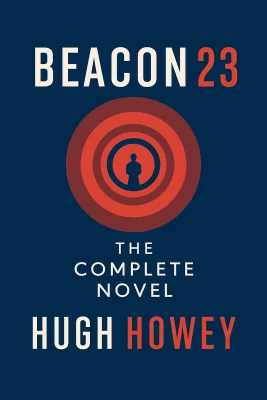
Beacon 23
Categories
Fiction, Science Fiction, Audiobook, Fantasy, Science Fiction Fantasy, Space, War, Space Opera, Aliens, Dystopia
Content Type
Book
Binding
Paperback
Year
2015
Publisher
Createspace Independent Pub
Language
English
ISBN13
9781516865871
File Download
PDF | EPUB
Beacon 23 Plot Summary
Introduction
In the infinite darkness between stars, beacon operator 23 maintains his lonely vigil at the edge of sector eight. His job is simple: keep the gravity wave broadcaster running so ships traveling at twenty times light speed don't smash into asteroids. But the little noises in his metal tomb are driving him insane—clicks, squeaks, and distant beeps that seem to mock his isolation. He's a decorated war hero who asked for the loneliest posting in the galaxy, carrying scars both visible and hidden from the trenches of an endless war against an alien enemy called the Ryph. When saboteurs destroy a cargo ship in a spectacular explosion of twisted metal and scattered debris, the beacon operator realizes he's failed at the one job that matters. Eight souls dead, five thousand more nearly lost when a passenger liner barely escaped the same fate. The war that's been raging across distant sectors is creeping closer, and in this remote corner of space, the line between enemy and ally, sanity and madness, heroism and cowardice, begins to blur in ways no one could have imagined.
Chapter 1: The Solitary Lighthouse: A Beacon Operator's Isolation
The beacon floats like a metal coffin in the void, its operator trapped inside with sounds that shouldn't exist. Every click, squeak, and distant beep feels deliberate, mocking. He stalks them through the cramped maintenance spaces with wire snips and foam, setting traps for noises that vanish the moment he gets close. Like deer on the first day of hunting season, they know when he's coming. NASA trained him for everything except this—the crushing weight of silence stretching light years in every direction, broken only by the mechanical symphony of his torment. He's supposed to be the human failsafe, the thinking meat in the machine that prevents computers from doing something catastrophically stupid one time out of a hundred trillion. But the computers aren't the ones going insane. In the lighthouse chamber at the end of a long weightless tunnel, he finds his only refuge. The gravity wave broadcaster hums behind him, its illegal neurological effects washing over him like whiskey. On the wall hangs a faded photograph—a lighthouse keeper standing calmly before a towering wave, pipe in mouth, moments before certain death. Or so it seems. The operator makes this man his hero, this image of serenity facing the inevitable. But when he finally requests research on the photograph, the truth shatters his illusion. The lighthouse keeper wasn't brave—he was terrified, leaping through the door just after the picture was taken, saved by mere seconds from the crashing wave. Heroes, the operator realizes, are made in the split second when the camera clicks. Everything else is just survival, dressed up in medals and stories. He touches his own scars, remembering the day he became a hero by doing nothing at all.
Chapter 2: Voices in the Vacuum: The Fracturing Mind
The gravity wave broadcaster fails without warning, its alien whine cutting to silence. Every alarm in the beacon screams as the operator scrambles through the emergency protocols, his bare feet slapping against metal grating. A cargo ship carrying eight souls is due to pass through the asteroid field in minutes. After that, a luxury liner with five thousand passengers sleeping peacefully in their bunks. NASA insists there's no outage, their readouts showing everything normal while the broadcaster sits cold and lifeless. The operator watches in horror as the cargo ship emerges from hyperspace directly into the asteroid field. Light blooms briefly—a star born and dying in seconds—as the vessel tears itself apart against stone older than Earth. Twisted metal and bright containers spill into space like confetti celebrating death. Among the wreckage, he spots two dark ships moving between the debris, scavengers picking clean the bones. Pirates who disabled his beacon, modern wreckers who profit from tragedy. The lighthouse keeper wasn't the only one who knew about making ships crash in the dark. But the luxury liner is still coming, and the beacon is still dark. Desperation drives him to extremes. He jury-rigs power directly to the broadcaster, bypassing safety systems, creating an electromagnetic pulse that fries everything nearby. The pain in his shoulder means nothing compared to five thousand lives. When the pulse fades and systems reboot, the beacon comes alive again just as the passenger ship's wake ripples past. They pass safely, unaware how close death came to visiting them in their dreams. In the aftermath, surrounded by the debris of his failure, the operator begins talking to a rock he found in the wreckage. The rock, which he names Rocky, talks back with a distinctly British accent and a philosophical bent. It's either an alien intelligence or proof that isolation has finally cracked his mind completely.
Chapter 3: Hunters and Fugitives: When the Past Returns
Three bounty hunters arrive within minutes of each other, drawn by the wreckage like carrion birds. The first is a walking arsenal named Mitch O'Shea, his ship reeking of sweat and animal musk. The second, Vladimir, pilots with surgical precision from a craft that resembles a luxury hotel more than a pursuit vessel. The third never speaks, dressed head to toe in black like a character from the urban ninja shows the operator loved as a child. They're all hunting the same woman—a fugitive with a fifty million credit bounty on her head. The operator denies seeing her, but she's already aboard his beacon, waiting in his command chair with a blaster in her hand. Scarlett was his lover once, in the trenches of another world, and she's come to ask him to end the war. She carries a worn paperback novel, one of the pulp military fiction books that soldiers pass around like contraband. But according to Scarlett, these aren't human stories at all—they're translated Ryph novels with the sides reversed. Humanity is the alien invasion force, spreading fear and death across the galaxy. The enemy they've been fighting sees them exactly as they see the enemy: monsters from the void. The revelation should be earth-shattering, but the operator is too broken to care about politics or philosophy. He's barely holding himself together, and Scarlett wants him to save the galaxy. Their reunion is cut short by the bounty hunters, who've realized their quarry is aboard the beacon. In the zero-gravity firefight that follows, O'Shea dies by his own grenade, his animal companion Cricket becomes the operator's reluctant pet, and Scarlett bleeds out in his arms as the ninja hunter drags her body away.
Chapter 4: Connection Across the Stars: Finding Claire
A new beacon appears a hundred kilometers away, its lights blinking steadily in the darkness. When it begins flashing an SOS signal, the operator overcomes his fear of human contact long enough to investigate. He finds Claire, a beacon tuner with grease-stained hands and emerald eyes, cursing at the malfunctioning systems she's trying to repair. She's nothing like he expected—strong, competent, unimpressed by his war hero status. She's also a veteran, scarred by the same battles that broke him. When she lifts her shirt to show the lacework of old wounds across her hip, he realizes he's not unique in his suffering. Everyone carries damage. Everyone fights their own war against the darkness. Claire stays to operate the new beacon, and slowly the operator begins to heal. She teaches him that the gravity wave broadcaster doesn't actually affect his brain—the peace he finds there comes from simply sitting still and breathing. She adopts Cricket, the alien warthen who reads emotions and follows the operator everywhere. Most importantly, she shows him how to cry in front of another person, how to let someone else see his pain. Their courtship unfolds in the spaces between beacons, sharing meals and stories, testing whether the broadcaster really works on his troubled mind. Claire keeps careful records, proving that he can somehow sense when the device is active even when he shouldn't be able to. There's something different about him, some sensitivity born from trauma or exposure to alien environments during the war. But their happiness exists on borrowed time. News filters in through passing traders—the war is escalating, massive fleets gathering on both sides. The first skirmish in sector eight has already been fought, and the conflict is spreading like a cancer across the galaxy.
Chapter 5: The Ultimate Choice: Sacrifice for Peace
The Ryph arrive without warning, their warship destroying a Navy patrol vessel before settling into attack position. The operator manages to get Claire and Cricket into a lifeboat, but his own escape attempt ends in disaster. He rams the enemy ship with his small craft, tearing both vessels apart, and finds himself dying in the vacuum of space. He awakens bound and helpless in his beacon's lighthouse chamber, facing a Ryph Lord—one of the massive alien commanders he'd encountered once before in the war. But this isn't an execution. It's a negotiation. The Lord places his clawed hand over the operator's old scars, a perfect match for wounds he'd inflicted years earlier during a battle that ended strangely, with the aliens retreating when victory was within their grasp. Through touch and shared consciousness, the Lord reveals the truth. There are factions on both sides who want the war to end, but neither can trust the other to stand down first. A massive human invasion fleet is approaching through hyperspace, while an equally large Ryph armada prepares to meet them. Over half a billion souls are about to collide in the greatest battle in galactic history. The Lord wants the operator to destroy the human fleet by shutting down his beacon at the crucial moment, letting them crash into the asteroids. In return, Ryph peacekeepers will destroy their own fleet. It's mutual assured destruction on an unthinkable scale, but the alternative is endless war consuming countless worlds. Claire, bound and bleeding in the neighboring beacon, begs him not to trust the aliens. But as the fleets converge and time runs out, the operator realizes that sometimes treason is the highest form of patriotism.
Chapter 6: Aftermath: Rebuilding What Was Broken
The twin explosions bloom like new stars in the darkness as both fleets die simultaneously, half a billion souls snuffed out in an instant. The operator and Claire survive their act of cosmic treason, living with the weight of necessary genocide. When the war crimes tribunal convenes, they tell the truth—that sometimes peace requires a sacrifice beyond comprehension, that someone must be willing to pull the trigger on their own side. Years later, the operator has become a planetary governor, one of the architects of the fragile peace between former enemies. He stands on the shores of the Chesapeake Bay watching as human and alien workers collaborate to move an old lighthouse to a new foundation. The photograph that once haunted him shows this same lighthouse, and he's bought it to preserve something beautiful from a more violent age. Claire, pregnant with their child, slips her hand into his as mixed crews of humans, Ryph, and other species work together. Cricket, now elderly but still devoted, stalks through the tall grass. The operator touches his scars—the ones on his body and the invisible ones on his soul—and wonders if the next generation will forgive what he did. He killed half a billion people to save billions more, and the mathematics of mercy don't make the weight any lighter.
Summary
In the infinite darkness between stars, heroism wears unexpected faces. The beacon operator thought he was hiding from his past, maintaining a lonely vigil at the edge of civilized space. Instead, he found himself at the fulcrum of galactic history, forced to choose between loyalty and love, duty and conscience, the lives he could see and the lives he could save. The lighthouse he preserves by the sea stands as a monument to those who tend the lights in dark places, who warn ships away from danger even when no one knows their names. Some heroes save the day through action; others through inaction, through the terrible wisdom of knowing when not to pull the trigger. In a galaxy where war had become the natural state of existence, peace required the ultimate sacrifice—not of one's life, but of one's soul, transformed forever by the weight of necessary choices made in love's desperate arithmetic.
Best Quote
“I call this the Relativistic Weekend Effect. We live in the present, but our happiness relies heavily on the future. Our mood is as much expectation as experience.” ― Hugh Howey, Beacon 23
Review Summary
Strengths: The review highlights Hugh Howey's ability to create a complete science fiction masterpiece in a short format, drawing parallels to the works of renowned sci-fi authors like Arthur C. Clarke and Isaac Asimov. The novel's exploration of contemporary political themes and its philosophical depth are praised. Howey's skill in character development, particularly in portraying the protagonist's struggle with PTSD and emotional complexity, is also commended. Overall: The reviewer expresses a highly positive sentiment, recommending "Beacon 23" for its profound narrative and emotional depth. The book is appreciated for its psychological exploration and philosophical insights, making it a compelling read for fans of character-driven science fiction.
About Author

Hugh Howey
Howey explores the resilience of humanity through complex narratives that challenge dystopian paradigms and highlight the indomitable spirit of individuals. His writing purpose revolves around the exploration of survival and human resilience in speculative settings, often integrating themes of societal pressure and closed-system dynamics. By self-publishing via Amazon's Kindle Direct Publishing, he carved a unique path in the literary world, thereby controlling his digital rights while signing print deals with major publishers. This method not only allowed him to retain creative autonomy but also inspired many aspiring authors to follow a similar route.\n\nCentral to Howey's work are the Silo series and The Sand Chronicles, which delve into post-apocalyptic landscapes and human perseverance. These books not only entertain with strong storytelling and world-building but also provoke readers to reflect on the power dynamics within isolated communities. His narratives often present characters facing moral and physical trials, ensuring that readers engage with both the external conflicts and the internal transformations of his protagonists. As a result, his books attract those who appreciate multifaceted characters and intricate plots, with "Wool" being a particularly influential work due to its international reach and subsequent media adaptations.\n\nWhile Howey's impact extends beyond traditional literary circles—bolstered by adaptations like Apple TV's "Silo"—his influence is most pronounced in the way he has reshaped the publishing landscape. This bio highlights Howey's career as an example of innovation in the literary field, celebrating his thematic focus on human endurance and his pioneering role in self-publishing. Readers who delve into his work can expect an immersive experience that questions societal constructs while rooting for characters who redefine their fates against overwhelming odds.
Read moreDownload PDF & EPUB
To save this Black List summary for later, download the free PDF and EPUB. You can print it out, or read offline at your convenience.
Beacon 23
by Hugh Howey
