
Beyond the Pleasure Principle
Delve Into Unconscious Desires
Categories
Nonfiction, Psychology, Philosophy, Science, Classics, Essays, German Literature, School, Theory, Psychoanalysis
Content Type
Book
Binding
Paperback
Year
1990
Publisher
W.W. Norton & Company
Language
English
ASIN
0393007693
ISBN
0393007693
ISBN13
9780393007695
File Download
PDF | EPUB
Beyond the Pleasure Principle Plot Summary
Introduction
In the conservative atmosphere of late 19th century Vienna, a young neurologist dared to venture into the uncharted territories of the human mind, forever changing how we understand ourselves. Sigmund Freud, with his penetrating gaze and unwavering determination, peered beyond the conscious mind to reveal the hidden forces that drive human behavior. Born into a Jewish family in 1856, Freud developed revolutionary theories during an era when Victorian repression clashed with emerging modernism, creating the perfect crucible for his radical ideas about sexuality, unconscious desires, and psychological development. Through Freud's journey, we witness not only the birth of psychoanalysis but also a profound intellectual revolution that transcended clinical practice to influence art, literature, philosophy, and popular culture. His concepts of the unconscious mind, defense mechanisms, and the structural model of personality continue to shape our understanding of human behavior more than a century later. Despite ongoing debates about his methods and conclusions, Freud's legacy endures in our everyday language and thinking—from Freudian slips to ego trips, from repression to projection. His exploration of the mind's depths reveals timeless insights into the complex interplay between our primal desires and social existence, between our past experiences and present behaviors.
Chapter 1: Early Life and the Birth of Psychoanalysis
Sigmund Freud was born on May 6, 1856, in Freiberg, Moravia (now part of the Czech Republic) to a wool merchant father and a young mother who was his father's third wife. When Freud was four years old, his family moved to Vienna, Austria, where he would spend most of his life. Growing up in a Jewish family during a time of prevalent anti-Semitism shaped his outsider perspective, perhaps contributing to his willingness to challenge established thinking. Despite financial struggles, his parents recognized his intellectual gifts and prioritized his education, making sacrifices to ensure he could pursue academic excellence. Freud initially pursued a career in medical research, studying the nervous systems of fish and the structure of nerve cells under the mentorship of Ernst Brücke. His meticulous laboratory work instilled in him a commitment to scientific methodology that would later distinguish his psychological theories. However, limited academic opportunities and his engagement to Martha Bernays prompted him to shift toward clinical practice. After studying with renowned neurologist Jean-Martin Charcot in Paris, Freud became fascinated with hysteria—a condition where patients exhibited physical symptoms with no apparent physiological cause. The pivotal moment in Freud's career came through his collaboration with Josef Breuer on the case of "Anna O." (Bertha Pappenheim), a young woman suffering from various hysterical symptoms. Breuer discovered that when Anna talked about her traumatic experiences while under hypnosis, her symptoms temporarily subsided—a process they called "catharsis." This observation led to their joint publication "Studies on Hysteria" in 1895, which laid the foundation for what would become psychoanalysis. Freud soon abandoned hypnosis, however, finding that patients could access unconscious material through the technique of free association—speaking whatever came to mind without censorship. The development of psychoanalysis accelerated when Freud turned his analytical gaze inward. Following his father's death in 1896, Freud underwent what he called his "self-analysis," examining his own dreams, memories, and psychological processes. This introspective journey led to his groundbreaking work "The Interpretation of Dreams" (1900), where he proposed that dreams were not random neural firings but meaningful expressions of unconscious wishes disguised to bypass the mind's censorship. The book introduced key concepts like dream work, manifest and latent content, and the role of symbolism in unconscious processes. Perhaps most controversial was Freud's recognition of the role of sexuality in psychological development. In an era of Victorian repression, he dared to suggest that children possessed sexual impulses from infancy, progressing through oral, anal, and genital stages. His formulation of the Oedipus complex—the child's unconscious desire for the parent of the opposite sex and rivalry with the same-sex parent—scandalized his contemporaries but became central to psychoanalytic theory. These ideas, along with his concepts of libido and repression, formed the core of early psychoanalytic thought, establishing Freud as both a revolutionary thinker and a controversial figure in the emerging field of psychology. By the early 1900s, Freud had attracted a circle of followers including Carl Jung, Alfred Adler, and Otto Rank, forming the Vienna Psychoanalytic Society. Though many of these early disciples would eventually break with Freud over theoretical disagreements, their initial collaboration helped establish psychoanalysis as a movement that would transform understanding of the human mind. Through his clinical practice, theoretical innovations, and growing influence, Freud had laid the groundwork for a psychological revolution that would extend far beyond the consulting room.
Chapter 2: The Unconscious Mind: Exploring Hidden Depths
The cornerstone of Freud's revolutionary contribution to psychology was his conceptualization of the unconscious mind. Before Freud, Western thought had largely equated the mind with consciousness—what we know and can articulate about ourselves. Freud shattered this assumption by proposing that the most powerful determinants of human behavior operate beyond our awareness. The unconscious, in Freud's view, was not merely a storage space for memories but an active, dynamic force containing repressed wishes, forbidden desires, and traumatic experiences that continue to influence our thoughts, feelings, and behaviors without our knowledge. Freud developed his theory of the unconscious through careful clinical observation. He noticed that patients' symptoms often disappeared when they recalled forgotten traumatic experiences, suggesting these memories continued to exert influence despite being inaccessible to consciousness. Similarly, phenomena like dreams, slips of the tongue (later called "Freudian slips"), and seemingly random associations revealed unconscious material breaking through into awareness in disguised form. These observations led Freud to develop techniques specifically designed to access unconscious content, including free association, dream analysis, and the interpretation of transference—the patient's projection of feelings onto the analyst. In his 1915 paper "The Unconscious," Freud formalized his topographical model of the mind, dividing mental life into three regions: the conscious (what we're aware of at any moment), the preconscious (material that can be readily brought to consciousness), and the unconscious (content that remains inaccessible under normal conditions). The unconscious, Freud proposed, operates according to its own distinctive logic—what he called "primary process thinking." Unlike the rational, logical thought of consciousness, primary process thinking is characterized by condensation (multiple meanings compressed into single images), displacement (emotional significance transferred from important to trivial elements), and symbolism (concrete representations of abstract ideas or feelings). The concept of repression was central to Freud's understanding of the unconscious. He viewed repression as an active, ongoing process by which threatening or unacceptable impulses are pushed into the unconscious and kept there. This process requires continuous psychic energy, explaining why repressed material never simply disappears but continues to exert pressure from below, seeking expression in disguised forms like symptoms, dreams, or slips of the tongue. Freud compared the mind to an iceberg, with consciousness representing only the small visible portion above water, while the vast majority remains submerged in the unconscious depths. Freud's theory of the unconscious had profound implications beyond clinical practice. It challenged fundamental assumptions about human rationality and self-knowledge, suggesting that we are not masters in our own psychological house. Our conscious intentions and self-understanding, Freud argued, are often rationalizations that conceal deeper, unconscious motivations. This perspective undermined Enlightenment notions of human beings as primarily rational actors, instead portraying humans as driven by unconscious forces they neither understand nor control. The theory also explained why direct advice or appeals to reason often fail to change problematic behaviors—because such approaches address only conscious processes while leaving unconscious determinants untouched. The concept of the unconscious remains Freud's most enduring contribution to psychology and Western thought more broadly. While contemporary neuroscience has modified many aspects of Freudian theory, research increasingly confirms that significant mental processing occurs outside conscious awareness. Modern concepts like implicit memory, unconscious bias, and automatic processing all echo Freudian insights about the limits of conscious knowledge. By mapping the hidden depths of the mind, Freud forever changed how we understand human experience, revealing the complex, often contradictory forces that shape our thoughts, feelings, and actions beneath the surface of awareness.
Chapter 3: Beyond Pleasure: The Revolutionary Death Drive Theory
In 1920, Freud published "Beyond the Pleasure Principle," a work that would dramatically reshape his theoretical framework. Until this point, he had maintained that human behavior was primarily governed by the pleasure principle—the drive to seek pleasure and avoid pain. But his clinical observations, particularly of traumatic neuroses and certain repetitive behaviors, suggested something more complex at work in the human psyche. War veterans returning from World War I exhibited a puzzling tendency to relive their traumatic experiences in nightmares and flashbacks. Similarly, Freud observed children repeatedly playing out distressing scenarios, and patients in analysis compulsively reenacting painful patterns. These phenomena contradicted the pleasure principle's logic—why would the mind repeatedly return to experiences that generated pain rather than pleasure? This question led Freud to posit the existence of a "compulsion to repeat" that operated at a more fundamental level than the pleasure principle. This repetition compulsion, he theorized, reflected something primordial in organic life itself—a conservative tendency to return to earlier states of existence. Following this logic to its ultimate conclusion, he proposed the controversial concept of the death drive (Thanatos), a fundamental impulse toward dissolution and return to an inorganic state that operated alongside the life-preserving sexual drives (Eros). While Eros bound together and preserved life through ever more complex unities, the death drive worked silently toward disintegration and return to an earlier, inanimate condition. The introduction of the death drive fundamentally altered Freud's drive theory. His earlier distinction between ego-instincts and sexual instincts gave way to a new dualism between life drives and death drives. This reformulation helped explain phenomena that had previously been difficult to account for, particularly aggression and self-destructiveness. Aggression, in Freud's new framework, represented death drives redirected outward, while masochism and self-destructive behaviors reflected death drives operating within. The concept of drive fusion and defusion provided further explanatory power, suggesting that the two fundamental drives typically operated in combination, with various psychological and developmental processes potentially leading to their separation. Freud's death drive theory had profound implications for understanding both individual psychology and broader social phenomena. At the individual level, it helped explain the puzzling tendency of some patients to sabotage their own treatment, maintain destructive relationships, or engage in self-harming behaviors—phenomena that seemed to contradict the basic human motivation to seek pleasure and avoid pain. At the social level, it offered insights into humanity's persistent tendency toward aggression and destruction, suggesting that civilization itself represented an ongoing struggle to bind and neutralize the death drive through the unifying power of Eros. The concept proved particularly valuable for understanding melancholia (severe depression), where Freud observed the superego turning with extraordinary cruelty against the ego. This internal sadism, he suggested, represented the death drive at work within the psyche, released through the defusion of drives that occurred when a lost love object was incorporated into the ego through identification. The theory also illuminated masochism, which Freud now understood not as a simple perversion of sexuality but as a complex fusion of libidinal and destructive impulses turned against the self. Despite its speculative nature, which Freud himself acknowledged, the death drive concept profoundly influenced subsequent psychoanalytic thinking. While controversial even within psychoanalytic circles, it provided a framework for understanding phenomena ranging from self-destructive behavior to the repetition compulsion, from sadism to the negative therapeutic reaction. The concept also resonated beyond clinical contexts, offering insights into social and cultural phenomena, particularly humanity's persistent tendency toward aggression and destruction. By venturing beyond the pleasure principle, Freud developed a more complex, tragic vision of human nature—one that acknowledged the destructive forces operating within individuals and societies while still recognizing the countervailing power of love and connection.
Chapter 4: Mapping the Psyche: Id, Ego, and Superego
In 1923, Freud introduced his structural model of the mind in "The Ego and the Id," replacing his earlier topographical model of conscious, preconscious, and unconscious with the now-famous trio: id, ego, and superego. This conceptual shift was necessitated by clinical observations that portions of the ego itself operated unconsciously, particularly in resistance and defense mechanisms. The new model provided a more dynamic understanding of mental processes and internal conflicts, becoming one of Freud's most enduring contributions to psychology. The id, the oldest part of the psyche, operates according to the pleasure principle and primary process thinking. It harbors our instinctual drives and demands immediate gratification without regard for reality or social conventions. Freud described it as "a cauldron full of seething excitations," chaotic and amoral, yet the source of all psychic energy. The id knows no contradictions, recognizes no negations, and has no conception of time. It is the reservoir of the libido, the psychic energy derived from the life instincts, as well as the aggressive energy associated with the death drive. For Freud, the id represents our biological inheritance, the primitive, unconscious base from which the more organized aspects of personality develop. The ego develops from the id's contact with external reality. Operating largely according to the reality principle and secondary process thinking, it mediates between the id's demands, the superego's prohibitions, and the constraints of the external world. Freud compared the ego's relationship to the id as that of a rider to a horse—the ego may guide the id's powerful energies, but is often carried along by forces stronger than itself. The ego serves executive functions: perception, memory, judgment, and motor control. It postpones gratification until appropriate objects and circumstances can be found, employing defense mechanisms when necessary to protect itself from overwhelming anxiety. Unlike the id, the ego can distinguish between mental images and external reality, between wishes and possibilities. The superego, the last component to develop, arises from the internalization of parental and societal prohibitions, particularly during the resolution of the Oedipus complex. It functions as an internal moral authority, judging the ego's actions and intentions against an often harsh and unattainable ideal. The superego has two aspects: the conscience, which punishes the ego through guilt feelings for moral transgressions, and the ego ideal, which rewards the ego with pride when it lives up to internalized standards. Significantly, Freud noted that the superego has access to unconscious material unavailable to the ego, explaining why people often feel guilty without knowing why. The superego's severity often exceeds that of the actual parents, as it incorporates not just their explicit prohibitions but also their unconscious hostilities and unacknowledged standards. This structural model illuminated the nature of internal conflict. Neurosis could now be understood as the outcome of struggles between these three agencies—perhaps the ego repressing id impulses to appease the superego, or the ego paralyzed between the id's demands and the superego's prohibitions. The model explained why psychological symptoms often represented compromises, simultaneously expressing and punishing forbidden impulses. It also clarified why treatment was so challenging—the analyst had to contend not only with the patient's resistance but also with the punitive superego that often unconsciously opposed recovery. Freud's structural model had profound implications for understanding normal development as well as psychopathology. The development of a healthy ego capable of mediating between instinctual demands and moral prohibitions became the goal of maturation. Psychoanalytic treatment aimed to strengthen the ego, making it less dependent on the superego and better able to manage id impulses. The famous Freudian dictum "Where id was, there ego shall be" expressed this therapeutic ambition—not to eliminate instinctual drives, but to bring them under the ego's conscious control. The id-ego-superego model has transcended psychoanalysis to become part of our cultural vocabulary, providing a framework for understanding the competing forces within the human psyche. While contemporary psychology has modified many aspects of Freudian theory, the basic insight that personality involves ongoing negotiation between primitive impulses, reality constraints, and internalized moral standards remains influential across various therapeutic approaches. By mapping the psyche's structure, Freud offered a compelling account of why humans are so often divided against themselves, torn between desire and restraint, between biological imperatives and cultural demands.
Chapter 5: Defense Mechanisms: The Mind's Protective Strategies
The concept of defense mechanisms represents one of Freud's most enduring contributions to psychology. His exploration of how the psyche protects itself against threatening impulses and painful affects evolved throughout his career, culminating in a sophisticated understanding of the ego's defensive operations. Initially using the term "defense" in his early writings, Freud later favored "repression" before ultimately returning to the broader concept of defense to encompass the variety of strategies the ego employs to manage anxiety and maintain psychological equilibrium. Repression, the cornerstone of Freud's theory of defense, involves the exclusion of unacceptable impulses, thoughts, or feelings from consciousness. Unlike simple forgetting, repression requires ongoing psychic effort to maintain, as the repressed material continuously presses for expression. Freud came to understand repression as a two-stage process: primary repression established an initial barrier against instinctual demands, while secondary repression targeted derivatives of the originally repressed material as they attempted to enter consciousness in disguised form. The economic cost of maintaining repression explained many neurotic symptoms, which represented the return of repressed material in compromised form—simultaneously expressing and concealing the forbidden impulse. Beyond repression, Freud identified numerous other defense mechanisms, each with its distinctive features and psychological costs. Reaction formation involves transforming an unacceptable impulse into its opposite—hatred becoming excessive solicitude, cruelty becoming compassion. Isolation separates an unacceptable idea from its emotional charge, allowing the idea to remain in consciousness while its affective significance is neutralized. Projection attributes one's own unacceptable impulses to others, while introjection involves taking external conflicts into oneself. Regression entails retreating to earlier modes of functioning when faced with anxiety, while sublimation channels instinctual energy into socially valued activities like art, science, or intellectual pursuits. Freud's understanding of defense mechanisms was particularly illuminated by his study of obsessional neurosis. In this condition, he observed elaborate defensive rituals including undoing (magical acts to cancel out forbidden thoughts), isolation (separating dangerous thoughts from their emotional context), and reaction formation (developing character traits directly opposed to forbidden impulses). These mechanisms revealed the ego's desperate attempts to control aggressive and sexual impulses that threatened to overwhelm it, often at the cost of severely restricting the person's freedom and spontaneity. The relationship between defense mechanisms and anxiety underwent significant revision in Freud's later work. Initially viewing anxiety as the product of repressed libido, he eventually recognized that anxiety functioned as a signal that triggered defensive operations. When the ego detected danger—whether from external threats, instinctual pressures, or superego demands—it produced anxiety as a warning, mobilizing defenses before being overwhelmed. This signal anxiety allowed the ego to repeat traumatic situations in miniature, gaining mastery over them through active anticipation rather than passive experience. Freud's analysis of phobias provided compelling evidence for this new understanding. In cases like "Little Hans," the phobic object (horses) served as a substitute for the father, allowing the child to avoid the original source of danger (castration anxiety) by displacing it onto something that could be more easily avoided. The phobia thus represented both a symptom and a defense, simultaneously expressing the forbidden impulse (aggression toward the father) and protecting against the anxiety it provoked. The concept of defense mechanisms highlighted the ego's active role in psychopathology. Rather than being a passive victim of instinctual forces or external trauma, the ego actively participated in symptom formation through its defensive operations. This recognition led to important therapeutic implications: effective analysis required not only uncovering repressed material but also addressing the ego's resistance to relinquishing its defenses, even when those defenses caused suffering. The phenomenon of "negative therapeutic reaction"—where patients paradoxically worsened when progress was made—demonstrated how tenaciously the ego could cling to familiar defensive patterns. Freud's exploration of defense mechanisms revealed the psyche as a battlefield where competing forces struggled for dominance. The ego's defenses, while often causing symptoms and restricting freedom, also represented sophisticated adaptations that protected the individual from being overwhelmed by anxiety. This nuanced understanding transformed psychoanalytic practice from a simple process of uncovering repressed material to a complex engagement with the ego's multifaceted strategies for managing internal and external dangers.
Chapter 6: Cultural Impact and Intellectual Legacy
Freud's influence extends far beyond clinical psychology, permeating virtually every aspect of 20th and 21st century thought. His ideas transformed literature, art, film, philosophy, and social theory, providing a new vocabulary for understanding human experience and a new lens through which to view culture. Writers from Thomas Mann to Virginia Woolf incorporated psychoanalytic insights into their work, while surrealist artists like Salvador Dalí explicitly drew on Freudian concepts of dreams and the unconscious. Filmmakers from Alfred Hitchcock to David Lynch have explored Freudian themes of repression, desire, and psychological conflict, creating a cinematic language deeply influenced by psychoanalytic theory. In the realm of social and political thought, Freud's impact has been equally profound. His nephew Edward Bernays applied psychoanalytic insights to create the field of public relations, revolutionizing advertising by targeting unconscious desires rather than rational needs. Critical theorists of the Frankfurt School, particularly Herbert Marcuse and Theodor Adorno, integrated Freudian and Marxist perspectives to analyze how social systems shape psychological development and how consumer capitalism manipulates unconscious desires. Feminist thinkers from Karen Horney to Juliet Mitchell have engaged critically with Freud's theories of gender and sexuality, rejecting some aspects while developing others to understand the psychological dimensions of gender inequality. Freud's cultural critiques, particularly "Civilization and Its Discontents" (1930), offered a pessimistic yet profound analysis of the human condition. He argued that civilization requires the suppression of instinctual gratification, creating an inevitable tension between individual desires and social demands. This repression generates a persistent discontent, as humans must sacrifice instinctual satisfaction for security and social cohesion. Written as fascism was rising in Europe, this work reflected Freud's growing concern about humanity's destructive potential, suggesting that the thin veneer of civilization barely contained the aggressive impulses of the death drive. This analysis continues to resonate in our understanding of social conflict, violence, and the psychological costs of civilization. Within psychology and psychiatry, Freud's legacy is complex and contested. While many of his specific theories have been modified or rejected by contemporary research, his fundamental insights about unconscious processes, psychological defense, and the importance of early experience remain influential across various therapeutic approaches. Psychodynamic therapies directly descended from psychoanalysis continue to evolve, incorporating new research while maintaining Freud's core insight that present difficulties often reflect unresolved past conflicts. Even cognitive-behavioral approaches, which explicitly rejected many Freudian concepts, have increasingly recognized the importance of unconscious processing and emotional factors in psychological functioning. Perhaps Freud's most enduring contribution is his recognition of the mind's inherent complexity and contradictions. By revealing how we are divided against ourselves—driven by forces we don't understand, defending against feelings we can't acknowledge—he forever changed our conception of human nature. His vision of the mind as a dynamic battlefield of competing forces, rather than a unified, rational entity, anticipated contemporary neuroscience's recognition of multiple, often conflicting neural systems operating simultaneously. His insistence that symptoms have meaning, that even seemingly irrational behaviors serve psychological purposes, transformed how we understand psychological suffering. Freud's intellectual legacy lies not in providing final answers but in formulating questions that continue to challenge and inspire. His recognition of unconscious mental processes, the role of sexuality and aggression in human motivation, the importance of childhood experience, and the inevitability of intrapsychic conflict transformed our understanding of human nature. By developing a theoretical framework that acknowledged both the biological underpinnings of mental life and its irreducible psychological complexity, Freud created a foundation for ongoing exploration of the human mind in all its contradictions and possibilities. Whether embraced or contested, his ideas continue to shape how we understand ourselves and others, making him one of the most influential thinkers of the modern era.
Summary
Sigmund Freud's revolutionary mapping of the human mind fundamentally altered our understanding of ourselves by revealing that we are not masters in our own psychological house. His greatest insight—that powerful unconscious forces shape our thoughts, feelings, and behaviors beneath our awareness—continues to resonate across disciplines from psychology to art, literature, and popular culture. By illuminating the mind's hidden depths, Freud offered a profound recognition of human complexity: we are divided beings, torn between primal desires and social demands, between our biological inheritance and cultural expectations, between the pleasure principle and the reality principle. From Freud's journey into the psyche, we can extract valuable lessons about self-awareness and human nature. His work teaches us to approach our own motivations with humility and curiosity, recognizing that our conscious reasons for behavior often conceal deeper, unconscious determinants. It encourages us to acknowledge the power of early experiences in shaping our adult lives without surrendering to determinism, and to recognize that psychological growth requires facing uncomfortable truths rather than maintaining comforting illusions. For anyone interested in understanding human behavior, relationships, or culture, Freud's insights provide an essential foundation—not as dogma to be accepted uncritically, but as a profound starting point for exploring the endlessly fascinating terrain of the human mind.
Best Quote
“The patient cannot remember the whole of what is repressed in him, and what he cannot remember may be precisely the essential part of it.. He is obliged to repeat the repressed material as a contemporary experience instead of remembering it as something in the past.” ― Sigmund Freud, Beyond the Pleasure Principle
Review Summary
Strengths: The review appreciates the original analysis by Alex, highlighting it as a "very fine heuristic study." It also effectively summarizes Freud's theories on narcissism and maturity, providing a clear interpretation of the book's themes.\nOverall Sentiment: Mixed. The reviewer acknowledges the depth of Freud's work but also points out the unresolved nature of his proposed solutions, indicating a level of skepticism.\nKey Takeaway: The review suggests that Freud's exploration of narcissism and maturity is insightful, yet it leaves unresolved questions about overcoming inherent narcissistic tendencies, ultimately pointing to the inevitability of entropy as a corrective force.
About Author
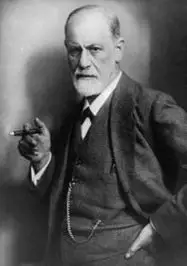
Sigmund Freud
Freud reframes our understanding of the human psyche by introducing the complex interplay of unconscious desires and conscious thought. His work in psychoanalysis challenged conventional perceptions of mental health, emphasizing that unresolved conflicts within the unconscious mind often manifest as psychological disorders. Therefore, Freud's methods, such as free association and dream analysis, opened new avenues for treating mental illness by allowing patients to explore their subconscious. In "The Interpretation of Dreams," he posits that dreams serve as a conduit to understanding unconscious wishes, while "Beyond the Pleasure Principle" delves into the motivations beyond mere hedonism, introducing concepts like the death drive that explain compulsive behaviors.\n\nThrough his analytical approach, Freud connects theoretical insights with practical therapeutic techniques, thereby reshaping how mental health is understood and addressed. His ideas about the structure of the mind, encapsulated in the model of the id, ego, and superego, provide a framework for comprehending the tensions between instinctual drives and societal expectations. While the scientific community initially resisted his theories, the enduring influence of his work is evident in the widespread adoption of psychoanalytic concepts across diverse fields, including literature and the arts.\n\nReaders and scholars of psychology and the humanities benefit greatly from Freud's pioneering ideas, which continue to provoke discussion and inspire further research. For those seeking to understand the intricacies of human behavior and the unconscious, his works serve as a foundational guide. Meanwhile, Freud's literary style, blending scientific rigor with cultural critique, enriches the field of psychological literature. Although he did not receive significant awards in his lifetime due to the contentious nature of his theories, Freud's legacy persists, positioning him as a seminal figure whose contributions have profoundly impacted modern psychological thought.
Read moreDownload PDF & EPUB
To save this Black List summary for later, download the free PDF and EPUB. You can print it out, or read offline at your convenience.

Beyond the Pleasure Principle
by Sigmund Freud
