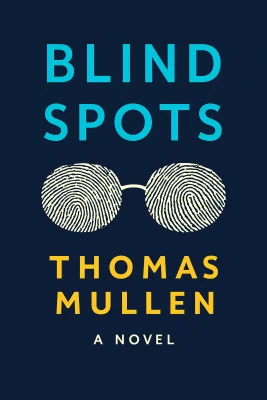
Blind Spots
Categories
Fiction, Science Fiction, Audiobook, Mystery, Thriller, Fantasy, Crime, Speculative Fiction, Dystopia, Mystery Thriller
Content Type
Book
Binding
Hardcover
Year
2023
Publisher
Minotaur Books
Language
English
ISBN13
9781250842749
File Download
PDF | EPUB
Blind Spots Plot Summary
Introduction
Detective Mark Owens never imagined that darkness would define his world. Seven years after The Blinding—a mysterious epidemic that erased humanity's sight—he moves through a city where everyone depends on vidders, temple-mounted devices that beam digital vision directly into the brain. The darkness has been replaced with technological sight, but truth remains elusive. When Owens witnesses a murder, but sees the killer only as a black blur—a visual impossibility—he tumbles into a conspiracy that stretches from the highest corridors of power to the dank alleyways of the city's underbelly. His partner Peterson dismisses his claims as hallucinations, his superiors question his sanity, and only Officer Amira Quigley seems willing to stand by him. But as more bodies fall—scientists, tech giants, even fellow officers—Owens discovers the horrifying truth: someone has learned to manipulate what people see, creating blind spots in a world already scarred by darkness. With his own vision compromised and his mind unraveling from grief over his wife's suicide two years earlier, Owens must confront not only the shadows hiding in plain sight, but also the darker corners of his own fractured memory.
Chapter 1: The Blinded World: A Detective's Fractured Vision
Owens sits in his squad car, next to his partner Peterson, a salami-breathed hulk of a man. In the back seat, Officer Khouri shakes her head at Peterson's belch. They're staking out a nightclub called Slade's in the River District, a zone where empty warehouses decay under splashes of vibrant paint—colors that had become almost worshipped during The Blinding, when color was all people could see. Even with their vidders, the temple-mounted devices that beam radar and GPS data directly to their visual cortex, the world isn't what it once was. Owens misses sunlight. Misses glare. Even misses squinting. The time displayed in the info bar at the bottom of his vision reads 11:15 PM, but in this new world, night and day look identical—a planet of vampire bats. His phone buzzes. Dispatch gives the green light. "Warrant went through. We're on for X-ray." Owens adjusts his vidder, accessing an enhancement that allows him to see through the brick exterior of the club. His heart races at the temporary god-like power. "Full house, two guards inside the door," he tells them. "They're carrying. That's our man on the second floor." Inside the club, the bass pounds so hard Owens thinks he could have a heart attack and never know it. He spots the undercover officer at the bar, makes brief eye contact, then finds the bouncer he's looking for. The man leads him through a black door and up to a loftlike living room on the second floor. Slade enters—tall, long hair, phony smile, wearing a faux-metallic suit. They get to business quickly, discussing the firearm transfer Owens is supposedly making. But Slade grows suspicious when Owens seems to be looking at something through the walls. "What?" Slade asks, eyes narrowing. "I didn't know any better, I'd think you were looking through the walls." Owens laughs it off, but Slade continues, "The only people who can do that are cops with warrants." Their eyes lock in the silent standoff that still exists even in a world where everyone's natural vision is gone. Slade reaches into his jacket, and Owens backs up instinctively. Slade laughs, pulling his empty hand back out. "Damn, you looked scared!" Slade's laugh reaches a high pitch. "You're no cop." Owens exhales in relief, but as he turns to scan the room again, he sees a man in another room picking up a large gun. Slade pulls his own weapon. "Keep your hands where I can see them." "There are a dozen cops entering this building right now," Owens says calmly. "Don't make this worse on yourself." The door opens and in comes Nayles, Slade's deputy—muscles that have muscles, holding an automatic rifle that would look massive in a mere mortal's hands. "Cops at the front door," Nayles says. Slade swings his gun into Owens's temple, square into his vidder. Pain explodes through Owens's head as his vision goes black.
Chapter 2: Shadows and Blurs: The First Impossible Murders
Dr. Madeleine Leila and Dr. Ray Jensen walk through Northwest Park after working late at Bio-Lux Technologies. They pass a blind panhandler in a gray tunic who offers them leaflets about "Inner Sight." The scientists are engaged in a tense conversation about Jensen's work—research that his colleagues dismiss as absurd. "I look forward to everyone's reactions when I finally prove it," Jensen says defiantly. As they walk deeper into the park, Dr. Leila notices something strange in the distance. A dark form approaches—the deepest black. It seems to resist her focus. Both scientists adjust their vidders, but nothing changes. "Do you see that?" Jensen asks. "Yes. I mean... no." The black blur stops before them. One of its arms lifts toward Jensen's head. Leila realizes with horror that the arm looks unusually long, strangely shaped—it's holding something. A deafening sound. Jensen's head snaps backward, red mist spraying behind him. He collapses with a hole in his forehead. The blur shoots him twice more, then turns toward Leila. She steps back as the blur raises its arm toward her. She hears a clicking sound—once, twice. The figure's gun is jammed. Leila runs through the park, screaming for help. The dark figure gives chase. She darts into a parking garage, slips on the stairs, and falls hard. The blur pushes her from behind. She lands again, turns over, and crawls backward until her head presses against the wall. The figure crouches before her, presses the gun against her forehead. She can feel the metal, warm against her skin. "You can't see me at all, can you?" a hoarse male whisper asks. She shakes her head no. "Then there's no reason to waste the bullet." The arm retracts. For a second he simply stands there. Then he leans over, extending his arm again. He takes a strand of her thick, curly hair and gently pulls it out, as if admiring it. She can see her own hair, pinched between two finger-shaped slivers of pure darkness. "Goodbye, Dr. Leila." The figure leaves, footsteps echoing down the concrete stairway, as Leila realizes she is somehow still alive.
Chapter 3: Vidder Manipulation: Technology as Both Savior and Weapon
In the station, Detective Owens retells his encounter with a black blur to Captain Carlyle. Three days after his vidder was damaged during the raid on Slade's club, he'd been at Dr. Leila's apartment when the killer struck again. "The whole car was blacked out?" Carlyle asks in disbelief. "Yes, sir," Owens insists. He had chased a human-shaped darkness through the streets after finding Dr. Leila with a bullet hole in her forehead. Despite firing his weapon multiple times, the blur had escaped. Carlyle clearly thinks Owens is hallucinating or making excuses. It's the oldest line in the book—vidder malfunction, I couldn't see anything. Peterson, his partner, doesn't explicitly contradict him, but doesn't fully back him either. Later, Owens and Peterson interview Dr. Leonard Pelzer, the supervisor of both murdered scientists at Bio-Lux Technologies. Seated in his expensive office with a view of the city skyline, Pelzer appears nervous. "Dr. Jensen was trying to cure blindness without using vidders," Pelzer admits. "His ideas could work. They could possibly let us see the old way again." "And you think someone wanted to kill him over this?" Peterson asks skeptically. "Detectives, do you know how many peer-reviewed studies have attempted to find biological cures for blindness since vidders were invented?" Pelzer folds his hands on his desk. "Zero. Because there's no money in it. The vidder industry would be crushed, as would several other segments of the tech economy. It would be enormously disruptive." "EyeTech sure wouldn't like it," Owens observes. Following a hunch, Owens places a call to a place he rarely visits—the Inner Sight commune, where his sister Sarah lives with other vidderless people who've chosen darkness over technological vision. The week before Jensen died, he had visited the commune three times. "If you were trying to cure blindness," Pelzer had said, "where would you find better guinea pigs?" That night, Owens finds himself wandering through the city streets when he sees something impossible: his wife Jeanie, who'd committed suicide two years ago. He chases the figure through traffic, nearly getting hit by cars, but when he gets closer, he realizes it's actually his girlfriend Amira—yet somehow she looks exactly like Jeanie. His mind reels. Are they manipulating his vidder to drive him mad? Or is it related to the new "CleerVu" feature EyeTech is about to launch—technology that lets users alter their appearance to others?
Chapter 4: Broken Trust: When Partners Become Predators
Kai Ballantine, the young, multiracial CEO of EyeTech, drives through the city, enjoying the thrill of controlling his sports car at high speed. The man who invented vidders at thirteen, bringing sight back to a darkened world, feels a rare sense of freedom. Then he notices something in his rearview mirror that makes his blood run cold: a black blur the size of a car, following him. "Oh my God," he whispers. He accelerates, makes a sharp turn, nearly spins out of control. The blur stays with him. In panic, Ballantine calls Detective Owens, who'd confronted him just days before about the possibility of vidder manipulation—an accusation Ballantine had dismissed. Owens races to the abandoned construction site where Ballantine is cornered. Through the shattered windows of his car, the tech genius stares in terror as Owens fires at the blur. The darkness retreats, leaving them momentarily safe. "So do you believe me now?" Owens asks. "I'm sorry," Ballantine says, shaking. "I never thought this could happen." He explains rumors about a company called Obscura Technologies that had developed ways to manipulate vidders for government intelligence agencies before being mysteriously shut down. "Whoever's doing this is not related to my company," he insists. They discuss the implications as Owens scans the area. Then a shot rings out. He pulls Ballantine to the ground, but too late—the tech mogul's right eye has been replaced by a red hole, blood spattering the car behind them. Back at the station, two unfamiliar FBI agents approach Owens's desk. "Detective Owens? I'm Special Agent Vincent Magnus, with the FBI. This is my partner, Joe O'Dell." "We'd like to have a talk at the Bureau field office," O'Dell says. "I can talk just fine here. What about?" Owens folds his arms. "The murders of Madeleine Leila and Kai Ballantine." "The black blurs," Owens says. "If you say so." O'Dell smirks. Owens realizes they suspect him of the murders. As they escort him down the hallway, something about O'Dell nags at his memory. In the men's room, Owens studies O'Dell's reflection and suddenly it clicks—he had glimpsed the killer's reflection in windows as the blur fled from Dr. Leila's apartment. The killer is standing next to him, with his dick out. In an instant, Owens slams O'Dell's head into the mirror, then tackles Magnus. The struggle is brief and violent. Owens escapes the station and calls Amira, who meets him in the garage with her car. "O'Dell shot Dr. Leila in her apartment and ran through the alley," he tells her breathlessly. "He blurred his appearance to me, but he didn't think of reflections." "I need your car," he says. When she hesitates, he adds, "Amira. You need to trust me. Or arrest me." She hands him her keys. Then he reaches up to his temple and unscrews his vidder, plunging himself into darkness again.
Chapter 5: The Inner Sight Commune: Finding Truth in Darkness
Owens sits in his assigned bed at the Inner Sight commune, trying to steady his breathing in the absolute darkness. He'd come here seeking an audience with Reverend Miriam, whose followers had rejected vidders in favor of what they called "Inner Sight." But his plan went sideways when the commune's guards discovered he wasn't Dr. Jensen as he'd claimed. The darkness presses in on him like a physical weight. Despite having lived through The Blinding years ago, the sensation of true blindness feels alien and terrifying once again. His other senses strain to compensate—the snoring of another acolyte, the distant call of a rooster, the scent of sweat and unwashed bodies. When morning comes, announced by gentle chimes, Owens is led with other newcomers to a dining hall. As they eat in enforced silence, he listens to Sister Lucy explain the commune's philosophy. "First they gave the devices to the police and the Army," she says in a calm, hypnotic voice. "To subdue the masses, arrest the agitators, and cart away those who did not agree. Then they implanted their devices onto us, inside us, and all we could see was the horrible world they'd created. A false world." After breakfast, Owens whispers to Sister Lucy, "I need to talk to Reverend Miriam. This can't wait. Tell her Dr. Jensen would like an audience with her, today." Hours later, he's led to a small wooden building where Reverend Miriam awaits. Her voice, devoid of emotion but crackling with intensity, fills the room. "You're not Dr. Jensen," she says immediately. "How do you know that?" "There are other ways, my son." Owens demands to know why Jensen had visited the commune. Miriam explains that the scientist had wanted to recruit subjects for his experiments to cure blindness without vidders. "He was motivated by what he thought were good intentions," she says. "But he assumed I would want to work with him, that the people here would volunteer for his experiments. He was wrong." "Because you don't want your people to see," Owens accuses. "If we could all see again like before, your little fiefdom would have no reason to exist." "No," Miriam's voice hardens. "I want them to seek the vision that lies in themselves. The Blinding, terrible as it was, served a purpose. It allowed us to step back from a deceitful, materialist, immoral world." The floor creaks nearby. They're not alone. Owens realizes too late that he's surrounded. "Get your hands off me," he snaps as someone grabs his arm. "Please stay calm," Miriam says. Something very hard hits Owens in the side of the head. As he falls to the floor, he hears Miriam saying, "Remove the unbeliever, please," before a second blow knocks him unconscious.
Chapter 6: Conspiracy Unveiled: The Plot Against Perception
Amira races through the records department, pulling files with trembling hands. What she discovers leaves her breathless: according to toxicology reports, Jeanie MacArthur had far too many sedatives in her system to have hung herself. Yet Peterson had signed off on her death as a suicide. "She never could have hung herself," Amira tells Owens when they reunite. "She would have been unconscious. But it got filed as suicide anyway." Owens feels like someone's punching him in the stomach. "Jimmy was not covering for me." "Either Mark Owens killed her and covered it up," Amira says, "or Jimmy Peterson did." They reconstruct the events of the past weeks. Peterson had been setting Owens up. The night Dr. Leila was killed, Peterson had done his best to keep Owens at a bar, drinking. Nayles had been brought to the station under Owens's police code, but Peterson could have arranged that too. "Whatever Jimmy's into," Owens realizes, "it's more than just Jeanie. It's the black blurs too." In the control room of the reborn Obscura Technologies, Peterson monitors the preparations for what he views as a necessary revolution. Screens surround him, showing feeds from across the city. Techs patch code as other cops, including Major Foyle, oversee the operation. Peterson has been haunted by what happened to his wife Cynthia during The Blinding. She'd been trampled in a riot and suffered brain damage that left her institutionalized, her memories fragmented. The world had fallen apart, and when it was pieced back together, something was still broken. "Someone needs to be in control," he thinks. His plan began small—a few cops taking out criminals they couldn't nail legitimately. But it grew into a movement to seize power from those who wanted to expose what had happened during The Blinding. Their secret weapon: the ability to manipulate what people see through their vidders. With a coup planned for the President's visit the next day, Peterson worries when he learns that Owens has discovered their headquarters. "If Owens is smart," Major Foyle says, "he'll find his way back into the city without a vidder." "He's figured out you're involved," Foyle notes. "He could track you here." Peterson folds his arms. "We're less than six hours from game time, so don't even think of trying to get me onto the sidelines." In a warehouse area, he watches as a dozen men in police SWAT uniforms load weapons into vehicles. One of the senator's assistants calls, and Peterson gives the signal: "Skies are perfectly clear." "Very good." The line goes dead.
Chapter 7: Reclaiming Vision: Fighting the Invisible Enemy
Central Plaza swarms with police, Secret Service agents, and political elites awaiting the President's National Day of Mourning speech. Captain Carlyle, stationed at the perimeter, receives a call from Owens that he dismisses as the ravings of a madman. "O'Dell said something's going to happen today," Owens warns. "I think they're going to do something at the Plaza." "Owens, if you want to be part of the solution, turn yourself in," Carlyle replies, hanging up. Minutes later, Carlyle notices a large black blur—the size of a tractor trailer—approaching the Plaza. Smaller person-sized blurs emerge from it, spreading throughout the crowd. He reports this to his officers, but most of them see the same thing—nothing. Then the blurs vanish completely, leaving empty spaces in the crowd. Gunshots erupt. The stage is riddled with bullets. Secret Service agents fall. Carlyle takes cover behind a bollard. "I don't know how they're doing it," he shouts into his mike, "but whatever those are in Areas 1, 2, and 3, stop them, now!" Meanwhile, at Obscura headquarters, Owens and a group of blind commune members launch their own assault. Their bus crashes through the gate as the deacons pour out, brandishing staffs and shouting about Inner Sight. Inside, Owens confronts a security guard who claims to be police. "I am police, asshole. Damn near everyone in this building is police." Owens doesn't hesitate. He fires, and the guard goes down. In the control room, Peterson gets word that Owens has breached the building. "Going to gone in five, four, three..." a tech announces, executing the command that will make their assassins completely invisible. Back at the Plaza, the invisible attackers continue their assault until suddenly, they reappear. The commune members have overrun the Obscura control room, forcing the techs to shut down the system. "Those are not cops!" Carlyle shouts, as his officers finally return fire at the exposed attackers. In a hallway at Obscura, Owens confronts Peterson. "I didn't know anything about this," Owens says, his voice hollowed out by shock. "Tell me about Jeanie, partner." "I don't know what you're talking about," Peterson deflects. "She'd learned something you didn't want her to know, hadn't she? Something about vision, about what you're doing now." The partners wrestle on the ground, hands at each other's throats. Peterson gains the edge with his greater bulk, but Owens smashes his vidder. Peterson reciprocates, and they both find themselves blind, circling each other in darkness. "Come on, Mark. Admit you're on the wrong side," Peterson taunts. Peterson's foot touches a gun on the floor. He slowly bends down, feeling for it, and raises himself back up. "She was still alive when I put the noose around her," he says, trying to provoke Owens into revealing his position. "Motherfucker—" Owens can't resist responding. Peterson smiles, knowing where to aim. "Keep breathing, Mark." A gunshot rings out. Then a second. After what feels like an eternity of silence, Owens hears a body hit the floor. "Mark!" Amira's voice calls. He touches his chest, finding no wounds. "Amira? That really you?" "It's me," she says, placing a hand on his shoulder. "It's over."
Summary
In the aftermath, news reports struggle to make sense of the failed coup. A rogue faction of police officers, FBI agents, and even members of Congress had attempted to assassinate the President, manipulating vidders to hide in plain sight. The political alignments seem confusing at first, until one commonality emerges: they all had something to hide from The Blinding years. The President gives a speech assuring the public they can still trust what they see, while Reverend Miriam reminds people that "no one can manipulate what is truly in our hearts and minds." Her following grows. The conspirators who survive face trials and imprisonment, though some escape to plot another day. At the Museum of Modern and Contemporary Art, a hologram of Jeanie welcomes visitors to her exhibit. "Sometimes that leads to something incredibly ugly," she says, removing her vidder. "But just as often I find a beauty there, a clarity I wouldn't have otherwise had. You have to risk one to discover the other." Standing in a hallway with Amira, Owens holds his vidder in his palm, unsure whether to put it back on or embrace the darkness that might, in its own way, reveal a different kind of truth.
Best Quote
“Because certainty isn't the same as truth. It just means you're really, really deluded.” ― Thomas Mullen, Blind Spots
Review Summary
Strengths: The review highlights the intriguing premise and unique setting of the book, which combines elements of dystopian science fiction and police procedural genres. The concept of a world where everyone is blinded and relies on technology to see is described as fascinating. The narrative's ability to provoke thought about trust and perception is also noted as a positive aspect. Overall: The reviewer expresses enjoyment of the book despite it not being their usual genre, suggesting it is well-suited for fans of dystopian, sci-fi, and thriller genres. The recommendation is positive, indicating that readers who enjoy adrenaline-filled narratives with a good versus evil theme will likely appreciate this novel.
About Author

Thomas Mullen
Mullen investigates the complexities of moral dilemmas and social upheaval through his historical fiction and crime novels, deftly integrating themes of racial injustice and crisis decision-making into his narratives. His work, such as "The Last Town on Earth", which was recognized as the Best Debut Novel of 2006 by USA Today, captures the tension between individual actions and broader societal issues. This book, set against the backdrop of the 1918 flu epidemic, exemplifies his ability to blend historical contexts with a strong narrative drive, engaging readers with its moral nuance and rich language.\n\nIn the Darktown series, beginning with the critically acclaimed "Darktown", Mullen delves into the racial tensions and police corruption of midcentury Atlanta, weaving a narrative that challenges readers to reconsider historical narratives through a crime fiction lens. "Darktown" was not only an NPR Best Book but also garnered nominations and shortlistings for several prestigious awards, underscoring its impact on the literary scene. Meanwhile, Mullen's upcoming novel, "The Rumor Game", set in World War II Boston, promises to continue his exploration of anti-fascist themes, showcasing his commitment to historical and ethical storytelling.\n\nReaders of Mullen's works benefit from a deep engagement with the moral complexities and historical intricacies he presents. His novels offer a nuanced understanding of right and wrong, making them appealing to those interested in exploring social justice issues through a gripping narrative. Mullen's awards, including the James Fenimore Cooper Prize, and his active participation in literary events, reflect his significant contributions to contemporary American literature.
Read moreDownload PDF & EPUB
To save this Black List summary for later, download the free PDF and EPUB. You can print it out, or read offline at your convenience.
Blind Spots
by Thomas Mullen
