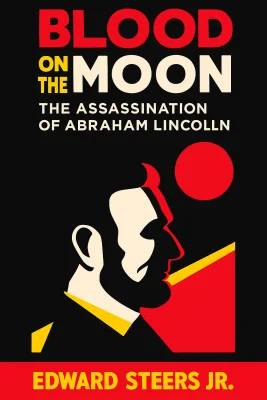
Blood on the Moon
The Assassination of Abraham Lincoln
Categories
Nonfiction, Biography, History, True Crime, Presidents, American History, War, Crime, American Civil War, Civil War
Content Type
Book
Binding
Paperback
Year
2005
Publisher
University Press of Kentucky
Language
English
ASIN
0813191513
ISBN
0813191513
ISBN13
9780813191515
File Download
PDF | EPUB
Blood on the Moon Plot Summary
Introduction
# The Conspiracy That Killed Lincoln: America's Darkest Hour On the evening of April 14, 1865, as jubilant crowds celebrated the end of America's bloodiest conflict, a single gunshot in Ford's Theatre would forever alter the nation's destiny. The assassination of Abraham Lincoln was not the desperate act of a lone madman, but the culmination of a sophisticated conspiracy rooted in the deepest divisions of American society. Behind John Wilkes Booth's fatal shot lay a network of Confederate agents, Southern sympathizers, and individuals whose hatred for Lincoln transcended mere political disagreement. This tragic event reveals how the institution of slavery, the very foundation upon which the Confederacy was built, drove men to extraordinary acts of violence and betrayal. The conspiracy that claimed Lincoln's life involved not just Booth and his immediate accomplices, but a broader underground network that had been operating throughout the war years. From the drawing rooms of Montreal to the tobacco farms of Maryland, from the halls of Richmond to the streets of Washington, a web of intrigue had been spinning for months before that fateful Good Friday night. Understanding this conspiracy illuminates not only the circumstances of Lincoln's death, but the profound cultural and moral divisions that nearly destroyed the American republic.
Chapter 1: Seeds of Hatred: Lincoln's Enemies and Their Confederate Network
The roots of the conspiracy that would claim Lincoln's life stretched back to the earliest days of his presidency, when his election in 1860 had already torn the nation apart. From the moment he took office, Lincoln faced not merely political opposition but visceral hatred from those who saw him as the destroyer of their way of life. In the border states, particularly Maryland, this animosity ran especially deep among Confederate sympathizers who viewed the president as a tyrant who had suspended their constitutional rights and imposed military rule upon them. Among these bitter opponents was Dr. Samuel Mudd, a Maryland physician and slave owner who had watched his world crumble under Lincoln's policies. Mudd's plantation in Charles County had once thrived on slave labor, but the president's Emancipation Proclamation had shattered that foundation. Like many in his community, Mudd had become involved in the Confederate underground, using his medical practice as cover for activities that supported the Southern cause. His grievances were both personal and political—Lincoln had not only freed his slaves but had also imposed martial law that made every aspect of daily life subject to military oversight. The conspiracy began to take concrete form in the autumn of 1864, when John Wilkes Booth, the famous actor and Confederate sympathizer, began recruiting accomplices for what he initially conceived as a plan to kidnap the president. Booth's motivations were complex, driven by a combination of Southern patriotism, personal ambition, and an actor's flair for the dramatic. He envisioned himself as a modern-day Brutus, striking down a Caesar to save the republic. Through his theatrical connections and Confederate contacts, Booth assembled a diverse group of conspirators, including Samuel Arnold and Michael O'Laughlen, two childhood friends from Baltimore who had served in the Confederate army. The network expanded to include Mary Surratt, whose boardinghouse on H Street in Washington became a crucial meeting place for the conspirators. Her establishment served a dual purpose—providing legitimate lodging for travelers while secretly harboring Confederate agents and their sympathizers. Mary's son John was already deeply involved in Confederate espionage, running messages and contraband between Richmond and points north. The Surratt tavern in Maryland became another vital link in the chain, offering a safe haven for those moving clandestinely through the countryside. As 1864 turned to 1865, the motivations of Lincoln's enemies grew more desperate. The Confederacy was clearly losing the war, and with it would go not only their political cause but their entire social and economic system. For men like Booth, the approaching end of the war meant that time was running out for any dramatic action that might change the course of history. The hatred that had been simmering for four years was about to boil over into violence, setting the stage for one of the most shocking crimes in American history.
Chapter 2: Booth's Evolution: From Kidnapping Plot to Assassination Conspiracy
Throughout the winter of 1864-1865, Booth's conspiracy evolved from a desperate kidnapping scheme into something far more sinister. The original plan had been audacious in its simplicity: capture President Lincoln during one of his frequent trips to the Soldiers' Home or while attending a theater performance, then spirit him away to Richmond where he could be exchanged for Confederate prisoners of war. Booth believed such a dramatic stroke might revive Southern morale and possibly alter the war's outcome. The transformation of Booth's thinking can be traced through his actions during the early months of 1865. In January, he met with Confederate agents in New York and possibly received encouragement, if not direct orders, from Richmond. By February, he had established contact with Dr. Mudd, who introduced him to Thomas Harbin, a Confederate operative who knew the escape routes through southern Maryland intimately. These connections were crucial, for any successful operation would require not only the capture of Lincoln but also a reliable means of transporting him through Union-controlled territory to Confederate lines. The conspiracy's membership reflected the diverse nature of Confederate resistance in the border states. George Atzerodt, a German immigrant and boat operator, was recruited for his knowledge of the Potomac River crossings. David Herold, a young pharmacy clerk with an intimate knowledge of the Maryland countryside, would serve as a guide through the swamps and back roads. Lewis Powell, a former Confederate soldier and member of Mosby's Rangers, brought military experience and a willingness to use violence. Each man had his own reasons for joining—some ideological, others financial, all bound together by their hatred of Lincoln and what he represented. The failed attempt to capture Lincoln on March 17, 1865, marked a crucial turning point in the conspiracy's evolution. Booth had planned to seize the president during a visit to a military hospital, but Lincoln changed his plans at the last moment. The failure left Booth's conspirators demoralized and questioning the feasibility of their mission. Several, including Arnold and O'Laughlen, began to distance themselves from the plot, sensing that Booth's schemes were becoming increasingly unrealistic and dangerous. It was in this atmosphere of frustration and desperation that Booth's thinking underwent its final, fatal transformation. The fall of Richmond in early April and Lee's surrender at Appomattox on April 9 effectively ended the Confederacy's hopes for independence. For Booth, these events did not signal the time for reconciliation but rather the moment for the most dramatic gesture of all. If the South could not win the war, then at least he could strike a blow for revenge that would echo through history. The kidnapping plot was abandoned in favor of assassination—not just of Lincoln, but of the entire Union leadership.
Chapter 3: April 14, 1865: The Fatal Night at Ford's Theatre
The morning of April 14, 1865, dawned with an air of celebration throughout Washington. The war was over, and the capital buzzed with plans for commemorating the Union victory. President Lincoln himself seemed in unusually high spirits, speaking of healing the nation's wounds and welcoming the South back into the Union. Yet even as the president contemplated peace, John Wilkes Booth was making his final preparations for war. Booth's discovery that Lincoln would attend Ford's Theatre that evening transformed what had been a vague plan into immediate action. The actor's familiarity with the theater gave him crucial advantages—he knew the layout, the staff, and the routines that would allow him to move freely through the building. More importantly, he understood the timing of the play, "Our American Cousin," well enough to choose the moment when the audience's laughter would mask the sound of his derringer. The coordination required for the night's events reveals the extent to which the conspiracy had evolved beyond Booth's original circle. Mary Surratt's trip to her tavern that afternoon, ostensibly to collect a debt, was actually a crucial mission to ensure that weapons and supplies would be waiting for the assassins' escape. Her message to tavern keeper John Lloyd—to have the "shooting irons" ready—demonstrates the level of planning that had gone into the aftermath of the assassination. This was not the impulsive act of a madman, but a carefully orchestrated operation with multiple moving parts. At Ford's Theatre, Booth's approach to the presidential box revealed both his audacity and his intimate knowledge of the building's security arrangements. The absence of proper guards at the box—a failure that would haunt the nation for generations—allowed Booth to approach Lincoln with relative ease. His preparation of the door, cutting a peephole and arranging a wooden brace to prevent pursuit, showed the methodical nature of his planning. When he finally entered the box at approximately 10:15 PM, Booth was executing a plan that had been months in the making. The moment of the assassination itself—the crack of the derringer, Booth's leap to the stage, his cry of "Sic semper tyrannis"—lasted only seconds but changed American history forever. The .44-caliber ball that tore through Lincoln's brain not only ended the life of the nation's greatest president but also shattered the hopes for the kind of merciful Reconstruction that Lincoln had envisioned. In that instant, the magnanimous victor who had spoken of "malice toward none" was replaced by the martyred saint whose death would demand vengeance.
Chapter 4: The Great Manhunt: Tracking Booth Through Confederate Maryland
The massive manhunt that followed Lincoln's assassination became the largest criminal investigation in American history to that point, involving thousands of soldiers, detectives, and civilian volunteers. Yet for all its scope and intensity, the pursuit of Booth and his accomplices revealed both the strengths and weaknesses of the Union's security apparatus. The conspiracy had been so carefully planned that even with unlimited resources, the authorities found themselves consistently one step behind their quarry. The trail began at the Navy Yard Bridge, where Sergeant Silas Cobb's decision to allow two suspicious riders to cross into Maryland in the early hours of April 15 gave Booth and Herold the head start they needed. Booth's audacious use of his real name when challenged by the guard suggests either supreme confidence or the reckless bravado of a man who believed he was already a hero to the Confederate cause. The fact that the military failed to capitalize on this crucial intelligence—Booth had told Cobb he was headed for Charles County—demonstrates the confusion and lack of coordination that plagued the early stages of the investigation. The fugitives' first major stop at the Surratt tavern in Maryland revealed the extent of the Confederate underground network that had been operating throughout the war. John Lloyd's testimony about Mary Surratt's instructions to have the weapons ready, and his description of Booth's boastful announcement that he had "assassinated the President and Secretary Seward," provided crucial evidence of the conspiracy's scope. Yet the very existence of such safe houses and supply caches showed how deeply Confederate sympathizers had penetrated the supposedly secure area around the nation's capital. The network of Confederate sympathizers who aided Booth's escape—from Samuel Cox, who hid the fugitives in a pine thicket, to Thomas Jones, who ferried them across the Potomac—demonstrated the persistence of Confederate resistance even after Lee's surrender. These men risked their lives and freedom not for money but for ideology, believing they were helping a Confederate hero escape Union vengeance. Their willingness to aid Booth reveals the depth of bitterness that would complicate Reconstruction and poison American politics for generations to come. The manhunt's ultimate success in tracking Booth to the Garrett farm in Virginia came not through superior detective work but through the gradual breakdown of the Confederate network and the testimony of those who had aided the fugitives. Each arrest led to new information, each interrogation revealed new connections, until the web of conspiracy was slowly unraveled. Yet the very fact that Booth had managed to evade capture for twelve days, despite the largest manhunt in American history, testified to both his careful planning and the extensive support network that the Confederate cause still commanded even in defeat.
Chapter 5: Dr. Mudd's Dilemma: Medical Oath vs. Confederate Loyalty
In the early morning hours of April 15, 1865, as church bells across the nation would soon toll for the murdered president, two desperate fugitives approached Dr. Mudd's farmhouse through the darkness. Booth, his leg fractured from his leap to the Ford's Theatre stage, desperately needed medical attention. What followed in those crucial hours would forever seal Mudd's fate and create one of American history's most enduring controversies. According to Mudd's later testimony, he was awakened around four in the morning by persistent knocking at his door. Two men stood in the shadows, one clearly injured and in need of medical care. Mudd claimed he did not immediately recognize Booth, whose appearance had been altered by the removal of his distinctive mustache and the addition of false whiskers. The doctor set the broken fibula, fashioned a crude crutch, and provided the wounded man with a bed for rest. Yet even as Mudd performed these seemingly humanitarian acts, evidence suggests he was well aware of his patient's true identity. The morning brought news that would transform the nation's grief into a burning desire for justice. As reports of Lincoln's assassination spread through Charles County, Mudd found himself in an impossible position. His Confederate sympathies were well known, his previous meetings with Booth were documented, and now the assassin had sought refuge in his home. The doctor's subsequent actions revealed a man caught between his medical oath and his political loyalties, between his desire for self-preservation and his commitment to the Confederate cause. When federal investigators first visited Mudd's farm on April 18, they encountered a man whose story would shift and evolve with each telling. Initially, Mudd claimed no knowledge of his patient's identity, insisting he had simply treated a stranger's broken leg. However, as evidence mounted and witnesses came forward, the doctor's carefully constructed narrative began to unravel. His failure to report the suspicious visitors, his delayed acknowledgment of recognizing Booth, and his assistance in the assassin's continued flight all pointed to a level of complicity that extended far beyond reluctant medical care. The evidence suggests that Mudd's involvement extended far beyond mere acquaintance with Booth. He had helped the actor purchase a horse, provided introductions to other potential conspirators, and offered his home as a safe haven along potential escape routes. When Booth needed to recruit additional conspirators, Mudd facilitated meetings with local Confederate agents and sympathizers. The doctor's farm had become a waystation in the underground network that supported Confederate operations in Maryland, a role that would prove fateful when Booth's plans shifted from kidnapping to murder.
Chapter 6: Military Justice: The Controversial Trial of Lincoln's Conspirators
The decision to try Dr. Mudd and his co-conspirators before a military tribunal rather than in civilian courts sparked immediate controversy and would resonate through American legal history for generations. Secretary of War Edwin Stanton, wielding extraordinary wartime powers, argued that the assassination constituted an act of war requiring military justice. The nine-member military commission that convened in May 1865 operated under rules of evidence and procedure that heavily favored the prosecution, setting the stage for a trial that many would later question. Mudd's defense team, led by General Thomas Ewing Jr., faced formidable challenges from the outset. The military tribunal permitted hearsay evidence, operated without the full protections of civilian courts, and conducted much of its proceedings in secret. The prosecution, armed with testimony from key witnesses like Louis Wiechmann and John Lloyd, painted a picture of Mudd as an integral part of Booth's conspiracy. They presented evidence of his previous meetings with Booth, his assistance in recruiting other conspirators, and his crucial role in facilitating the assassin's escape. The most damaging testimony came from Mudd's own contradictory statements to federal investigators. His initial denial of recognizing Booth, followed by grudging admissions as evidence mounted, created an impression of deception that the prosecution exploited ruthlessly. When confronted with a photograph of Booth, Mudd's delayed recognition and shifting explanations undermined his credibility with the military commissioners. The discovery of Booth's boot, which Mudd had cut from the assassin's swollen leg, provided physical evidence linking the doctor directly to the crime. Perhaps most telling was the testimony of Samuel Arnold and George Atzerodt, fellow conspirators who confirmed Mudd's prior relationship with Booth and his knowledge of the plot's general outlines. Their accounts, corroborated by other witnesses, established that Mudd was far from the innocent country doctor his defense portrayed. When the military commission delivered its verdict on June 30, 1865, Mudd escaped the death penalty by a single vote, receiving instead a sentence of life imprisonment at the forbidding fortress of Fort Jefferson in the Dry Tortugas. The trial's most controversial aspect was the conviction and execution of Mary Surratt, whose boardinghouse had served as a meeting place for the conspirators. Her defenders argued that she was merely an innocent widow caught up in her son's activities, but the evidence suggested deeper involvement. Her trips to Surrattsville on April 11 and 14, carrying messages and supplies for the conspirators, demonstrated active participation in the plot rather than mere passive association. The executions of Booth's accomplices on July 7, 1865, brought formal closure to the conspiracy, but the broader questions it raised about loyalty, justice, and reconciliation would continue to haunt the nation.
Chapter 7: Legacy of Violence: How Assassination Changed American Reconstruction
The death of Abraham Lincoln transformed the martyred president into a symbol of national unity and sacrifice that would shape American memory for generations to come. The elaborate funeral ceremonies that began in Washington and culminated in Springfield, Illinois, provided the grieving nation with a ritual of mourning that helped process the trauma of the assassination while simultaneously elevating Lincoln to the pantheon of American heroes. The impact of Lincoln's death on Reconstruction policy was immediate and profound. The magnanimous approach toward the defeated South that Lincoln had outlined in his Second Inaugural Address—"with malice toward none, with charity for all"—was replaced by a more punitive approach driven by the desire for vengeance against those who had murdered the president. Andrew Johnson's attempts to continue Lincoln's moderate policies were undermined by the Radical Republicans in Congress, who argued that the assassination proved the need for harsh measures against the unrepentant South. The conspiracy trial and its aftermath established important precedents for how the American government would respond to political terrorism. The use of military commissions, the broad interpretation of conspiracy law, and the willingness to execute even peripheral participants in the plot sent a clear message that political violence would be met with the full force of federal power. These precedents would influence American responses to political terrorism for generations to come, establishing patterns of government behavior that would be repeated in times of national crisis. The memory of Lincoln's assassination became intertwined with the broader narrative of American exceptionalism and the idea that democracy must be defended against its enemies at all costs. The martyred president became a symbol of the price that must sometimes be paid to preserve freedom, while his assassins were remembered as cautionary examples of the dangers of extremism and political fanaticism. This memory would shape American political culture for generations, reinforcing the idea that violence against democratic institutions was not only criminal but also fundamentally un-American. The true tragedy of Lincoln's death lies not only in the loss of his leadership but in the lost opportunity for the kind of merciful Reconstruction he had envisioned. His assassination transformed him from a controversial wartime president into a martyred saint, but it also unleashed forces of vengeance that would poison American politics for generations. The harsh measures imposed on the South during Reconstruction, while perhaps necessary to protect the rights of freed slaves, also created lasting resentments that would fuel racial violence and political extremism well into the twentieth century.
Summary
The assassination of Abraham Lincoln represents a pivotal moment when American democracy faced its greatest test—not on the battlefield, but in the aftermath of victory, when the forces of reconciliation and revenge battled for the nation's soul. The conspiracy that claimed Lincoln's life was not merely the work of a few deranged individuals but the product of deep ideological divisions and institutional failures that had allowed hatred to fester even as the war was ending. The network of Confederate sympathizers who aided Booth's escape revealed how thoroughly the rebellion had penetrated supposedly loyal territory, while the government's response demonstrated both the strengths and limitations of federal power in times of crisis. The lessons of Lincoln's assassination remain painfully relevant today. First, democratic institutions are only as strong as the commitment of citizens to resolve their differences through peaceful means rather than violence. Second, the rhetoric of extremism, whether political or ideological, can inspire individuals to acts of terrorism that threaten the very foundations of democratic society. Finally, the response to political violence must be carefully calibrated to punish the guilty while preserving the constitutional principles that define American democracy. Lincoln's death reminds us that the price of freedom is not only eternal vigilance but also the wisdom to distinguish between justice and revenge in our darkest hours.
Best Quote
Review Summary
Strengths: The review highlights the book's meticulous research and logical presentation of facts, debunking conspiracy theories surrounding the Lincoln assassination. The author is praised for providing a clear, evidence-backed narrative and for offering insights into the socio-economic impacts of the era, such as the consequences of Lincoln's Emancipation Proclamation. Overall: The reader expresses high regard for the book, considering it the best on the subject of the Lincoln assassination. The book is recommended for its thorough and factual approach, effectively challenging myths and providing a comprehensive understanding of the historical context and events.
About Author

Edward Steers Jr.
Steers reframes the intersection of scientific inquiry and historical narrative by delving into the life and assassination of Abraham Lincoln with the analytical rigor of a scientist. His background in molecular genetics informs his meticulous research methods, which emphasize primary source documentation and thorough archival work. This unique approach allows him to examine the Lincoln assassination with a focus on factual precision and context. Steers' participation in the John Wilkes Booth Escape Tours, sponsored by the Surratt Society, catalyzed his specialized interest in Lincoln's assassination and the trial of the conspirators, leading to his reputation as a leading authority in this area.\n\nHis scholarship extends beyond mere recounting of events, as he synthesizes historical evidence into coherent narratives that offer deeper insights into Lincoln's era. Books like "Blood on the Moon: The Assassination of Abraham Lincoln" and "The Lincoln Assassination: The Evidence," co-edited with William C. Edwards, demonstrate Steers’ commitment to providing a comprehensive view of historical events through carefully annotated documentation. This approach not only contributes to the scholarly community but also serves readers interested in American history by presenting well-supported narratives that challenge and expand conventional understanding.\n\nReaders benefit from Steers' work through access to richly detailed accounts of Lincoln's life and the historical implications of his assassination. His research is particularly valuable to historians, educators, and enthusiasts who seek a deeper understanding of this pivotal moment in American history. By blending scientific precision with historical analysis, Steers crafts narratives that illuminate the complexities of the past while providing a compelling, evidence-based bio of one of America’s most studied figures.
Read moreDownload PDF & EPUB
To save this Black List summary for later, download the free PDF and EPUB. You can print it out, or read offline at your convenience.
Blood on the Moon
by Edward Steers Jr.
