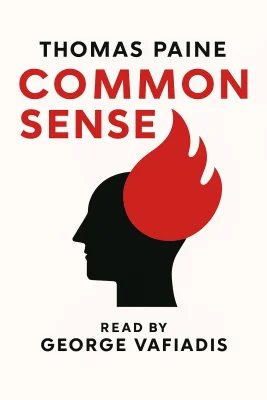
Common Sense
A Spark for Revolutionary Thought
Categories
Nonfiction, Philosophy, History, Politics, Classics, Essays, Political Science, Historical, American History, American Revolution
Content Type
Book
Binding
Paperback
Year
2005
Publisher
Penguin
Language
English
ASIN
0143036254
ISBN
0143036254
ISBN13
9780143036258
File Download
PDF | EPUB
Common Sense Plot Summary
Introduction
The power of well-reasoned moral arguments to challenge established authority and inspire revolutionary change stands at the core of political transformation. When moral principles are articulated with precision and passion, they transcend mere rhetoric to become catalysts for action. Through methodical deconstruction of traditional power structures and persuasive appeals to natural rights, certain thinkers have demonstrated how reason itself can become a revolutionary force. The moral foundations of liberty do not merely suggest reform but demand it, creating an intellectual framework that renders tyranny not just undesirable but fundamentally illegitimate. This moral imperative for liberty rests on several interconnected principles: the inherent dignity and equality of all persons, the necessity of government by consent, the primacy of natural rights over traditional authority, and the duty to resist oppression. What makes these arguments particularly compelling is their appeal to universal principles rather than specific grievances. When articulated through clear logical steps that connect first principles to practical political conclusions, such reasoning creates a complete system that both justifies revolution and provides guidelines for establishing just government afterward. The resulting intellectual framework transforms vague dissatisfaction into principled resistance, offering individuals both motivation and justification to challenge systems previously considered unquestionable.
Chapter 1: The Case for Natural Rights and Self-Governance
Natural rights exist as inherent qualities of being human, not as gifts bestowed by governments or rulers. This foundational premise establishes that certain rights—to life, liberty, and the pursuit of happiness—precede any government and cannot legitimately be taken away by any authority. Humanity's natural state is one of freedom, with each person possessing equal moral standing. This equality forms the basis for subsequent political rights, as no individual inherently possesses the right to rule over others without their consent. The concept of self-governance emerges directly from this understanding of natural rights. If all persons possess equal natural rights, then legitimate political authority can only arise from the consent of the governed. This reasoning systematically undermines the justification for hereditary rule or divine right, as neither birth nor religious authority can override the fundamental equality established by natural rights. Government becomes not an entity with inherent authority, but a mechanism created by equal citizens to protect their pre-existing rights. The social contract theory provides the bridge between natural rights and legitimate government. Individuals agree to surrender certain freedoms—not to a ruler, but to a system of laws—in exchange for the security and order that allows them to enjoy their remaining rights more fully. This voluntary arrangement creates obligations that bind both the governed and the governors. When government fails to fulfill its obligations under this implicit contract, citizens not only have the right but the moral duty to alter or abolish it. The argument for self-governance also appeals to practical considerations beyond abstract rights. Distant rulers cannot understand local conditions, foreign monarchs have interests that diverge from those of the people they rule, and unaccountable power inevitably tends toward corruption and abuse. These practical failures reinforce the philosophical case: distant, unrepresentative government is not merely morally questionable but functionally inferior to self-governance. The appeal to nature functions as both philosophical foundation and rhetorical strategy. By grounding political rights in the natural world rather than tradition or scripture, this approach claims a universal authority that transcends cultural and historical differences. Natural rights become self-evident truths accessible to anyone through reason, creating a standard against which all governments can be judged and found wanting. This framework transforms political dissent from mere complaint to moral imperative. Those who resist unjust authority are not merely pursuing their preferences but fulfilling their obligations as rational beings to uphold natural law. Thus, revolution against tyranny becomes not just permissible but required when government systematically violates the natural rights it was created to protect.
Chapter 2: Monarchy vs. Republic: The Contrast of Systems
Monarchy represents a fundamentally flawed system of government that contradicts the principles of natural justice and rational political organization. Its primary defect lies in its premise that one individual, through accident of birth rather than merit or consent, should possess supreme power over others. This arrangement violates the natural equality of persons and creates a situation where the interests of the monarch inevitably diverge from those of the people. A monarch seeks to expand and preserve personal power, while citizens seek protection of their rights and general welfare—goals that frequently conflict. The hereditary nature of monarchy compounds these problems by ensuring that leadership depends on lineage rather than ability. History demonstrates that capable monarchs are the exception rather than the rule, as the random distribution of talent pays no attention to royal bloodlines. Even when a competent monarch ascends the throne, the arbitrary nature of succession means their successor may possess none of the same qualities. This creates perpetual instability as nations oscillate between competent and incompetent rulers with no mechanism to ensure consistent governance. By contrast, republican government derives its authority from the people and incorporates mechanisms to ensure accountability. Power flows upward from citizens rather than downward from a sovereign, fundamentally altering the relationship between the government and the governed. Officials serve as representatives rather than rulers, exercising delegated authority that can be withdrawn. This arrangement aligns incentives between the government and citizens, as officials must remain responsive to public needs to retain their positions. The republic's systematic advantages extend beyond its philosophical foundation. Republics harness collective wisdom through deliberative processes, distributing decision-making across multiple individuals and institutions. This diffusion creates checks on arbitrary power and ensures that policy emerges from the exchange of ideas rather than the whims of a single person. The republican system also facilitates adaptation over time through constitutional mechanisms for amendment and renewal, allowing each generation to govern itself according to its own circumstances rather than remaining bound by decisions made in the distant past. Economic considerations also favor republican governance. Monarchies demand enormous resources to maintain royal courts, standing armies, and the apparatus of control. These expenses burden citizens with heavy taxation while providing minimal benefit in return. Republics, designed to serve citizen interests rather than royal ambitions, generally direct resources toward public goods that benefit the broader population rather than the luxuries and wars that typically consume royal treasuries. The moral superiority of republics ultimately rests on their recognition of human dignity and equality. Where monarchy treats citizens as subjects whose purpose is to serve the crown, republicanism acknowledges them as the rightful source of political authority. This fundamental reorientation transforms governance from an exercise in control to a cooperative enterprise aimed at securing common welfare. The contrast between systems is not merely one of efficiency or effectiveness, but of morality—between government that upholds or denies the inherent worth and sovereignty of the people it serves.
Chapter 3: Rights and Representation: The Foundation of Just Government
The relationship between rights and representation forms the essential foundation for legitimate government. Rights exist prior to government and define its proper limits, while representation provides the mechanism through which collective decisions can be made without violating individual liberty. This interdependent relationship creates a system where authority derives from the people yet operates within constraints that protect fundamental freedoms from majority overreach. Representation solves the practical problem of direct democracy in large societies. While small communities might govern themselves through direct participation, nations require a system where citizens can delegate decision-making authority without surrendering their sovereignty. True representation occurs when representatives remain accountable to their constituents and when the composition of representative bodies reflects the diversity of interests within society. The quality of representation depends on both formal mechanisms—regular elections, reasonable district sizes, transparent proceedings—and cultural expectations of responsiveness and integrity. The right to representation connects directly to taxation and other governmental powers. When citizens bear the burdens of public expenditure through taxes, they gain a corresponding right to determine how those resources are used. "No taxation without representation" expresses not merely a political slogan but a profound moral principle: those affected by decisions must have a voice in making them. This principle extends beyond fiscal matters to all areas where government exercises authority over citizens' lives and property. Effective representation requires institutional safeguards that prevent corruption of the representative process. These include limitations on terms of office, separation of powers that prevents any single faction from controlling all aspects of government, transparency requirements that allow citizens to monitor their representatives, and mechanisms for removing officials who betray public trust. Without these protections, representation becomes nominal rather than substantive, with elected officials serving private interests rather than the public good. Rights establish boundaries that even representative governments cannot legitimately cross. Certain fundamental freedoms—of conscience, expression, assembly, security in one's person and property—remain beyond the reach of majority rule. This understanding rejects the notion that democracy means unlimited power for the majority, instead recognizing that legitimate governance requires respect for individual rights that no vote can override. Constitutional guarantees of these rights provide formal protection, but their ultimate security depends on public commitment to principles of liberty. The proper relationship between rights and representation creates a virtuous cycle where each reinforces the other. Representative institutions protect rights by providing citizens with means to check government overreach, while rights protections ensure that representation remains meaningful by preserving the conditions for free political participation. This balance resolves the tension between individual liberty and collective decision-making that has challenged political theorists since antiquity, offering a framework for governance that honors both.
Chapter 4: Dismantling Traditional Authority: The Religious and Moral Arguments
Traditional authority often derives its legitimacy from religious claims and established moral hierarchies. To effectively challenge such deeply rooted power structures requires dismantling their theological and ethical foundations. This intellectual undertaking begins by separating religious truth from political authority, demonstrating that divine sanction for particular rulers or systems cannot be credibly established and that genuine religious values actually support liberty rather than oppression. The divine right of kings represents a primary target for this critique. This doctrine asserts that monarchs rule as God's representatives on earth, making resistance to royal authority equivalent to rebellion against divine will. Refuting this claim involves demonstrating its logical inconsistencies, historical contingencies, and scriptural misinterpretations. If God intended humanity to live under monarchy, why does nature provide no clear indication of who should rule? Why do the qualities needed for good governance distribute themselves without regard to royal lineage? The arbitrary nature of succession contradicts the order and purpose evident in other divine creations. Religious arguments for liberty emphasize the spiritual equality of all persons and the primacy of individual conscience. If each soul has equal value before God, then political arrangements that treat some as inherently superior to others contradict this spiritual truth. Similarly, if authentic faith requires voluntary acceptance rather than coercion, then religious freedom becomes not merely a political right but a theological necessity. Freedom of conscience emerges as both a natural right and a religious imperative, undermining claims that orthodoxy requires political enforcement. The moral critique of traditional authority extends beyond specifically religious arguments. Natural sympathy and moral intuition rebel against systems that enable some to enjoy immense privilege while others suffer deprivation. The arbitrary distribution of power and wealth in traditional societies violates basic fairness and human dignity. When examined rationally rather than through the lens of custom, these arrangements appear as historical accidents rather than moral necessities, products of force rather than justice. Traditional moral values themselves, when properly understood, support liberty rather than hierarchy. Virtues like honesty, integrity, and compassion flourish better in free societies where individuals act from conviction rather than compulsion. The moral case for liberty rests partly on the understanding that virtue requires choice—that actions performed under threat have no moral merit, while those chosen freely develop character and contribute to human flourishing. By separating religious truth from political power, this approach transforms faith from a source of oppression into a foundation for liberty. Genuine religion focuses on spiritual transformation rather than worldly dominion, on serving others rather than ruling them. This understanding liberates both politics and religion, allowing each to function in its proper sphere without the corruption that comes from their improper mingling. The result is a moral framework that supports liberty not as a concession to human weakness but as an expression of human dignity and divine purpose.
Chapter 5: Economic Justice and Taxation: Practical Reforms
Economic arrangements and taxation systems directly reflect and reinforce political power structures. Any comprehensive vision of liberty must address not just political rights but economic justice. This requires analyzing how existing systems concentrate wealth and power, how taxation burdens different segments of society, and how alternative arrangements might better serve the common good while respecting individual rights. Current taxation systems typically place disproportionate burdens on ordinary citizens while privileging the wealthy and powerful. Progressive reforms must begin by identifying and eliminating these inequities. Property qualifications for voting, poll taxes, and other mechanisms that link political participation to economic status undermine meaningful representation. Similarly, tax exemptions for aristocratic landholdings, religious institutions, and commercial monopolies shift burdens onto those least able to bear them while protecting established interests from contributing their fair share. Economic monopolies and exclusive privileges granted by government create artificial restrictions on opportunity. These arrangements—including chartered trading companies, guild restrictions, and licensed monopolies—prevent fair competition and concentrate wealth in privileged hands. True economic liberty requires dismantling these artificial barriers and allowing all citizens to participate freely in economic activity. This approach benefits not just those previously excluded but society as a whole through increased productivity and innovation. Public debt often serves as a mechanism for transferring wealth from ordinary citizens to financial elites. When governments borrow heavily—typically to fund wars and other projects that primarily benefit the powerful—they create ongoing obligations that burden future generations. Reform requires establishing transparent, accountable financial systems that limit debt, eliminate corruption in public finance, and ensure that government expenditures serve genuine public needs rather than private interests. Land reform represents a crucial component of economic justice. In societies where vast estates remain under aristocratic control while many lack access to productive resources, redistributing land can simultaneously reduce inequality and increase overall prosperity. Breaking up large, underutilized holdings and making land available to those who will work it directly expands opportunity while undermining traditional power structures based on land ownership. A just economic system requires monetary policies that serve the general welfare rather than privileged interests. Currency manipulation, artificial scarcity of money, and financial systems designed to benefit lenders at the expense of productive enterprise all undermine economic justice. Reform involves creating transparent, stable monetary systems that facilitate productive exchange rather than speculation and exploitation. These economic reforms connect directly to broader principles of liberty and self-governance. Economic dependency undermines political independence, as those struggling for subsistence cannot effectively exercise their political rights. True liberty requires not just formal rights but the material conditions that allow all citizens to participate meaningfully in both political and economic life. By addressing practical economic concerns alongside abstract principles, this approach offers a comprehensive vision of liberation that speaks to immediate needs while advancing fundamental values.
Chapter 6: Historical Context and Revolutionary Impact
The revolutionary ideas challenging traditional authority emerged within specific historical conditions that made their widespread acceptance possible. These conditions included the intellectual ferment of the Enlightenment, economic transformations that empowered new social classes, communications advances that facilitated the spread of ideas, and political crises that created openings for radical change. Understanding this context illuminates why these arguments resonated so powerfully at particular moments in history. The American Revolution provided the first major testing ground for these revolutionary principles. Colonial grievances against British rule initially focused on specific policies rather than fundamental questions of political legitimacy. However, as conflict escalated, colonists increasingly articulated their resistance in terms of natural rights and consent of the governed. This philosophical framing transformed a tax dispute into a struggle for universal principles, establishing a precedent for revolution based on rights rather than mere interests or traditional claims. The French Revolution dramatically expanded the scope and implications of revolutionary ideology. Where the American Revolution largely preserved existing social structures while changing political arrangements, French revolutionaries challenged the entire edifice of traditional society—abolishing aristocratic privileges, nationalizing church properties, and explicitly rejecting the principles of monarchy. This more radical implementation revealed both the transformative potential of revolutionary ideas and the difficulties of rapid, comprehensive social transformation. The revolutionary wave spread beyond France and America to inspire movements throughout Europe and Latin America. Each context produced distinctive adaptations of revolutionary principles to local conditions. In Haiti, revolutionary ideals extended to challenge slavery and racial hierarchy. In Latin America, independence movements combined European Enlightenment concepts with indigenous traditions and local grievances. These diverse applications demonstrated both the universal appeal of liberty and self-governance and the flexibility of these principles across different cultural contexts. Revolutionary ideas transformed not just political structures but intellectual life across multiple domains. Religious discourse increasingly emphasized individual conscience rather than institutional authority. Scientific inquiry flourished as traditional restrictions on free investigation weakened. Literature and art embraced new forms that challenged conventional standards. The revolutionary emphasis on reason and liberty created intellectual openings that accelerated innovation across cultural spheres. The long-term impact of these revolutions extended far beyond their immediate political outcomes. Even where revolutionary governments fell or revolutionary goals remained unrealized, the fundamental principles they articulated permanently altered political discourse. Divine right, aristocratic privilege, and unquestioning deference to tradition lost legitimacy as organizing principles for society. Future political developments—including democratic reforms, nationalist movements, and even conservative reactions—necessarily responded to the challenges raised by revolutionary thought, making return to pre-revolutionary assumptions impossible.
Chapter 7: Paine's Rhetorical Strategy and Persuasive Techniques
Effective persuasion requires not just sound arguments but compelling presentation. The revolutionary case for liberty succeeds partly through its rhetorical power—its ability to present complex philosophical ideas in language accessible to ordinary citizens. This rhetorical approach combines several elements: clear, forceful prose; vivid metaphors that make abstract concepts concrete; appeals to both reason and emotion; and direct challenges to readers that demand engagement and response. The use of plain language represents a deliberate political choice rather than merely a stylistic preference. By avoiding technical jargon and classical allusions that would restrict comprehension to the educated elite, this approach democratizes political discourse. Complex ideas about natural rights, governmental legitimacy, and constitutional principles appear in straightforward terms that connect abstract theory to everyday experience. This accessibility transforms political philosophy from an esoteric discipline into a practical resource for citizen action. Vivid imagery and metaphor translate philosophical concepts into concrete mental pictures that readers can easily grasp and remember. Government appears as a structure built on a foundation of rights, with different parts playing distinct roles in supporting liberty. Monarchy becomes a parasite drawing nourishment from the nation without contributing to its welfare. These images stick in the mind long after specific arguments fade, providing mental frameworks that shape how readers interpret political events and institutions. The rhetorical approach balances appeals to reason and emotion, recognizing that effective persuasion requires engaging both faculties. Logical arguments establish the intellectual case for liberty through step-by-step reasoning from first principles to practical conclusions. These rational appeals gain force through parallel emotional appeals to natural sympathy, moral indignation against injustice, and aspirational vision of a better future. By engaging both mind and heart, this approach produces not just intellectual agreement but motivational commitment to act on these principles. Direct address to readers creates a sense of dialogue rather than didactic instruction. Questions challenge readers to think through implications for themselves rather than passively accepting conclusions. Anticipation of counterarguments demonstrates respect for audience intelligence while strengthening the overall case. This conversational approach transforms readers from spectators into participants in the reasoning process, increasing both comprehension and conviction. The strategic use of contrast heightens persuasive impact. Vivid descriptions of oppression and injustice under traditional systems stand alongside inspiring visions of liberty and prosperity under reformed governments. This juxtaposition not only clarifies the choice facing society but creates emotional momentum toward the positive alternative. Similarly, contrasts between simple truth and elaborate deception, between common sense and aristocratic sophistry, position readers to identify with the clear, honest perspective that challenges power rather than the complex justifications that defend it. These rhetorical techniques serve not merely to convince but to empower. By making revolutionary principles accessible and compelling to ordinary citizens, they transform political discourse from an elite conversation into a popular movement. When people not only understand but feel capable of judging and acting upon fundamental political questions, the foundation for genuine self-governance is established. The rhetorical strategy thus becomes inseparable from the political vision it advocates—a demonstration in practice of the democratic principles it defends in theory.
Summary
The moral force of arguments for liberty derives from their integration of philosophical principle and practical application. Beginning with the fundamental assertion of human equality and natural rights, these arguments systematically dismantle traditional justifications for hierarchy while constructing an alternative vision of just governance based on consent and representation. What distinguishes truly revolutionary thinking is not merely its critique of existing systems but its comprehensive framework for replacement—a coherent set of principles that connects abstract rights to specific institutional arrangements and everyday practices. This intellectual architecture provides not just motivation for change but guidance for constructing new political orders after revolutionary success. The enduring influence of these arguments stems from their ability to transcend particular historical circumstances while addressing universal human concerns. Their appeal to natural rights rather than traditional privileges makes them applicable across cultures and time periods. Their combination of moral clarity and practical flexibility allows adaptation to diverse contexts without sacrificing core principles. Their integration of political, economic, and moral considerations addresses the full spectrum of human experience rather than compartmentalizing liberty into separate domains. Most significantly, their fundamental optimism about human capacity for self-governance continues to inspire resistance against oppression and efforts to create more just societies. The revolutionary idea that ordinary people can and should govern themselves, once introduced into human consciousness, cannot be permanently suppressed—it remains always available to challenge new forms of domination with its persistent, fundamental question: By what right does any person claim authority over others?
Best Quote
“A long habit of not thinking a thing wrong, gives it a superficial appearance of being right, and raises at first a formidable outcry in defense of custom. But the tumult soon subsides. Time makes more converts than reason.” ― Thomas Paine, Common Sense
Review Summary
Strengths: The review highlights the book's insightful and entertaining nature, emphasizing its passionate wisdom, scathing wit, and intellectual depth. It praises Thomas Paine's boldness and brilliance, noting the historical significance of his arguments for American independence.\nOverall Sentiment: Enthusiastic\nKey Takeaway: The reviewer found the book to be unexpectedly engaging and educational, appreciating its role as a powerful and unapologetic call for revolution, which transformed a potentially tedious read into a captivating and enlightening experience.
About Author
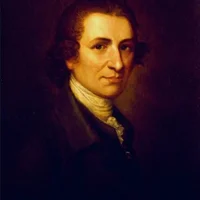
Thomas Paine
Paine interrogates the pillars of political and religious authority, presenting a compelling case for radical reform and independence. With a fervent belief in liberty and egalitarianism, Paine’s writings serve as a clarion call for change, using persuasive, accessible language to engage a broad audience. In "Common Sense," Paine makes a powerful argument for American independence, capturing the revolutionary spirit of his time and galvanizing colonial resolve. Meanwhile, in "Rights of Man," he defends the French Revolution's ideals, directly challenging Edmund Burke’s conservative views and further cementing his role as a radical thinker. This focus on revolutionary thought and human rights, conveyed through clear and vigorous prose, showcases Paine’s commitment to transforming societal norms.\n\nPaine’s method of engaging readers through relatable language and Enlightenment rationalism has left a lasting impact on political thought. He deftly blends reason with impassioned appeals for justice, thereby making complex ideas accessible to ordinary people. This approach not only broadened his readership but also amplified his influence on democratic movements. By promoting a deistic worldview in "The Age of Reason," Paine challenges institutional religion and advocates for individual skepticism, resonating with freethought circles. His unique ability to synthesize complex philosophical ideas with practical calls to action renders his work a crucial resource for those interested in the development of modern democracy and human rights.\n\nReaders and scholars benefit from Paine’s insightful critique of political and religious structures, finding in his work a rich source of inspiration and guidance. His clear articulation of radical ideas provides a framework for understanding and advancing democratic principles, making his books essential reading for those exploring the intersections of politics, philosophy, and social justice. This bio thus captures not just the achievements of a prolific author but also the enduring relevance of his vision for an equitable society.
Read moreDownload PDF & EPUB
To save this Black List summary for later, download the free PDF and EPUB. You can print it out, or read offline at your convenience.
Common Sense
by Thomas Paine
