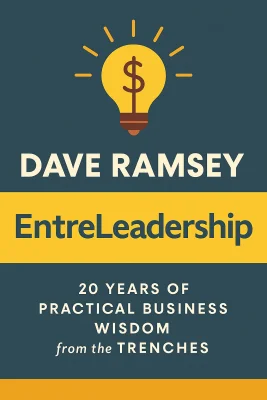
EntreLeadership
20 Years of Practical Business Wisdom from the Trenches
Categories
Business, Nonfiction, Self Help, Finance, Leadership, Audiobook, Management, Entrepreneurship, Personal Development, Buisness
Content Type
Book
Binding
Hardcover
Year
2011
Publisher
Howard Books
Language
English
ISBN13
9781451617856
File Download
PDF | EPUB
EntreLeadership Plot Summary
Introduction
# Building Unstoppable Momentum: Your Guide to Entrepreneurial Leadership You know that feeling when you're lying awake at 3 AM, your mind racing with possibilities and plans for your business? Maybe you're wondering how to turn your passionate vision into something that actually works in the real world, or perhaps you're already running a company but feeling stuck between the daily firefighting and the bigger dreams you started with. The gap between entrepreneurial passion and effective leadership can feel overwhelming, especially when you're responsible not just for your own success, but for the livelihoods and dreams of the people who've chosen to follow you. The journey from passionate entrepreneur to effective leader isn't about losing your fire or becoming just another corporate executive. It's about learning to channel that entrepreneurial energy through proven systems and principles that create sustainable growth and lasting impact. The most successful business leaders understand that building something meaningful requires more than just good ideas and hard work—it demands a systematic approach to vision, communication, team building, and execution that transforms individual passion into collective momentum. This transformation doesn't happen overnight, but when you master these essential leadership principles, you'll discover that your business becomes a vehicle for creating the kind of positive change you've always envisioned.
Chapter 1: Transform Your Dreams Into Clear Action Plans
Every transformational business begins with a dream that refuses to stay quiet, but dreams without structure remain forever out of reach. The bridge between aspiration and achievement lies in your ability to systematically transform abstract visions into concrete, actionable plans that guide every decision you make. This isn't about losing the passion that drives you—it's about giving that passion a clear pathway to create real change in the world. Consider the remarkable story of Dave Ramsey, who started with nothing more than a folding table in his living room and an unshakeable belief that he could help families take control of their financial lives. After experiencing his own financial collapse, losing everything he had built, Ramsey discovered that his personal pain could become his professional purpose. His dream wasn't just about building another business—it was about creating a movement that would fundamentally change how families think about money and financial security. The transformation from personal experience to global impact didn't happen through wishful thinking or motivational speeches. Ramsey and his team spent months crafting and refining their mission statement, filling wastebaskets with crumpled paper as they searched for the exact words that would capture their purpose. They understood that this mission statement would become their North Star, guiding every major decision for decades to come. The process was so important that every new team member was required to memorize and recite the mission statement within their first ninety days, ensuring that everyone understood not just what they were doing, but why they were doing it. To transform your own dreams into clear action plans, begin by writing down your biggest aspirations without editing or limiting yourself. Then ask three fundamental questions that will form the foundation of everything you build: What unique skills and abilities do you bring to this dream? What personality traits and natural talents will help you execute it? What values, experiences, and passions drive your deepest why? These three elements—your what, your how, and your why—combine to create a mission statement that becomes both your inspiration and your boundary marker. Remember that your mission statement serves a dual purpose: it clearly defines not just who you are, but who you aren't. This clarity becomes your protection against the countless "opportunities" that will come your way as you succeed. Every shiny object, every potential partnership, every new direction gets filtered through this mission. If it aligns, you consider it. If it doesn't, you pass, no matter how attractive it might seem in the moment. The ultimate test of your vision-to-action pipeline is whether it creates unstoppable momentum in your daily work. When your dreams have been properly distilled into specific, measurable goals, you'll find yourself pulled forward by a sense of purpose that makes even the most challenging days feel meaningful. Your team will rally around a cause they can understand and contribute to, and your customers will become advocates for something bigger than just your products or services.
Chapter 2: Master Time Management for Maximum Impact
Time is the ultimate equalizer in business—every entrepreneur gets exactly 24 hours each day, regardless of their experience, resources, or ambitions. The difference between those who build lasting success and those who remain trapped in constant busyness lies not in having more time, but in making fundamentally different choices about how to invest the time they have. True time mastery isn't about efficiency tricks or productivity hacks; it's about aligning your daily activities with your most important long-term objectives. The power of strategic time management became crystal clear through the story of a CEO who made a simple but profound decision during one of the most challenging periods of his career. After being forced to lay off over 250 team members due to economic downturn, he committed to parking at the very back of the company parking lot every single morning. This meant walking past 250 empty parking spaces each day—a daily reminder of his most important but not urgent task: getting those people back to work. That long walk kept his priorities laser-focused and drove him to concentrate on the strategic activities that would restore his company's health. What made this approach so powerful was the CEO's understanding that every moment falls into one of four categories: important and urgent, important but not urgent, not important but urgent, and not important and not urgent. Most people instinctively handle the important and urgent tasks while avoiding obvious time wasters. The real challenge lies in distinguishing between important but not urgent activities—like strategic planning, relationship building, and skill development—and not important but urgent ones that feel pressing but don't move you toward your goals. That daily walk past empty parking spaces kept the CEO focused on the important but not urgent work of rebuilding his organization. To master time management for maximum impact, start each day by creating a prioritized action plan. List everything that needs to be done, then categorize each item as A (must be done today), B (should be done soon), or C (would be nice to do). Within each category, rank items by importance, creating A1, A2, B1, B2, and so on. Your A1 item becomes your "North Star" for the day—the single most important thing you must accomplish before anything else gets your attention. This system provides a framework for evaluating the inevitable interruptions and distractions that will compete for your attention. When someone appears at your door with a problem or opportunity, ask yourself whether their issue is more important than your A1 priority. Usually, it isn't. By maintaining this discipline consistently, you'll find that your productivity increases dramatically while your stress decreases, because you're making measurable progress on what matters most. Focus your energy on managing activities rather than hoping for outcomes. If you want increased sales, manage the activities that create sales—prospecting calls, presentations, follow-up conversations. If you want better team morale, manage the activities that build morale—recognition, clear communication, fair treatment. When you consistently execute the right activities with focused intensity, the results you desire will naturally follow.
Chapter 3: Build Trust Through Transparent Communication
Communication is the lifeblood that keeps organizations healthy and growing, yet most businesses treat it as an afterthought rather than a strategic priority. The quality of communication within your organization directly determines the level of trust, engagement, and performance you'll see from your team. When information flows freely and authentically, people feel valued and empowered to contribute their best work. When communication breaks down, even the most talented teams suffocate under confusion, frustration, and mistrust. The transformative power of transparent communication became evident during a particularly challenging period when one company faced two consecutive quarters of declining sales. Rather than hiding this information or presenting a sanitized version to protect morale, the leadership team made the bold decision to share the complete truth with every team member. They gathered the entire organization and explained exactly what was happening, what it meant for the company's future, and what role each person could play in turning the situation around. The initial reaction was concern and uncertainty, but what happened next defied conventional wisdom about sharing difficult news. Instead of panic or mass resignations, the team rallied together with a renewed sense of unity and determination. People began looking for creative ways to cut costs, improve efficiency, and generate new revenue streams. The transparency created a sense of shared ownership and responsibility that had been missing when everyone was kept in the dark about the company's challenges. Team members started thinking and acting like owners rather than just employees, because they finally understood the bigger picture and their role in shaping it. Within six months, the company had not only recovered but was experiencing its strongest growth period ever. To build trust through transparent communication, establish regular, predictable channels for sharing information throughout your organization. This might include weekly team meetings, monthly all-hands gatherings, or quarterly state-of-the-company addresses. The key is consistency and authenticity—people need to know when and how they'll receive important information, and they need to trust that what they're hearing is the complete truth, not a carefully crafted message designed to manage their emotions. Create systems that encourage genuine two-way communication, not just top-down information sharing. Implement anonymous feedback mechanisms, maintain open-door policies, and schedule regular one-on-one meetings between managers and their direct reports. Remember that effective communication requires listening at least as much as talking. When people feel heard and understood, they're much more likely to contribute their best ideas and efforts. Address conflicts and disagreements quickly and directly rather than hoping they'll resolve themselves. Unresolved issues fester and poison the entire organizational culture, creating an environment where people walk on eggshells and avoid difficult conversations. When problems arise, bring the involved parties together, facilitate honest dialogue, and work toward resolution. This demonstrates that your organization values relationships and is committed to maintaining a healthy, productive work environment where everyone can thrive.
Chapter 4: Hire the Right People and Let Go When Necessary
The people you bring onto your team will ultimately determine whether your vision becomes reality or remains an unfulfilled dream. Yet most organizations approach hiring with the urgency of a crisis and the thoroughness of a coin flip, then wonder why they struggle with performance, culture, and retention issues. The cost of hiring wrong extends far beyond the immediate financial impact—it affects productivity, morale, and the success of everyone around the misplaced hire. The story of Jean illustrates this principle perfectly. She was hired as the company's primary salesperson and initially seemed like the perfect fit—experienced, confident, and capable of delivering strong results. What became apparent over time was that Jean's impressive sales numbers came with a toxic attitude that slowly poisoned the entire office environment. Her disrespectful behavior toward leadership, tendency to spread gossip, and general negativity created tension throughout the small team. Despite her performance metrics, the leader found himself dreading Monday mornings and watching other team members become increasingly frustrated and disengaged. The turning point came when the leader realized he was allowing one person's destructive behavior to hold the entire organization hostage. Fear of losing sales revenue had prevented him from taking action, but the cost of keeping Jean was far higher than the temporary disruption of letting her go. When he finally made the difficult decision to terminate her employment, something remarkable happened: the entire team celebrated. The relief was immediate and palpable, productivity increased across the board, and the office culture transformed overnight. Most surprisingly, the customers didn't leave, the revenue didn't disappear, and the leader learned a valuable lesson about the true cost of tolerating behavior that undermines organizational health. To hire the right people and let go when necessary, implement a comprehensive hiring process that evaluates far more than technical skills and experience. This should include multiple interviews with different team members, thorough reference checks, personality assessments, and even conversations with spouses or family members to get a complete picture of who you're considering bringing into your organization. Take the time to ensure cultural fit and shared values, not just competency. A skilled person who doesn't align with your principles will cause more problems than they solve. Create crystal-clear expectations and measurable key result areas for every position in your organization. People need to know exactly what success looks like in their role, and you need objective criteria for evaluating their performance. When someone isn't meeting expectations, address it quickly and directly. Provide coaching, training, and support, but also set clear timelines for improvement and stick to them. When it becomes necessary to let someone go, do it with dignity and respect, but don't delay the inevitable hoping things will magically improve. Keeping underperforming or culturally misaligned people sends the wrong message to your entire team and ultimately damages the organization you're working so hard to build. Remember that your responsibility is to the mission and to the team members who are contributing positively, not to individuals who are holding everyone back.
Chapter 5: Multiply Your Impact Through Strategic Delegation
True leadership isn't about being the smartest person in the room or handling every important task yourself—it's about developing others to accomplish things better than you ever could alone. Delegation is the bridge between being a talented individual contributor and becoming a leader who creates lasting impact through the success of others. Yet many entrepreneurs struggle with this transition, holding onto control even when it limits their organization's potential for growth and excellence. The art of effective delegation became beautifully clear through the story of a business leader who compared the process to raising teenagers. Just as wise parents gradually extend privileges and freedoms as their children demonstrate responsibility and good judgment, effective leaders must gradually extend authority and autonomy as team members prove their competence and integrity. This principle crystallized when the leader presented his college-bound daughter with an actual rope, beautifully tied with ribbons representing different areas of her life, symbolizing that she had earned his complete trust and the freedom that comes with it. This powerful moment revealed the essence of strategic delegation: it must be built on proven trust, not blind faith or desperate hope. The daughter had earned that rope through years of making good decisions, keeping her word, and demonstrating the maturity to handle increasing levels of responsibility. When she left for college, both she and her parents felt confident about the transition because the foundation had been carefully laid over time through countless smaller opportunities to prove herself. The rope became legendary in her dormitory, with other students asking to hear the story behind this tangible symbol of earned trust and freedom. To multiply your impact through strategic delegation, start by recognizing that delegation is a developmental process, not a one-time event. You can't simply hand over important responsibilities to someone and hope for the best. Begin with smaller tasks and projects, then gradually increase the scope and importance of what you delegate as team members consistently prove their reliability and competence. This approach protects your organization while giving people meaningful opportunities to grow and develop their capabilities. Establish clear systems for communication and accountability that allow you to monitor progress without micromanaging every detail. This might include regular check-ins, written progress reports, or milestone reviews. The goal is to maintain appropriate oversight while giving people the freedom to accomplish objectives in their own way. Remember that delegation isn't about abdicating responsibility—it's about multiplying your effectiveness through the talents and efforts of others. Focus on delegating outcomes and objectives rather than just tasks and activities. Instead of telling someone exactly how to do something step by step, explain what needs to be accomplished, why it matters to the organization, and what success looks like, then give them the authority and resources to figure out the best approach. This develops their problem-solving skills, creates a sense of ownership, and often leads to better solutions than you would have developed on your own.
Chapter 6: Design Compensation That Drives Performance
Money talks in every organization, and what it says about your values speaks louder than any mission statement posted on the wall. How you structure compensation reveals what you truly prioritize and directly influences the behaviors and results you'll see throughout your team. The most successful leaders understand that compensation isn't just about paying people fairly—it's about creating powerful alignment between individual success and organizational success that motivates everyone to perform at their highest level. The importance of thoughtful compensation design became evident when one growing company discovered that their quarterly bonus system was actually demotivating their best people. Despite paying substantial bonuses based on company performance, employees weren't considering this money as part of their real compensation because it wasn't guaranteed or predictable. One talented assistant even left for a lower-paying position because she didn't factor the bonus into her financial planning, viewing it as "nice to have" rather than something she could count on for her family's security. This revelation led to a complete overhaul of the company's compensation philosophy and structure. The leadership team realized that different types of people are motivated by different approaches to pay and recognition. Some team members thrive on variable, performance-based compensation that directly rewards results, while others prefer the security of steady, predictable income with opportunities for advancement and professional growth. The company redesigned their system to include monthly profit-sharing that employees could depend on, combined with clear communication about how everyone's efforts contributed to the organization's success and their own financial rewards. To design compensation that drives performance, start by clearly defining the specific behaviors and results you want to encourage throughout your organization. Then create pay structures that directly reward those outcomes. If you want teamwork and collaboration, don't create systems that only reward individual achievement. If you want long-term thinking and sustainable growth, don't base all compensation on short-term metrics. Ensure that your compensation philosophy aligns perfectly with your organizational values and strategic objectives. Consider implementing profit-sharing or other variable compensation that gives team members a direct financial stake in the organization's success. This creates an ownership mentality that transforms employees into partners who think and act like entrepreneurs. Be completely transparent about how these systems work and regularly communicate how individual and team performance impacts everyone's compensation. When people understand the connection between their efforts and their rewards, they naturally become more engaged and productive. Don't overlook the power of non-monetary compensation in your overall strategy. Recognition, professional development opportunities, flexible work arrangements, and meaningful work can be just as motivating as financial rewards for many people. Create a comprehensive approach that addresses different types of motivation and different stages of people's careers and personal lives. The goal is to create a compensation system where your best performers are also your best-compensated people, where excellence is rewarded generously, and where everyone clearly understands how their contributions impact their own success and the success of the entire organization.
Chapter 7: Manage Money with Integrity and Long-term Vision
Financial management in business extends far beyond maximizing quarterly profits—it's about building a foundation strong enough to weather any economic storm while maintaining the integrity and values that define your organization. The principles that create personal financial success apply equally to business, but with the added complexity of serving multiple stakeholders and managing significantly greater risks and opportunities. The critical importance of sound financial principles became crystal clear during the economic crisis of 2008, when panic gripped Wall Street and fear spread throughout the business community like wildfire. While countless companies struggled to survive or closed their doors entirely, those built on conservative financial foundations found themselves in positions of remarkable strength and opportunity. One leader described sitting in a New York steakhouse during the height of the crisis, surrounded by supposedly sophisticated business people who were literally panicking about their companies' survival, and realizing that he felt completely calm and confident about his organization's future. This financial peace didn't come from luck or superior market timing—it came from following basic but powerful principles that had guided every financial decision for years. The company operated with substantial cash reserves, avoided debt entirely, maintained healthy profit margins, and made decisions based on long-term sustainability rather than short-term gains. While competitors were forced to make desperate cuts, lay off valuable team members, or even close their doors, this organization was able to invest in new opportunities, hire talented people who suddenly became available, and purchase assets at significantly discounted prices. The crisis became a period of strategic growth and expansion rather than mere survival. To manage money with integrity and long-term vision, implement rigorous accounting practices that give you complete visibility into your financial position at all times. This means knowing exactly where every dollar comes from and where it goes, maintaining accurate and timely profit and loss statements, and creating detailed budgets that guide your decision-making process. You cannot effectively manage what you don't consistently measure, and you cannot make wise decisions without accurate, up-to-date information about your financial reality. Build substantial cash reserves that can carry your organization through unexpected challenges or position you to capitalize on unexpected opportunities. This might seem overly conservative in a culture that celebrates leverage and aggressive growth strategies, but cash provides options and peace of mind that debt never can. Aim to maintain at least six months of operating expenses in readily available funds, and resist the temptation to deploy this money for growth initiatives or equipment purchases. Practice principled generosity as a core business philosophy, looking for opportunities to share success with team members, customers, and your community. This doesn't mean being careless or wasteful with resources, but rather maintaining a mindset of abundance that recognizes the connection between giving and receiving. Generous organizations consistently attract better people, create stronger customer loyalty, and build reputations that open doors to new opportunities and partnerships that money alone cannot buy.
Summary
The journey from entrepreneurial dreamer to effective leader isn't about choosing between passion and pragmatism—it's about combining both into a powerful force for creating positive change in the world. Throughout this exploration of essential leadership principles, we've discovered how the most successful organizations are built on foundations of clear vision, authentic relationships, sound principles, and unwavering commitment to serving others. As one experienced leader wisely observed, "Business is too hard to work only for money. There must be meaning and you must have passion about it." This truth captures the essence of what separates ordinary businesses from extraordinary ones that create lasting impact. The path forward begins with a single, decisive step: choosing to become the kind of leader who builds something bigger and more meaningful than personal success alone. Start by clarifying your vision and communicating it with such passion and consistency that others cannot help but be inspired to join your cause. Focus on building a team of people who share your values and complement your skills, then create systems and culture that allow everyone to thrive and contribute their best work. Remember that true success isn't measured only by what you accomplish, but by how you accomplish it and who you become in the process. The world desperately needs more leaders who understand that lasting success comes from serving others while building organizations that make a meaningful difference for generations to come.
Best Quote
“Seth Godin says, “Instead of wondering when your next vacation is, maybe you should set up a life you don’t need to escape from.” ― Dave Ramsey, EntreLeadership: 20 Years of Practical Business Wisdom from the Trenches
Review Summary
Strengths: The book offers practical ideas for self-employed individuals and business owners, focusing on leadership, consistency, patience, and managing change. It provides insights from Dave Ramsey's extensive experience, appealing to those interested in personal and professional growth. The book is also praised for its applicability to leaders beyond business ownership. Weaknesses: The book contains Christian ideology that some readers found off-putting. It was also criticized for being mediocre despite receiving numerous positive reviews, attributed to Dave Ramsey's strong brand rather than the book's content quality. Overall: The book received mixed reviews, with some readers finding it valuable for leadership and business insights, while others were disappointed by its perceived mediocrity and religious undertones. Recommendations vary, with some suggesting it for self-employed individuals and leaders, while others advise passing on it.
About Author

Dave Ramsey
Ramsey charts a pragmatic course through personal finance, emphasizing financial responsibility, debt avoidance, and disciplined saving. By distilling his principles into actionable steps, he connects deeply with readers seeking control over their financial futures. His approach is vividly illustrated in works like "The Total Money Makeover," where he outlines a no-nonsense path to financial stability. Furthermore, in "Baby Steps Millionaires," Ramsey demystifies wealth-building, offering readers the tools to achieve financial independence. Meanwhile, his collaboration with his daughter in "Smart Money Smart Kids" extends his philosophy to younger audiences, ensuring that financial literacy starts early.\n\nBy employing a method that integrates biblical principles with modern financial practices, Ramsey reframes the conventional narrative around money management. His use of straightforward language and relatable examples makes complex financial concepts accessible to a broad audience, therefore inspiring a commitment to personal accountability. This unique blend of practicality and motivation allows readers to not only grasp theoretical concepts but also implement them effectively in their lives.\n\nReaders benefit from Ramsey's clear, direct writing style that eschews jargon in favor of relatable narratives and actionable insights. This bio highlights his impact on personal finance, with audiences ranging from individuals drowning in debt to those simply seeking better money management techniques. His books empower readers to pursue financial peace and stability, making him a trusted guide for those navigating the complexities of modern financial landscapes. As an author and educator, Ramsey's work has inspired countless individuals to reclaim control over their financial destinies.
Read moreDownload PDF & EPUB
To save this Black List summary for later, download the free PDF and EPUB. You can print it out, or read offline at your convenience.
EntreLeadership
by Dave Ramsey
