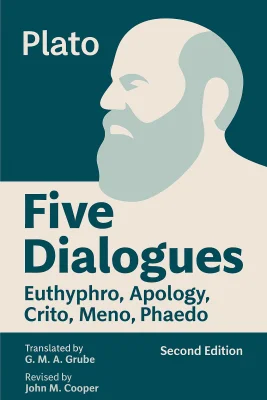
Five Dialogues
Euthyphro, Apology, Crito, Meno, Phaedo
Categories
Nonfiction, Philosophy, History, Politics, Classics, School, Greece, Ancient History, Ancient, College
Content Type
Book
Binding
Paperback
Year
2002
Publisher
Hackett Publishing Company, Inc.
Language
English
ASIN
0872206335
ISBN
0872206335
ISBN13
9780872206335
File Download
PDF | EPUB
Five Dialogues Plot Summary
Introduction
The philosophical dialogues presented here embark on an extraordinary journey through fundamental questions that have captivated human minds for millennia: What is virtue? Can it be taught? What constitutes genuine knowledge? And perhaps most profoundly, what is the nature of the soul and its relationship to truth and morality? These conversations, set against the backdrop of ancient Athens, demonstrate how rigorous questioning can illuminate the deepest mysteries of human existence while challenging our most basic assumptions about wisdom, justice, and the good life. The inquiry proceeds through a distinctive method of philosophical investigation that transforms abstract concepts into lived realities. Rather than providing definitive answers, this approach reveals the profound complexity underlying seemingly simple questions about piety, courage, and moral knowledge. The dialogues demonstrate how genuine philosophical thinking requires not just intellectual curiosity but also moral courage—the willingness to examine one's own beliefs and live according to the insights such examination reveals, even when facing the ultimate test of mortality itself.
Chapter 1: The Philosophical Method: Socratic Inquiry and the Search for Definitions
The foundation of philosophical investigation rests upon a revolutionary approach to knowledge that begins with the radical admission of ignorance. This method proceeds by systematic questioning that exposes the inadequacy of conventional definitions and commonly accepted beliefs. When examining concepts like piety or virtue, the inquiry reveals that most people operate with vague, contradictory, or circular understandings of terms they use confidently in daily life. The questioning process follows a distinctive pattern: it begins with a request for definition, examines proposed answers through careful analysis of their implications, and demonstrates their inadequacy through logical scrutiny. This is not mere intellectual exercise but a transformative practice that aims to replace false certainty with genuine wisdom. The method reveals that true knowledge differs fundamentally from mere opinion or belief, requiring rigorous examination and the ability to give a coherent account of what one claims to know. Central to this approach is the recognition that wisdom begins with understanding the limits of human knowledge. The philosophical life demands constant vigilance against the tendency to mistake familiarity with understanding, or confidence with knowledge. This intellectual humility becomes not a weakness but the starting point for genuine learning and moral development. The inquiry demonstrates that definitions matter profoundly because they shape how we understand ourselves and our obligations to others. When we examine what makes actions pious or virtuous, we discover that these are not arbitrary social conventions but reflect deeper truths about human nature and our relationship to what is ultimately good and valuable. The method ultimately reveals that philosophical investigation is inseparable from the examined life. Knowledge is not merely theoretical but must be integrated with how one lives, creating a unity between understanding and action that characterizes the philosophical approach to human existence.
Chapter 2: Virtue as Knowledge: The Ethical Foundation of Socratic Philosophy
The central thesis emerges that virtue fundamentally consists in knowledge—specifically, knowledge of good and evil, benefit and harm. This revolutionary claim challenges conventional assumptions about moral behavior by arguing that people do wrong only because they are ignorant of what is truly good for them. If individuals genuinely understood what actions would benefit them most, they would inevitably choose those actions, making virtue a matter of wisdom rather than willpower. This understanding transforms the nature of moral education and responsibility. If virtue is knowledge, then it should be teachable like any other form of expertise. Yet empirical observation reveals that virtuous parents often fail to transmit their virtue to their children, and those who claim to teach virtue—the sophists—produce inconsistent results. This apparent contradiction requires deeper investigation into the nature of knowledge itself and how it relates to human character. The analysis reveals that true knowledge differs from mere information or skill. Moral knowledge involves understanding not just what actions to perform but why they are genuinely beneficial. This knowledge must be integrated into one's character so thoroughly that virtuous action becomes natural and inevitable. The person who possesses such knowledge cannot choose evil any more than someone who truly knows mathematical truths can believe that two plus two equals five. The relationship between virtue and knowledge explains why moral development requires more than learning rules or principles. It demands the kind of deep understanding that comes through sustained inquiry and self-examination. This knowledge transforms the knower, making virtue not just an external standard to follow but an internal principle that guides all choices and actions. The practical implications suggest that moral education must focus on developing wisdom rather than simply teaching proper behavior. True virtue emerges when individuals understand the rational basis for ethical action and integrate this understanding into their fundamental approach to life.
Chapter 3: The Soul's Journey: Arguments for Immortality and Recollection
The investigation into the soul's nature begins with the fundamental question of what happens to consciousness after bodily death. Multiple lines of argument converge to support the thesis that the soul is immortal and continues to exist after physical dissolution. The first argument proceeds from the principle that opposites generate from opposites: just as waking comes from sleeping and sleeping from waking, life emerges from death and death from life, suggesting a cyclical process that requires the soul's continued existence. The theory of recollection provides compelling evidence for the soul's pre-existence and immortality. When individuals demonstrate knowledge they have never been taught—such as geometric truths—this suggests they are recovering knowledge already possessed by the soul. The famous examination of an untrained slave who discovers mathematical principles through questioning alone illustrates how learning is fundamentally a process of recollection rather than acquisition of new information. This understanding revolutionizes the nature of education and knowledge. If the soul already possesses truth and must be helped to remember it, then teaching becomes a matter of guiding individuals to discover what they already know at some deeper level. The soul's immortality ensures that knowledge gained through proper inquiry has lasting significance beyond the temporary concerns of bodily existence. The soul's affinity to eternal truths and universal Forms provides additional support for its immortal nature. Since the soul can apprehend unchanging realities like Justice, Beauty, and Goodness, it must share their eternal character. The soul's ability to transcend the physical world through rational contemplation demonstrates its fundamental kinship with the realm of permanent truth. The implications extend beyond individual survival to encompass the ultimate purpose of human existence. If the soul is immortal, then its moral condition matters profoundly, not just for this life but for its eternal destiny. This transforms the significance of philosophical inquiry from intellectual curiosity to spiritual necessity.
Chapter 4: Justice, Piety, and the Relationship Between Gods and Humans
The examination of piety reveals the profound complexity underlying religious and moral concepts. The initial definition of piety as "what the gods love" encounters immediate difficulties when we consider that gods might disagree among themselves, making the same action both pious and impious. This leads to a more fundamental question: do the gods love pious actions because they are inherently pious, or are actions pious simply because the gods happen to love them? The resolution establishes that piety must have an objective nature independent of divine preference. The gods love pious actions because they recognize their inherent righteousness, just as they love what is beautiful because it truly is beautiful. This understanding preserves both divine wisdom and the objectivity of moral truth, while avoiding the arbitrariness that would result if moral values depended solely on divine command. The relationship between justice and piety emerges as fundamental to understanding human obligations. Piety represents that part of justice concerned with proper service to the gods, while justice encompasses all our obligations to both divine and human beings. This service does not benefit the gods themselves but rather purifies and improves those who practice it, creating the conditions for genuine human flourishing. The investigation reveals that authentic piety requires more than ritual observance or conventional religious behavior. True piety involves understanding the rational basis for reverence and living according to principles that reflect the order and goodness manifest in the cosmos. This connects religious practice with philosophical inquiry, making genuine piety inseparable from the pursuit of wisdom. The broader implications suggest that moral and religious truth are discovered through reason rather than simply accepted through tradition or authority. The gods themselves embody rational principles, making human reason a reliable guide to understanding divine will and our proper relationship to the sacred dimension of existence.
Chapter 5: The Philosopher's Death: Facing Mortality with Rational Courage
The culminating test of philosophical conviction comes when principles must be maintained despite the threat of death. The philosopher's attitude toward mortality reveals the practical consequences of believing in the soul's immortality and the supremacy of virtue over all external goods. If the soul is indeed eternal and virtue is the only true good, then death cannot represent genuine harm but merely a transition to a potentially better state of existence. The philosophical life prepares individuals for death by teaching them to value truth and goodness above bodily pleasure, social approval, or material security. This preparation involves a gradual separation from the concerns that typically dominate human attention, allowing the soul to focus on its proper objects: eternal truths and moral excellence. Death becomes not an evil to be feared but the final liberation from the distractions that impede the soul's pursuit of wisdom. The courage displayed in facing death differs fundamentally from ordinary bravery, which often stems from fear of greater evils or desire for honor and recognition. Philosophical courage emerges from understanding the nature of reality and the soul's true interests. This understanding makes it impossible to value temporary existence above permanent principles, creating a form of fearlessness based on knowledge rather than emotion. The example demonstrates that philosophical principles are not merely theoretical positions but practical guidelines for living. The ultimate test of any philosophical system is whether it provides adequate resources for facing life's greatest challenges with integrity and rational consistency. The philosopher's death becomes a final argument for the truth of the philosophical life. The broader implications extend beyond individual mortality to encompass the relationship between wisdom and courage, knowledge and action. True philosophy transforms not just how we think but how we live, creating a unified approach to existence that maintains its coherence even under ultimate pressure.
Chapter 6: Forms and Reality: The Metaphysical Foundations of Knowledge
The investigation into knowledge leads to the recognition that genuine understanding requires stable objects that transcend the constantly changing world of physical experience. The Forms—eternal, unchanging essences like Justice itself, Beauty itself, and Equality itself—provide the metaphysical foundation for both knowledge and moral truth. These perfect realities serve as the standards by which we judge particular instances in the sensible world. The theory emerges from careful analysis of how we recognize instances of moral and mathematical concepts. When we identify two sticks as equal, we do so by reference to a standard of Equality that is more perfect than any physical example. This standard cannot be derived from sensory experience, since all physical instances fall short of perfect equality, yet our ability to recognize this shortcoming proves we have access to the perfect Form. The soul's relationship to the Forms explains both the possibility of knowledge and the process of learning as recollection. Because the soul existed before birth and contemplated the Forms directly, it retains traces of this knowledge that can be recovered through proper inquiry. This accounts for the mind's ability to grasp universal truths that transcend particular experiences and its dissatisfaction with purely empirical explanations. The Forms provide the ultimate explanation for causation and existence. Physical objects participate in the Forms, deriving their characteristics from this relationship rather than from purely material causes. Something is beautiful because it participates in Beauty itself, just as something is large because it participates in Largeness. This participation explains both why things have the properties they do and why these properties remain intelligible despite constant physical change. The practical implications transform the philosopher's relationship to the physical world. Understanding that true reality lies in the eternal realm of Forms motivates the turn away from sensory experience toward rational contemplation. This shift represents not an escape from reality but a deeper engagement with what is most fundamentally real and valuable.
Chapter 7: The Limits of Human Understanding and the Value of Wisdom
The philosophical journey reveals that human knowledge operates within significant constraints that must be acknowledged for genuine wisdom to emerge. The recognition of ignorance becomes not a cause for despair but the beginning of authentic learning. The distinction between what can be known with certainty and what must remain matters of reasonable hope or belief shapes the proper attitude toward the deepest questions of human existence. The method of hypothesis demonstrates how philosophical inquiry can proceed even when complete certainty is impossible. By adopting the most reasonable assumptions and examining their consequences, we can make progress toward understanding while remaining appropriately humble about the limitations of human reason. This approach allows for meaningful investigation without falling into either dogmatism or skepticism. The danger of misology—hatred of rational argument—emerges as a serious threat to human intellectual and moral development. When people become frustrated with the difficulty of philosophical questions or disappointed by inadequate arguments, they may abandon the effort to think carefully altogether. This abandonment leaves them vulnerable to irrationality and moral confusion, cutting them off from the resources needed for living well. The value of philosophical inquiry lies not only in the conclusions it reaches but in the process itself. The careful examination of beliefs, the rigorous testing of arguments, and the honest acknowledgment of difficulties all contribute to intellectual and moral development. Even when questions remain unanswered, the inquiry cultivates virtues of mind and character essential for human flourishing. The ultimate justification for the philosophical life rests on its power to transform how we understand ourselves and our place in the cosmos. While certainty may be impossible on the deepest questions, the pursuit of wisdom provides the best available guide for living with integrity and purpose. This pursuit connects individual fulfillment with service to truth and goodness, creating meaning that transcends the limitations of finite existence.
Summary
The philosophical investigation reveals that the pursuit of wisdom represents humanity's highest calling, capable of transforming our understanding of knowledge, virtue, and mortality itself. Through rigorous questioning and honest acknowledgment of ignorance, the examined life discovers that virtue is inseparable from knowledge, the soul's immortal nature gives ultimate significance to moral choices, and rational inquiry provides our best access to truth about the most fundamental questions of human existence. These insights offer profound resources for contemporary readers seeking to live with greater intentionality and integrity. The method of careful questioning, the integration of knowledge with moral commitment, and the courage to maintain principles even under pressure provide timeless guidance for navigating the complexities of modern life while remaining connected to enduring sources of meaning and value.
Best Quote
“I am better off than he is,—for he knows nothing, and thinks that he knows; I neither know nor think that I know.” ― Plato, Five Dialogues
Review Summary
Strengths: The review highlights the dialogues' ability to provoke thought and introspection, emphasizing Socrates' role in challenging beliefs. It praises the work's beauty, open-mindedness, and Plato's skillful use of imagery and dialogue form. The dialogues are noted for their concision, clarity, and the emotional impact they have on readers. Weaknesses: The review briefly mentions the exclusion of women and the aristocratic nature of the participants as a potential drawback. Overall: The reviewer expresses a deep appreciation for the philosophical and emotional depth of the dialogues, recommending them as a significant and impactful read, despite minor criticisms regarding historical context.
About Author
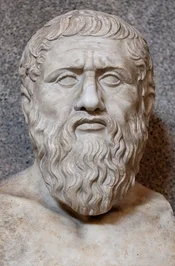
Plato
Plato synthesizes the profound philosophical inquiries of his time, crafting a legacy that endures through his exploration of knowledge, reality, and virtue. His dialogues, marked by a dynamic use of conversation and debate, probe essential themes such as justice in "The Republic," the immortality of the soul in "Phaedo," and the nature of love in "The Symposium." By integrating the teachings of his mentor Socrates with pre-Socratic thought, Plato establishes a new philosophical trajectory that challenges readers to consider the ideals of a higher, unchanging reality, which he termed the theory of forms. This approach not only influences Western philosophy but also sparks debates that resonate in fields ranging from metaphysics to political theory.\n\nPlato's method of exploring philosophical ideas through dialogues creates a multifaceted exploration of complex issues, allowing readers to engage with diverse perspectives and logical arguments. For instance, in "The Republic," he imagines an ideal state governed by philosopher-kings, thereby interrogating the relationship between power and wisdom. Meanwhile, in "Phaedrus," he delves into rhetoric and love, revealing his ability to traverse the breadth of human experience and inquiry. As a result, the author's works offer a fertile ground for scholars, students, and thinkers, prompting them to question, analyze, and ultimately seek a deeper understanding of their own realities and beliefs.\n\nThe benefits of engaging with Plato's writings extend beyond academic discourse; they invite readers to reflect on fundamental human questions and ethical considerations. His establishment of the Academy represents a seminal moment in educational history, fostering an environment where intellectual exploration and critical thinking thrive. Through this bio, one gains insight into how Plato's dialogues, such as "The Republic" and "Phaedo," not only shape Western thought but also continue to inform contemporary discussions on governance, morality, and the pursuit of truth. Consequently, the impact of his works is profound, encouraging ongoing reflection and discourse across generations.
Read moreDownload PDF & EPUB
To save this Black List summary for later, download the free PDF and EPUB. You can print it out, or read offline at your convenience.
Five Dialogues
by Plato
