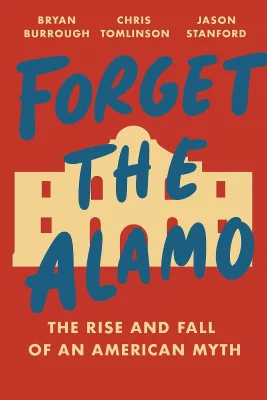
Forget the Alamo
The Rise and Fall of an American Myth
Categories
Nonfiction, History, Politics, Audiobook, Westerns, Book Club, Historical, American History, Race, War
Content Type
Book
Binding
Hardcover
Year
2021
Publisher
Penguin Press
Language
English
ISBN13
9781984880093
File Download
PDF | EPUB
Forget the Alamo Plot Summary
Introduction
On a chilly March morning in 1836, the silence of dawn was shattered by the sound of Mexican bugles as General Santa Anna's troops launched their final assault on the Alamo. Within hours, all the defenders lay dead, and what might have been remembered as a minor military defeat was instead transformed into one of America's most powerful and enduring myths. The story of the Alamo's transformation from historical event to national symbol reveals how societies craft usable narratives from complex realities, often obscuring uncomfortable truths in the process. This book explores the contested history of the Alamo, examining how its story has been continuously reshaped to serve changing political needs over nearly two centuries. We'll discover how the Texas Revolution was fundamentally connected to the preservation of slavery, despite generations of textbooks that emphasized abstract notions of liberty. We'll trace how women, minorities, and competing interest groups have fought to control the Alamo's meaning, turning a former Spanish mission into America's most contested historical site. Whether you're a history enthusiast seeking a more nuanced understanding of a familiar tale or someone interested in how historical memory shapes national identity, this exploration of the Alamo myth offers valuable insights into how Americans remember their complicated past.
Chapter 1: Bloody Beginnings: Texas Before the Alamo (1810-1835)
The story of Texas begins not with heroic Anglo settlers seeking freedom, but with blood and chaos. In the early 1800s, Texas was a remote, sparsely populated province of Spanish Mexico, home to a few thousand settlers in isolated outposts like San Antonio, Nacogdoches, and La Bahía (today's Goliad). The Spanish had struggled for centuries to maintain control of this frontier against Native American tribes, particularly the Comanche, who dominated the region with superior horsemanship and newly acquired firearms. The first serious challenge to Spanish rule came in 1810 when Father Miguel Hidalgo raised an army of peasants in Mexico intent on overthrowing colonial rule. Though his rebellion briefly took control of San Antonio, Spanish loyalists quickly recaptured the territory. The aftermath was horrific - General José Joaquín de Arredondo, accompanied by his young officer Antonio López de Santa Anna, embarked on a reign of terror, executing hundreds of Tejanos suspected of supporting the rebellion. By 1813, half of Texas's prewar population was dead or gone, and the province lay in ruins. Into this vacuum stepped a variety of opportunists. The Lafitte brothers transformed Galveston Island into a pirate base, selling contraband goods and enslaved people at steep discounts to American buyers. Meanwhile, Comanche raids intensified, stripping the province of horses and mules which they sold to American traders. The Spanish authorities in San Antonio were desperate - Governor Antonio Martínez found his soldiers without shoes, horses, or weapons, and the town under virtual siege from Native American attacks. It was in this context that Moses Austin arrived in San Antonio in 1820 with a proposal to bring American colonists to Texas. Though initially rebuffed, Austin gained support from the "Baron de Bastrop" (actually a Dutch embezzler named Philip Hendrik Nering Bögel) and local Tejano elites like Erasmo Seguín. When Moses died in 1821, his son Stephen F. Austin took up the mantle, just as Mexico won independence from Spain. Austin's timing was fortuitous, as the new Mexican government was eager to populate its northern frontier as a buffer against both Native American raids and American expansionism. What's often overlooked in traditional Texas histories is that from the beginning, American settlement was inextricably tied to slavery. The rich bottomlands of southeast Texas were perfect for cotton, and Southern planters wouldn't immigrate without their enslaved workforce. This created immediate tension with Mexico, where liberal revolutionaries had embraced equality for all races. As Austin traveled to Mexico City in 1822 to confirm his colonization grant, he discovered the new government's primary objection wasn't American settlement itself - it was slavery. This fundamental conflict would simmer beneath the surface for years, eventually becoming the primary catalyst for revolution.
Chapter 2: Slavery and Cotton: The Real Causes of Texas Revolt
When examining the Texas Revolution, one must confront an uncomfortable truth: the revolt was fundamentally about preserving slavery. For decades, the heroic narrative of freedom-loving Texians fighting Mexican tyranny has obscured this reality. But the historical evidence is clear - the single most consistent point of conflict between American colonists and Mexican authorities was slavery. From the moment Stephen F. Austin arrived in Mexico City in 1822, Mexican liberals made clear their opposition to slavery. Austin spent a year lobbying officials, writing candidly that "the principal difficulty is slavery. This they will not admit." He eventually secured a compromise allowing existing slaves but prohibiting the slave trade. When a new Mexican constitution was drafted in 1824, Austin and his Tejano allies like José Antonio Navarro fought successfully to delegate slavery decisions to the states. When the state of Coahuila y Tejas proposed abolishing slavery in 1827, Austin warned it would be "the deathblow" to Texas. The cotton economy that developed in Texas was entirely dependent on enslaved labor. By 1825, one in four people in Austin's colony was enslaved. His legal code imposed harsh punishments for slaves who left plantations without permission or attempted escape. When Mexican President Vicente Guerrero issued a decree abolishing slavery in 1829, panic erupted among colonists. "In the Name of God what Shall we do?" wrote one settler. "We are ruind for ever Should this Measure be adopted." Some began openly discussing rebellion. The turning point came when Santa Anna, initially a federalist supported by the Texians, consolidated power and moved toward centralism in 1834. This political shift threatened the colonists' autonomy and, by extension, their ability to maintain slavery despite Mexican opposition. When Santa Anna crushed a rebellion in Zacatecas in 1835, Texians feared they would be next. The arrest order for William Barret Travis after his attack on Mexican customs officials at Anahuac became the spark that ignited long-simmering tensions. As war approached, Mexican officials made clear their intention to enforce abolition. General Martín Perfecto de Cos warned that "the inevitable consequences of war will bear upon [Texians] and their property." In Matagorda, the safety committee declared that "merciless soldiery" was coming "to give liberty to our slaves, and to make slaves of ourselves." The underlying cause of the Texas Revolt was not Mexican tyranny but the colonists' determination to preserve their slave-based cotton economy against Mexico's increasingly determined abolitionism. The Texas Revolution thus represents a historical irony of profound proportions. A movement that claimed to fight for liberty was largely motivated by the desire to deny liberty to others. This uncomfortable truth was systematically obscured in subsequent decades as the Alamo narrative was crafted to emphasize heroism and sacrifice while minimizing the role of slavery in motivating the conflict.
Chapter 3: The Alamo Battle: Myth vs. Reality (1836)
The Battle of the Alamo stands as perhaps the most mythologized event in American history, but the reality differs dramatically from the legend. In February 1836, after capturing San Antonio from Mexican forces, a small garrison of Texian rebels occupied the Alamo, a former Spanish mission. Among them were the now-legendary figures Jim Bowie, William Barret Travis, and Davy Crockett - each with complicated backstories that hardly match their heroic images. Jim Bowie was no noble frontiersman but a notorious slave smuggler and land swindler who fled to Texas to escape legal troubles. William Barret Travis, just 26 years old, was a melodramatic, oversexed lawyer who abandoned his wife and child in Alabama to escape debts. And Davy Crockett, while genuinely famous as a congressman and frontier celebrity, came to Texas seeking political redemption after losing his seat in Congress. None arrived intending to die for Texas independence. When Santa Anna's army appeared outside San Antonio on February 23, 1836, the defenders were caught by surprise despite numerous warnings. Travis and Bowie had ignored intelligence reports and failed to prepare adequately. Once surrounded, they were trapped with no realistic hope of escape. Travis's famous letters pleading for reinforcements were masterpieces of propaganda, but they couldn't change the military reality - the Alamo was indefensible, and the decision to remain there was a fatal strategic error. The battle itself, on March 6, 1836, lasted just 90 minutes. Mexican soldiers initially struggled to scale the walls, but eventually overwhelmed the defenders through sheer numbers. Travis died early, shot in the forehead while firing from the north wall. Bowie, contrary to legend, was bedridden with typhoid fever and killed in his sickroom. Recent scholarship suggests that many defenders, perhaps half, didn't make heroic last stands but attempted to flee when the battle turned hopeless. They were cut down by Mexican cavalry outside the walls. Even Crockett's death has been contested. While the traditional story portrays him fighting to the end surrounded by Mexican dead, Mexican accounts indicate he surrendered and was executed afterward. This version was long suppressed because it contradicted the preferred narrative of uncompromising heroism. In reality, the defenders had no choice but to fight - they were trapped, and Santa Anna had made clear he would take no prisoners. The battle's aftermath transformed a military disaster into powerful propaganda. Sam Houston, initially skeptical of Travis's reports, recognized the story's potential to rally support. "Remember the Alamo!" became the battle cry at San Jacinto, where Texian forces defeated Santa Anna six weeks later. What began as a tactical blunder had become the emotional fuel for Texas independence - a transformation that would shape how generations of Texans understood their history.
Chapter 4: Creating the Legend: The Battle After the Battle
The Alamo's transformation from military defeat to sacred symbol didn't happen overnight. In the immediate aftermath of the battle, the physical site was neglected - Mexican troops tore down walls, and locals sold Alamo stones by the wagonload. For decades, the remaining structures sat roofless and filled with rubble, their only permanent occupants a colony of bats. This neglect mirrored the battle's initial place in Texas historical consciousness - important, but not yet central to the state's identity. The first serious historian of the Alamo was Reuben Marmaduke Potter, a former U.S. Army quartermaster who interviewed survivors and Mexican officers. His 1860 account was groundbreaking but still perpetuated many myths, including Crockett's heroic death and Bowie fighting from his sickbed. Henderson K. Yoakum's 1855 History of Texas, the first comprehensive work on Texas history, devoted just six pages to the Alamo. These early historians established the framework of what would become the "Heroic Anglo Narrative" - a story of brave white Americans fighting for liberty against Mexican tyranny. One of the most enduring Alamo myths emerged in 1873 when William Physick Zuber published a story claiming that Travis had drawn a line in the sand, asking those willing to stay and die to cross it. Zuber attributed this tale to Louis "Moses" Rose, supposedly the only defender to refuse and escape. Though historians immediately questioned the story's authenticity, it captured the public imagination. When Anna Hardwicke Pennybacker included it in her influential 1888 textbook, the "line in the sand" became enshrined in Texas mythology despite the lack of contemporary evidence. By the late 19th century, the Alamo narrative had taken shape, but the physical site remained neglected until two remarkable women intervened. Adina De Zavala, granddaughter of the first vice president of Texas, Lorenzo de Zavala, formed a preservation group in 1889. She was joined by Clara Driscoll, daughter of a wealthy rancher, who provided crucial funding. Their partnership initially saved the Long Barrack (where most of the fighting occurred) from demolition, but soon dissolved into bitter conflict over the site's future. This "Second Battle of the Alamo" revealed competing visions for Texas memory. De Zavala wanted to preserve the Long Barrack as a historical site that told the full story of the battle. Driscoll preferred creating a beautiful shrine that emphasized heroism over historical accuracy. Their fight culminated in 1908 when De Zavala barricaded herself inside the Long Barrack for three days to prevent its demolition. Though Driscoll ultimately won control, the conflict demonstrated how the Alamo had become a contested symbol whose meaning different Texans interpreted differently. By the early 20th century, the Alamo had been transformed from a neglected ruin into a sacred shrine. The physical site now reflected the mythological narrative - a place where heroic white men had sacrificed themselves for liberty. Left out of this story were the Tejanos who fought alongside the Anglos, the complex motivations of the defenders, and the role of slavery in precipitating the conflict. The Alamo legend had become more powerful than the historical reality.
Chapter 5: Women's Fight: The Second Battle of the Alamo (1900-1945)
The struggle to control the Alamo's physical space and narrative meaning entered a new phase in the early 20th century, led by women who recognized the site's symbolic power. Clara Driscoll, having prevailed in her conflict with Adina De Zavala, set about transforming the Alamo into a reverential shrine under the management of the Daughters of the Republic of Texas (DRT). Driscoll envisioned the Alamo as a sacred space that would inspire patriotic devotion rather than historical inquiry. Under her guidance, the DRT established strict rules of decorum - men were required to remove their hats, speaking above a whisper was discouraged, and the atmosphere resembled that of a church more than a historic site. This feminization of the Alamo's management represented a paradox. While the battle itself had been an exclusively male affair, its commemoration became largely women's work. The DRT members, primarily white women of high social standing, saw themselves as guardians of Texas virtue and values. They carefully curated the Alamo experience to emphasize heroism and sacrifice while minimizing more complex aspects of Texas history, particularly slavery's role in the revolution. Their version of the Alamo story aligned perfectly with the "Lost Cause" narrative of the Civil War that was simultaneously being promoted across the South. The physical transformation of the site reflected this ideological vision. Driscoll enclosed the grounds with a stone wall, creating the quiet garden behind the church that tourists still visit today. The DRT removed commercial buildings from the immediate vicinity and fought against urban development that might detract from the shrine's dignity. This physical isolation of the Alamo from its urban context paralleled the conceptual isolation of the battle from its complex historical context. Both served to elevate the site from ordinary history to sacred myth. The Texas Centennial in 1936 marked the apotheosis of the Alamo as a symbol of Texas identity. Driscoll orchestrated an elaborate commemoration that brought together Texas elites and even hosted President Franklin Roosevelt. That same year, the Alamo Cenotaph was commissioned - a sixty-foot monument with statues of Travis, Crockett, Bowie, and Bonham at its base. The monument's inscription proclaimed the defenders had died for "freedom," with no mention of slavery or the complex political realities of 1836. The centennial celebrations cemented the Heroic Anglo Narrative as the official state interpretation of the Alamo. During this period, the Alamo also became increasingly important in defining racial hierarchies in Texas. The heroic narrative justified Anglo dominance by portraying Mexicans as cruel and treacherous, while Tejano contributions to Texas independence were systematically erased from public memory. This racialized narrative served a political purpose - it helped legitimize the oppression of Mexican Americans by casting them as descendants of the villains in Texas's creation story. Juan Seguín, who had fought for Texas independence and served as mayor of San Antonio, was forced to flee to Mexico in 1842 amid growing Anglo hostility, later branded a traitor to the cause he had supported. By World War II, the Alamo had become a powerful symbol of American patriotism and sacrifice. Military recruits from San Antonio's bases were brought to the shrine to inspire their commitment to national defense. The Alamo story, stripped of its complexity and controversy, had become a usable past that could be deployed to serve contemporary political needs - a pattern that would continue and intensify in the decades to come.
Chapter 6: From Local Shrine to National Symbol (1950-1990)
The transformation of the Alamo from a regional shrine into an international symbol began in 1954 when Walt Disney, seeking to shore up "traditional" American values, decided to feature Davy Crockett in a three-part television miniseries. Though Crockett was no longer a household name, Disney saw potential in treating all of Crockett's frontier boasts as fact and making his death at the Alamo the climax of the series. When "Davy Crockett: Indian Fighter" aired in December 1954, it portrayed Crockett not as a boastful bumpkin but as a saintly stoic committed to liberty. The series became a national sensation, with boys across America donning coonskin caps and singing the theme song. Americans spent $100 million on Crockett merchandise within two months, introducing the Alamo story to millions who had previously known little about it. John Wayne's 1960 epic film "The Alamo" further cemented the battle's place in American consciousness. Wayne, an ardent anti-communist, explicitly framed the story as an allegory for America's Cold War struggle. He invested $1.5 million of his own money in the project and built an authentic Alamo set outside Brackettville, Texas. Though critically panned, the film spread the Heroic Anglo Narrative globally and planted the Alamo deeply in the minds of many, especially young men. Wayne's version emphasized the defenders' willing sacrifice for freedom, with dialogue that often sounded more appropriate to Cold War America than 1836 Texas. President Lyndon Johnson, a third-generation Texan, completed the triumvirate that transformed the Alamo into a national political symbol. Throughout his career, Johnson returned repeatedly to the Alamo narrative, especially during wartime. During the Vietnam War, his preoccupation became an obsession. "Hell, Vietnam is just like the Alamo," Johnson once said. "I thank the Lord that I've got men who want to go with me." Journalists dubbed this his "Alamo syndrome" or "Alamo mind-set." At White House dinners, Johnson would recite a poem about Travis drawing a line in the sand, always to applause. The final brushstrokes in this portrait of the Alamo as a symbol of American nationalism came with T.R. Fehrenbach's 1968 book "Lone Star," a swashbuckling, triumphalist narrative of Texas history. Despite criticism for its racist undertones and factual liberties, "Lone Star" became the best-selling book of Texas history in living memory. Fehrenbach celebrated the Anglo Texan's conquest of everyone and everything as the natural order. His book so dominated the field that it effectively killed the market for more nuanced histories for decades. This period also saw the Alamo increasingly used as a commercial symbol. Tourism to the site boomed, with millions of visitors annually by the 1980s. Gift shops sold everything from replica Bowie knives to plastic coonskin caps. The Alamo name and image appeared on countless products, from beer to insurance companies. This commercialization paradoxically both trivialized the historical event and reinforced its cultural significance. The Alamo had become not just a place or an event, but a brand that signified authentic Americanism. By 1990, the journey of the Alamo from historical event to national legend was complete. Disney had transformed Crockett into a symbol of American exceptionalism, Wayne had turned the Alamo into a political symbol against shifting political winds, and Johnson had cemented its status as a metaphor for American military resolve. The Alamo had become a potent Rorschach test in American culture, symbolizing both the willingness to fight for freedom and, increasingly, conservative resistance to cultural change.
Chapter 7: Culture Wars: The Alamo in Modern American Politics
By the early 2000s, the Alamo had become ground zero in America's culture wars. The physical site itself had devolved into a dingy curiosity surrounded by tacky tourist attractions, with many visitors spending less than twenty minutes inside. In 2003, a Chicago-born documentary filmmaker named Gary Foreman presented an unsolicited plan to rescue the Alamo by restoring its 1836 footprint, adding exhibits, tour guides in period costumes, and historically accurate battle reenactments. The Daughters of the Republic of Texas dismissed him, but Foreman persisted, gaining allies and media attention that would eventually contribute to the end of the Daughters' control. The first significant challenge to the traditional Alamo narrative came from Tejano activists who protested the site's Anglo-centric interpretation. In 1988, city councilman Walter Martínez objected to an IMAX film called "Alamo: The Price of Freedom" for its historical inaccuracies and demeaning portrayal of Tejanos. Though his protest failed to stop the film, it raised consciousness among San Antonio's Latino majority about the Alamo's problematic narrative. LULAC (League of United Latin American Citizens) began calling for the Daughters to cede control, arguing "the traditional attitude of the Alamo needs to be changed so our children may grow up with the pride that they were part of the fight for freedom." Academic historians increasingly challenged the Heroic Anglo Narrative. The publication of José Enrique de la Peña's diary, which claimed Crockett had surrendered rather than died fighting, triggered outrage among traditionalists. When Corpus Christi accountant Dan Kilgore published "How Did Davy Die?" in 1978 confirming this account, he was vilified. Jeff Long's 1990 book "Duel of Eagles" went further, portraying the Alamo defenders as "mercenaries," "pirates," and "fanatics," while questioning the heroism of Crockett, Bowie, and Travis. Long received death threats, demonstrating how emotionally invested many Americans remained in the traditional narrative. The most dramatic change came in 2011 when, after years of controversy over financial mismanagement, Texas Governor Rick Perry signed legislation removing the Daughters from control of the Alamo and placing it under the supervision of the Texas General Land Office. In 2014, British rock star Phil Collins donated his collection of Alamo artifacts to the state, with the condition that a new museum be built. This donation, combined with the city of San Antonio's own revitalization efforts, set the stage for a $450 million redevelopment project that immediately became controversial. Land Commissioner George P. Bush embraced a revisionist vision for the Alamo that would tell "the complete story" spanning 300 years, including the contributions of Tejanos, Native Americans, and acknowledging slavery's role in the Texas Revolution. However, as he faced reelection in 2018, Bush began distancing himself from revisionism to emphasize the traditional battle narrative. The culture war reached its peak when a working group proposed removing the word "heroic" from Texas school curriculum standards when describing Alamo defenders. Governor Greg Abbott tweeted, "Stop political correctness in our schools. Of course Texas schoolchildren should be taught that Alamo defenders were 'Heroic'!" The controversy exploded into national news, with the working group quickly backtracking. By 2020, the Alamo had become a flashpoint in America's polarized political landscape. Protests erupted over plans to relocate the Cenotaph monument, with armed demonstrators vowing to use "physical force" if necessary to prevent it. When protesters defaced the Cenotaph during Black Lives Matter demonstrations following George Floyd's death, Bush tweeted, "The Alamo is the Shrine of Texas Liberty. And it will be defended." The Alamo had become a proxy battlefield for larger cultural conflicts about race, history, and American identity. As Texas demographics shift toward a Latino majority, the struggle over the Alamo's meaning continues to intensify. The site stands as a powerful symbol in America's ongoing debate about how we remember our past and who gets to tell our national story. The battle over the Alamo may ultimately reveal more about contemporary America than about the events of 1836.
Summary
The Alamo stands as America's most contested historical site precisely because it embodies fundamental contradictions in our national story. What began as a Spanish mission became the stage for a complex revolution motivated simultaneously by noble ideals of liberty and the ignoble desire to preserve slavery. The transformation of the Alamo from military defeat to cultural touchstone reveals how societies craft usable narratives from messy historical events. For nearly two centuries, the story has been continuously reshaped to serve changing political needs – from rallying Texian troops at San Jacinto to justifying Manifest Destiny, from bolstering Cold War anti-communism to fueling modern culture wars. The ongoing battle over the Alamo's meaning offers valuable lessons about historical memory in a diverse democracy. First, we must recognize that no historical narrative is neutral; all history is interpreted through the lens of present concerns. Second, the most enduring historical sites are those that accommodate multiple perspectives rather than imposing a single "official" story. Finally, how we remember our past directly shapes our future – the Alamo narrative that ultimately prevails will reflect the America we are becoming. Rather than fighting to control the Alamo's story, perhaps we should embrace the site's complexity, acknowledging both the heroism and the contradictions, the sacrifice and the self-interest, that have always characterized the American experience. In doing so, we might transform the Alamo from battleground to common ground where diverse Americans can engage honestly with their shared history.
Best Quote
“pause for a moment to consider the irony of a Mexican government determined to stop the flow of illegal American immigrants. You just have to relish it. The only thing missing is a Mexican president promising to build a wall.” ― Bryan Burrough, Forget the Alamo: The Rise and Fall of an American Myth
Review Summary
Strengths: The book's re-examination of the Battle of the Alamo is a key strength, offering a provocative challenge to traditional narratives. Its thorough research and engaging writing style are particularly noteworthy, stimulating critical thinking about historical narratives. Additionally, the exploration of themes such as slavery's role in the Texas Revolution and the manipulation of the Alamo's story for cultural purposes is well-received. Weaknesses: Criticism often centers on the perceived bias, with some readers feeling alienated by the book's challenge to the traditional narrative. The tone is occasionally described as dismissive or confrontational, and a more balanced perspective is sometimes desired. Overall Sentiment: Reception is mixed, reflecting the book's controversial nature. While many appreciate its depth and challenge to conventional wisdom, others are less favorable due to its tone and perceived bias. Key Takeaway: "Forget the Alamo" invites readers to reconsider the complexities of history and the power of myth-making in shaping cultural identity, urging a more nuanced understanding of Texas history.
About Author
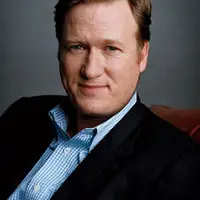
Bryan Burrough
Burrough explores the intricacies of American culture and history through investigative journalism, producing works that challenge and illuminate complex narratives. He employs a methodical approach to non-fiction writing, combining detailed research with compelling storytelling to dissect themes of business history, crime, and cultural myths. His book "Barbarians at the Gate: The Fall of RJR Nabisco," co-authored with John Helyar, exemplifies this approach by delving into a historic corporate takeover with precision and nuance. Burrough's narrative style evolved from his early journalism career, particularly during his time at The Wall Street Journal and Vanity Fair, where he honed his skills in financial and investigative reporting.\n\nReaders of Burrough's work benefit from his unflinching commitment to uncovering truth, gaining insights into the economic and social shifts that have shaped American history. His ability to weave complex historical events into engaging narratives ensures his books are both informative and accessible. "Forget the Alamo: The Rise and Fall of an American Myth," co-authored with Chris Tomlinson and Jason Stanford, is another significant book that deconstructs entrenched myths, inviting readers to question and reflect on historical narratives.\n\nBurrough's career is marked by numerous accolades, including multiple Gerald Loeb Awards and the John Hancock Award for Excellence in Business and Financial Journalism, which underscore his status as a distinguished figure in the literary and journalistic fields. His contributions have been recognized through his membership in the Texas Institute of Arts and Letters and the New Jersey Literary Hall of Fame. This short bio summarizes the achievements of an author whose works continue to provide profound insights into the complexities of American society.
Read moreDownload PDF & EPUB
To save this Black List summary for later, download the free PDF and EPUB. You can print it out, or read offline at your convenience.
Forget the Alamo
by Bryan Burrough
