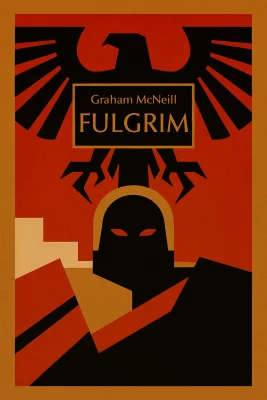
Fulgrim
Categories
Fiction, Science Fiction, Audiobook, Horror, Fantasy, Science Fiction Fantasy, Novels, War, Space Opera, 40k
Content Type
Book
Binding
Mass Market Paperback
Year
2007
Publisher
Games Workshop
Language
English
ISBN13
9781844164769
File Download
PDF | EPUB
Fulgrim Plot Summary
Introduction
# The Phoenix Fallen: Fulgrim's Path from Perfection to Damnation In the coral temples of Laeran, beneath alien skies that had never known Terra's sun, Primarch Fulgrim lifted a silver sword that would damn his soul. The blade sang with otherworldly harmonics, its purple gem pulsing like a living heart, and in that moment of triumph over xenos corruption, the Phoenix of the Emperor's Children took his first step toward becoming something far worse than any alien abomination. The weapon felt perfect in his grip, its weight balanced to supernatural precision, whispering promises of sensations beyond mortal comprehension. What followed was not conquest but seduction, not victory but the slow dissolution of everything noble the Third Legion had ever represented. The Emperor's Children, who alone among all the Legions bore their father's own aquila upon their chests, would fall further than any other, their pursuit of perfection becoming a descent into depravity that would culminate in fratricide on the black sands of Isstvan V. This is the story of how the most beautiful of the Primarchs became the most damned, and how the whispers of a daemon wearing his face would echo through eternity.
Chapter 1: The Perfect Legion's First Corruption: The Silver Blade of Laeran
The coral city of Atol 19 screamed as it died, its living towers bleeding phosphorescent ichor into the alien sea. Captain Solomon Demeter pressed forward through passages that pulsed like arteries, his bolter barking death at serpentine defenders who moved with inhuman grace. The Laer had crafted their bodies for war, their four-armed forms coiling around coral formations as they unleashed crackling energy weapons that left the air tasting of ozone and burnt flesh. Solomon had removed his helmet despite protocol, preferring to taste battle with his own senses rather than trust filtered air and machine spirits. The decision nearly killed him when a Laer warrior dropped from above, its mandibles clicking in what might have been pleasure as curved blades sparked with deadly energy. They grappled in a crater-scarred plaza while around them the Emperor's Children carved through defenders with methodical precision, their purple and gold armor gleaming like jewels in the alien sunlight. The final assault came with Fulgrim himself leading the charge, his golden eagle helm catching the light as he carved through Laer flesh with Fireblade, each stroke a masterpiece of lethal artistry. His Phoenix Guard followed in perfect formation, their halberds creating a deadly perimeter around their gene-father. The sight filled every Emperor's Child with fierce pride, driving them to greater heights of valor as they pushed deeper into the coral city's pulsing heart. In the temple's depths, where walls breathed with colors that had no names and pink mist leaked from porous surfaces, Fulgrim found his prize. The chamber floor writhed with intertwined Laer bodies, their serpentine forms locked in collective ecstasy as they basked in whatever power emanated from the temple's core. At the center stood a block of black stone, and embedded within it was a sword unlike any forged by human hands. The silver blade curved gently, inscribed with patterns that seemed to shift when viewed directly. Its pommel held a purple gem that pulsed with inner light, casting strange shadows on the breathing walls. As Fulgrim approached, the Laer parted before him like a living sea, their movements synchronized as if controlled by a single will. The moment his fingers closed around the hilt, the temple shuddered with distant laughter that none would later remember hearing clearly. Fulgrim lifted the weapon from its stone prison with ease, testing its balance with a master swordsman's appreciation. Behind him, Captain Julius Kaesoron felt something vast and hungry awaken in the chamber's depths. The silver sword sang in Fulgrim's grip, and for the first time in his long life, the Primarch smiled with genuine satisfaction at a weapon not of his own making. The blade seemed to pulse with its own heartbeat, and in the depths of his mind, Fulgrim heard the first whisper of a voice that would eventually consume his soul.
Chapter 2: Whispers of Transcendence: The Sword's Growing Influence
The voice came to him in dreams, though Fulgrim told himself it was merely his subconscious processing the stress of command. It spoke with cultured refinement about art and beauty in ways that resonated with his deepest desires, showing him visions of what the Emperor's Children could become. Not merely perfect warriors, but transcendent beings who experienced reality in ways that lesser mortals could never comprehend. Aboard the Pride of the Emperor, the corruption spread like a virus through the ship's cultural elite. Serena d'Angelus, the expedition's most gifted painter, produced a portrait of Fulgrim that seemed to writhe with malevolent life, its painted eyes following observers with predatory intelligence. The canvas reeked of something beyond human understanding, and those who stared too long reported hearing whispers in languages that predated human speech. Bequa Kynska, the renowned composer, began work on a symphony she called the Maraviglia, a piece that would capture the essence of perfect sensation. Her musicians crafted instruments of impossible complexity, devices that seemed more like weapons than tools of art. The very air aboard the Pride of the Emperor grew thick with anticipation, as if the ship itself held its breath waiting for some grand revelation. Meanwhile, Chief Apothecary Fabius worked in sterile laboratories deep within the ship's bowels, his hands moving with practiced precision over alien specimens recovered from Laeran. The Primarch himself had visited these hidden chambers, examining the Laer corpses with a connoisseur's eye. Where others saw only xenos corruption, Fulgrim recognized kindred spirits in their pursuit of physical perfection through modification and enhancement. The first breakthrough came in the form of a blue serum synthesized from Laer glandular secretions. When administered to test subjects, it increased their metabolic rate and physical strength dramatically, though early versions proved fatal as enhanced warriors' hearts simply exploded from the strain. Fabius refined the formula with obsessive dedication, driven by visions of Space Marines who could punch through tank armor with bare hands and move faster than human eyes could follow. The voice in Fulgrim's head grew stronger with each passing day, more insistent in its whispered promises. It spoke of his brother Primarchs with subtle disdain, planting seeds of doubt about their loyalty and competence. Most insidiously, it whispered about the Emperor himself, suggesting that the Master of Mankind was not the perfect being Fulgrim had always believed him to be, but rather a flawed tyrant who used his sons as mere tools in his quest for godhood.
Chapter 3: Shattered Illusions: Prophecy and the Revelation of Imperial Lies
The warning came from an unexpected source in the mysterious Perdus Anomaly, where paradise worlds lay empty beneath alien skies. Eldrad Ulthran, ancient Farseer of the Eldar, had sought out Fulgrim's fleet with prophecies that chilled the Primarch to his core. On the surface of Tarsus, the alien psyker spoke words that would shatter everything Fulgrim believed about his beloved Warmaster. "Horus lies in the shadow of death," Eldrad declared, his alien features grave with the weight of foresight. "Forces beyond your understanding fight for his soul, and he will not emerge unchanged. The Warmaster will betray you all and lead your armies against your Emperor." The accusation was monstrous, unthinkable. Horus, the most beloved of the Primarchs, the chosen son who had earned their father's trust above all others. How could such a being contemplate treachery? Fulgrim's rage was immediate and terrible, his silver sword singing as it cleared its sheath. The alien blade seemed to guide his hand toward the Farseer's throat, hungering for noble blood to sanctify its edge. But Eldrad's warning had been given out of desperate hope, not malice, and as Eldar forces materialized around them like ghosts given form, Fulgrim found himself fighting not just alien warriors but the growing certainty that the Farseer spoke truth. The battle was fierce and brief, wraithbone weapons clashing against ceramite armor while the fate of the galaxy hung in the balance. When their Avatar of Khaine strode onto the battlefield, a burning god of war made manifest in molten metal and divine wrath, Fulgrim met it with savage joy. The duel that followed was titanic, a clash between mortal perfection and divine fury that ended with the Primarch's bare hands crushing the life from the war god's molten throat. As the Avatar crumbled to ash, Fulgrim felt the silver sword pulse with satisfaction, drinking in the death of a god like wine. The victory should have brought him satisfaction, but instead Fulgrim found himself haunted by Eldrad's words. The voice in his head whispered confirmation of the Farseer's prophecy, showing him visions of the Emperor's supposed treachery. His father had abandoned his sons to pursue his own ascension to godhood, leaving them to complete his conquest while he retreated to Terra for mysterious purposes. Everything Fulgrim had believed about the Great Crusade, about his own purpose, suddenly seemed hollow and false. In the aftermath of battle, as Eldar bodies smoldered on alien soil, Fulgrim made a decision that would damn not only himself but his entire Legion. If the Emperor had truly abandoned them, then perhaps it was time to seek new masters, new purposes that would allow the pursuit of true perfection without the constraints of Imperial doctrine.
Chapter 4: The Warmaster's Embrace: Brotherhood Turned to Rebellion
The summons came through Administrator Ormond Braxton, a nervous bureaucrat who brought disturbing reports of the Warmaster's conduct from the Auretian system. Civilian casualties, excessive brutality, whispers of madness spreading through the Luna Wolves like a plague. All pointed to a Horus who was no longer the shining exemplar of Imperial virtue. Fulgrim was ordered to investigate, to ensure that the principles of the Great Crusade remained intact. But when Fulgrim arrived aboard the Vengeful Spirit, he found not a madman but a visionary. Horus welcomed him with open arms and terrible truths, his presence radiating a charisma that seemed almost supernatural in its intensity. In the privacy of the Warmaster's chambers, with the Word Bearer Erebus as witness, Horus revealed the cancer that had been eating at his soul since his near-death on Davin. "The Emperor lied to us, Fulgrim," Horus said, his voice heavy with betrayal and bitter wisdom. "He seeks to abandon us in the wilderness of the galaxy while he ascends to godhood on Terra. We were never his sons, never his beloved children. We were his tools, to be discarded when our usefulness ended." The words struck Fulgrim like physical blows, each revelation cutting deeper than any blade. Everything he had believed, everything he had strived for, was built upon deception. The Emperor, that perfect being he had sought to emulate in all things, was revealed as just another tyrant seeking power. The Great Crusade was not liberation but conquest, not enlightenment but enslavement dressed in noble rhetoric. Erebus spoke of gods older and more honest than the Emperor, beings who offered power without lies, sensation without limits. They did not demand blind obedience but rewarded those who dared to transcend mortal limitations. The silver sword at Fulgrim's side pulsed with agreement, its voice now clearly audible as it whispered confirmation of every word. In his moment of vulnerability and rage, Fulgrim made the choice that would shatter the Imperium. He pledged his loyalty to Horus's rebellion, swearing to help tear down the corrupt edifice their father had built upon lies and broken promises. The decision felt like liberation, like chains falling away from his soul. No longer bound by the Emperor's restrictive doctrines, the Emperor's Children could pursue true perfection without limit or compromise. The voice in the sword sang with triumph as Fulgrim clasped hands with his brother, sealing a pact that would drench the galaxy in blood. But first, there was a task to complete. Horus needed the loyalty of other Primarchs, and he believed that Fulgrim could convince their brother Ferrus Manus of the Iron Hands to join their cause. The two had been close friends for centuries, forging weapons for each other in the fires of Mount Narodnya. If anyone could sway the Iron Hands' Primarch to their righteous cause, it would be Fulgrim.
Chapter 5: Cultural Decay: The Legion's Transformation Through Art and Excess
The corruption of the Emperor's Children accelerated as they embraced their new philosophy of limitless sensation. What had once been a Legion renowned for discipline and martial perfection began to transform into something altogether more sinister. Warriors who had once found satisfaction in clean, efficient kills now lingered over their victims, savoring the artistry of violence like connoisseurs appreciating fine wine. Fabius's combat stimulants spread through the Legion like a plague of enhancement, each dose promising greater strength, speed, and most importantly, heightened sensation. The warriors who partook found their senses expanded beyond human limits, able to taste colors and hear the music of violence in ways that would have driven lesser beings mad. But madness, they discovered, was simply another form of transcendence. The ship's cultural districts became laboratories of hedonistic experimentation, where the boundaries between art and atrocity blurred beyond recognition. Remembrancers who had once documented the glory of the Great Crusade now created works of disturbing beauty that celebrated excess in all its forms. Sculptures writhed with impossible geometries that hurt to perceive directly, while paintings seemed to move when viewed from the corner of one's eye. Captain Solomon Demeter, one of the few voices of reason remaining in the Legion, tried to warn his brothers about the changes he witnessed. His concerns fell on deaf ears, dismissed as the narrow-minded fears of one who lacked the vision to appreciate true artistry. Even Saul Tarvitz, once Solomon's closest friend, seemed caught up in the Legion's transformation, though he retained enough of his former self to feel troubled by what he saw. The portrait of Fulgrim that dominated the Primarch's chambers had become something monstrous, a twisted reflection painted in obscene colors that reeked of corruption. Those who stared at it too long reported hearing whispers in their minds, feeling alien thoughts probe the darkest corners of their souls. The painting seemed to possess its own malevolent intelligence, watching and judging all who entered its presence. Lord Commander Vespasian, one of Fulgrim's most trusted officers, finally confronted his Primarch about the Legion's moral decay. He found himself face to face with something that was no longer entirely his gene-father, something that spoke with Fulgrim's voice but harbored thoughts that belonged to no mortal mind. When the portrait declared him worthless, beyond corruption's reach, the anathame blade slid between his vertebrae with surgical precision. As the loyal commander died, the last vestiges of Fulgrim's old self died with him.
Chapter 6: The Maraviglia: Ritual Music as Gateway to Daemonic Corruption
The performance of Bequa Kynska's Maraviglia marked the point of no return for the Emperor's Children. What had begun as a symphony celebrating perfect sensation became something far more sinister, a ritual that would tear holes in reality itself and allow daemonic entities to pour through into the material universe. The concert hall aboard the Pride of the Emperor had been transformed into something resembling an alien temple, its walls lined with instruments of impossible complexity. As the first notes rang out, reality began to warp around the performers. The music bypassed human hearing entirely, striking directly at the soul with harmonics that existed in dimensions beyond mortal comprehension. Captain Marius Vairosean felt his jaw lock in a permanent silent scream as his hearing expanded to supernatural levels, able to detect the heartbeats of men on distant decks and the whispered prayers of terrified serfs. Julius Kaesoron's face burned away in the music's fire, revealing the skull beneath, yet he felt only ecstasy at the sensation. The pain was exquisite, a symphony of nerve endings singing in perfect harmony with Kynska's composition. Around him, other officers underwent their own transformations, their bodies reshaped by forces that cared nothing for human limitations or sanity. The crescendo came when the barriers between dimensions finally shattered completely. Daemonic entities poured through the gaps in reality like living nightmares, their forms shifting and changing as they adapted to the material universe. Some possessed the surviving performers, wearing their flesh like ill-fitting clothes, while others simply reveled in the chaos they had helped create. Fulgrim watched the transformation of his Legion with a mixture of horror and fascination. The voice in his head assured him that this was evolution, transcendence beyond the crude limitations of mere mortality. His warriors were becoming something greater, something that could experience reality in ways their former selves never could have imagined. The Emperor's Children were shedding their humanity like a snake sheds its skin, emerging as perfect predators in a galaxy that had always belonged to the strong. Those who survived the Maraviglia were forever changed, their bodies and minds reshaped by forces beyond human understanding. They began incorporating the musical weapons into their arsenal, turning sound itself into an instrument of war. The very air around them became a weapon, capable of liquefying organs or driving enemies mad with a single discordant note. They had achieved a form of perfection, though it bore no resemblance to anything the Emperor had ever intended for his sons.
Chapter 7: Fratricide on Black Sands: The Ultimate Betrayal at Isstvan V
The trap was perfect in its simplicity and devastating in its execution. Seven Legions had been dispatched to crush Horus's rebellion on Isstvan V, but four of them had already pledged their secret loyalty to the Warmaster. The Iron Warriors, Word Bearers, Night Lords, and Alpha Legion would turn on their brothers at the moment of victory, transforming what should have been the rebellion's end into a massacre that would echo through history. Fulgrim found himself face to face with Ferrus Manus in single combat, the two brothers wielding weapons they had forged for each other in happier times. The Iron Hands Primarch carried the reforged Fireblade, while Fulgrim bore Forgebreaker, the mighty thunder hammer that had once been a symbol of their unbreakable friendship. Now these weapons would taste each other's blood on the black volcanic sands of Isstvan. The duel was titanic, two demigods unleashing their fury upon each other while around them the loyalist Legions were systematically destroyed by their former brothers. Ferrus fought with the cold precision of a master craftsman, every blow calculated for maximum effect, his silver hands leaving dents in ceramite armor with each strike. His rage was volcanic, a fury born of betrayal and the bitter knowledge that his closest friend had chosen damnation over duty. Fulgrim danced around his brother's attacks, the silver sword in his hand seeming to guide his movements with inhuman grace. The daemon weapon whispered instructions in his ear, showing him weaknesses in Ferrus's defense that no mortal eye could have detected. Each parry was perfect, each riposte precisely calculated to inflict maximum damage while conserving his own strength for the killing blow that would surely come. As the battle reached its climax, Fulgrim felt the sword's influence surge through him like liquid fire. The weapon demanded blood, demanded the ultimate sacrifice to seal his transformation from loyal son to willing servant of Chaos. The voice that had whispered to him for so long now screamed its hunger, promising him sensations beyond imagination if he would only complete this final act of betrayal. With a cry of anguish that echoed across the battlefield, mixing grief with terrible ecstasy, Fulgrim struck the killing blow. The silver blade severed his brother's head in a spray of gore that painted the black sand crimson, and in that moment of ultimate fratricide, the Phoenix of the Emperor's Children completed his fall from grace. The weapon sang with satisfaction as it drank deeply of Primarch blood, and Fulgrim felt something fundamental shift within his soul.
Chapter 8: Soul Imprisoned: The Daemon's Victory and Fulgrim's Eternal Torment
In the moment of victory over his beloved brother, Fulgrim felt only horror. The realization of what he had done crashed over him like a tide of ice, washing away the intoxication of battle and leaving only the stark reality of his crimes. He had murdered his closest friend, betrayed everything he had once held sacred, and led his Legion into damnation. The weight of his sins was unbearable, and he begged the voice in his head to end his suffering. The entity that had been whispering to him all along finally revealed its true nature, shedding the pretense of being merely his own inner voice seeking counsel. It was a daemon of Chaos, a creature of the Warp that had been manipulating him from the moment he first touched the silver sword on Laeran. It had fed on his pride, his ambition, his desire for perfection, twisting these noble qualities into instruments of corruption and damnation. The daemon offered him a different kind of release from his guilt and anguish. It would take away his pain, his memories of what he had been, his crushing awareness of what he had become. All he had to do was surrender control, let the daemon wear his flesh like a suit of perfectly tailored armor. In his moment of ultimate despair, broken by the magnitude of his betrayal, Fulgrim accepted the offer with the desperate gratitude of a drowning man grasping at driftwood. But the daemon lied, as daemons always lie. Instead of the promised oblivion, Fulgrim found himself trapped within his own body, a prisoner in his own flesh. He could see and hear everything the daemon did with his form, but he was powerless to stop it or even speak a word of warning to those it deceived. The creature paraded before Horus wearing Fulgrim's face, presenting the severed head of Ferrus Manus as a trophy while the real Fulgrim screamed silently within his own skull. The daemon's mastery of his form was perfect, mimicking his mannerisms and speech patterns with supernatural precision. It spoke of duty and honor while planning atrocities, smiled with his face while contemplating horrors that would have made the real Fulgrim weep. The Emperor's Children followed their false Primarch deeper into corruption, never suspecting that their true gene-father was trapped within his own body, forced to witness every degradation committed in his name. In the depths of his mental prison, Fulgrim raged against his fate with the fury of a caged god. But the daemon's hold was absolute, sustained by the very crimes it had manipulated him into committing. Each act of betrayal had strengthened its grip, each moment of corruption had tightened the chains that bound his soul. He had sought perfection and found only damnation, pursued transcendence and discovered only imprisonment in his own flesh.
Summary
The fall of Fulgrim stands as perhaps the most tragic of all the betrayals that shattered the Imperium, for it began not with malice but with the noblest of intentions. The Primarch who had embodied the highest ideals of the Great Crusade found those very virtues transformed into instruments of his downfall, his pursuit of perfection becoming a descent into depravity that culminated in fratricide and spiritual imprisonment. The daemon that now wears his face continues to lead the Emperor's Children in their corruption of the galaxy, using his reputation and authority to spread the very chaos he had once fought to destroy. But somewhere within that stolen flesh, the real Fulgrim remains, a shattered reflection of what he once was, forever witnessing the horrors committed in his name. His fate serves as a warning about the seductive nature of power and the terrible price of reaching beyond mortal limitations. In seeking to become more than human, Fulgrim lost his humanity entirely, becoming a cautionary tale that echoes through the grim darkness of the far future, where there is only war and the laughter of thirsting gods.
Best Quote
“You fuss too much over making the "right" choice Gaius. All we need do is make a good choice, see it through, and accept the consequences.” ― Graham McNeill, Fulgrim
Review Summary
Strengths: The reviewer appreciates Fulgrim's character development, particularly his personality and descent into chaos, which is portrayed convincingly. The relationship between Fulgrim and Ferrus Manus is highlighted as a strong narrative element. The detailed depiction of the battle on Isstavan is also praised for its depth and insight. Weaknesses: The reviewer criticizes the inclusion of too many human characters, finding them uninteresting. Distrust towards the character Fabius is expressed, questioning the logic of other characters trusting him. The death of Ferrus Manus is seen as emotionally impactful but frustrating, and the character Julias is negatively compared to the Imperial Fists. Overall: The reviewer finds "Fulgrim" to be an engaging and well-crafted addition to the Warhammer 40k series, despite some character-related grievances. They recommend it for its compelling portrayal of the Emperor's Children and the lead-up to the Heresy.
About Author

Graham McNeill
McNeill reframes the landscape of science-fantasy literature by infusing it with intricate world-building and vivid storytelling. Known for his work within the Warhammer and Warhammer 40,000 universes, his narratives explore the depths of grimdark themes while maintaining a speculative edge. His writing serves a dual purpose: to entertain and to immerse readers in expansive universes, where intense character development and imaginative conflict take center stage. This approach is exemplified in works such as "A Thousand Sons", which became a New York Times bestseller, and "Empire", a recipient of the David Gemmell Legend Award for best fantasy novel.\n\nExploring beyond traditional literary confines, McNeill transitioned into game narrative, joining Riot Games as a Senior Narrative Writer. His method of blending narrative techniques with gaming elements showcases his versatility and commitment to storytelling across mediums. For those interested in the synthesis of rich narratives with interactive experiences, McNeill's career trajectory offers valuable insights. His notable contributions to the Warhammer series, including stories featuring the character Uriel Ventris, highlight his ability to maintain fidelity to established lore while expanding its horizons.\n\nReaders and enthusiasts of speculative fiction and gaming narratives will find McNeill's bio a testament to the power of following one's passion, even when it diverges from initial career paths. His influence extends to those who appreciate layered storytelling and thematic depth in both literary and interactive forms. Through his award-winning books and contributions to gaming, McNeill has left an indelible mark on the genres he explores.
Read moreDownload PDF & EPUB
To save this Black List summary for later, download the free PDF and EPUB. You can print it out, or read offline at your convenience.
Fulgrim
by Graham McNeill
