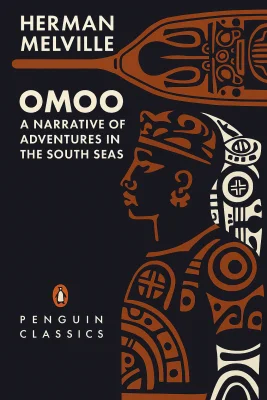
Omoo
A Narrative of Adventures in the South Seas
Categories
Fiction, Classics, Audiobook, Travel, Literature, American, 19th Century, Novels, Adventure, Nautical
Content Type
Book
Binding
Paperback
Year
2007
Publisher
Penguin Publishing Group
Language
English
ASIN
0143104926
ISBN
0143104926
ISBN13
9780143104926
File Download
PDF | EPUB
Omoo Plot Summary
Introduction
# Adrift in Paradise: A Pacific Odyssey of Rebellion and Captivity The morning sun blazed over Nukuheva's harbor as a desperate sailor climbed aboard the Julia, a rotting whaling bark that wallowed in the Pacific swells like a dying beast. Behind him lay four months among the cannibals of Typee valley; ahead waited something far worse—a floating hell commanded by incompetent officers and crewed by the dregs of maritime society. The Julia's timbers groaned with disease and discontent, her crew festering with mutinous thoughts as they sailed toward Tahiti's coral reefs. What followed would be no ordinary tale of maritime adventure, but a savage comedy of rebellion and survival played out against the backdrop of French colonial ambitions. The crew, ravaged by tropical ailments and driven to desperation by brutal conditions, would soon find themselves caught between the iron fist of naval discipline and the seductive promise of island freedom. Their defiance would lead them not to liberty, but to a bamboo prison where the real struggle for dignity would begin, and where two unlikely companions would discover that paradise itself could be the cruelest cage of all.
Chapter 1: Aboard the Doomed Julia: A Ship of Discontent
The Julia presented a sorry sight as she wallowed through the swells, her hull black with neglect and her rigging bleached white by tropical suns. This former privateer from the War of 1812 had seen better days—much better days. Her lower masts groaned with rot, her bulwarks crumbled at the touch, yet she still possessed the grace of a witch when the wind caught her patched canvas. Captain Guy lay fevered in his cabin, pale as a counting-house clerk and twice as useless. The real power belonged to John Jermin, the mate—a bullet-headed man with iron-gray curls and a face pitted by smallpox. His fierce squint might have terrified lesser men, but Jermin possessed the heart of a bullock and an unfortunate fondness for strong drink. When sober, he was the finest seaman alive; when drunk, he became a devil spoiling for a fight. The crew itself was human wreckage. Half the original thirty-two souls had deserted in Sydney, leaving behind only the sick, the desperate, and the damned. Among them lurked Doctor Long Ghost, a towering skeleton of a man with colorless skin and mischievous gray eyes. He had been exiled from the cabin after punching the captain during a political argument, and now lived in the forecastle like some fallen aristocrat, entertaining the sailors with classical quotations that seemed impossible coming from his cadaverous frame. Disease stalked the ship like a hungry predator. Men lay groaning in their bunks, victims of tropical ailments and Sydney's dissipated pleasures. The provisions consisted of rust-colored pork that reeked like old ragout and biscuits riddled with worm holes. Yet the crew's spirits remained surprisingly high, sustained by daily rations of Pisco and the Saturday night bottles that kept them in perpetual good humor despite their wretched circumstances. Two sailors died within hours of each other, their bodies sewn into hammocks and slid into shark-infested depths without ceremony, while their shipmates argued over the contents of their sea chests before the bubbles stopped rising.
Chapter 2: Mutiny on the Horizon: The Crew's Defiance
When Tahiti's peaks finally appeared on the horizon, the crew's joy turned to rage. Captain Guy ordered his belongings loaded into a boat, intending to go ashore alone while the ship continued her voyage under Jermin's command. The men had endured disease, starvation, and brutal conditions only to be denied the rest they desperately needed. Their fury erupted like a tropical storm, threatening to tear the ship apart. The confrontation reached its climax when the crew refused to work the ship, leaving her wallowing dangerously close to Tahiti's coral reefs. Only the combined efforts of the narrator and Doctor Long Ghost prevented immediate violence, but their patience had limits. The Julia lay hove-to within sight of paradise, her crew balanced on the knife's edge between discipline and rebellion. British Consul Wilson boarded the ship to investigate reports of unrest, his official presence only heightening the crew's defiance. A petty man with a pugged nose and spindly legs, Wilson was determined to make an example of the rebellious sailors. When he ordered several men to return to duty, they refused outright. The narrator watched his shipmates cross the line from grumbling sailors to open mutineers. Doctor Long Ghost, with his sardonic wit and natural leadership, became their unofficial spokesman. His educated speech and calm demeanor lent legitimacy to their cause, even as their actions spelled certain punishment. The French frigate Reine Blanche loomed in the harbor, her guns a silent reminder of colonial authority. When Wilson's patience finally snapped, the mutineers found themselves transferred to the warship's sweltering hold, swept along by events beyond their control into a moment of solidarity that would seal their fate.
Chapter 3: The Calabooza Chronicles: Imprisonment in Paradise
The Calabooza Beretanee—the native jail—proved to be captivity with a distinctly Polynesian flavor. Built of coral blocks and bamboo, it housed the mutineers in conditions that were primitive yet oddly comfortable. The only furniture consisted of stocks—two heavy timbers with holes cut for prisoners' ankles—but the setting was so beautiful that incarceration felt almost like a holiday. Captain Bob, their corpulent Tahitian keeper, treated his charges more like wayward guests than dangerous criminals. This jolly giant had sailed with whalers in his youth and peppered his speech with nautical phrases, claiming to have known Captain Cook personally though the chronology made this impossible. Each morning he would ceremoniously lock them in the stocks, then spend the day bringing gifts of fruit and fish, treating the whole affair more like an elaborate joke than serious punishment. The Calabooza became a tourist attraction for curious Tahitians who flocked to see the white prisoners. Native courts convened in their jail, with judges sitting on the sailors' sea chests while defendants sprawled on the ground. The proceedings mixed traditional customs with colonial law in ways that seemed absurd to both sides. Meanwhile, the crew had declared themselves Catholic to curry favor with French priests, much to Captain Bob's consternation and the Protestant missionaries' disgust. Doctor Long Ghost orchestrated elaborate medical performances to obtain medicines from the visiting English physician, convincing the gullible man that laudanum and medicinal brandy were essential for their recovery. The resulting scenes of mock unconsciousness and dramatic symptoms provided endless entertainment. Their sea chests, retrieved from the Julia, became objects of intense fascination for the natives, every scrap of European clothing holding magical significance as artifacts from the Land of Wonders.
Chapter 4: Island Encounters: Natives, Missionaries, and Colonial Powers
The political drama unfolding around them soon overshadowed the prisoners' personal troubles. French warships had arrived to enforce a protectorate over Tahiti, following alleged insults to Catholic missionaries. Admiral Du Petit Thouars had dictated terms to the native chiefs at gunpoint, effectively ending Tahitian independence while maintaining the fiction of voluntary submission. Queen Pomaree had fled to neighboring Imeeo, leaving her people confused and divided. Some chiefs collaborated with the French for monetary rewards, while others prepared for resistance. The crew witnessed heated discussions in native houses about the island's ability to fight back—counting muskets and warriors, debating whether to fortify the heights overlooking Papeetee harbor. The French priests, led by the jovial Irishman Father Murphy, established themselves near the prison with portable altars and gilded ceremonial objects. The natives regarded them as sorcerers whose masses were evil spells. Father Murphy, despite his clerical robes, proved a convivial companion who shared his brandy freely with any sailor willing to convert to Catholicism, even temporarily. Cultural tensions erupted in violence as French marines clashed with native warriors at various points around the island. Tales filtered back of desperate battles where islanders fought with traditional weapons against modern firearms, their courage no match for European military technology. The crew realized they were witnessing the death throes of an ancient civilization, crushed beneath the wheels of colonial expansion. The number of diseased and deformed islanders, victims of ailments unknown before European contact, told its own story of paradise corrupted.
Chapter 5: French Intrigue: Witnessing the Tahitian Occupation
Wilson's plan to break the men's spirit had backfired completely. Instead of crushing their resolve, imprisonment had strengthened their bonds and provided them with new allies among the natives. The consul found himself the laughingstock of Papeetee's foreign community, his authority undermined by his failure to control a handful of rebellious sailors. His threats of transportation to Sydney for trial had proven empty, leaving him with no legal recourse. The prisoners' status became increasingly ambiguous as days passed without word from the authorities. Captain Bob continued his benevolent guardianship, but the daily bread rations stopped coming. Wilson seemed to hope the men would simply disperse and disappear, solving his problem through neglect rather than decisive action. But the crew had grown fond of their bamboo palace and its kindly keeper. Their survival depended on systematic foraging expeditions throughout the district, trading bits of European goods for food and shelter. The natives welcomed them warmly, bound by traditional hospitality customs that made every stranger a potential friend. This generosity allowed the former prisoners to live better than many of Tahiti's own people, who suffered under the economic disruptions of colonial rule. The Julia's departure came as both relief and abandonment. The crew watched from the beach as their former prison glided past the reef, her sails filling with trade winds. Captain Guy stood quietly by the helm while Jermin bellowed orders with his usual theatrical flair. The sight stirred complex emotions—freedom from the ship's tyranny mixed with uncertainty about their future in this tropical limbo between worlds.
Chapter 6: Abandoned in Eden: When the Julia Sails Without Us
Freedom came unexpectedly when the authorities simply stopped paying attention. The transformation from prisoners to free men happened gradually, almost imperceptibly. Captain Bob relaxed his vigilance until the stocks remained permanently open, used only as furniture for the native courts that continued to meet in the Calabooza. The crew established a network of traditional Polynesian friendships that provided both material support and cultural protection throughout the island. Doctor Long Ghost emerged as the group's natural leader, his education and wit making him popular with both natives and foreign residents. His medical knowledge, however questionable, earned him respect and free meals, while his classical quotations and bawdy humor entertained audiences who understood neither Latin nor the finer points of his jokes. The narrator found himself caught between two worlds—the rough camaraderie of his shipmates and the exotic allure of island life. The crew's integration into Tahitian society revealed the complex dynamics of colonial Polynesia. Traditional chiefs struggled to maintain authority while collaborating with French administrators. Missionaries of different denominations competed for souls and political influence. Native customs persisted beneath the surface of European law, creating a hybrid culture that satisfied no one completely but somehow functioned day by day. As weeks turned to months, the former mutineers faced a choice between returning to the harsh life of the sea or accepting permanent exile in paradise. Some had already made their decision, forming relationships with native women and learning the skills needed for island survival. Others remained restless, their sailor's blood calling them back to the endless horizons of the Pacific. The narrator found himself torn between these possibilities, knowing that whatever choice he made would shape the rest of his life.
Chapter 7: Finding Freedom: New Alliances in the South Seas
The lure of adventure drew the narrator and Doctor Long Ghost to neighboring Imeeo, where they secured employment at a potato plantation run by two Yankees who had carved out their own version of paradise. Zeke and Shorty had found ways to blend American enterprise with Polynesian rhythms, their plantation flourishing because it worked with the island rather than against it. The work was simple but demanding—tending fields under the tropical sun while learning to navigate the complex social relationships that governed island life. Success required more than physical labor; it demanded sensitivity to cultural nuances that European visitors often missed entirely. Long Ghost, with his gift for languages and natural charm, proved particularly adept at winning over their Polynesian coworkers. Their wanderings across Imeeo revealed an island caught between ancient traditions and modern pressures. In remote valleys, they discovered communities that maintained old ways despite missionary influence. Traditional dances still occurred in secret, and ancient customs persisted beneath a thin veneer of Christian conversion. During daylight hours, natives attended church services with apparent devotion, but when darkness fell, drums echoed from hidden groves where older gods still held sway. Yet even this idyllic arrangement could not hold them long. The wanderer's spirit that had brought them to the Pacific would not be satisfied with agricultural routine, however pleasant. When their brief contract ended, both men felt the familiar pull of the horizon. The plantation had provided respite and insight, but their true calling lay in movement itself—the endless journey that defined the beachcomber's existence in these island waters where empires rose and fell while paradise endured.
Summary
The Calabooza Beretanee had become more than a prison—it was a crossroads where cultures collided and men discovered who they truly were beneath the harsh discipline of the sea. Some of the crew would eventually find passage on other ships, carrying their stories to distant ports. Others would remain in Tahiti, their names forgotten by history but their lives woven into the island's complex tapestry of survival and adaptation. The narrator's journey from mutineer to free man revealed the paradoxes of liberty in the colonial Pacific. True freedom could not be found in the supposed civilization of European ships or settlements, but only in the spaces between worlds—among people who retained enough humanity to show kindness to strangers, regardless of race or nationality. In that small corner of paradise, surrounded by the wreckage of empires and the dreams of desperate men, something approaching genuine human dignity had briefly flourished before being swept away by the relentless tide of progress and the eternal call of distant horizons.
Best Quote
“Now, I knew not, that there was any thing in my own appearance calculated to disarm ridicule; and, indeed, to have looked at all heroic, under the circumstances, would have been rather difficult. Still, I could not but feel exceedingly annoyed at the prospect of being screamed at in turn, by this mischievous young witch, even though she were but an islander. And, to tell a secret, her beauty had something to do with this sort of feeling; and, pinioned as I was, to a log, and clad most unbecomingly, I began to grow sentimental. Ere her glance fell upon me, I had, unconsciously, thrown myself into the most graceful attitude I could assume, leaned my head upon my hand, and summoned up as abstracted an expression as possible. Though my face was averted, I soon felt it flush,” ― Herman Melville, Omoo: A Narrative of Adventures in the South Seas
Review Summary
Strengths: The review highlights Melville's ability to weave a semi-autobiographical narrative with elements of imagination and source material from other writers. It notes the novel's engaging depiction of the ship's crew and the comical adventures that follow. Weaknesses: The review criticizes the lack of a compelling storyline in "Omoo" compared to "Typee," and suggests that the characters are less developed than those in Melville's later works like "Moby-Dick." It also implies that the novel's adventures are somewhat aimless. Overall: The review suggests that while "Omoo" was popular in Melville's time, it lacks the depth and originality of his later works. The narrative is pleasant and occasionally humorous but does not offer a strong storyline or character development. The recommendation level appears moderate, appreciating its historical context but noting its limitations.
About Author

Herman Melville
Melville probes the intricacies of human existence through tales that interlace adventure with philosophical depth, utilizing the sea as both setting and metaphor. His purpose transcends mere storytelling, probing the nature of identity and isolation within the human condition. The themes in "Moby-Dick; or, The Whale" encapsulate this pursuit, focusing on obsession and existential struggle, while his early successes, "Typee" and "Omoo," romanticize Polynesian life to explore cultural intersections. This thematic duality—juxtaposing romantic adventure with profound inquiry—underscores Melville’s narrative voice, which is rich in symbolism and psychological insight. His book "Bartleby, the Scrivener" further extends this exploration by delving into the psyche of alienated characters, offering a nuanced commentary on societal detachment.\n\nIn crafting these narratives, Melville employs complex narrative structures and a rich descriptive style, seamlessly blending realism with allegory. This method allows him to navigate the depths of the human psyche and moral ambiguity, a testament to his skills as a literary craftsman. His later work, including poetry that reflects on the Civil War, like "Battle-Pieces and Aspects of the War," continues to highlight his versatility and ability to interrogate the human spirit amid historical context. Although his later writings faced initial neglect, the posthumous recognition of "Billy Budd, Sailor" illustrates his enduring impact on American literature.\n\nFor readers, engaging with Melville’s works offers a deep, reflective journey into existential themes, making them ideal for those who relish philosophical and psychological inquiry alongside captivating narratives. His literary contributions not only enrich the American canon but also invite introspection and discussion about the complexities of human nature and society, ensuring his relevance and appeal to contemporary audiences seeking depth and meaning in their literary pursuits.
Read moreDownload PDF & EPUB
To save this Black List summary for later, download the free PDF and EPUB. You can print it out, or read offline at your convenience.
Omoo
by Herman Melville
