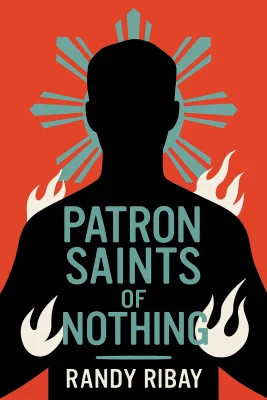
Patron Saints of Nothing
Categories
Fiction, Audiobook, Mystery, Young Adult, Family, Contemporary, Coming Of Age, Realistic Fiction, Asian Literature, Teen
Content Type
Book
Binding
Hardcover
Year
2019
Publisher
Kokila
Language
English
ASIN
0525554912
ISBN
0525554912
ISBN13
9780525554912
File Download
PDF | EPUB
Patron Saints of Nothing Plot Summary
Introduction
The rooster's crow pierces the Manila dawn as seventeen-year-old Jay Reguero steps off the plane, carrying questions about a cousin he barely knew and letters that no longer exist. Jun is dead—shot by police in the Philippines' brutal drug war—and Jay's family wants to forget he ever existed. No funeral. No mourning. No questions asked. But Jay can't let go. The boy who once comforted him over a dying puppy, who wrote heartfelt letters across oceans for years until Jay stopped responding, deserves more than silence. Armed with fragmented memories and a desperate need for truth, Jay embarks on a journey through Manila's sprawling neighborhoods and into the heart of a country torn between progress and violence, where the line between victim and criminal blurs like smoke in the tropical heat.
Chapter 1: Unanswered Letters: A Death Across Oceans
The mechanical dinosaur mauls Jay's avatar as his father's words land like bullets. "Jun is dead." Jay's fingers freeze on the PlayStation controller, the game's death sequence playing out in slow motion—camera panning skyward, mimicking a soul's departure. His seventeen-year-old cousin Jun, the boy who wrote letters on yellow legal pad paper, who challenged priests and questioned everything, gunned down by police in the Philippines for allegedly selling drugs. "When?" Jay asks, throat constricting. "Yesterday." The word hits like a slap. While Jay was worrying about college applications and playing video games, Jun was bleeding out on some Manila street. The distance between their worlds—8,000 miles of ocean and privilege—suddenly feels crushing. His father shifts uncomfortably, avoiding eye contact. "Sometimes seventeen-year-olds just... die." But not randomly. Not Jun, with his fierce intelligence and tender heart. Jay remembers the last letter he received but never answered—Jun's careful handwriting asking why Jay had stopped responding, wondering if he'd moved or simply grown tired of their correspondence. "Will there be a funeral?" Jay asks. "No. Your uncle doesn't want one. The way he died... it wasn't... it's not our concern." The casual dismissal ignites something dangerous in Jay's chest. Jun—who once saved a puppy, who questioned authority, who saw suffering others ignored—reduced to an embarrassment the family must bury twice. Jay climbs the stairs to his room and retrieves the shoebox hidden under his bed. Dozens of letters spill across his floor, Jun's voice rising from yellowed pages. Stories of family dinners turned battlefields, midnight guitar sessions, dreams of becoming an astronaut to escape a world grown too small for his expanding heart. The letters chronicle a slow drowning—Jun's growing isolation, his father's increasing authoritarianism, his desperate search for someone who understood. Someone who stopped writing back.
Chapter 2: Return to Manila: Navigating Family Silence
The humid Manila air hits Jay like a wall as he steps into the passenger pickup area, scanning for his Uncle Maning's familiar scowl. Instead, Aunt Ami emerges from a black SUV, her smile brittle as old plastic. "Your uncle is working," she explains, settling Jay into air-conditioned leather seats beside his cousins Grace and Angel. The two girls have transformed in his eight-year absence—Grace now sixteen with serious eyes, Angel twelve and already carrying shadows. Their silence speaks volumes as they navigate Manila's brutal traffic. No one mentions Jun's name, though his absence fills the vehicle like carbon monoxide—invisible, suffocating, deadly. Uncle Maning's house rises from the suburban landscape like a fortress, all security cameras and razor wire. Inside, the walls display family photos scrubbed clean of Jun's existence. His former bedroom has been sterilized into a generic guest room, every trace of its former occupant erased as if he'd never drawn breath. At dinner, Uncle Maning holds court from the head of the table, his police uniform stretched tight across his barrel chest. He interrogates Jay about American failures—his father's choice to become a nurse instead of a doctor, his sister's "worthless" art degree, Jay's own rejection from Ivy League schools. "Did your father teach you nothing about our history?" Maning's voice carries the authority of a man accustomed to immediate obedience. "You cannot know who you are if you do not know your mother tongue." Jay swallows the hypocrisy—this from a man who erased his own son from memory. The dinner table becomes a battlefield of passive aggression, each question a small violence. When Jay dares to push his plate away before finishing, Maning's hiss cuts through the room like a whip crack. "In the Philippines, we do not waste food." That night, Jay searches his luggage frantically. The letters—Jun's voice captured in careful script—have vanished. Every page, every word, stolen while he slept. The erasure is complete. Jun's room emptied, his photographs hidden, his letters disappeared. Uncle Maning's war on drugs has claimed another casualty: memory itself.
Chapter 3: The Search for Jun: Uncovering Hidden Histories
Grace's secret Instagram account reveals the first crack in the family's carefully constructed amnesia. Photos of Jun, taken months before his death—gaunt but smiling in mall food courts, arms wrapped around sisters who supposedly never spoke his name. "It was you," Jay confronts her, showing the message from Jun's "friend" who first contacted him. Grace's confession spills out in whispers—she created the fake account to test if Jay truly cared, to see if anyone across the ocean still remembered her brother. Mia, the journalism student with undercut hair and fierce curiosity, becomes Jay's guide into Manila's hidden truths. Together they follow breadcrumbs through the city's maze of contradictions—gleaming malls built over slums, politicians' faces smiling down from billboards while death squads patrol below. The trail leads to Reyna, living in a makeshift apartment high above the Tondo slums. She was eleven when traffickers bought her from her father with promises of overseas work. Instead, they forced her into prostitution until Aunt Chato's organization rescued her years later. That's where she met Jun—not as a customer, but as a kind teenager who kept respectful distance while she healed. He brought her groceries, helped her find work, never asked for anything in return. When she finally offered herself to him, he refused. "He said I needed to learn to care for myself first," Mia translates Reyna's Bisaya. "But weeks later, he confessed his love." For two years they built a life together in the vertical slums, Jun working construction while Reyna washed laundry. They were happy—until Christmas morning when Reyna woke to find him gone, leaving only cash and a note apologizing for what he couldn't explain. The pieces form a mosaic of abandonment. Jun running from his authoritarian father at fourteen. Running from his protective aunt's house at fifteen. Running from the woman who loved him at seventeen. Each escape carried him deeper into Manila's shadows, closer to the list that would seal his fate. "He was always running," Mia observes with journalist's precision. "When things got hard, he left." But Jay understands now—Jun wasn't fleeing cowardice. He was protecting everyone he loved from the storm gathering around him, a storm that would eventually claim his life.
Chapter 4: Complicated Truths: The Human Behind the Headlines
Uncle Danilo's cathedral in Legazpi rises like a monument to faith and hypocrisy, its marble floors paid for by parishioners who can barely afford rice. The priest receives Jay and Grace with weary eyes, already knowing why they've come. The truth he reveals shatters Jay's carefully reconstructed image of his cousin. Jun did appear in the church months before his death—hollow-eyed, skeletal, hands shaking with withdrawal. Not the noble journalist fighting injustice, but a broken boy trapped in addiction's grip. "He told me everything," Danilo says, each word falling like a stone. "The shabu started as hunger suppression—cheaper than food. Then came the dependency. Then the selling, to feed the need." Jay's world tilts on its axis. The cousin he idolized, whose memory he'd spent weeks defending, was exactly what Uncle Maning claimed—a drug user and dealer. The police hadn't murdered an innocent; they'd killed a criminal. But Grace grasps something Jay cannot yet see. "It doesn't matter what he did," she whispers through tears. "It doesn't make his life worthless." Danilo continues his grim testimony. Jun had found his name on a death list and begged his uncle to save him, but refused offers of sanctuary. Three days later, a vigilante's bullet ended his story in a Manila alley, another casualty in Duterte's war that has claimed thousands. "The government determines what's legal," Danilo explains with bureaucratic detachment. "If they say he needed to die to make society safer, who are we to argue?" Jay stares at the crucifix hanging above the altar, searching for meaning in its carved suffering. How do you mourn someone whose life contradicted everything you believed about them? How do you grieve a victim who was also a perpetrator? The questions follow him like ghosts as they drive back through rice paddies toward his grandfather's village, where the family waits with their own complicated truths. Jun's addiction doesn't erase his kindness, just as his crimes don't justify his execution. People contain multitudes—light and shadow, victim and villain, saint and sinner. In the gathering dusk, Jay begins to understand that truth isn't a destination but a journey, messy and painful and necessary. Jun died not because he was innocent or guilty, but because he was human in a system that demanded saints or monsters, nothing in between.
Chapter 5: Honoring Memory: A Memorial Without Ceremony
The confrontation erupts in his grandfather's backyard under stars that witnessed centuries of family secrets. Jay stands before Uncle Maning, no longer the intimidated boy who arrived two weeks ago. "What really happened to Jun?" he demands. Maning's hand finds Jay's throat, lifting him off his feet in rage. "You Americans and your stories. Always looking for heroes." But Grandmother's iron grip on her son's ear ends the violence quickly, her aged fingers still capable of disciplining grown men. Gasping for air, Jay realizes he's found his courage too late—or maybe just in time. The family memorial happens without the patriarch's blessing but not without his presence. They gather as the sun dies, lighting candles from Jun's flame while reading prayers for the dead. Each flame represents memory multiplied—Jun's brief light spreading through the lives he touched. Aunt Amy kneels before her son's photograph, speaking words of love and regret that should have been said years earlier. Uncle Maning emerges from shadows to support his grieving wife, adding his own candle to the growing constellation. Jay reads his final letter to Jun, the words carrying across the warm night air: "You were my cousin, my brother, my best friend. Wherever you are, know that I miss you, and I love you." The memorial can't resurrect the dead or undo years of family silence, but it creates space for grief in a house built on forgetting. For the first time since Jun's death, his name rises freely into the darkness without shame or qualification. When they finally return inside, Jay looks up at the star-crowded sky and sees not emptiness but infinite possibility. Jun is gone, but his light continues burning in those who remember—not the sanitized saint or condemned criminal, but the complicated human being who loved imperfectly and died too young. The memorial doesn't provide closure, but it offers something better: acknowledgment that Jun existed, mattered, and deserved to be mourned despite his flaws. In a family built on silence, speaking his name becomes an act of revolution. Grace whispers her intention to continue Jun's Instagram account, documenting the forgotten victims of Duterte's war. It's dangerous work that could land her on the same list that killed her brother, but she accepts the risk as legacy and responsibility. "He lived," she says simply. "That has to count for something."
Chapter 6: Bridges Between Worlds: Finding Identity in Fragmented Belonging
The plane rises above Manila's glittering sprawl, carrying Jay back to Michigan with questions heavier than answers. His father waits at Detroit's arrival gate, looking smaller somehow, diminished by distance and time. During the drive home through familiar suburbs, Jay makes a decision that surprises them both. He's deferring college for a gap year, returning to the Philippines to work with Aunt Chato's organization helping trafficked girls like Reyna. "I moved us here to give you a better life," his father protests. "Not so you could go back." "I know," Jay replies. "But I need to understand where I come from before I can decide where I'm going." The conversation that follows breaks decades of silence between them. Jay speaks of Jun's letters, his death, the family's conspiracy of forgetting. His father listens without judgment, asking real questions for perhaps the first time. "You sound like you've aged years," his father observes. "Feels like it." They talk through the morning over coffee on the front porch, two men finally seeing each other clearly. The father who carried guilt across oceans for leaving his homeland. The son who discovered his roots in a cousin's grave. Jay's phone buzzes with messages from Mia, his collaborator on a story that might reach audiences beyond the Philippines. They'll write Jun's truth together—not the sanitized version or the condemned one, but the human story of a boy who loved and failed and died in a war that claims the poor while protecting the powerful. The memoir won't save lives or change policies, but it will add one name to the growing list of those who refuse to be forgotten. In a world that reduces people to categories—innocent or guilty, worthy or worthless—remembering someone's full humanity becomes an act of resistance. Grace continues updating the Instagram account from her father's house, each post a small rebellion against forgetting. Mia pursues her journalism studies, armed with new understanding of truth's complexity. Reyna raises children in the slums while dreaming of better worlds. And Jay? He packs his bags for another journey across oceans, this time with purpose instead of questions. He cannot save the Philippines or resurrect the dead, but he can honor one boy's memory by refusing to let it die.
Summary
Jun's story ends not with closure but with continuation—his brief light fracturing into countless smaller flames carried by those who knew him. Jay returns to the Philippines not as savior but as witness, understanding finally that truth serves justice better than heroes. The drug war rages on, claiming new victims daily while politicians smile from billboards. But in small acts of remembrance—a photograph shared, a story told, a name spoken without shame—the dead push back against forgetting. Jun's letters may be lost, but his voice echoes in those who refuse to be silenced by fear or shame. Some battles are won not through victory but through persistence, not through perfection but through the stubborn insistence that every life contains multitudes worth remembering. In a world that demands saints or sinners, choosing to see someone's full humanity becomes the most radical act of all.
Best Quote
“I will try not to judge because I have no idea what you were struggling with in your heart, what complicated your soul. None of us are just one thing, I guess.” ― Randy Ribay, Patron Saints of Nothing
Review Summary
Strengths: The review highlights the book's rich portrayal of Filipino culture and its effective handling of complex themes such as identity, being biracial, and the socio-political climate in the Philippines, particularly President Duterte’s war on drugs. The writing style is compared favorably to Angie Thomas’s, noted for addressing significant issues subtly. The inclusion of LGBT representation is also appreciated. Overall: The reviewer expresses strong enthusiasm for the book, appreciating its cultural representation and thematic depth. It is highly recommended, especially for those interested in the biracial Filipino American experience and socio-political issues.
About Author

Randy Ribay
Ribay investigates the multifaceted experiences of Filipino American identity, using his young adult fiction to navigate themes of cultural heritage and belonging. His writing serves as both a mirror and a window for young readers, particularly those navigating the complexities of a "hyphenated" identity. This thematic exploration is evident in works like "Patron Saints of Nothing," where a Filipino American teenager confronts familial and cultural dissonance. Beyond individual stories, Ribay's commitment to diversity in literature is evident as he creates narratives that delve into male friendship dynamics and the influence of patriarchal ideology, inviting readers to question and re-evaluate societal norms.\n\nIn crafting narratives that resonate with a broad audience, Ribay employs a method that interweaves personal experience with universal themes of identity and friendship. This approach not only enriches the reader's understanding of the protagonist's journey but also fosters empathy and reflection. His bio highlights how his educational background, with a BA in English Literature and an Ed.M. in Language and Literacy, informs his narrative style, making it accessible and profound. As a Filipino American author, Ribay's contributions extend to his upcoming works, including "Everything We Never Had" and "The Chronicles of the Avatar: The Reckoning of Roku," which continue to broaden the scope of young adult literature.\n\nRecognized for his impactful storytelling, Ribay has garnered numerous awards and nominations, including a Freeman Book Award for "Patron Saints of Nothing." His books have been finalists for prestigious awards like the National Book Award and the CILIP Carnegie Medal. Through these accomplishments, Ribay solidifies his position as a significant voice in contemporary young adult fiction, using his platform to elevate stories that celebrate cultural diversity and challenge conventional narratives.
Read moreDownload PDF & EPUB
To save this Black List summary for later, download the free PDF and EPUB. You can print it out, or read offline at your convenience.
Patron Saints of Nothing
by Randy Ribay
