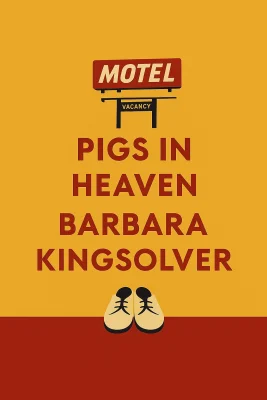
Pigs in Heaven
Categories
Fiction, Audiobook, Literature, Adult, Book Club, Contemporary, Novels, Adult Fiction, Literary Fiction, Native American
Content Type
Book
Binding
Paperback
Year
1993
Publisher
Faber and Faber
Language
English
ASIN
0571171788
ISBN
0571171788
ISBN13
9780571171781
File Download
PDF | EPUB
Pigs in Heaven Plot Summary
Introduction
# Between Two Worlds: The Flight of Hearts and Heritage The morning Alice Greer decided to leave her husband, she stood in her kitchen at four-fifteen AM, surrounded by the detritus of a marriage that had never quite warmed her bones. Harland's antique headlights stared from the china cabinet like accusatory eyes, and the silence pressed against her eardrums with the weight of years. She thought about calling her daughter Taylor in Tucson, but what could she say? That the women in their family were cursed to end up alone, despite their best efforts at love? Meanwhile, in the desert outside Tucson, Taylor was living what seemed like a perfect life with six-year-old Turtle, the Cherokee girl she'd adopted three years earlier, and Jax, her musician boyfriend who adored them both. But perfection, Taylor would soon learn, is as fragile as the shell of a robin's egg. When a Cherokee lawyer named Annawake Fourkiller knocked on her door with questions about Turtle's adoption, Taylor's world cracked open like the Hoover Dam spillway where Turtle had once saved a man's life. Some rescues, it turned out, only delayed the reckoning.
Chapter 1: A Child's Witness: The Hoover Dam Incident
The angels guarding the Hoover Dam stood with their granite arms raised toward heaven, muscles carved deep enough to cast shadows in the desert sun. Taylor pointed them out to Turtle as they approached the monument, but the six-year-old was more interested in taking photographs with her stubborn concentration, cutting off legs and capturing empty sky with the dedication of an artist whose vision no one else could see. The dam stretched before them like a concrete wing, hundreds of feet above the Colorado River. Tourists pressed against the safety walls, cameras clicking, while Turtle methodically documented their vacation in her own mysterious way. The heat pressed down like a weight, and Taylor twisted her dark hair off her neck, watching her daughter's serious face behind the camera viewfinder. That's when Turtle saw him fall. A man with long dark hair and a green bandana, picking up a soda can near the spillway, suddenly tumbling sideways into the massive concrete throat that could swallow a person whole. Turtle lowered her camera and watched him disappear into the darkness, her small face showing no panic, only the careful attention she gave to everything that mattered. For two days, no one believed her. Park rangers looked at this skinny Cherokee child and saw unreliable testimony. "We don't actually have a witness," they told Taylor with patronizing smiles. But Taylor had learned to trust Turtle's quiet observations, had seen how the child noticed things others missed. When Turtle said she saw Lucky Buster fall, Taylor knew it was true, even when the authorities dismissed them both as attention-seeking tourists with wild stories. The rescue, when it finally came, vindicated Turtle's sharp eyes. Lucky Buster emerged from the spillway after thirty-six hours, blinking in the television lights like a man returning from the dead. The media called Turtle a hero, but she only wanted to know how Lucky would get out of the hole. Some questions, Taylor realized, didn't have easy answers. The Oprah Winfrey show came calling, wanting to tell their story to the nation, and Taylor agreed, thinking it would be harmless. She had no way of knowing that somewhere in Oklahoma, a Cherokee lawyer was watching.
Chapter 2: Contested Belonging: The Cherokee Nation's Claim
Annawake Fourkiller had the kind of beauty that made people look twice—high cheekbones and skin the color of pottery, with black hair cropped short as a man's. She worked for the Cherokee Nation's legal department, and she'd been watching the Oprah Winfrey show the day Turtle appeared as one of the "Children Who Have Saved Lives." Something about the adoption story didn't add up, and Annawake had spent her career learning to spot the gaps where Cherokee children disappeared into white families. She found Taylor's house in the desert outside Tucson, a small stone cottage where apricot trees dropped their fruit for the birds and a woman was up in the branches, tying a boom box to the limbs. Taylor climbed down warily when Annawake introduced herself, her hands still sticky with tree sap, her eyes already calculating escape routes before she knew why she needed them. "The adoption might not be valid," Annawake said simply, sitting at Taylor's kitchen table with coffee growing cold between them. "There's a law called the Indian Child Welfare Act. It gives tribes the final say over custody of our children." She spoke carefully, but Taylor heard the underlying steel. This woman had come to take Turtle away. The conversation spiraled into accusations and defenses. Taylor's voice rose as she described finding Turtle abandoned, abused, barely alive. "Nobody wanted her," she said, her hands shaking. "And now that she's cute and famous, now you want her back." But Annawake had her own stories—of Cherokee children systematically removed from their families, of her own brother Gabriel, adopted into a Texas family that taught him to hide his heritage until he lost himself completely. When Annawake left, she placed her card on the table like a small white flag of war. Taylor stared at the Cherokee Nation seal, feeling the ground shift beneath her feet. That night, she packed everything that mattered into the Dodge Corona, including two hundred green apricots that might ripen on the road. By dawn, she and Turtle were driving north toward an uncertain horizon, leaving Jax to wake up alone in their empty house.
Chapter 3: Flight and Found Family: The Road to Nowhere
The white Dodge Corona became their world, filled with the sound of rolling apricots and Turtle's quiet breathing in the backseat. Taylor drove with no destination, only the desperate need to keep moving, to stay ahead of whatever legal machinery might be grinding into motion behind them. They stopped at the Hoover Dam again, and this time Turtle wanted to throw things into the spillway—green apricots that ponked and ricocheted down into the darkness like small, hard tears. Las Vegas rose from the desert like a fever dream of neon and false promises. Taylor, running low on cash and high on desperation, fed quarters into slot machines while Turtle watched with solemn eyes. The coins disappeared as quickly as hope, leaving them with eleven dollars and a growing sense that luck was a luxury they couldn't afford. The city felt poisonous, full of people so focused on their own survival they'd run you down in the crosswalk without looking back. Their salvation came in an unlikely form: Barbie, a waitress at the Delta Queen Casino who'd legally changed her name and spent her life pursuing the impossible dream of becoming a living doll. She'd been fired for talking too much to Taylor and Turtle about her Barbie collection, and now she sat in a pancake house with her makeup running, clutching a black purse that clinked with stolen silver dollars from the casino's slot machines. Alice arrived by airplane, her gray hair wind-blown and her eyes fierce with purpose. She'd left Harland and his headlight collection behind in Kentucky, choosing her daughter and granddaughter over the safety of a loveless marriage. The three generations of women sat in a booth while Alice read tabloid stories about Francis the runaway pig and men marooned on fishing boats, understanding that they too were fugitives now, bound together by love and the terrible mathematics of survival. With Barbie as their unlikely fourth member, they drove west toward California in the overloaded Dodge, four women fleeing different kinds of emptiness. The desert stretched endlessly around them, and Taylor began to understand that running away was easy—it was knowing where to run to that broke your heart. But Seattle called to them like a gray promise, a place where rain might wash away their troubles and no one would think to look for a Cherokee child among the coffee shops and grunge music.
Chapter 4: Divided Paths: Alice's Return to Oklahoma
In a Carson City motel room, Alice discovered Barbie's secret: hundreds of silver dollars hidden in her black purse, stolen from the Delta Queen's slot machines. The revelation changed everything. Barbie wasn't just a deluded dreamer—she was a thief with her own reasons for running. But instead of judgment, Alice felt a strange kinship with this young woman who'd taken what she needed to survive. The phone call from Jax shattered their fragile equilibrium. He read Annawake Fourkiller's letter aloud, his voice empty of its usual humor: "Soon she's going to hear from someone that she isn't white. On the night of the junior prom, Turtle will need to understand why no white boy's parents are happy to take her picture on their son's arm." The words hit Taylor like physical blows, but Alice heard something else—the pain of a woman who'd lost her own brother to the same system that had failed Turtle. Alice made her decision with the clarity that comes from a lifetime of hard choices. She would return to Oklahoma, to her cousin Sugar in Heaven, and try to build a bridge between the two sides of this war. Taylor protested, but Alice was firm. "Somebody ought to go talk to them," she said, her voice gentle but immovable. "I understand why you ran, but I think there's another way." The bus station in Reno was a place of temporary goodbyes and permanent departures. Alice hugged Taylor and Turtle with the fierce tenderness of someone who might not see them again, then climbed aboard the Greyhound with nothing but a small suitcase and the phone number of a cousin she hadn't seen in forty years. Through the tinted window, she watched her daughter and granddaughter grow smaller, two figures standing alone in a parking lot with all their possessions loaded into a white car that looked suddenly fragile against the vastness of the western sky. As the bus pulled away, Alice pressed her face to the glass and whispered a prayer to whatever gods might be listening. She was sixty-one years old, heading into Cherokee country with nothing but hope and the memory of a girl named Sugar who'd once posed with a Coca-Cola bottle under a sign that read "Welcome to Heaven." Sometimes, Alice thought, you had to believe in miracles just to keep breathing.
Chapter 5: Unearthed Roots: Cash Stillwater's Homecoming
Cash Stillwater drove his pickup truck through the Oklahoma hills like a man returning from the dead. The cornfields lay newly harvested, their orange dirt exposed like flesh beneath torn skin, and the wildflowers along the roadside blazed with colors he'd forgotten existed during his exile in Wyoming. He'd left three years ago after his wife's death, chasing dreams of horses and mountains, but the West had only taught him how to be lonely in a different landscape. The Cherokee Nation welcomed him back with the quiet acceptance of family. His sister Letty organized a hog fry in his honor, and relatives he'd almost forgotten emerged from the woods around Heaven, Oklahoma, carrying covered dishes and stories that connected him to the living web of kinship he'd abandoned. The men stood around the iron washpot, supervising the crackling oil with the gravity of priests, while children with berry-stained faces ran between their legs like small, dark spirits. But Cash's homecoming carried shadows. His daughter Alma had driven her car into the river while he was gone, and his granddaughter had vanished into the maze of social services and foster care. The loss ate at him like acid, making him understand why some Cherokee families fought so fiercely to keep their children close. Every family gathering reminded him of the empty spaces where his blood should have been standing. At the hog fry, he met Alice Greer, Sugar Hornbuckle's cousin from Mississippi, a woman with steel-gray hair and eyes that had seen their share of trouble. She'd come to Oklahoma on a mission she couldn't quite explain, something about her own granddaughter and the Cherokee Nation's claim on children who'd been raised white. Cash listened to her story and recognized the familiar ache of family torn apart by good intentions and bad laws. The evening ended with gospel singing in Cherokee, the old words rising into the darkness like smoke from the cooking fire. Cash felt the language settle into his bones, reminding him who he was beneath the accumulated grief and wandering. He'd come home to die among his people, but Alice Greer's story suggested that sometimes coming home was just the beginning of the real journey. When she showed him a photograph of Turtle, his heart stopped. The child's face carried the unmistakable stamp of his lost daughter Alma.
Chapter 6: Temporary Refuge: Seattle's Rainy Shelter
Seattle embraced them with gray skies and the constant whisper of rain on glass. Taylor found work driving a Handi-Van for disabled passengers, navigating the city's hills and floating bridges while Barbie watched Turtle in their cramped apartment. The job paid eight dollars an hour and came with stories—like the blind woman who was forgetting colors one by one, holding onto blue like a lifeline to the visible world. Their apartment was a brown box in a row of identical boxes, with thin walls that carried their neighbors' arguments in what sounded like Chinese. But it was shelter, and Taylor had learned not to ask for more than survival. She hid their remaining money in a plastic photo cube on her nightstand, surrounded by pictures of the life they'd left behind—Jax in his paper bag mask, Alice shelling lima beans, Turtle serious and beautiful in the desert light. Barbie revealed more of her criminal past with casual indifference. She'd been wanted for counterfeiting in Bakersfield, using color Xerox machines to print fake twenties with the same attention to detail she brought to her Barbie costumes. "It's not like I was hurting anybody," she said, working on her tan in their concrete-walled patio. "Rich people lose more than that in their couch cushions." Her pragmatic approach to crime both horrified and impressed Taylor, who was learning that survival sometimes required flexible ethics. Turtle adapted with the resilience of children who've learned not to expect permanence. She helped Barbie glue gold stars onto a denim skirt, part of an "All American" ensemble that would never be washed, only worn until it fell apart. Her green overalls from the Oprah show were too small now, and her toes curled in Barbie's yellow flip-flops, but she complained about nothing. At night, she still talked to her angels in the private language she'd never lost, her flashlight Mary clutched against her chest like a talisman against the dark. The rain drummed against their windows with the persistence of time itself, washing the city clean each morning and leaving it gray and gleaming. But even in Seattle's embrace, Taylor knew they couldn't hide forever. The phone calls from Alice in Oklahoma carried news that would change everything—Cash Stillwater had recognized Turtle's photograph, and the Cherokee Nation was preparing to file formal custody papers.
Chapter 7: Reconnection: The Cherokee Way of Knowing
In Heaven, Oklahoma, Alice sat on Sugar Hornbuckle's porch and learned to see the world through Cherokee eyes. The town was poor in ways that would have depressed her back in Kentucky, but rich in connections that ran deeper than money. Everyone was related to everyone else through marriage, tragedy, or both, and the stories that linked them together formed a safety net stronger than any government program. Sugar took her to meet Ledger Fourkiller, Annawake's uncle, who lived on a shantyboat on Tenkiller Lake and still hunted squirrels with a blowgun. He was a medicine man and a chief, with eyes that seemed to see through time itself. When Alice told him about Turtle, he nodded slowly and said, "That child belongs to all of us. The question is how to bring her home without breaking her heart." The solution came through patience and the Cherokee way of doing things—slowly, with respect for all the relationships involved. Annawake arrived from Tahlequah with legal papers and a heart full of hope. She'd been corresponding with Taylor through Alice, learning about Turtle's life in Seattle, her love of photography and her quiet strength. The letters had softened the edges of their conflict, revealing the love that both women felt for the same child. The meeting took place at Sugar's kitchen table, with Alice serving as translator between two worlds that spoke different languages of belonging. Annawake explained the Cherokee Nation's position—not to steal Turtle away, but to ensure she knew where she came from and who her people were. Taylor, speaking through Alice's letters, had begun to understand that identity wasn't something you could protect by hiding it, but something that grew stronger when it was shared. They crafted an agreement that honored both Turtle's need for stability and her right to her heritage. Taylor and Turtle would return to Tucson, but they would also spend summers in Oklahoma, learning Cherokee language and customs. Turtle would grow up knowing she belonged to two worlds, and that both had shaped her into the strong, observant child who could see what others missed. Cash Stillwater would be her grandfather in law and in love, and Alice would become his wife, binding their families together in ways that transcended legal documents.
Summary
The story of Turtle's belonging resolved not with victory or defeat, but with the kind of wisdom that comes from understanding that some questions have more than one right answer. Taylor and Turtle returned to Tucson, but they carried Oklahoma with them now—in the Cherokee words Turtle was learning, in the stories Alice brought back from Heaven, in the knowledge that identity could stretch across state lines and still remain whole. Cash Stillwater had found his granddaughter and a new wife, while Alice discovered that love could bloom even in the autumn of life. Annawake Fourkiller had found what she was looking for, though not in the way she'd expected. Turtle would know her heritage, would understand the long history of her people and the struggles they'd faced to keep their children close. But she would also know the love of the woman who'd saved her from abandonment and abuse, who'd driven through the night to keep her safe. Some families, they discovered, were made by choice as much as by blood, and the strongest bonds were those that honored both. In the end, they all learned that belonging wasn't a place you could run to or from—it was something you carried inside you, as constant and necessary as the sky that covered two worlds with the same endless blue.
Best Quote
“But kids don't stay with you if you do it right. It's the one job where, the better you are, the more surely you won't be needed in the long run.” ― Barbara Kingsolver, Pigs in Heaven
Review Summary
Strengths: The review highlights Barbara Kingsolver's ability to seamlessly integrate vivid descriptions of landscapes and cultures into her prose, creating an immersive experience. The reviewer appreciates the engaging storytelling in "Pigs in Heaven," noting it as a page-turner that did not require editing, unlike "The Poisonwood Bible." The characters and writing style are praised, with a recommendation to read "The Bean Trees" first for context. Weaknesses: The review criticizes "Pigs in Heaven" for its perceived lack of character depth, describing Taylor and Turtle as two-dimensional. The plot is seen as overly focused on delivering a specific message, detracting from character development. Overall: The reviewer expresses a strong appreciation for "Pigs in Heaven," recommending it highly despite some narrative predictability. However, they express disappointment in the character portrayal and thematic execution compared to "The Bean Trees."
About Author

Barbara Kingsolver
Kingsolver interrogates the complex interplay between humanity and the natural world, weaving her narratives with themes of social justice and environmental responsibility. Her work, including celebrated titles like "The Poisonwood Bible," explores the human condition through the lens of family and community interactions, often set against the backdrop of cultural and ecological diversity. By creating stories that focus on these intricate relationships, Kingsolver challenges readers to reconsider their place within both local and global contexts.\n\nIn her literary journey, Kingsolver has seamlessly blended fiction with nonfiction to emphasize the importance of ecological sustainability and local engagement. "Animal, Vegetable, Miracle" exemplifies her commitment to this cause, documenting her family's year-long endeavor to consume only locally grown food. Her narratives are grounded in a deep understanding of biology and ecology, subjects in which she holds academic degrees. This scientific perspective enriches her storytelling, offering readers an insightful exploration of the world’s ecosystems and humanity’s role within them.\n\nKingsolver’s recognition extends beyond her compelling narratives; she has been honored with prestigious awards such as the Pulitzer Prize for "Demon Copperhead" and has twice received the Women’s Prize for Fiction. Her influence is not only literary but also social, as evidenced by her establishment of the Bellwether Prize to support literature that fosters social change. Readers who seek books that address pressing global issues and explore human experiences through a compassionate and critical lens will find her works both enlightening and transformative.
Read moreDownload PDF & EPUB
To save this Black List summary for later, download the free PDF and EPUB. You can print it out, or read offline at your convenience.
Pigs in Heaven
by Barbara Kingsolver
