
Prague Spring
Categories
Fiction, Historical Fiction, Thriller, Literature, Book Club, Historical, Contemporary, Novels, 21st Century, Czech Literature
Content Type
Book
Binding
Paperback
Year
2018
Publisher
Other Press
Language
English
ISBN13
9781590519660
File Download
PDF | EPUB
Prague Spring Plot Summary
Introduction
# Prague Spring: Where Coins Fall and Hearts Cross Borders A Belgian coin spins through morning air, catching sunlight before falling to wet grass with a metallic ring. James Borthwick watches Eleanor Pike retrieve it, her wild blonde hair whipping in the wind. The eagle faces up—Prague it is. Two Oxford students with heavy rucksacks and lighter hearts, following roads that lead anywhere but home. They are Fando and Lis from the absurdist play they performed together, bound by invisible chains of dependence and desire. In Prague, another kind of border crossing unfolds. Sam Wareham, First Secretary at the British Embassy, stands at his apartment window watching ancient towers emerge from morning mist. Stephanie has returned to England, leaving only the scent of Youth Dew and uncertainty. At a political meeting in a deconsecrated church, he encounters Lenka Konečková—tall, blonde, with winter-sky eyes and the reckless courage of her generation. The year is 1968, and Prague pulses with dangerous energy as Alexander Dubček promises socialism with a human face. But Soviet tanks mass on the borders, and everyone—diplomat and student, lover and beloved—will soon discover that some dreams are too fragile for this world.
Chapter 1: The Coin's Decision: Two Paths Converge on Prague
The Black Forest swallows them in green shadows and pine scent. James adjusts his rucksack straps while Eleanor studies their map with the intensity of a general planning invasion. They've been hitchhiking for days, two English students following whim and chance across Europe. When the Volkswagen Beetle finally stops, its occupants prove as intriguing as the landscape. Birgit Eckstein unfolds from the passenger seat—gray hair scraped into a severe bun, eyes sharp as winter steel. Her nephew Horst towers behind her, devastatingly German in that way that makes James feel shabby. She's a cellist, she explains, and when she discovers they're from Oxford, her face lights up. She knows Professor Hubert from the Bach Festival. The world contracts to the size of a small, interconnected web. Their destination is a fairy-tale house deep in the forest, all wooden shingles and carved eaves. Inside, walls display photographs of musical legends—Casals, Tortelier, Toscanini. That evening, Birgit plays Bach for them in her music room, her gnarled fingers drawing notes from the Guadagnini cello like a human voice crying from the depths. James feels something crack inside him as the music washes over him. He's never understood classical music before, never felt its power to judge and absolve. When morning comes, Birgit mentions Prague almost casually. She's giving a concert there, playing with a young Russian violinist and a celebrated conductor named Gennady Egorkin. The city is alive with change, she says. Something is happening there that deserves their support. Eleanor's eyes burn with new fire. Prague, she insists. They must go to Prague.
Chapter 2: Behind the Iron Curtain: Forbidden Love and Dangerous Dreams
The border between West and East cuts through German countryside like a surgical scar. American Sergeant Chester Falk gives them their first glimpse of the Iron Curtain—not iron at all, but chain-link and barbed wire, watchtowers perched like mechanical spiders across the landscape. The crossing proves anticlimactic. German guards wave them through with bored indifference. Czech border police, young men with acne and Beatles records, stamp their passports with something approaching enthusiasm. But the emptiness beyond tells a different story. Abandoned villages, derelict farmland, the ghostly presence of the expelled. This is the landscape of ethnic cleansing, where three million Germans were driven westward in 1945, leaving only empty houses and fruit trees heavy with unharvested plums. James and Eleanor walk through this silence, eating wild fruit and wondering what they've stumbled into. When the embassy Humber finally stops for them, Sam Wareham's sardonic smile suggests he knows exactly what kind of adventure they're seeking. His companion, the Czech girl with winter-sky eyes, offers them a room in Prague with casual generosity. Sam finds himself studying this woman who has already begun to consume his thoughts. Lenka Konečková carries herself with the confidence of someone who has survived the worst the system can throw at her. Their first lunch together becomes reconnaissance of the heart. She tells him fragments of her story—her father Lukáš Vadinský, executed in the show trials of the 1950s. She's lived her entire life under a false name to escape the stigma. Her mother's bitterness, her own careful navigation of a system that wanted to crush her, the way she traded pieces of herself for education and a future. Sam finds himself falling not just for her beauty, but for her fierce intelligence, her refusal to be broken.
Chapter 3: Spring Awakening: Freedom Blooms in Ancient Streets
Prague in summer 1968 pulses with dangerous energy. In cramped apartments beneath the eaves, James and Eleanor settle into the borrowed life of Jitka and Zdeněk, musicians caught between art and politics. Jitka plays violin in the orchestra while her husband composes jingles for television, dreaming of symphonies. Through thin walls, they hear the urgent sounds of a marriage trying to survive history. Lenka becomes their guide to this city of spires and secrets. In the Jewish Quarter, she points to names covering the walls of Pinkas Synagogue—77,797 of them, every Jew from Bohemia and Moravia murdered by the Nazis. Her own grandparents are there somewhere in that vast catalog of the dead. The weight of absence presses down on everything—no Germans, no Jews, no dissidents, a country defined by who is no longer there. At the Café Slavia, writers and philosophers argue over coffee and cigarettes while the Castle looms across the river like Kafka's nightmare made stone. Eleanor finds herself intoxicated by the intellectual ferment, the sense of being present at history's turning point. When they drag her onto the stage at a political meeting, she transforms into a revolutionary orator, shouting slogans about socialism with a human face to an audience that believes such things are possible. Sam watches from the shadows, recognizing the dangerous innocence of Western idealism. He has read the intelligence reports, knows about the Soviet divisions massing on the borders. But in Lenka's bed, with her pale body moving beneath his hands, such knowledge seems abstract, irrelevant to the urgent reality of skin and breath and the small sounds she makes in darkness. When they make love, it's with an intensity that leaves him shaken, something raw and desperate and utterly consuming.
Chapter 4: The Music of Revolution: Art, Politics, and Passion Intertwined
The concert hall fills with the sound of Smetana's Blaník, the final movement of Má Vlast—My Homeland. The audience rises as one, tears streaming down faces, as the music tells the old legend of sleeping knights who will wake to save the nation in its darkest hour. Lenka grips Sam's hand, her eyes bright with unshed tears and dangerous hope. Gennady Egorkin stands at the podium, his baton raised before the Czech Philharmonic. Beside him, young Russian violinist Nadezhda Pankova adjusts her instrument, flame-red dress a splash of color against the orchestra's black and white. At fifty-three, the conductor has reached his profession's pinnacle, yet feels like a prisoner. His outspoken criticism of the Soviet system has earned him a ban from traveling West. The London Symphony offered him their principal conductorship, but Moscow refused to let him go. Worse still, he's fallen in love with his protégée. Nadezhda, twenty-two years old, brilliant, beautiful, and as trapped as he is. Their affair is an open secret among the orchestra, but in the Soviet Union, such relationships carry dangerous implications. When the concert ends to thunderous applause, Egorkin makes a decision that will change everything. In the spa town of Mariánské Lázně, during a brief respite from their Soviet handlers, he approaches Sam with desperate plea. He wants out. Both of them. He's willing to risk everything for a chance at freedom in the West. Sam listens with growing unease. Granting asylum to Soviet citizens is a diplomatic minefield, especially now when tensions rise across Eastern Europe. But there's something about Egorkin's quiet desperation, about the way Nadezhda looks at him with such trust, that touches something deep in Sam's soul. The conductor speaks of music as a language that transcends politics, of art as expression of the human spirit.
Chapter 5: Tanks at Dawn: When Dreams Meet Reality's Cruel Weight
The phone rings at 1:30 AM, cutting through Sam's dreams like a blade. Eric Whittaker's voice crackles through static, tight with controlled panic. "It's Eric. Ivan the Terrible has arrived. The fucking Red Army. They crossed the borders just before midnight." Sam stumbles to the window, Lenka stirring beside him in the bed they've shared for these precious weeks. Outside, a black Tatra sedan sits like a predator in the small square, its occupants invisible behind tinted glass. The sound of aircraft fills the night sky—the whine of turboprops, the roar of jets bringing death from the east. On the radio, a solemn voice addresses "all people of the Czechoslovak Socialist Republic." At approximately 11 PM on August 20, 1968, the armies of the Soviet Union, Poland, East Germany, Hungary, and Bulgaria have crossed into Czechoslovakia. Then transmission cuts to static, replaced by an unfamiliar voice speaking accented Czech, claiming Party leaders have requested Soviet assistance against counterrevolutionary forces. Across the city, James and Eleanor jolt awake to Jitka's frantic knocking. "The barbarians are coming," she cries, her words echoing ancient poetry. But these barbarians have actually arrived, and no one knows what to do. They stumble through dawn streets toward Wenceslas Square, joining streams of people drawn toward catastrophe's epicenter. The great sloping boulevard fills with citizens, but also with tanks—T-54 battle tanks that gouge cobblestones with their tracks, their guns sweeping back and forth like hunting beasts' heads. The smell of diesel exhaust mingles with fear's stench. Young Czechs argue with confused Soviet soldiers who recite prepared phrases: "We are here to maintain order. We come as friends." From somewhere comes the sharp crack of gunfire. The crowd gasps collectively, some running, others frozen. The revolution that was supposed to be peaceful has suddenly turned lethal.
Chapter 6: Exodus and Aftermath: The Price of Crossing Lines
The radio station becomes a fortress under siege. Buses and trucks form barricades across Vinohradská Street while tanks ram through obstacles like angry children destroying toys. Smoke and dust drift over the scene as Czech civilians throw stones at armored vehicles, David facing Goliath with predictable results. Lenka pushes through chaos, her journalist's instincts driving her toward the story even as common sense screams at her to flee. James sees her fall—a moment acid-etched into memory, the tall blonde figure crumpling between a bus and car as Soviet armor grinds forward. There's blood behind her ear, people screaming, hands lifting her onto a stretcher. The ambulance wails away while James and Eleanor stand stranded in a city at war. Sam races through occupied streets, his diplomatic immunity a fragile shield against chaos. At the embassy, phones ring constantly with reports of arrests, deportations, the systematic dismantling of Prague Spring. His two Russian guests cower in his spare room, their dreams of freedom now a nightmare of hiding and fear. Gennady Egorkin paces like a caged animal while Nadezhda Pankova clutches Akhmatova's poetry, finding solace in verses about survival under tyranny. When Sam finally reaches the hospital, he finds Lenka unconscious, balanced on the knife's edge between life and death. Tubes and wires connect her to machines that breathe for her, that measure faint electrical activity in her damaged brain. Doctors speak in careful euphemisms about cranial trauma, about foreign objects lodged against brain tissue, about chances hovering around fifty percent. The convoy forms at dawn like a funeral procession. Forty-two vehicles from NATO embassies, led by the American ambassador's car flying Stars and Stripes. Sam sits in a minibus with James, Eleanor, and their hidden passengers—Egorkin folded into a compartment beneath the rear seat, Nadezhda clutching a forged British passport identifying her as "Nicola Jones." At the German border, television cameras wait like vultures, reporters thrusting microphones at refugees, hungry for sound bites about tragedy unfolding behind the Iron Curtain.
Chapter 7: What Remains: Memory, Music, and the Seeds of Hope
Sam returns to Prague to find Lenka emerging slowly from her coma, damaged but alive, their love tested by trauma but not broken. The surgeon's skill has saved her life, though the woman who awakens is subtly changed, carrying invisible scars that will never fully heal. The Prague Spring becomes memory, its leaders broken or exiled, its promises buried beneath twenty years of "normalization." James and Eleanor return to Oxford changed by their brief glimpse of history in the making. They carry faces of those left behind—Jitka with her sharp intelligence, Zdeněk with his bitter idealism, Lenka with her fierce courage. The memory of tanks in ancient squares, of young voices raised in defiant song, of a people who dared to dream of something better. Gennady Egorkin conducts orchestras in London and New York, his art finally free to soar. Nadezhda Pankova becomes a celebrated soloist, her violin singing songs of exile and hope. But something survives from that brief spring—in hearts of those who tasted freedom, in music that transcends borders, in simple human connections that no amount of oppression can completely destroy.
Summary
The borders close again, watchtowers rise, the Iron Curtain falls back into place. But seeds scattered by that brief spring lie dormant in memory's soil, waiting for another season, another chance, another coin toss that might land differently. Sam and Lenka rebuild their love from fragments, stronger for having been tested by history's weight. James and Eleanor carry Prague's lessons back to their safe English world, forever changed by their glimpse of courage under fire. In the end, perhaps that's all any of us can do—keep flipping the coin, keep walking toward whatever horizon calls to us, keep believing that somewhere ahead lies the city we've been seeking all along. The Prague Spring lasted only months, but its memory endures as reminder that even the most powerful empires cannot forever suppress the human desire for dignity and choice. The tanks crushed the reform movement and countless individual dreams, but they could not destroy the idea that another world is possible. That may be the most subversive message of all.
Best Quote
“You don't have to be guilty of anything in order to feel guilt” ― Simon Mawer, Prague Spring
Review Summary
Strengths: The novel's setting during the "Prague Spring" of 1968 is intriguing, and the characterisation and plot are competently constructed. The audiobook narration by Dugald Bruce Lockhart is noted for handling multiple languages and accents with skill. Weaknesses: The book is described as lacklustre, failing to fully engage the reader. Historical scenes are perceived as contrived, detracting from the fictional narrative. The American accent in the audiobook is not entirely convincing. Overall: The reader found the novel moderately diverting but not compelling, with a particular interest in the historical context rather than the story itself. The book receives a lukewarm recommendation, rated at 2.5 stars, rounded up to three.
About Author

Simon Mawer
Mawer investigates the intricate layers of human experience by weaving historical events with scientific exploration in his novels. With a background in zoology and over two decades of teaching biology, Mawer's writing delves into themes of identity, history, and science, allowing readers to navigate the intersections of past and present. His richly detailed narratives are often set against the backdrop of his life experiences in England and the Mediterranean, contributing to his exploration of cultural and personal dislocation.\n\nIn novels like "Mendel’s Dwarf" and "The Glass Room," Mawer combines scientific themes with personal stories, creating a narrative depth that invites readers to ponder the complexities of genetics and architectural history. Meanwhile, "The Fall," which explores themes of mountaineering and personal challenge, underscores his ability to translate physical endeavors into psychological explorations. His books are not merely stories but are layered with elegance and deep psychological insight, making them appealing to readers interested in the intersections of history and personal narrative.\n\nMawer's work, honored with awards such as the McKitterick Prize for "Chimera" and the Boardman Tasker Prize for "The Fall," offers a sophisticated narrative style that engages readers who seek more than just a story; they seek an experience grounded in rich historical and scientific contexts. His bio reveals an author who transcends simple storytelling, crafting works that resonate with those drawn to nuanced and multilayered literary journeys.
Read moreDownload PDF & EPUB
To save this Black List summary for later, download the free PDF and EPUB. You can print it out, or read offline at your convenience.
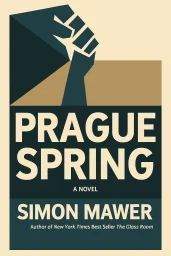
Prague Spring
by Simon Mawer
