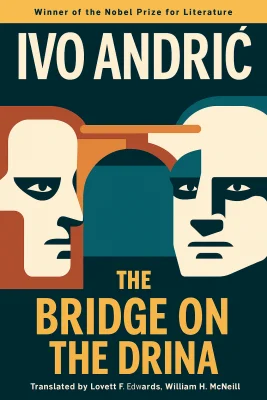
The Bridge on the Drina
Categories
Fiction, Classics, Historical Fiction, Literature, Historical, 20th Century, Novels, War, Literary Fiction, Nobel Prize
Content Type
Book
Binding
Paperback
Year
1976
Publisher
University of Chicago Press
Language
English
ASIN
0226020452
ISBN
0226020452
ISBN13
9780226020457
File Download
PDF | EPUB
The Bridge on the Drina Plot Summary
Introduction
# The Bridge on the Drina: Stone Witness to Empire's Rise and Fall The autumn morning of 1516 carries screams across the Drina valley. Ottoman soldiers tear Christian boys from their mothers' arms—the blood tribute that feeds the Sultan's armies. Among them, a ten-year-old Serbian child watches his village burn, terror carved into his memory as the rickety ferry spins helplessly in the treacherous current. The boy believes he will drown in these green waters, but fate has grander plans. Decades later, that terrified child has become Mehmed Pasha Sokolović, Grand Vizier of the Ottoman Empire. Yet in his dreams, he still hears the Drina's voice. The river that once carried him toward slavery now demands a monument to his triumph over fear. His vision takes shape in white stone—eleven graceful arches spanning the waters, crowned by a kapia where East meets West. But every bridge demands its price, and the Drina has been collecting debts for centuries. From the bridge's violent birth through blood sacrifice to its ultimate destruction in the Great War, this is the chronicle of a structure that became the soul of a town, witnessing empires rise and fall while human nature remains eternally unchanged.
Chapter 1: The Vizier's Vision: From Childhood Terror to Stone Dreams
The Grand Vizier stands on the Drina's bank where Ottoman soldiers once dragged him screaming toward an uncertain fate. Mehmed Pasha Sokolović has conquered half of Europe, commanded armies that stretched from Vienna to the Persian Gulf, yet this muddy crossing still haunts his nights. The same waters that nearly claimed a frightened boy now reflect the face of one of the most powerful men in the world. His architect spreads plans across a makeshift table while the autumn wind rattles the parchment. Eleven arches will span the treacherous current, the central pier widening into a kapia—a stone terrace where travelers can rest and merchants can trade. The Vizier's weathered finger traces each arch, seeing not just engineering but redemption. Every stone will be an act of defiance against the terror that shaped his childhood. But the Drina fights back with savage fury. Each morning, workers find their previous day's labor scattered across the riverbed like broken teeth. The current tears away scaffolding, undermines foundations, and claims the lives of men who dare challenge its ancient dominion. Local legends whisper of water spirits that demand appeasement, of an old curse that guards the crossing. Rade the Mason, master builder whose hands have shaped a dozen monuments, grows desperate as winter approaches. His weathered face shows the strain of battling an enemy that cannot be defeated with hammer and chisel. Then comes the terrible solution, whispered by old women who remember darker times. The river demands its price—twin infants, Stoja and Ostoja, walled alive into the central pier. Their sacrifice will bless the bridge with permanence, their mother's milk flowing through stone to protect all who cross. The final keystone settles into place as spring floods test the new structure. The Vizier watches from the completed kapia as the Drina hurls tree trunks and boulders against his creation. The bridge holds, its arches channeling the torrent's fury harmlessly downstream. But in the silence that follows, Mehmed Pasha can still hear the echo of children's cries—both those taken by the Sultan's men and those given to the river's hunger. His monument to permanence stands complete, built on foundations of sacrifice that will haunt its stones forever.
Chapter 2: Blood and Foundation: The Sacred Construction and Its Price
The bridge's completion transforms the wild crossing into civilization's newest jewel. Caravans from Dubrovnik to Istanbul pause at the kapia, their bells echoing off white stone arches. But even monuments built for eternity carry seeds of their own destruction, and the Drina has not forgotten the price of its taming. Radisav of Unište becomes the bridge's first keeper, appointed by the Vizier to collect tolls and maintain the sacred structure. His task seems simple until winter brings floods that test every stone. The river swells beyond memory, rising to within inches of the roadway while townspeople flee to higher ground. Radisav watches from the kapia as the water tries to reclaim what was stolen from it, but the bridge holds firm, its foundations deep in bedrock and sacrifice. Spring brings human enemies more dangerous than flood waters. A band of Herzegovinian raiders, led by a chieftain who remembers the old crossing, attempts to destroy this symbol of Ottoman power. They see the bridge as an alien chain binding their ancestral lands, its beauty an insult to their defeated pride. The attack comes at dawn, axes ringing against stone while fire licks at wooden supports. Radisav and his handful of guards fight desperately on the narrow span, using the bridge's own geometry as a weapon. The stone parapets become battlements, the kapia a fortress suspended above the torrent. Blood stains the white stone for the first time since construction, mixing with mortar that already holds darker secrets. The raiders' leader falls into the Drina, his body swept away by waters that seem to welcome this fresh offering. The surviving attackers retreat, but their defeat carries a message that spreads throughout the region. The bridge will defend itself, and those who serve it faithfully will find protection in its shadow. As news of the victory reaches distant courts, the structure's reputation grows beyond mere engineering marvel. Travelers speak of its supernatural strength, its ability to stand against both nature's fury and human malice. The kapia becomes a place of pilgrimage where merchants pray for safe journeys and mothers seek blessings for their children, never knowing that infant bones lie buried in the very stones they touch with reverent hands.
Chapter 3: The Kapia Chronicles: Life Unfolding on the Stone Heart
Centuries flow past like the Drina's waters, and the bridge becomes Višegrad's beating heart. The kapia transforms into the town's living room where Muslim merchants sip coffee beside Christian traders, their conversations weaving the fabric of daily life. Here, beneath the open sky, the empire's diversity finds its most natural expression. Alihodja Mutevelić, descendant of the bridge's guardians, maintains the Vizier's endowment with religious devotion. Every dawn finds him inspecting stone for damage, clearing debris from the roadway, ensuring oil lamps burn through the darkest nights. The bridge has become his family's sacred trust, passed from father to son like a prayer book worn smooth by countless hands. The kapia witnesses love and death in equal measure, its stones absorbing the full spectrum of human passion. Fata Osmanagić, the merchant's daughter with eyes like dark water, holds court among the young men who gather each evening. Her beauty becomes legend, her wit sharper than any blade, but her heart remains untouchable as the bridge's highest arch. When Nail-beg Hamzić of remote Nezuke dares to court her, Fata's response rings across the water like a challenge to fate itself. "It will happen when Velje Lug comes down to Nezuke," she declares, her voice carrying the certainty of stone. The words are meant to dismiss an unwelcome suitor, but they become prophecy that will demand fulfillment in ways no mortal can foresee. The young men laugh at her impossible condition, not knowing that destiny often wears the mask of jest. But the kapia also serves darker purposes when Ottoman justice demands public display. Condemned men meet their fate here, their heads mounted on stakes as warnings to others. The same stones that shelter lovers also run red with traitors' blood, while the Drina below accepts all offerings with equal indifference. Through seasons of joy and sorrow, the bridge endures, its purpose transcending the temporary passions of those who cross its span. It stands as proof that some human creations can indeed touch eternity, if their builders dream large enough and pay the necessary price in blood and stone.
Chapter 4: Floods and Trials: Nature's Test of Human Permanence
The great flood comes without warning in the autumn darkness, when the Rzav and Drina join forces to reclaim the valley they ruled before human ambition carved channels through their domain. Suljaga Osmanagić's Arab stallion senses the danger first, neighing frantically until its terror wakes the sleeping town. By midnight, muddy waters have swallowed the lower streets, and desperate exodus begins toward the safety of Mejdan hill. In Hadji Ristić's house on higher ground, the town's leaders gather in unlikely fellowship. Suljaga Osmanagić sits beside Pop Mihailo, the Serbian priest, while Hadji Liacho, the Jewish merchant, trades dark jokes with the Turkish hodja. The flood has washed away their differences, leaving only shared humanity facing nature's indifferent fury. Through the long night, they tell stories to keep fear at bay, each tale a small victory over the darkness pressing against their windows. When dawn breaks gray and terrible, they look down on a transformed world. The bridge has vanished beneath thirty feet of roiling water, only the kapia's raised platform visible like a tiny island in the flood. Houses stand half-submerged or completely drowned, their contents scattered across the valley like broken dreams. The Drina has become a sea, its voice no longer the familiar murmur but a roar that shakes the earth. Pop Jovan, the unlucky priest whose prayers for rain brought drought and whose prayers for sun brought floods, stands at the window with tears streaming down his weathered cheeks. His lifetime of failed intercessions with heaven seems to mock him now, when divine wrath has transformed his peaceful world into an apocalyptic vision. A gypsy's voice cuts through the storm, shouting bitter wisdom at the huddled clergy: "Let the one whose house is under water pray—he'll put his heart into it!" Days pass before the waters begin their reluctant retreat, revealing the bridge like a resurrection made manifest. Mud streaks its white stones and debris clogs its arches, but the structure stands unchanged, its foundations deeper than any flood can reach. The townspeople return to their ruined homes and begin the long work of rebuilding, but they carry with them a deeper understanding. The bridge is more than stone and mortar—it is permanence itself, the one constant in a world where everything else can be swept away in a single night of rain and wind.
Chapter 5: Imperial Twilight: From Ottoman Glory to Austrian Order
The year 1878 brings the sound of marching boots across ancient stones as Austrian soldiers cross the bridge in perfect formation, their uniforms crisp and weapons gleaming in the morning sun. The Ottoman Empire's long retreat has reached Višegrad, and with it comes a new order that will test the bridge's ability to adapt to changing masters. General Filipović posts proclamations on the kapia's walls, promising peace and prosperity under Habsburg rule, but the townspeople read these flowery German phrases with deep suspicion. Alihodja Mutevelić, now an old man bent with years of faithful service, watches Austrian engineers examine his beloved bridge with measuring instruments and notebooks. Their clinical approach to his sacred charge fills him with nameless dread. The transition proves more violent than the proclamations suggest. Osman Effendi Karamanli, a proud Turkish notable with fire in his eyes and madness in his voice, organizes resistance from the hills above town. His men strike at Austrian patrols like ghosts, then vanish into forests that have hidden rebels since time began. The bridge becomes a strategic prize, its control essential to Habsburg ambitions in the restless Balkans. The climax comes when Karamanli himself descends to the town, determined to destroy the bridge rather than see it serve foreign masters. On the kapia where merchants once bargained and lovers whispered, he faces Alihodja in a debate that will decide the town's fate. Karamanli speaks of death and glory, of martyrdom and paradise awaiting those who die for faith. Alihodja speaks of reality and survival, of the futility of resistance against overwhelming force. "The time has come to die," Karamanli proclaims, his scarred face twisted with fanatic fervor. "We shall all die to the last man." But Alihodja's response carries the weight of centuries: "There is nothing easier than to die. If that is all you offer, we need no help from you." The argument ends in violence as Austrian shells whistle overhead and the last Turkish defenders flee. When Hungarian soldiers find Alihodja nailed to the kapia by his ear, they free him with gentle hands and bandage his wounds with a red cross—the symbol of the new order that has come to stay.
Chapter 6: Modern Currents: Progress, Nationalism, and the Mining of Memory
The new century arrives with steam whistles and the clatter of narrow-gauge rails connecting Višegrad to Sarajevo and the wider world. Progress brings electric lights and running water, but also changes that threaten the bridge's ancient purpose as the vital link between East and West. Lotte Salzmann, a sharp-eyed Jewish widow from Galicia, opens the town's finest hotel with ruthless efficiency and mysterious charm. Her establishment becomes the center of nightlife where Austrian officials, local merchants, and ambitious young men gather to drink, gamble, and pursue pleasures unimaginable under Ottoman rule. Lotte herself remains an enigma, beautiful and untouchable, collecting the town's secrets along with its money. Young men return from universities in Vienna and Prague with dangerous ideas about national liberation and democratic rights. The kapia, once a place of peaceful coexistence, becomes a forum for heated political debates. Nikola Glasičanin, a bitter clerk whose family lost their lands in the transition, represents the new generation's frustrations. He watches wealthy Austrians prosper while his own people struggle under foreign rule, his conversations with fellow Serbs growing increasingly radical. The bridge itself undergoes a transformation that horrifies its aging guardian. Austrian engineers drill deep into the central pier and pack it with explosives, connecting the mine to their command post with electrical cables. The structure that survived floods and wars, built as a monument to permanence, now carries within its stones the seeds of instant destruction. Alihodja Mutevelić, ancient and frail, sees the mining as sacrilege against God's will. The bridge is a vakuf, a religious endowment built for the glory of Allah and the benefit of all travelers. To destroy it would be not just military necessity but spiritual blasphemy. He spends sleepless nights imagining the moment when some Austrian officer might press a button and reduce centuries of craftsmanship to rubble. As the Balkan Wars redraw the map of southeastern Europe, Serbian victories against the Ottoman Empire inspire local patriots while terrifying Habsburg officials. The bridge that once connected the heart of the Ottoman Empire to its European provinces now spans only a provincial river, its grand purpose rendered obsolete by the shifting tides of history.
Chapter 7: The Final Sacrifice: War's Demand for Ultimate Destruction
June 28, 1914. News of Archduke Franz Ferdinand's assassination in Sarajevo reaches Višegrad like a thunderbolt splitting the summer sky. Within hours, Austrian gendarmes arrest prominent Serbs while hastily formed militia units patrol the streets. The bridge, witness to so many historical transitions, prepares for its greatest and final test. War erupts across the Drina valley with unprecedented fury. Serbian artillery on the surrounding hills targets the bridge, recognizing its strategic importance to Austrian supply lines. Defenders return fire from positions around the town while shells chip the white stone that has stood unmarked by violence for three centuries. For the first time in its existence, the bridge becomes a direct target of military action. The townspeople flee to the hills as bombardment intensifies. Lotte Salzmann, the indomitable hotel keeper, suffers a complete nervous breakdown as her life's work crumbles around her. Austrian officers requisition her establishment as a field hospital, her elegant dining rooms filling with the screams of wounded soldiers. The bridge she could see from her windows now stands wreathed in smoke and flame. Alihodja Mutevelić, the bridge's ancient guardian, makes one final pilgrimage to his beloved kapia. His bent frame moves slowly across stones worn smooth by centuries of footsteps, his failing eyes taking in every detail of the structure he has served faithfully since childhood. He knows the end is coming—can feel it in the trembling of the earth beneath his feet, can hear it in the whistle of shells overhead. The Austrian retreat begins in October as Serbian forces advance through the mountains. Faced with the impossibility of holding their positions, Habsburg commanders prepare to deny the bridge to their enemies. Engineers check the explosive charges planted years earlier while the last defenders take positions around the central pier. The moment arrives with dawn's first light. An Austrian officer, his face pale with the weight of his orders, presses the detonator. The explosion tears through the morning air like the world's end, hurling massive stones high into the sky before they crash into the Drina's waters. The seventh pier, the bridge's heart, vanishes in an instant of fire and smoke, taking with it four centuries of human dreams and the old man who died defending them.
Summary
The shattered bridge stands as a monument to human ambition and folly, its broken arches reaching toward each other across the gap where the seventh pier once stood. The kapia, that gathering place of generations, lies buried beneath tons of rubble in the Drina's depths. Alihodja Mutevelić died with the structure he served so faithfully, his body found among the scattered stones like a final sacrifice to the monument that defined his life. Yet even in destruction, the bridge's legacy endures in ways its builders never imagined. The stones that built it came from the earth and return to the earth, but the human stories it witnessed live on in memory and legend. Mehmed Pasha's dream of connecting East and West, of building something permanent in an impermanent world, transcends the physical structure that embodied it. In the end, bridges exist not just in stone and mortar, but in the human heart's eternal desire to reach across the void and touch another soul. The Drina flows on, carrying away the debris of empires, while somewhere in its depths the bones of children still bless the waters with their innocent sacrifice.
Best Quote
“Forgetfulness heals everything and song is the most beautiful manner of forgetting, for in song man feels only what he loves.” ― Ivo Andrić, The Bridge on the Drina
Review Summary
Strengths: The review eloquently captures the symbolic significance of the bridge as a historical witness and a central element in the lives of the townspeople. It highlights the bridge's architectural details and its role in the community's collective memory and storytelling. Overall: The review presents a poetic and reflective analysis of the book, emphasizing the bridge's enduring presence through changing times and its impact on human history. The reader is likely to appreciate the depth of historical and cultural insight, making it a recommended read for those interested in the interplay between architecture and human experience.
About Author

Ivo Andrić
Andrić delves into the complex layers of Bosnia's past, weaving intricate tales of cultural and historical depth. His narratives are marked by a keen exploration of life under Ottoman and Austro-Hungarian rule, using detailed psychological and historical insights to portray the diverse social fabric of the region. This approach not only captures the ethnic and social dynamics of Bosnia but also extends universal human themes. Andrić’s lyrical and contemplative prose in works such as "The Bridge on the Drina" and "Bosnian Chronicle" exemplifies his ability to blend local material with broader, timeless narratives, allowing readers to engage with the multifaceted aspects of identity and history.\n\nFor those interested in the interplay of history and literature, Andrić’s books offer a profound understanding of human destinies shaped by shifting empires and political regimes. Readers are invited to reflect on the nuances of cultural identity and the historical context that shapes human experience. His work remains relevant for scholars of literature and history alike, offering insights that transcend the specificities of the Balkan context. Therefore, this short bio of the Nobel Prize-winning author highlights how Andrić’s storytelling continues to influence generations, encouraging a deeper appreciation of the intricate narratives that define human existence across different epochs.
Read moreDownload PDF & EPUB
To save this Black List summary for later, download the free PDF and EPUB. You can print it out, or read offline at your convenience.
The Bridge on the Drina
by Ivo Andrić
