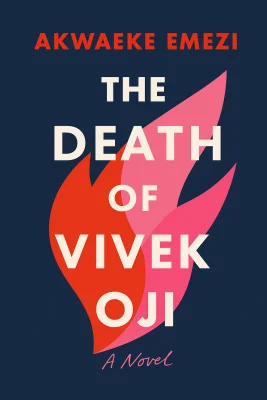
The Death of Vivek Oji
Categories
Fiction, Audiobook, Africa, Adult, Book Club, Contemporary, LGBT, Nigeria, Literary Fiction, Queer
Content Type
Book
Binding
Hardcover
Year
2020
Publisher
Riverhead Books
Language
English
ASIN
0525541608
ISBN
0525541608
ISBN13
9780525541608
File Download
PDF | EPUB
The Death of Vivek Oji Plot Summary
Introduction
The body arrives wrapped in red-and-black akwete cloth, deposited on a family's doorstep like a broken promise. Kavita finds her son Vivek there in the early morning light, his long hair matted with blood, one foot twisted beside a fallen flowerpot. The same day, smoke rises from the market across town where riots have torn through the streets, leaving ash and questions in their wake. This is how death announces itself in a small Nigerian town—sudden, violent, and inexplicable. But Vivek's death is only the beginning of a deeper mystery. As his mother Kavita refuses to accept the silence surrounding her son's final moments, she will uncover truths that challenge everything she thought she knew about the beautiful, troubled young man who lived between worlds, caught between the expectations of family and the dangerous freedom of becoming himself.
Chapter 1: A Body at the Threshold: Discovery and Denial
The weight of akwete cloth cannot hide the shape of broken dreams. Kavita stumbles onto her veranda that morning to find her twenty-year-old son motionless beneath the traditional fabric, his skull cracked, blood pooling into her welcome mat. His bare feet are clean despite the journey that brought him here, and she notices the small brown scar on his left instep—a starfish-shaped mark that matches the one her mother-in-law Ahunna carried to her grave twenty years earlier, on the same day Vivek was born. The police arrive hours later, their interest perfunctory. With the market riots consuming their attention, one dead young man hardly registers as priority. "Probably robbed," the officer suggests with bloodshot eyes. "These things happen during civil unrest." But robbers don't typically return bodies to family doorsteps. They don't carefully wrap victims in ceremonial cloth or remove silver necklaces without taking anything else. Chika, Vivek's father, retreats into numbness while Kavita burns with questions. Who brought their son home? Why was he stripped naked before being covered? Where is the Ganesh pendant he never removed, a gift blessed by Kavita's uncle years ago? Her husband begs her to let it rest, to bury their child and move forward. But Kavita has spent too many years watching Vivek disappear piece by piece—first to boarding school up north, then to university, finally to whatever darkness consumed him when he returned home changed and unreachable. The friends gather for the funeral with guilty faces and careful words. Juju, Maja's daughter, hasn't spoken since learning of Vivek's death. Elizabeth maintains her composure behind dark sunglasses. Somto and Olunne, the Thai doctor's daughters, whisper prayers in the humid air. And Osita—Vivek's cousin and childhood companion—stands apart from everyone, his jaw clenched against secrets that threaten to spill from his throat like blood.
Chapter 2: Double Lives: Vivek's Hidden Identity as Nnemdi
In the months before his death, Vivek had been living two lives with surgical precision. By day, he was the troubled son who climbed trees in the backyard and slept with the dogs rather than in his own bed, his parents' worry manifesting in desperate attempts to fix whatever had broken inside him. By night, he transformed into Nnemdi—the name that should have been his if he'd been born the daughter his uncle Ekene once suggested, honoring their grandmother's memory. The transformation began in Juju's bedroom with borrowed dresses from her mother's closet. Maja's old clothes from her twenties became Nnemdi's wardrobe: A-line skirts in navy stripes, sleeveless sundresses, anything that allowed movement and breath. Vivek's hair, grown long against his father's protests, became Nnemdi's crown—braided, curled, or flowing free down his back like black water. Juju applied makeup with careful hands, teaching him the weight of eyeliner, the architecture of lipstick, the way rouge could reshape a face. The other girls—Somto, Olunne, Elizabeth—became conspirators in this daily resurrection. They understood what Chika and Kavita could not: that Vivek was dying by degrees in his assigned skin, and only as Nnemdi could he breathe freely. They watched him spin in borrowed dresses, watched his face light up with a joy they'd never seen in his boyhood, and they kept his secret like a sacred trust. But secrets have weight, and Nnemdi's grew heavier with each passing day. The fugues that had plagued Vivek since adolescence—moments when he would drift away from conversations, stare at walls, respond to voices no one else could hear—began to ease. As if allowing Nnemdi space to exist had quieted some internal war that had been raging since childhood. The girls documented this transformation with photographs, capturing moments of pure happiness that would later become evidence of a life lived in defiance of expectation.
Chapter 3: Blood Ties: Osita and Vivek's Forbidden Bond
Osita returned to his cousin's life carrying his own secrets like stones in his chest. Years had passed since their childhood friendship fractured over a girl named Elizabeth and Vivek's mysterious episodes, but grief has a way of erasing old wounds. When Osita arrived at Juju's house that afternoon, desperate to confess his own struggles with desire and identity, he found Vivek transformed—hair flowing, lips tinted red, wearing a white caftan that made him look like something from a dream. The kiss happened without premeditation, born from years of unspoken longing and the dangerous honesty that comes with having nothing left to lose. Osita pressed his mouth to Vivek's with the hunger of someone finally naming his deepest truth, and when Vivek kissed back, something fundamental shifted between them. They moved from cousins to lovers in the space of a heartbeat, their bodies recognizing what their minds had been too afraid to acknowledge. In Juju's bedroom, with afternoon light cutting through drawn curtains, they discovered the geography of each other's desire. Osita traced the silver chain around Vivek's neck, the Ganesh pendant warm against his palm. Vivek mapped the architecture of Osita's shoulders, the places where muscle met bone, the sensitive hollows that made him gasp. They were careful with each other, tender in a way that suggested this had been inevitable since childhood, since the day they first learned each other's names. Their love affair unfolded in stolen hours across the humid months. Sometimes Vivek would appear at Juju's house as himself, hair tied back, wearing jeans and a T-shirt. Other times Nnemdi would emerge, dressed in flowing fabrics, moving with a grace that seemed borrowed from somewhere beyond the physical world. Osita learned to love them both, to see how they were different expressions of the same soul, two faces of one impossible, beautiful person who had been born into a world too small to contain them.
Chapter 4: The Protective Circle: Friends Who Kept the Secret
The girls built walls of silence around Vivek's transformation with the fierce protectiveness of young women who understood what it meant to be different. Juju became the keeper of his wardrobe, teaching him how to move in heels, how to sit in skirts without self-consciousness. Her mother's old suitcases yielded treasures—dresses that had waited decades for the right body to inhabit them, jewelry that caught light like trapped stars. Somto and Olunne provided practical support: makeup tutorials learned from older sisters, lessons in voice modulation gleaned from drama classes. They were daughters of a Thai mother who had learned to navigate cultural displacement, and they recognized in Vivek the same delicate negotiation between authenticity and survival. Their house became another sanctuary, a place where Nnemdi could practice being herself without judgment or fear. Elizabeth brought a different energy to the group—the confidence of someone who had already begun questioning prescribed roles and expectations. Her own relationship with Juju bloomed in the shadow of Vivek's transformation, two girls finding in each other a love that required its own careful concealment. She understood the weight of living authentically in a world that demanded conformity, the exhausting performance of normalcy that closeted people perfect out of necessity. Together, they created a bubble of acceptance that sustained Vivek through his final months. They threw small parties where Nnemdi could dance freely, organized photo shoots that captured her joy, provided the audience of love and recognition that every authentic self requires. But bubbles, no matter how carefully maintained, are fragile things. And the world beyond their protective circle was growing more dangerous by the day, with election tensions rising and violence erupting in markets and streets across the region.
Chapter 5: A Market in Flames: The Day Everything Changed
The morning of his death, Vivek ate breakfast with unusual appetite—cornflakes with powdered milk and three sugar cubes, the same combination he'd loved since childhood. Kavita watched him from across the table, noting the way he tied his hair in a careful bun, the deliberate precision with which he dressed afterward. He told her he was going to see the girls, a statement vague enough to mean anything or nothing. By noon, tensions that had been building for weeks finally exploded into violence near the main market on Chief Michael Road. What started as an argument between a Hausa trader and an Igbo customer escalated when the northerner slapped his accuser, igniting communal rage that had been simmering beneath the surface. Within minutes, a mob formed, hunting for targets, for any representative of the other who could be made to pay for generations of accumulated grievances. Vivek had transformed into Nnemdi that afternoon, wearing his favorite dress—deep blue cotton scattered with red hibiscus flowers, the wraparound style tied at his narrow waist. The dress belonged to Juju's mother, one of many garments that Nnemdi had claimed through careful borrowing. His hair flowed in waves down his back, his toes painted to match the flowers on his dress, his face carefully made up with the skill born of months of practice. Against all advice, Nnemdi ventured out into the chaos. Perhaps she was drawn by the same restlessness that had always plagued Vivek, the need to test boundaries and push against the walls that confined her. Or maybe she simply wanted puff-puff from her favorite vendor, a mundane desire that would prove fatal. The streets were already emptying as the violence spread, traders abandoning their stalls, families fleeing to safety. But Nnemdi walked toward the danger with the fearlessness of someone who had already survived too much to be easily frightened.
Chapter 6: Uncovering Truth: A Mother's Relentless Search
Months passed, and Kavita's questions multiplied like wounds that wouldn't heal. She haunted the girls' houses with desperate persistence, sensing lies in their careful answers, detecting guilt in their averted eyes. Juju had started speaking again but chose her words like someone walking through a minefield. Somto became hostile when pressed too hard, while Olunne offered sympathy but no information. Even Osita, her own nephew, seemed to be withholding something crucial. The breaking point came when Juju finally produced the photographs—dozens of images that revealed the son Kavita had never known existed. Here was Vivek in flowing dresses, his face transformed by makeup, spinning with joy in fabrics that moved like water. Here was Nnemdi laughing with abandon, her eyes lined in kohl, her mouth painted in shades of rose and crimson. The images hit Kavita like physical blows, each one shattering another assumption about her child's inner life. The girls' confession poured out in fragments: how Vivek had asked to be called by another name, how he found peace in clothes that matched his internal landscape, how they had protected his secret because they loved him. They described the happiness that transformed his face when he was allowed to be himself, the way Nnemdi moved through the world with a grace that Vivek had never possessed. But with understanding came a more terrible knowledge. On the day he died, Nnemdi had ventured out during the riots, drawn into the chaos that consumed the market district. The girls believed he had been caught by the mob, recognized as male beneath his feminine presentation, beaten and killed for the crime of existing between categories. Someone had returned his body to the family doorstep, stripped of the dress that had marked him as different, wrapped in traditional cloth as if to restore him to acceptable masculinity even in death.
Chapter 7: Final Confessions: What Remains Buried and Revealed
The truth Kavita extracted from the girls was incomplete, missing the crucial piece that Osita carried like a wound in his chest. He had been there that day, searching for Vivek in the chaos, finding Nnemdi instead on a side street near their family compound. The argument that followed—about safety, about the dangers of being seen, about the shame Osita carried regarding his own desires—ended when Nnemdi stumbled backward, her heel catching on stone, her head striking the cement edge of a gutter with sickening finality. The accident lasted seconds. The cover-up consumed the rest of Osita's life. He carried Nnemdi's body to the family doorstep, stripped away the blue dress that would have raised questions, wrapped her in akwete cloth found at the scene. He took the Ganesh pendant that she never removed, the silver chain still warm from her skin. Then he fled, carrying secrets that would poison every relationship he tried to build afterward. Kavita never learned these details. She accepted the girls' version of events—that Vivek died in the riots, killed for daring to exist authentically in a world that demanded conformity. The knowledge was painful enough without adding the layer of family complicity, the understanding that love itself could become a weapon when wielded carelessly. She had the headstone changed to acknowledge both names: Vivek Nnemdi Oji, Beloved Child. In the end, Osita left Nigeria altogether, carrying Nnemdi's necklace and the weight of unconfessed truth to distant shores where no one knew the name Vivek Oji or asked about the silver pendant that never left his throat. The dress remained buried at the base of a star fruit tree, slowly decomposing in soil that would eventually nourish the branches above, creating a cycle of transformation that Nnemdi would have appreciated—becoming something new while remaining essentially herself.
Summary
Death came for Vivek Oji on the same day fire consumed the local market, but his story began years earlier with a grandmother's scar appearing on a newborn's foot and a name that was never spoken aloud. Between the suffocating expectations of family and the dangerous freedom of authentic expression, Vivek learned to live as Nnemdi—finding in borrowed dresses and borrowed time a peace that had always eluded him. His friends built walls of love around this secret self, but walls cannot hold back the violence that erupts when worlds collide. The mystery of his death reveals itself slowly, like flowers blooming from buried seeds. In the end, it matters less who struck the fatal blow than who carried the body home with such tender care, who chose to preserve dignity even in covering truth. Some secrets die with their keepers while others live on in silver pendants and fading photographs, in the tears of mothers who learn too late that love requires more than protection—it demands the courage to see and accept what has always been there, waiting to be recognized and named.
Best Quote
“Some people can't see softness without wanting to hurt it” ― Akwaeke Emezi, The Death of Vivek Oji
Review Summary
Strengths: The review highlights Akwaeke Emezi's exceptional prose and storytelling abilities, comparing their language to poetry. The novel is praised for its narrative structure, which skillfully intertwines past and present, and its ability to address complex themes with clarity and beauty. The book's potential to be a modern classic is emphasized, along with its accessibility and depth, inviting both casual reading and detailed analysis. Overall: The review conveys a highly positive sentiment, suggesting that "The Death of Vivek Oji" is a compelling and masterfully crafted novel. It is recommended for its emotional depth, narrative sophistication, and potential to become a significant work in contemporary literature.
About Author

Akwaeke Emezi
Smith investigates the complexities of human relationships through a lens that often incorporates elements of magical realism. By blending the mundane with the fantastical, Smith aims to reveal deeper truths about the nature of existence and the human condition. Her works frequently explore themes of identity and belonging, using rich narratives that invite readers to question their perceptions of reality.\n\nIn her early book, Smith intertwines vivid character development with imaginative settings, fostering a sense of wonder while addressing profound questions. Her narrative style is characterized by intricate plots that weave together disparate elements into a cohesive whole, thus challenging conventional storytelling techniques. The author adeptly situates her characters in situations where they must navigate personal and societal conflicts, thereby prompting readers to reflect on their own experiences and beliefs.\n\nSmith’s contribution to literature resonates with audiences who appreciate complex narratives and philosophical inquiries. Her books not only entertain but also encourage introspection, offering insights into personal and collective identities. This approach has garnered a dedicated readership, particularly among those who seek stories that transcend traditional boundaries. As a result, Smith’s bio highlights her impact on contemporary literature, where her unique voice continues to inspire both readers and writers alike.
Read moreDownload PDF & EPUB
To save this Black List summary for later, download the free PDF and EPUB. You can print it out, or read offline at your convenience.
The Death of Vivek Oji
by Akwaeke Emezi
