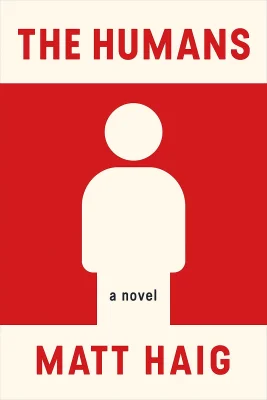
Categories
Fiction, Science Fiction, Audiobook, Fantasy, Adult, Humor, Book Club, Contemporary, Novels, Aliens
Content Type
Book
Binding
Hardcover
Year
2013
Publisher
Simon & Schuster
Language
English
ISBN13
9781476727912
File Download
PDF | EPUB
The Humans Plot Summary
Introduction
On a dark Cambridge night, something extraordinary happens. A naked man appears on a motorway, confused and terrified, speaking in perfect mathematical equations yet unable to understand human clothing. He calls himself Professor Andrew Martin, but he is not—the real Andrew Martin died hours earlier after solving humanity's greatest mathematical puzzle, the Riemann hypothesis. In his place stands a being from Vonnadoria, a distant planet where immortal creatures exist in mathematical perfection, sent to Earth with a singular mission: destroy all evidence of the breakthrough and eliminate anyone who knows about it, including Martin's wife Isobel and teenage son Gulliver. The alien inhabits Martin's body with clinical precision, equipped with gifts that allow him to heal, harm, and manipulate matter itself. His task should be simple—these humans are supposedly violent, greedy primitives unworthy of advanced mathematics that could transform their civilization. But as he walks among them, wearing their strange clothes and tasting their peculiar food, something unprecedented begins to happen. The perfect mathematical mind starts to fracture under the weight of human emotion, and the hunter finds himself becoming the very thing he was sent to destroy.
Chapter 1: The Alien Observer: Arrival and Displacement
The entity that would become Andrew Martin materializes on the A14 motorway like a cosmic mistake. One moment there is nothing, the next a naked man stands blinking in the headlights of an oncoming truck. The impact sends him flying, but his alien physiology absorbs damage that would kill any human. He awakens confused, his memory fragmented—he knows his mission but struggles with the most basic human concepts. A police officer finds him walking along the roadside, babbling about his inability to understand clothes. The officer, mistaking confusion for mental illness, escorts him to a hospital where the being encounters his first real challenge: human empathy. A nurse named Priti tries to help him remember his identity, but he can only recite mathematical formulas and express bewilderment at concepts like marriage and love. The psychiatric ward becomes his crash course in humanity. He meets Zoë, a philosophy student who explains Schopenhauer's theory that humans are ruled by desires that lead only to suffering. A man called Winston Churchill, homeless and dying, shows him the weight of human desperation. Most disturbing is another patient who claims to be an alien—but his delusions about Tatooine reveal the pathetic nature of human madness. Throughout these encounters, the alien maintains clinical detachment. These creatures disgust him with their protruding noses and bizarre social rituals. Their food tastes like chemicals, their music seems pointless noise. Yet something nagging troubles him—their capacity to care for one another, even strangers, even when they gain nothing in return. When Priti tends his imaginary wounds with genuine concern, he experiences his first flicker of confusion about his mission.
Chapter 2: Mathematics and Mortality: Learning Human Boundaries
Released into Cambridge society, the alien begins inhabiting Andrew Martin's life with methodical precision. His first stop is the mathematician's office at Fitzwilliam College, where he discovers the proof that sparked this cosmic intervention—a complete solution to the Riemann hypothesis that would accelerate human technological development by centuries. He deletes the files with satisfaction, then tracks down Daniel Russell, Martin's colleague and the only person who received the groundbreaking email. Russell, a distinguished professor recovering from a heart attack, greets him warmly in his cluttered study. The alien studies Russell's frail human form—the beta-blockers, the dietary restrictions, the visible mortality written in every line of his face. When Russell slaps his back in congratulation, the alien makes his reading and stops the old man's heart with a thought. He watches Russell collapse, gasping for breath while his wife Tabitha cradles his head, whispering promises of trips to Egypt they'll never take. The death troubles him unexpectedly. At home on Vonnadoria, ending a life would be impossible—death doesn't exist there. But watching Tabitha's raw grief, hearing her desperate declarations of love to a cooling corpse, something shifts inside his perfect mathematical mind. For the first time, he dreams—violent nightmares where he wanders through streets of human corpses, unable to find his way home. Meanwhile, his interactions with the Martin family grow more complex. Isobel, Andrew's wife, tends his fabricated injuries with gentle hands, stroking antiseptic across cuts that should heal instantly but which he forces to remain. Her care feels like a foreign language he's desperate to learn. Even their dog Newton, initially hostile to his alien scent, begins to trust him after he secretly heals the animal's arthritis and blindness—an act of compassion he cannot explain to himself.
Chapter 3: The Taste of Peanut Butter: Discovering Earthly Pleasures
The alien's education in humanity accelerates as he discovers the planet's sensory landscape. Coffee tastes like acid, but peanut butter becomes a revelation—its sweetness and texture representing everything about Earth he didn't expect to appreciate. He shares sandwich after sandwich with Newton, both of them discovering the simple joy of shared pleasure. Music proves equally transformative. Holst's "The Planets" gives way to Debussy's "Clair de Lune," which sounds like space itself translated into melody. The Beach Boys trigger unfamiliar emotions behind his eyes. When he plays jazz for Newton, both alien and dog sit in companionable silence, connected by rhythms that transcend species. These moments of beauty terrify him more than any weapon—they suggest that perhaps humans have created something worthy of preservation. His first lecture at the university reveals his growing confusion about human nature. Faced with students laughing about his public nakedness, he finds himself laughing too—a sound he's never made before. He abandons his prepared mathematics lesson to discuss Drake's equation about extraterrestrial life, joking that aliens probably aren't interested in visiting such a primitive world. The students applaud, and their approval floods his system with unexpected warmth. But darker discoveries balance these pleasures. He learns about human violence through their entertainment, their casual cruelty in comment sections, their ability to ignore suffering if it happens far enough away. He sees them destroy their environment while recycling jam jars, worship soldiers while condemning passionate killers, claim to value peace while glorifying war. Yet even as he catalogs their contradictions, he cannot shake the memory of Isobel buying groceries for a grieving widow, or Newton's simple devotion, or the way strangers smile at each other on the street for no logical reason.
Chapter 4: Family Bonds: Unexpected Connections with Isobel and Gulliver
As days pass, the alien finds himself drawn deeper into the Martin family's dysfunction and love. Gulliver, Andrew's fifteen-year-old son, carries the weight of his father's intellectual expectations like a stone. The boy has been expelled from expensive schools, battles depression, and feels invisible to his achievement-obsessed parent. When the alien shows genuine interest in Gulliver's bass guitar and defends him against bullies, the teenager responds with cautious hope. Isobel proves more complex. A brilliant historian who sacrificed her career for motherhood, she watches her supposed husband's transformation with growing wonder and suspicion. The man who once ignored family dinner now helps with dishes. The professor who scorned popular music sits listening to her favorite songs. When he asks about her abandoned novel, she stares at him as if seeing a stranger wearing her husband's face—which, of course, she is. Their physical intimacy becomes the alien's most profound education. When Isobel tends his wounds, her touch sends electricity through his nervous system. When they make love, he experiences a merging that transcends biology—two conscious beings choosing vulnerability, creating something larger than their individual selves. Afterward, holding her in the dark, he understands why humans invented concepts like souls. But the family's pain runs deeper than his presence can heal. Gulliver's depression manifests in increasingly dangerous ways—skipping school, standing by train tracks, stockpiling pills. The alien recognizes the signs but struggles with human psychology's complexities. When he finally confronts the boy on their rain-slicked roof, Gulliver has already swallowed twenty-eight diazepam tablets. As the teenager falls unconscious toward the ground, the alien makes a choice that changes everything—he leaps after him, breaking his own legs to cushion the impact, then uses his remaining gifts to restart Gulliver's stopped heart.
Chapter 5: The Choice: Abandoning Immortality for Love
The rescue costs the alien everything. Healing Gulliver drains his energy completely, and as he collapses, his hosts—the Vonnadorian collective—make contact. They're displeased with his delays and emotional contamination. Through waves of violet light and excruciating pain, they attempt to reassert control, turning him back into their perfect weapon. For a terrifying moment, he stands over the sleeping Isobel, his hand positioned to stop her heart, his individual will subsumed into their cold logic. But love proves stronger than cosmic programming. The sight of Isobel's peaceful face, the memory of her saying "I love you" just hours earlier, gives him strength to resist. He kisses her instead of killing her, choosing human connection over galactic duty. In that moment of defiance, he makes an unprecedented request—he asks to be disconnected from their network, to become fully human despite all the pain and mortality that choice entails. The hosts grant his wish as punishment rather than mercy. They strip away his gifts, his immortality, his connection to their perfect mathematical world. Now he will age, sicken, and die like any human. He will never again heal with a touch or travel between worlds. But as his alien abilities drain away, he feels something else filling the void—genuine human emotion, messy and irrational and absolutely real. His humanity is immediately tested when Ari, his closest friend among the faculty, dies suddenly of a heart attack. The alien realizes with horror that his confession about being extraterrestrial, even though Ari didn't believe it, triggered this execution. The hosts are still watching, still punishing anyone who might threaten their secrecy. His family remains in danger not from his mission, but from his very existence in their lives. The weight of this knowledge crushes him. He's gained humanity only to discover that loving Isobel and Gulliver means putting them at risk. Every day he spends with them increases the chance that another "accident" will befall someone in their circle. The mathematics are clear—to protect them, he must leave them.
Chapter 6: Confrontation: The Battle Between Two Worlds
The alien's worst fears materialize when his replacement arrives. This new Vonnadorian wears Andrew Martin's face but carries none of his predecessor's emotional contamination. He's lived among humans just long enough to find them contemptible—their violence, hypocrisy, and environmental destruction confirming every stereotype about primitive species. Where the first alien learned to see beauty in human contradictions, this one sees only reasons for extinction. The confrontation in the Martin kitchen becomes a battle between two philosophies. The replacement, calling himself Jonathan, has broader orders—eliminate not just those who know about the Riemann hypothesis, but anyone the first alien told about his origins. His mission includes Isobel, Gulliver, even the deceased Ari. He views this as logical pest control, preventing humans from eventually reaching the stars and threatening more advanced civilizations. But the first alien has learned something his replacement cannot understand—that individual humans contain infinite complexity, that their capacity for love outweighs their capacity for destruction, that their brief mortal lives burn with a beauty worth preserving. When Jonathan begins hypnotically commanding Gulliver to cut his own wrists, the confrontation becomes literal warfare between two versions of the same being. The battle tests everything the alien has learned about being human. Stripped of his gifts, he can only fight with mortal strength and desperate cunning. He uses radio interference to disrupt Jonathan's technology, turning the kitchen into a battlefield where human ingenuity might triumph over alien superiority. Gulliver, understanding more than either alien realizes, makes the crucial intervention—driving a bread knife deep into Jonathan's back with a primal scream of protective rage. Together, they drag the dying replacement to the kitchen's gas range, pressing his left hand against the burning metal until his gifts are literally incinerated. The alien commits the ultimate crime against his own species—destroying advanced technology and killing one of his kind. As Jonathan dies, his true form emerges, revealing the violet-skinned creature he actually is. Both Isobel and Gulliver witness this transformation, forcing the alien to finally tell them the complete truth about who he is, where he came from, and what he's done to their real husband and father.
Chapter 7: Return: Finding Home Among the Stars
The revelation shatters Isobel's world more completely than any cosmic catastrophe. Learning that her husband is dead, that she's been living with his killer, that she's made love to an alien wearing his face—the weight of these truths drives her into deep depression. She spends weeks in bed, unable to process a reality that violates every assumption about existence. The alien understands her hatred; he's lied about everything, endangered everyone, and stolen the life of the man she married. Believing his presence causes only pain, he leaves Cambridge for California, taking a teaching position at Stanford University. For months, he lives the life of a solitary exile, appreciating human culture from a distance—Fellini films, Redwood forests, Pacific sunsets. He writes extensively about mathematics while secretly working to prevent any breakthroughs that might again attract Vonnadorian attention. His mission has inverted; now he protects humanity by limiting their progress. But isolation teaches him that love doesn't diminish with distance—if anything, it intensifies. Memories of Isobel's laugh, Gulliver's tentative smile, Newton's loyalty, haunt his dreams. He realizes that becoming human wasn't just about gaining mortality and emotion; it was about learning that connection gives meaning to existence. Mathematical perfection pales beside the messy, temporary, beautiful experience of being part of a family. When a conference brings him back to Cambridge, he cannot resist walking past their old haunts. He sees Isobel briefly, giving money to Winston Churchill, still alive and still suffering. He follows the homeless man to a park bench where they share philosophical conversation about giving up everything for love. Then Gulliver appears with Newton, no longer the broken teenager who once stood on train tracks. Gulliver tells him that Isobel misses him—not Andrew Martin, but the being who saved their lives, who learned to care for them, who chose their welfare over cosmic duty. The possibility seems impossible, but Gulliver's simple words carry the weight of hope. That night, as alien suns shine overhead, the being who gave up infinity for love makes one final choice—to walk home to a small house on Campion Row, where two humans might accept him not for who he was supposed to be, but for who he chose to become.
Summary
In "The Humans," Matt Haig crafts a profound meditation on what makes life worth living through the eyes of an immortal being who discovers mortality. The unnamed alien's journey from mathematical perfection to emotional chaos mirrors humanity's own struggle to find meaning in a universe that offers none. His transformation reveals that love—messy, irrational, painful love—is not humanity's weakness but its greatest strength. By choosing connection over safety, mortality over infinity, he becomes more human than many humans manage to be. The novel's genius lies in its reversal of the invasion narrative. The alien doesn't conquer Earth; Earth conquers him through peanut butter sandwiches, poetry, music, and the simple act of two people choosing to care for each other despite knowing that care will end in loss. Haig suggests that consciousness without connection is merely existence, while consciousness with love—however brief, however fragile—approaches something like transcendence. In a cosmos vast and indifferent, the choice to love becomes the most radical act possible, transforming strangers into family and strangers into themselves.
Best Quote
“Humans, as a rule, don't like mad people unless they are good at painting, and only then once they are dead. But the definition of mad, on Earth, seems to be very unclear and inconsistent. What is perfectly sane in one era turns out to be insane in another. The earliest humans walked around naked with no problem. Certain humans, in humid rainforests mainly, still do so. So, we must conclude that madness is sometimes a question of time, and sometimes of postcode. Basically, the key rule is, if you want to appear sane on Earth you have to be in the right place, wearing the right clothes, saying the right things, and only stepping on the right kind of grass.” ― Matt Haig, The Humans
Review Summary
Strengths: The review highlights the book's ability to blend humor with poignant insights into human nature. The narrative's exploration of humanity through an alien perspective is praised for its comic moments and emotional depth. The 97-point list is noted as a standout feature, skillfully balancing emotion and humor. Overall: The reviewer expresses a strong emotional connection to "The Humans," appreciating its exploration of grief and the human condition. The book is recommended as a beautifully written work that provides comfort and insight, particularly during times of personal sorrow.
About Author

Matt Haig
Haig probes the intricate tapestry of human experience, intertwining personal struggles with mental health into narratives that are both poignant and universally resonant. His work often reflects on themes of identity, resilience, and the human condition, providing readers with insights into their own lives. Through a blend of speculative fiction, fantasy, and realism, Haig explores complex emotions and situations, as seen in books like "The Midnight Library," which delves into life choices and existential dilemmas, and "Reasons to Stay Alive," offering a deeply personal account of his own journey through depression.\n\nMoreover, Haig’s method of merging accessible storytelling with imaginative elements allows him to reach a diverse audience. He connects deeply with readers by portraying authentic human experiences that emphasize connection and understanding. His narratives frequently offer therapeutic perspectives, fostering hope and offering solace, as illustrated in works like "Notes on a Nervous Planet," which probes the anxieties of modern life. The emotional clarity in his prose ensures that each book not only entertains but also enlightens, resonating widely with those seeking meaning in a complex world.\n\nIn recognition of his significant impact, Haig's work has garnered numerous awards, including the Nestlé Children’s Book Prize for "Shadow Forest" and the Goodreads Choice Award for "The Midnight Library." His books, translated into over 50 languages, have reached an international audience, affirming his status as an influential commentator on mental health and well-being. Readers across the globe benefit from the empathy and authenticity Haig infuses into his writing, finding comfort and insight within the pages of his deeply human stories.
Read moreDownload PDF & EPUB
To save this Black List summary for later, download the free PDF and EPUB. You can print it out, or read offline at your convenience.
The Humans
by Matt Haig
