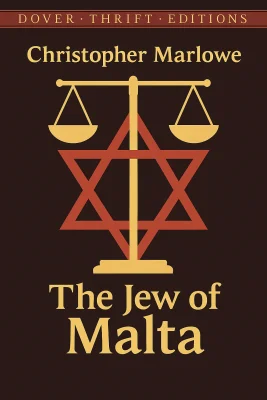
The Jew of Malta
Categories
Fiction, Classics, Plays, Literature, School, British Literature, 16th Century, Drama, Theatre, Renaissance
Content Type
Book
Binding
Paperback
Year
2003
Publisher
Dover Publications
Language
English
ASIN
0486431843
ISBN
0486431843
ISBN13
9780486431840
File Download
PDF | EPUB
The Jew of Malta Plot Summary
Introduction
The Mediterranean sun beats down mercilessly on Malta's stone walls as Barabas counts his gleaming treasures in the shadows of his counting house. Gold from Arabia, pearls from Alexandria, diamonds that could ransom kings—all testament to his mastery of international trade. Yet in the harbor, Turkish galleys approach like death itself, their black sails cutting through azure waters with a demand that will shatter everything. When the Ottoman Empire comes calling for tribute, Malta's Christian rulers face a choice that will ignite a chain of betrayals stretching from the Governor's palace to the darkest corners of the slave market. In this world where cross and crescent clash, where merchant princes scheme against holy men, and where a daughter's love becomes her father's weapon, no one is quite what they seem. What begins as a simple matter of taxation will spiral into poisoned wine, forged challenges, and a final trap that will consume both the innocent and the guilty in its flames.
Chapter 1: The Wealth Seized: Barabas's Fall from Prosperity
The blade falls swiftly on prosperity. One moment Barabas stands among his riches, watching ships heavy with Eastern silks glide into Malta's harbor. The next, armed officers storm into the senate house where Malta's Jews have been summoned like sheep to slaughter. Governor Ferneze delivers the verdict with the cold precision of a man convinced of his righteousness. The Turkish sultan demands ten years of unpaid tribute. The sum could purchase a dozen cities, yet Malta's coffers lie empty. Therefore, the Jews must surrender half their wealth—or convert to Christianity and lose everything anyway. Barabas watches his fellow Jews crumble before the ultimatum, nodding like broken dolls as they accept their fate. But when they demand his fortune, something darker stirs in his eyes. "I have as much coin as will buy the town," he declares, yet these hypocrites dare speak of Christian charity while picking clean his bones. The expropriation unfolds with bureaucratic brutality. Officers inventory every treasure while Ferneze quotes scripture to justify the theft. "Better one want for a common good, than many perish for a private man," he intones, borrowing the very words used to condemn Christ. The irony cuts both ways—Barabas may be cast as villain, but his persecutors wear the faces of those who once drove nails through innocent palms. As the last of his gold disappears into Christian hands, Barabas kneels in the dust and curses them with biblical fury. The plagues of Egypt, earth's barrenness, everlasting torment—let them all fall upon these wolves in sheep's clothing. But even as rage consumes him, his mind already turns to darker arithmetic. They have taken his wealth, seized his house for a nunnery, left him with nothing but his wits and his daughter. In the gathering shadows, those prove to be weapons enough.
Chapter 2: Schemes of Recovery: Abigail's Role in Her Father's Plots
Moonlight filters through stone corridors as Abigail slips through the darkness of what was once her home, now transformed into a convent. Her father's voice echoes in her memory like a serpent's whisper, instructing her in the art of sacred deception. She must play the repentant daughter, seeking God's forgiveness for her Jewish sins, all while retrieving the fortune Barabas hid beneath the floorboards. The plan unfolds with theatrical precision. Barabas arrives at the nunnery gates, bellowing curses at his "seduced" daughter while secretly coaching her through whispers and gestures. When Friar Jacomo intervenes, speaking of spiritual blindness and eternal salvation, Barabas plays his part perfectly—the grieving father watching his child embrace their enemies' faith. "Child of perdition," he roars for the friars' benefit, then whispers urgently about the marked board that conceals their treasure. The performance would be comical if not for its desperate stakes. Each gesture, each apparent rejection, guides Abigail toward the gold that represents their only hope of survival. That night, as the nuns sleep, daughter and father reunite in the courtyard. Bag after bag of precious metal tumbles from the upper window, each impact against stone ringing like a muffled bell. Barabas embraces the wealth with an almost carnal passion, crooning endearments to his "felicity," his "strength to soul, death to enemy." But even as they celebrate their success, new players enter the game. Don Mathias and Governor Ferneze's son Lodowick have both glimpsed Abigail and fallen instantly under her spell. What they mistake for Christian charity—a beautiful Jewish maiden seeking salvation—becomes the perfect trap. Barabas watches them compete for his daughter's affections with the calculating gaze of a spider studying flies caught in his web. The recovered gold brings no peace, only opportunity for a more elaborate revenge. These Christian boys want to possess what they have already helped destroy. Soon they will learn that some prices exact payment in blood.
Chapter 3: Vengeance Orchestrated: The Deaths of Lodowick and Mathias
The slave market reeks of human misery and commerce intertwined. Among the chained Turks and Moors, Barabas finds his perfect instrument of destruction—Ithamore, a youth whose resume reads like a catalog of atrocities. Poisoned wells, burned villages, strangled pilgrims—this creature speaks Barabas's language of calculated cruelty. "We are villains both," Barabas declares as he purchases his new confederate, "both circumcised, we hate Christians both." But Ithamore proves even more bloodthirsty than his master, delighting in the prospect of murder with the enthusiasm of a child promised sweets. The trap requires delicate orchestration. Barabas plays both suitors like instruments in a symphony of deception, promising Abigail to each while stoking their rivalry into murderous jealousy. To Lodowick, he speaks of his daughter as a precious diamond, all while muttering asides about poison and death. To Mathias, he weaves tales of his rival's persistent pursuit, how the Governor's son refuses to leave poor Abigail in peace. Ithamore carries the forged challenges between them, letters crafted to inflame masculine honor beyond all reason. Each young man believes the other has issued an insult that can only be answered with steel. They meet at dawn like characters from some ancient tragedy, swords drawn, convinced they fight for love when they truly die for one old Jew's revenge. The duel ends with both boys bleeding out in the dust. From his hiding place above, Barabas watches their death throes with grim satisfaction. "So now they have showed themselves to be tall fellows," he observes with bitter irony as their mothers arrive to discover the carnage. Governor Ferneze cradles his dead son, promising vengeance on whoever orchestrated this tragedy. If only he knew his enemy stands so close, wearing the mask of a grieving victim. The first payment has been extracted, but the ledger of revenge still shows a substantial balance due.
Chapter 4: Poisoned Faith: The Nunnery and Abigail's Fate
Horror blooms in the convent like a poisonous flower. Abigail, horrified by her unwitting role in the young men's deaths, genuinely converts to Christianity and confesses her father's murders to Friar Bernardine. Her repentance comes too late—Barabas has already prepared his most diabolical response to what he sees as her ultimate betrayal. Saint Jacques' Eve provides the perfect cover. On this holy night, the faithful traditionally send charitable gifts to the nunneries, leaving them in a dark passage where neither giver nor receiver need be identified. Among the offerings, Barabas places a pot of rice porridge seasoned with Italian poison, deadly but slow-acting, designed to kill without immediate suspicion. "As fatal be it to her as the draught of which great Alexander drunk and died," he intones over the tainted meal, invoking the blood of the Hydra and the poisons of Hell itself. His love for his daughter has curdled into something monstrous—if she will not remain his alone, she belongs to no one. The poison works with methodical precision. One by one, the nuns succumb, their death agonies mistaken for sudden illness. Even the local physicians cannot help as the convent becomes a charnel house. Abigail dies last, lucid enough to understand her father's final gift, begging Friar Bernardine to convert the man who murdered her. "Witness that I die a Christian," she whispers with her final breath, the words carrying both triumph and tragedy. She has found the faith her father mockingly taught her to feign, but it costs her everything. Bernardine watches her expire, his own grief shadowed by terrible knowledge—the confessional seal prevents him from revealing the truth, even as it condemns him to dangerous silence. The bells that ring for the dead nuns sound sweet as music to Barabas. He has eliminated the witnesses to his schemes while punishing his daughter's defection. Yet in his moment of victory, new threats emerge from unexpected quarters, as those who shared his secrets begin to see profit in betrayal.
Chapter 5: Betrayal's Price: Ithamore's Alliance with Bellamira
Love makes fools of them all, even killers. Ithamore, drunk on wine and newfound wealth, stumbles into the web of Bellamira, a courtesan whose beauty masks predatory cunning. She and her accomplice Pilia-Borza recognize opportunity when it walks through their door, especially when it boasts of poisoning nuns and strangling friars. The seduction unfolds with professional efficiency. Bellamira plays the smitten lover while Pilia-Borza feeds Ithamore's fantasies of power and romance. "I'll be thy Jason, thou my golden fleece," the besotted Turk declares, imagining pastoral paradises while revealing the location of his master's hidden wealth. Their first extortion demand sends Barabas into calculating rage. Three hundred crowns, delivered by Pilia-Borza, a scarred rogue who threatens exposure if payment fails to arrive. The amount grows with each letter—five hundred, then more, as greed breeds greed like a contagion. Watching his tormentors feast on his gold while he plots their destruction, Barabas dons the disguise of a French musician, complete with lute and poisoned flowers. His performance at their revelry rivals any theatrical comedy, playing the humble entertainer while distributing bouquets that carry the scent of death. "A vôtre commandement, madame," he murmurs in broken French as Bellamira inhales the fatal perfume. The lovers and their accomplice breathe deeply of flowers that will soon stop their breathing forever, while their intended victim plays sweet melodies to accompany their doom. But even as the poison takes hold, officials arrive to arrest the whole sordid group. Ithamore's confessions have reached the Governor's ears, and now all of them—blackmailers and victim alike—face the law's rough justice. As they drag him toward prison, Barabas maintains his innocence while the bodies of his tormentors begin their final convulsions. Justice and revenge have become indistinguishable, each feeding on the other in an endless cycle of retribution.
Chapter 6: False Resurrection: Barabas and the Turkish Conquest
Death proves negotiable for those who understand its marketable value. Barabas feigns his final agony with consummate skill, aided by sleeping draughts that simulate the stillness of the grave. The authorities, convinced of his demise, dispose of his body beyond the city walls like refuse, never suspecting their victim will rise like some unholy resurrection. The timing could not be more perfect. As Barabas awakens in the dust, Turkish forces under young Calymath approach Malta's defenses, ready to collect their tribute through siege and storm. The supposed corpse presents himself to the enemy commanders as a valuable asset—a man who knows every secret passage and weakness in the Christian stronghold. "My name is Barabas; I am a Jew," he declares to Calymath, playing the role of persecuted victim with practiced ease. The Turks, having heard tales of his confiscated wealth and unjust treatment, welcome him as both ally and guide. Here stands the perfect instrument for their victory—a man with intimate knowledge of Malta's defenses and burning reason to see them breached. The siege unfolds with surgical precision. While Turkish artillery batters the outer walls, Barabas leads five hundred soldiers through ancient drainage tunnels beneath the city. They emerge in Malta's heart like deadly flowers blooming from poisoned soil, opening the gates for their comrades while defenders scramble in hopeless confusion. Victory brings its own rewards. Calymath, grateful for services rendered, appoints Barabas as Malta's new Governor, placing Christian knights in chains beneath their former victim's authority. The reversal seems complete—the man who lost everything now commands those who took it from him. Governor Ferneze, the architect of the Jews' destruction, kneels in Barabas's presence as a captive. The wheel of fortune has turned full circle, yet somehow the newly elevated ruler finds no satisfaction in his triumph. Power without security becomes merely another form of prison, and Malta's hatred for its conqueror grows more dangerous with each passing hour.
Chapter 7: The Final Trap: A Cauldron of Justice
Power corrupts the corrupted further still. Barabas, drunk on authority but paranoid about its permanence, devises a scheme to eliminate both his Turkish allies and Christian enemies in one magnificent betrayal. He approaches the captive Ferneze with an offer too tempting to refuse—freedom for Malta in exchange for one last act of treachery. The plan unfolds with mechanical precision. Barabas will host a great feast, inviting Calymath and his officers to celebrate their victory while the Turkish soldiers are quartered in a monastery rigged with explosives. The main guests will dine in a specially prepared gallery above a concealed pit filled with boiling oil. Ferneze listens to the proposal with growing amazement. This monster who murdered his son now offers him the chance to destroy their common enemies and reclaim Malta's independence. The irony proves irresistible—the Jewish devil will engineer his own downfall through overreaching ambition. The feast commences with appropriate ceremony. Turkish officers praise their host's hospitality while below them, carpenters put finishing touches on mechanisms designed for mass murder. Barabas surveys his guests with supreme satisfaction, counting moments until the signal that will trigger multiple deaths. But hubris demands payment in kind. As the warning piece fires from the tower and Ferneze moves to cut the trap's cord, he redirects its mechanism. Instead of Turkish guests plummeting to their doom, Barabas himself crashes through the trapdoor into his own boiling cauldron. The architect of so much destruction writhes in agony as his skin burns away, yet still finds breath for final confessions. "Know, Governor, 'twas I that slew thy son," he gasps between screams, claiming credit for every murder while the heat steals his life away.
Summary
The cauldron claims its victim as bells toll across Malta's liberated walls. Barabas dies as he lived—by his own devices, consumed by flames of his own kindling. His final curses echo through stone corridors where Christian and Muslim alike have learned the true cost of avarice and revenge. Governor Ferneze stands victorious among the wreckage, praising heaven for their deliverance from the Jewish devil's machinations. Yet his triumph rings hollow amid so much destruction. Sons lie dead, trust lies shattered, and the very foundations of civilized society have cracked under pressure from competing hatreds. In this moral wasteland where every faith breeds fanatics and every merchant conceals a murderer, victory and defeat become merely different faces of the same corrupted coin.
Best Quote
“I count religion but a childish toyAnd hold there is no sin but ignorance.” ― Christopher Marlowe, The Jew of Malta
Review Summary
Strengths: The review highlights the play's subversive black comedy and its engaging use of blank verse, theatre, and humor. It acknowledges Marlowe's influence on Shakespeare and the play's capacity to entertain with its outrageous plot and characters. Weaknesses: The review criticizes the play for its lack of depth compared to Shakespeare's works, particularly "The Merchant of Venice." It notes that Barabas, the protagonist, is portrayed as a caricature rather than a sympathetic character, which diminishes the emotional impact of the narrative. Overall: The reader finds "The Jew of Malta" to be an eccentric and challenging read, with a complex plot that may not appeal to everyone. While acknowledging its theatrical strengths, the review suggests that the play lacks the nuanced character development found in Shakespeare's works, leading to a mixed recommendation.
About Author

Christopher Marlowe
Marlowe delves into the human condition through the lens of ambition, power, and fate, crafting narratives that resonate with complexity and intensity. Known for his pioneering use of English blank verse, Marlowe's works often feature overreaching protagonists who grapple with their desires and limitations. His method of drawing on historical and classical sources allows for rich, dramatic themes that challenge readers to reflect on the human experience. With plays like "Doctor Faustus" and "Tamburlaine the Great", Marlowe set a standard for English drama, influencing countless playwrights, including Shakespeare.\n\nBeyond his thematic innovation, Marlowe’s style is marked by poetic innovation and controversial subject matter. His ability to balance intricate character development with the exploration of ambition and human limitation makes his work both provocative and timeless. For those interested in the evolution of English literature, Marlowe’s bio provides insight into a key figure of the Elizabethan era, whose untimely death adds an element of mystery to his legacy. Readers and scholars alike find value in his exploration of the darker sides of human nature, making his contributions essential to understanding the period's dramatic landscape.\n\nHis books remain crucial for anyone interested in the foundations of modern theater, offering both entertainment and philosophical depth. While Marlowe did not receive significant awards in his lifetime, his legacy is cemented through the continued relevance and study of his work. His impact on English literature and drama endures, providing a lens through which to explore complex themes that resonate with audiences even today.
Read moreDownload PDF & EPUB
To save this Black List summary for later, download the free PDF and EPUB. You can print it out, or read offline at your convenience.
The Jew of Malta
by Christopher Marlowe
