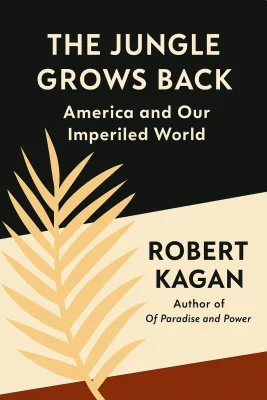
The Jungle Grows Back
America and Our Imperiled World
Categories
Nonfiction, History, Politics, Audiobook, Political Science, The United States Of America, American History, International Relations, United States, Current Affairs
Content Type
Book
Binding
Hardcover
Year
2018
Publisher
Knopf
Language
English
ASIN
0525521658
ISBN
0525521658
ISBN13
9780525521655
File Download
PDF | EPUB
The Jungle Grows Back Plot Summary
Introduction
In the summer of 1945, as the guns fell silent across Europe and Asia, few could have imagined that the world stood at the threshold of its most extraordinary transformation in human history. The liberal world order that emerged from the ashes of two devastating world wars was not the natural culmination of human progress, but rather an artificial creation—a carefully tended garden carved out of the historical jungle of war, tyranny, and poverty that had characterized human existence for millennia. This remarkable system has provided unprecedented peace, prosperity, and democratic governance for over seven decades. Yet like any garden, it requires constant tending against the natural forces that threaten to overwhelm it. Today, as authoritarian powers reassert themselves and democratic institutions face internal challenges, we witness the gradual return of historical patterns that the liberal order had successfully suppressed. Understanding how this order was built, how it transformed the world, and why it now faces existential threats offers crucial insights into the choices that will determine whether humanity continues on its path of progress or slides back into the familiar darkness of great power competition, conflict, and oppression.
Chapter 1: The Artificial Miracle: Liberal World Order Defying History
The world we inhabit today represents a stunning departure from the normal course of human affairs. For thousands of years, the story of humanity was one of relentless warfare, autocratic rule, and grinding poverty interrupted only by brief moments of peace and prosperity. The great powers of Europe were at war almost continuously from 1500 to 1945, yet since then, no major powers have fought each other directly. Global GDP has grown at unprecedented rates, lifting billions from poverty while the number of democracies has expanded from a handful to over one hundred. This transformation did not occur through natural evolution or the inevitable march of progress. The liberal principles of the Enlightenment—individual rights, democratic governance, free trade—had existed for centuries before 1945 without creating anything resembling today's peaceful world. These ideas were right and better in the 1930s too, yet they nearly perished under the assault of fascism and communism. What changed after 1945 was not human nature or the power of ideas alone, but the emergence of a unique configuration of power led by a nation with unprecedented military and economic capabilities, favorable geography, and a commitment to liberal principles. The United States, protected by two vast oceans and blessed with abundant resources, found itself in a position to reshape the international system in ways no previous power had attempted. Unlike traditional empires that sought to extract wealth from their dominions, America created a system designed to benefit its members while constraining the disruptive forces that had repeatedly plunged the world into chaos. This was not inevitable—it was an act of defiance against both history and human nature. Yet this artificial creation remains under constant siege from the natural forces it was designed to contain. Geography, historical grievances, cultural traditions, and the eternal human drives for power, honor, and security continue to exert their pull. The question is not what threatens this order—everything threatens it—but what can possibly sustain it against the inexorable pressure of historical gravity.
Chapter 2: The 1930s Revisited: Democracy's Earlier Retreat
The parallels between our current moment and the 1930s illuminate how quickly democratic progress can unravel when the forces sustaining it weaken. Following World War I, democracy had seemed triumphant, with the number of democratic governments doubling across Europe. Yet within two decades, most of these new democracies had collapsed, not through dramatic revolutions but through the gradual erosion of liberal norms and institutions. The collapse began with economic crisis and social upheaval, but the underlying cause was the breakdown of any international order capable of protecting democratic governments from internal and external threats. Britain and France, exhausted by war, could not provide the leadership necessary to maintain stability. The United States, despite its growing power, retreated into isolationism, rejecting the international responsibilities that might have preserved the liberal gains of the immediate postwar period. Into this vacuum stepped movements that appealed to humanity's darker impulses—fear of the other, nostalgia for imagined golden ages, and the desire for strong leaders who promised simple solutions to complex problems. Fascism succeeded not because it offered better policies but because it provided emotional satisfaction that struggling democracies could not match. It offered scapegoats for national humiliation, pride in place of uncertainty, and the comfort of belonging to something greater than oneself. The lesson of the 1930s was not that democracy was inherently weak, but that it required active defense. Without sustained commitment from the world's leading democratic powers, liberal institutions and norms proved fragile in the face of determined opposition. The retreat of American power and the weakness of other democratic nations created a permissive environment in which authoritarianism could flourish and eventually threaten the entire liberal world.
Chapter 3: Building a Liberal Order: America's Post-1945 Vision
The architects of America's postwar grand strategy understood that preventing another descent into chaos required more than defeating fascism—it demanded creating an entirely new kind of international system. Men like Dean Acheson and George Marshall had witnessed how quickly the world could slide from prosperity to depression, from democracy to dictatorship, from peace to total war. They were determined to address not merely immediate threats but the underlying conditions that had made such catastrophes possible. Their vision went far beyond traditional concepts of national interest. Instead of simply defending America's physical security or economic advantages, they sought to create what Acheson called an "environment of freedom"—a political, economic, and ideological space within which liberal democratic capitalism could flourish. This meant not only rebuilding war-torn economies but ensuring that recovery occurred within democratic political systems committed to open markets and individual rights. The economic dimension proved crucial. The architects of the new order believed that the breakdown of international economic cooperation in the 1920s and 1930s had been a major cause of global conflict. Competing economic blocs and rising protectionism had deepened international tensions while providing authoritarian regimes with justifications for aggressive expansion. Creating a stable liberal order required establishing an open international economy in which all members could compete and prosper. Yet this was not a utopian vision based on faith in human progress or the power of international law. The new order's architects were realists who understood that power, not idealism alone, would be necessary to create and sustain their ambitious project. As Acheson observed, the international system was a jungle with "no rules, no umpire, no prizes for good boys." Only the "continued moral, military and economic power of the United States" could provide the security necessary for liberal progress to occur.
Chapter 4: Transforming Enemies: Pacifying Germany and Japan
The most remarkable achievement of the new liberal order was the complete transformation of Germany and Japan from aggressive military powers into peaceful democratic nations. This transformation did not occur naturally—it was the direct result of American occupation policies and the broader security arrangements that followed. The devastation these nations had suffered discredited their previous regimes, but democratic traditions in both countries were weak and could easily have given way to new forms of authoritarianism. The key to successful transformation was not merely democratic rhetoric but the creation of entirely new geopolitical realities. Both Germany and Japan were denied the option of returning to their traditional paths to power and influence through military expansion. American-drafted constitutions and security arrangements made it impossible for either nation to threaten its neighbors, while American security guarantees meant that those neighbors no longer needed to fear German or Japanese resurgence. This revolutionary change freed both former adversaries and their neighbors from the security dilemmas that had plagued their regions for decades. With geopolitical competition foreclosed, Germany and Japan could channel their considerable energies into economic competition, becoming what Acheson called the "workshops" of Europe and Asia. Their neighbors, protected by American power, could welcome rather than fear German and Japanese economic success because it no longer translated into military threats. The broader implications transformed the entire structure of international relations within the liberal order. The normal link between economic power and military power was severed. Rising economic powers no longer automatically became military rivals, while established powers no longer needed to suppress competitors' economic growth out of security concerns. This created an unprecedented situation in which all members of the order could benefit from each other's economic success rather than viewing it as a zero-sum competition for survival.
Chapter 5: Cold War's End: The Order's Triumph and New Vulnerabilities
The peaceful conclusion of the Cold War vindicated the liberal order's fundamental premises while simultaneously creating new challenges for its survival. Soviet leaders, confronted by the economic success of the liberal world and the evident failure of their own system, chose reform over confrontation. This decision was possible partly because the nature of the liberal order made accommodation seem safe—even defeated powers like Germany and Japan had found security and prosperity within it. The Soviet collapse revealed the extraordinary success of containment and the broader strategy of creating an attractive alternative to authoritarian rule. Where Stalin had promised to "catch up to America and overtake it," his successors found themselves begging for Western aid while their satellite states rushed to join NATO and the European Union. The liberal order had not merely defeated communism through military pressure; it had rendered it obsolete by demonstrating superior performance in every measure that mattered to ordinary people. Yet success bred complacency. Many Americans and Europeans concluded that the liberal order would now sustain itself automatically. The "End of History" had arrived, democracy and free markets had triumphed permanently, and geopolitics had been replaced by geo-economics. This optimism was understandable but dangerous, for it ignored the artificial nature of the order's success and the ongoing need for active maintenance. The end of the Cold War also removed the unifying threat that had helped hold the order together. Without the Soviet Union to contain, Americans increasingly questioned why they needed to maintain expensive commitments abroad, while allies wondered whether American protection remained necessary. The very success that validated the liberal order's principles also weakened the political consensus required to sustain it.
Chapter 6: Order Eroding: Post-Cold War Complacency
The 1990s and early 2000s witnessed a gradual erosion of the foundations that had made the liberal order possible. Despite the success of interventions in the Gulf War, Bosnia, and Kosovo, Americans grew increasingly reluctant to bear the costs of global leadership. Each crisis sparked fierce partisan debates over whether American interests were truly at stake, weakening the consensus that had supported international engagement since World War II. The Iraq War proved particularly destructive to this consensus. Like Vietnam before it, Iraq began with broad bipartisan support based on assessments shared across the political spectrum. When the war's conduct proved flawed and its intelligence faulty, many who had originally supported it turned against not only the war itself but the entire framework of American global engagement. The financial crisis of 2008 deepened American introspection, convincing many that the costs of global leadership outweighed its benefits. Meanwhile, the liberal order's expansion created new vulnerabilities. The European Union, designed to transcend nationalism through ever-closer union, began generating nationalist backlash among populations that felt their sovereignty and cultural identity threatened. The very success of global economic integration produced dislocations that authoritarian movements could exploit. Immigration flows, whether from economic opportunity or conflict, created social tensions that challenged liberal assumptions about multiculturalism and tolerance. Perhaps most dangerously, the order's success in creating peace and prosperity led many to take both for granted. New generations that had never experienced major war or economic collapse found it difficult to imagine that such catastrophes could return. The idea that constant vigilance and sacrifice might be necessary to preserve their way of life seemed antiquated, even offensive, to peoples who believed they had transcended history itself.
Chapter 7: The Jungle Returns: Russia, China, and Democratic Retreat
Today's challenges to the liberal order come not from revolutionary ideologies like fascism or communism but from the reassertion of older patterns of great power behavior that the order had temporarily suppressed. Russia and China have not embraced radical new visions of human organization; instead, they have returned to traditional approaches to power, security, and national greatness that characterized international relations for millennia before 1945. Russia's trajectory illustrates how quickly nations can revert to historical patterns when circumstances permit. For a brief period after the Cold War, Russia seemed prepared to integrate into the liberal order, accepting reduced global influence in exchange for economic modernization and security. However, this path required abandoning centuries of imperial ambitions and accepting a diminished role on the world stage—sacrifices that proved politically unsustainable for a people accustomed to great power status. China presents a more complex challenge. Unlike Russia, China has benefited enormously from the liberal order, using American-protected sea lanes and open markets to achieve unprecedented economic growth. Yet success has bred ambitions that the current order cannot accommodate. As China's power has grown, so has its desire for recognition as an equal of the United States and for deference to its interests in East Asia. The "China dream" of national rejuvenation requires overturning the regional arrangements that have kept the peace since 1945. Both powers face the same fundamental problem: they cannot achieve their historical ambitions while the liberal order remains strong and unified. Their goals require returning the world to a state of great power competition in which military strength matters more than economic efficiency and where might makes right. The question is whether the United States and its allies retain the will and capability to maintain an order that no longer seems natural or necessary to many of its own citizens.
Summary
The liberal world order represents humanity's greatest achievement in creating conditions for peace, prosperity, and human dignity on a global scale. Yet this achievement was never the inevitable result of historical progress but rather an artificial creation that requires constant maintenance against the natural forces of history and human nature. The order succeeded not because liberal ideas were inherently superior—they had existed for centuries without creating anything like today's world—but because they were backed by unprecedented American power exercised within a framework that benefited other participants. Today's threats to this order come both from external challengers seeking to restore traditional patterns of great power competition and from internal decay within liberal societies themselves. The very success that validated liberal principles has bred complacency about the sacrifices required to sustain them. Americans and Europeans increasingly question whether global responsibilities serve their interests, while authoritarian alternatives gain appeal among populations seeking security and identity that liberalism sometimes fails to provide. The challenge is not merely military or economic but spiritual and political: whether free societies can rediscover the sense of purpose and mutual obligation necessary to preserve a world order that has lifted billions from poverty and war but whose benefits are now taken for granted by those who have never known anything else.
Best Quote
“History had not led to the triumph of liberalism; it had led to Hitler and Stalin.” ― Robert Kagan, The Jungle Grows Back: America and Our Imperiled World
Review Summary
Strengths: The review acknowledges Robert Kagan's capability in defending the U.S.-led liberal international order and highlights the historical context of peace and prosperity over the past 70 years. It also notes the persuasive rather than coercive nature of the liberal order in maintaining alliances. Weaknesses: The review criticizes Kagan for potentially dishonest or myopic arguments, particularly regarding his portrayal of Vladimir Putin and the Iraq War. It points out Kagan's failure to consider alternative perspectives, such as the motivations of foreign countries driven by insecurity. Overall: The reviewer appreciates Kagan's historical perspective but questions the integrity and completeness of his arguments. The review suggests that while Kagan's points are worth considering, they require a critical examination of omitted factors and biases.
About Author

Robert Kagan
Kagan reflects on the intricate dynamics of American power and its implications on global order. Known for his analytical prowess in U.S. national security and international relations, his work delves into how America shapes and is shaped by the global political landscape. Through a scholarly yet accessible writing style, Kagan often blends historical narrative with policy analysis, offering insights into America's role as a global superpower. His focus on the challenges of liberal globalism in the 21st century reflects a deep concern for the evolving international order, as seen in his book "The Jungle Grows Back: America and Our Imperiled World".\n\nReaders benefit from Kagan's expertise as he synthesizes complex historical and policy themes into narratives that resonate with both academic and general audiences. His writing not only charts the historical context of U.S. foreign policy but also interrogates contemporary debates about America's global influence. In "Dangerous Nation: America’s Place in the World from Its Earliest Days to the Dawn of the 20th Century", Kagan reframes the understanding of America's historical role, inviting readers to consider the continuity and change in its international strategies. As a senior fellow at the Brookings Institution and a contributor to prominent publications, Kagan continues to impact discussions on American foreign policy, making his bio a valuable resource for those interested in political thought and global affairs.
Read moreDownload PDF & EPUB
To save this Black List summary for later, download the free PDF and EPUB. You can print it out, or read offline at your convenience.
The Jungle Grows Back
by Robert Kagan
