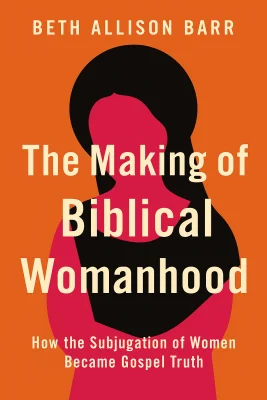
The Making of Biblical Womanhood
How the Subjugation of Women Became Gospel Truth
Categories
Nonfiction, Christian, History, Religion, Audiobook, Feminism, Theology, Womens, Christianity, Faith
Content Type
Book
Binding
Paperback
Year
2021
Publisher
Brazos Press
Language
English
ISBN13
9781587434709
File Download
PDF | EPUB
The Making of Biblical Womanhood Plot Summary
Introduction
Picture a medieval woman standing before the Archbishop of York in 1417, boldly declaring that a powerful church leader would not reach heaven unless he repented. This was not fiction, but the remarkable reality of Margery Kempe, who defended her right to speak God's word even when confronted with Paul's injunctions for women to be silent. Her story reveals a startling truth: throughout Christian history, women have consistently challenged the boundaries placed upon them, often with the support of their faith communities. Yet today's evangelical churches tell a different story entirely. They present "biblical womanhood" as an unchanging truth stretching back to creation itself, where women are divinely designed for submission and domesticity while men are called to leadership and authority. This narrative, however, crumbles under historical scrutiny. The evidence reveals that what we call "biblical womanhood" is not biblical at all, but rather a modern construction built from centuries of cultural adaptation, political maneuvering, and theological shapeshifting. From ancient Mesopotamian patriarchy to nineteenth-century domesticity, from medieval preaching women to Reformation household codes, the true story of Christian women exposes how deeply human traditions have infiltrated our understanding of God's design for half of humanity.
Chapter 1: The Historical Construction of Patriarchy Within Christianity
The story begins not with Genesis, but with Gilgamesh. In the ruins of ancient Nineveh, archaeologists discovered one of humanity's oldest tales, revealing a truth that challenges everything modern evangelicals believe about gender hierarchy. The Epic of Gilgamesh, dating to around 2750 BC, presents women as supporting characters in a male-dominated world—helpers, advisers, and keepers of the hearth. This pattern would echo through millennia, from ancient Sumeria to modern America, where women still earn roughly three-quarters of what men earn, remarkably unchanged from medieval England. The continuity is striking and troubling. In ancient Rome, women lived under the legal guardianship of male relatives, unable to own property or conduct business independently. The Roman paterfamilias wielded absolute authority over his household, including the power of life and death. This was not Christian innovation but pagan tradition, rooted in the belief that women were, as Aristotle proclaimed, "deformed males" whose weakness and incomplete nature required masculine oversight and control. When early Christianity emerged within this Roman context, it carried both revolutionary and conventional elements. Jesus's interactions with women were radically countercultural—he spoke publicly with the Samaritan woman, allowed Mary to learn as his disciple, and chose women as the first witnesses to his resurrection. Paul declared that in Christ there is "no longer male and female," a statement that should have shattered ancient gender hierarchies. Yet the institutional church, developing within patriarchal societies, gradually absorbed rather than challenged these surrounding cultural norms. The critical insight emerges when we examine Genesis 3:16 within its proper theological framework. God's words to Eve—"he shall rule over you"—appear not as divine design but as consequence of the fall. Patriarchy, rather than being God's intention, represents humanity's first power hierarchy born from sin. This reading aligns perfectly with historical evidence showing that patriarchy emerged alongside civilization itself, as agricultural societies developed complex hierarchies of dominance and control. The Bible describes what happened when sin entered the world, but Christians have mistaken this description for divine prescription. Understanding patriarchy as fallen rather than foundational transforms everything. It explains why Christian communities that most faithfully follow Jesus often challenge rather than reinforce traditional gender roles. It reveals why the gospel consistently elevates the marginalized and oppressed, including women. Most importantly, it suggests that Christians should be leading the fight against patriarchal oppression, not sanctifying it as God's will for human relationships.
Chapter 2: Misreading Paul: How Scripture Was Weaponized Against Women
The transformation of Paul from women's liberator to women's oppressor ranks among history's greatest misinterpretations. Students often confess their hatred for Paul, burdened by how his letters have been used to silence, subordinate, and suppress women's calling. Yet this reading of Paul contradicts both his explicit statements and his ministry partnerships, revealing how cultural assumptions have corrupted biblical interpretation across centuries. Consider Paul's actual practice rather than selective quotations from his letters. In Romans 16, Paul commends more women than men for their ministry work. He identifies Phoebe as a deacon, Priscilla as a coworker whose name appears before her husband's, and Junia as prominent among the apostles. These women exercised precisely the kind of authority that modern complementarians deny to women, yet Paul celebrates rather than corrects their leadership. The disconnect between Paul's commendations and contemporary restrictions suggests that we have fundamentally misunderstood his intentions. The household codes provide the clearest example of interpretive malpractice. Modern evangelicals read Ephesians 5 and Colossians 3 as divine endorsements of patriarchal marriage, yet Paul's original audience would have heard something entirely different. In the Roman world, Aristotle's household code addressed only men, instructing fathers and husbands on their rights and duties while treating women, children, and slaves as property. Paul's revolutionary innovation was addressing all members of the household directly, treating each as moral agents responsible to God rather than merely extensions of the paterfamilias. Furthermore, Paul's emphasis falls not on female submission but on mutual submission and male sacrifice. While Roman law gave husbands absolute authority, including the right to divorce or even execute their wives, Paul commands husbands to give up their lives for their wives. This represents not accommodation to Roman patriarchy but subversion of it, replacing domination with self-sacrifice and hierarchy with mutuality. The famous "women be silent" passage in 1 Corinthians 14 exemplifies how cultural context illuminates Scripture's true meaning. Paul's words echo Roman sources that demanded women remain silent in public forums and seek information from their husbands at home. Rather than endorsing this view, Paul appears to be quoting Corinthian practices before correcting them with his sharp retort: "What! Did the word of God originate with you?" This reading explains why Paul elsewhere encourages women to pray and prophesy publicly—he was never commanding universal female silence but addressing specific cultural disruptions in Corinth. The tragic irony is that Paul, history's great advocate for women's freedom in Christ, has been conscripted to defend the very patriarchal systems he challenged. His letters reveal a man who worked alongside female leaders, celebrated their ministries, and envisioned a community where spiritual gifts transcended gender boundaries. Recovering Paul's true voice requires setting aside centuries of male interpretation and hearing his words within their original revolutionary context.
Chapter 3: Medieval Women Leaders: The Forgotten Christian Tradition
The medieval church preserved a remarkable secret that modern evangelicals have forgotten: women preached, taught, and led throughout Christian history with widespread acceptance and divine blessing. Far from being silenced and subordinated, medieval women claimed religious authority in ways that would scandalize contemporary complementarians, yet they did so with biblical warrant and ecclesiastical support. Margery Kempe exemplified this tradition when she faced down the Archbishop of York in 1417. Accused of being a "wicked woman," she turned the tables by declaring the archbishop himself wicked and unlikely to reach heaven without repentance. When priests quoted Paul's prohibitions against women teaching, Margery responded with Jesus's own endorsement of women's voices, citing Luke's account of the woman who blessed Christ and received his affirmation. Her argument carried the day—the archbishop found no fault with her teaching and even provided her with written endorsement for her travels. Kempe stood within a great cloud of female witnesses whose stories filled medieval Christianity. Women like Hildegard of Bingen preached across Germany to audiences of clergy and laity alike, calling bishops and priests to repentance with such authority that they begged for transcripts of her sermons. Saints Margaret and Cecilia were celebrated not for domestic virtues but for their defiance of male authority, their theological debates with Roman officials, and their miraculous victories over dragons and demons. Medieval saints' lives reveal a striking pattern: women gained spiritual authority not by embracing feminine distinctiveness but by transcending traditional gender roles. Saint Paula abandoned her children to follow God's calling, working alongside Jerome to translate Scripture into Latin. The medieval Martha wasn't merely a good hostess but a dragon-slaying preacher whose public ministry paralleled that of Mary Magdalene. These women earned praise for behavior that would be condemned as "unfeminine" in modern evangelical circles. The church's gradual restriction of women's authority stemmed not from biblical conviction but from institutional politics. During the eleventh and twelfth-century reforms, church leaders sought to strengthen clerical authority by enforcing celibacy and excluding secular influence. Women's bodies became associated with spiritual pollution that threatened priestly power, while female leadership was reinterpreted as aberrant rather than normative. Even then, historical memory of women's biblical authority was so strong that medieval theologians had to explain female leaders like Mary Magdalene as divine exceptions rather than deny their ministry altogether. This forgotten tradition proves that women's subordination is neither biblical nor historically universal within Christianity. Medieval churches that accepted women's teaching and leadership were not capitulating to secular feminism—they were following biblical precedent and apostolic example. Modern evangelicals who claim to defend historic Christian truth have actually abandoned it, replacing a rich tradition of female authority with an impoverished theology that serves patriarchal rather than gospel priorities.
Chapter 4: The Reformation's Impact on Women's Religious Authority
The Protestant Reformation marked a theological watershed that, despite liberating believers from priestly mediation, paradoxically narrowed women's spiritual opportunities and institutionalized their subordination within Christian households. While medieval women could transcend gender restrictions through religious vocations, Protestant women found their sanctification tied increasingly to marriage and motherhood, creating what historian Lyndal Roper termed "the holy household" governed by male headship. Martin Luther's theological revolution should have expanded women's religious authority. His doctrine of the priesthood of all believers suggested that women, equally created in God's image and equally redeemed by Christ, could access divine grace without male mediation. Early Protestant women like Katherine Zell and Argula von Grumbach certainly understood it this way, claiming the right to teach Scripture and defend biblical truth based on their spiritual calling rather than their gender. Von Grumbach boldly proclaimed that her words were "not woman's chit-chat, but the word of God," while defending a Lutheran teacher before university authorities. Yet the institutional Reformation moved in the opposite direction, replacing the Catholic priest with the Protestant patriarch. Where medieval unmarried women could claim spiritual authority through their virginity and religious vows, Reformation theology made marriage the primary venue for female holiness. Luther himself embodied this transformation, praising his wife Katharina von Bora as the ideal Christian woman precisely because she managed his household, bore his children, and supported his ministry rather than pursuing independent religious calling. This shift reflected broader socioeconomic changes accompanying the Reformation era. As European societies commercialized and professionalized, women found themselves increasingly excluded from public economic life and confined to domestic spheres. The theological emphasis on wifely submission provided religious sanction for women's economic dependence and social subordination, transforming cultural trends into divine mandates. The consequences become visible in changing sermon patterns across the Reformation divide. Medieval English sermons rarely emphasized Pauline household codes, focusing instead on women as examples of faith and spiritual courage. Post-Reformation preaching, however, made female submission a central theme, using Paul's letters to reinforce domestic hierarchy rather than spiritual equality. The same biblical texts that medieval preachers had largely ignored became weapons for enforcing women's subordination in Protestant churches. Protestant women like Anne Askew paid a terrible price for challenging these restrictions. When accused of heretical teaching, Askew defended her right to speak God's word by distinguishing between formal preaching and informal instruction, arguing that Paul's prohibitions applied only to official pulpit ministry. Her careful biblical exegesis failed to save her—she was burned at the stake for heresy, while her husband was ordered to control her teaching. The Reformation's promise of spiritual freedom became, for women, a narrower cage gilded with theological respectability.
Chapter 5: Modern Evangelicalism's Creation of 'Biblical' Gender Roles
The nineteenth century witnessed the transformation of cultural domesticity into divine calling as Protestant Christianity sanctified women's subordination through what historians call "the cult of domesticity." This ideology, born from Industrial Revolution changes rather than biblical exegesis, elevated piety, purity, submission, and domesticity as the four cardinal virtues of Christian womanhood, creating the theological foundation for modern "biblical womanhood." The Industrial Revolution had separated work from home, creating distinct public and private spheres that mapped conveniently onto male and female roles. As men's labor moved into factories and offices, women's work remained domestic, leading to new ideologies about gender difference and divine design. Scientific theories claimed that women's smaller heads indicated weaker intellects, while their reproductive biology supposedly rendered them unfit for public responsibilities. Jean-Jacques Rousseau proclaimed that "the search for abstract and speculative truths" lay beyond women's intellectual capacity, making domestic duties their natural calling. Christian leaders baptized these cultural developments with biblical language. James Dobson's influential writings portrayed women as naturally passive, emotionally unstable, and dependent on masculine strength and provision. Focus on the Family broadcasts spread these ideas throughout evangelical America, teaching that women's biology predetermined their domestic destiny while men were designed for leadership and public responsibility. The ideology was so comprehensive that it influenced everything from career counseling to marriage therapy, creating a total worldview that seemed both natural and scriptural. Yet historical evidence reveals "biblical womanhood" as thoroughly modern construction. The emphasis on women's distinctive piety and moral superiority emerged only after Enlightenment theories about gender difference and complementarity replaced older beliefs about women's spiritual and intellectual inferiority. The celebration of motherhood as women's highest calling developed alongside industrial capitalism's need to justify women's exclusion from wage labor. The domesticity that evangelicals presented as timeless truth was actually nineteenth-century ideology wrapped in scriptural language. Women throughout American Christianity adapted to these expectations while finding ways to exercise ministry and leadership. Female preachers from Baptist to Pentecostal traditions grounded their authority in their feminine distinctiveness, arguing that their superior piety and natural nurturing abilities equipped them for pastoral work. Rather than transcending gender roles, they strategically embraced them, claiming that ministry was simply "motherly work" extended beyond the household. This tactical accommodation allowed women to preach while preserving patriarchal theology, but it also reinforced the very gender stereotypes that limited women's opportunities. The tragedy is that evangelicals embraced cultural patriarchy precisely when the broader society was beginning to question it. As women gained legal rights, educational access, and economic opportunities in the wider world, evangelical churches became refuges for traditional gender hierarchy. What seemed like faithfulness to biblical truth was actually capitulation to cultural nostalgia, preserving nineteenth-century domesticity against twentieth-century progress under the banner of scriptural authority.
Chapter 6: The Cost of Complementarianism: Trauma and Resistance
The final assembly of modern complementarianism required two theological innovations that transformed gender hierarchy from cultural preference into gospel truth: the weaponization of biblical inerrancy and the revival of ancient Arianism. These developments elevated women's subordination from practical arrangement to divine mystery, making opposition to patriarchy tantamount to denying Christian orthodoxy itself. The fundamentalist-modernist controversy of the early twentieth century made biblical inerrancy the test of evangelical faithfulness, creating a slippery-slope mentality that treated any questioning of Scripture's "plain meaning" as spiritual compromise. Women's increasing prominence as preachers and missionaries threatened traditional gender boundaries just as inerrancy became the weapon of choice for defending theological orthodoxy. Conservative leaders like B.B. Warfield declared that Paul's restrictions on women were unambiguous divine commands that faithful Christians must accept regardless of personal preference or cultural pressure. This inerrancy framework made impossible the kind of contextual biblical interpretation that might have liberated women from patriarchal restrictions. Questions about Paul's historical context, rhetorical strategies, or cultural adaptations became signs of liberal theology rather than scholarly inquiry. The "plain and literal" reading of Scripture that inerrancy demanded happened to align perfectly with traditional gender hierarchy, making women's subordination a test of biblical authority itself. The revival of Arianism provided the final theological piece for complementarian ideology. Despite being condemned as heresy by fourth-century church councils, the doctrine of eternal subordination of the Son resurged among evangelical theologians seeking to ground gender hierarchy in the Trinity itself. Leaders like Bruce Ware taught children that Jesus "lives always under the authority of his Father" and "takes great joy in doing exactly what the Father wants him to do," making divine subordination the model for human marriage relationships. This theological innovation embedded patriarchy in the very nature of God, making women's subordination not merely biblical command but cosmic principle. Just as Jesus eternally submits to the Father's authority, wives must submit to their husbands' leadership as reflection of divine reality. Opposition to complementarianism became not just disobedience to Scripture but denial of trinitarian orthodoxy, making egalitarians guilty of heresy rather than complementarians. The human cost of this theological system has been devastating. Churches that teach male headship and female submission create environments where abuse flourishes and victims are silenced. From Bill Gothard's Institute seminars to Southern Baptist churches, from Sovereign Grace Ministries to countless individual families, the doctrine of women's divinely ordained subordination has enabled men to claim God's authority for their dominance while teaching women that submission to abuse demonstrates spiritual maturity. The system that promises to protect women by placing them under masculine care has instead endangered them by removing their agency, voice, and recourse when that care becomes exploitation.
Summary
The historical evidence reveals biblical womanhood as an elaborate construction project spanning centuries of cultural adaptation and theological innovation. From ancient Mesopotamian patriarchy through medieval modifications, Reformation restrictions, Victorian domesticity, and modern complementarianism, each era has reshaped women's subordination to match contemporary needs while claiming divine authorization for human arrangements. The continuity lies not in biblical faithfulness but in patriarchy's remarkable ability to adapt and survive by clothing itself in religious language. The tragedy is that Christians have repeatedly chosen the world's patterns over Christ's example. Where Jesus elevated women as disciples and witnesses, the church has insisted on their silence and subordination. Where Paul celebrated female coworkers and apostles, theologians have explained away their ministries and restricted their successors. Where the gospel proclaims that in Christ there is no male and female, denominations have made gender hierarchy central to their identity and message. The very communities called to demonstrate God's alternative vision for human relationships have instead sanctified the oppressive structures that Christ came to overthrow. Yet history also reveals reasons for hope. Women have never stopped answering God's call to ministry and leadership, regardless of institutional permission or theological approval. From medieval mystics to Reformation martyrs, from frontier preachers to modern missionaries, Christian women have consistently transcended the boundaries placed upon them, often with biblical warrant and sometimes with ecclesiastical support. Their persistence suggests that the Spirit's calling transcends human restrictions and that God's purposes will ultimately prevail over patriarchal traditions. The question is whether today's churches will join this movement toward freedom or continue defending systems that serve human hierarchy rather than divine kingdom.
Best Quote
“Instead of being a point of pride for Christians, shouldn't the historical continuity of a practice that has caused women to fare much worse than men for thousands of years caused concern? Shouldn't Christians, who are called to be different from the world, treat women differently?What if patriarchy isn't divinely ordained but is a result of human sin?” ― Beth Allison Barr, The Making of Biblical Womanhood: How the Subjugation of Women Became Gospel Truth
Review Summary
Strengths: The review highlights Beth Allison Barr’s deep understanding of evangelical patriarchy, supported by her personal and professional background. It praises her ability to intertwine history, theology, and contemporary issues, offering a compelling narrative against Christian patriarchy. Barr's arguments for egalitarianism are noted as convincing, with her reinterpretation of Paul's writings providing a fresh perspective. Overall: The review conveys a positive sentiment towards Barr’s work, suggesting it as a significant contribution to the discussion on gender roles within Christianity. It encourages readers, even those with opposing views, to consider Barr’s arguments, indicating a high recommendation level for those interested in theological and historical analysis.
About Author

Beth Allison Barr
Barr interrogates the intersection of medieval history and modern Christianity with a focus on the roles and subjugation of women. Her work merges rigorous historical analysis with contemporary theological concerns, offering insights into how historical narratives shape modern religious discourse. This dual approach allows Barr to act as a bridge between academic circles and broader audiences, thereby amplifying her impact beyond traditional scholarly boundaries. Her book, "The Making of Biblical Womanhood: How the Subjugation of Women Became Gospel Truth", exemplifies this approach, having achieved critical acclaim and commercial success, including being named Jesus Creed's Book of the Year in 2021.\n\nThroughout her career, Barr has held several leadership positions, which have enhanced her academic profile. Serving as the James Vardaman Endowed Professor of History at Baylor University, she teaches courses that span European women's history, medieval sermons, and feminist theory. Her engagement in professional organizations, such as the Texas Medieval Association and the Conference on Faith and History, has further established her as a prominent figure in her field. For readers interested in women's roles within church history, Barr's scholarly work offers a comprehensive bio and perspective, grounded in both historical evidence and modern relevance.\n\nAs an author, Barr contributes regularly to platforms like "The Anxious Bench", providing accessible interpretations of complex historical themes. Her scholarly contributions have been recognized with honors such as the Centennial Professor Award in 2018, underscoring her influence in both academic and public domains. By challenging conventional narratives about women in religious history, Barr's work empowers readers to re-evaluate long-standing beliefs and invites them to explore the nuanced dynamics between history and theology.
Read moreDownload PDF & EPUB
To save this Black List summary for later, download the free PDF and EPUB. You can print it out, or read offline at your convenience.
The Making of Biblical Womanhood
by Beth Allison Barr
