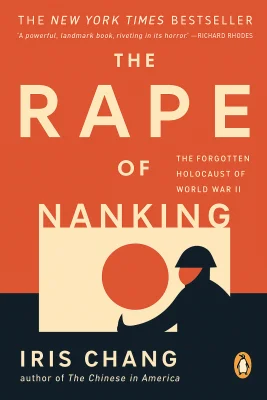
The Rape of Nanking
The Forgotten Holocaust of World War II
Categories
Nonfiction, History, Politics, Audiobook, China, Asia, Japan, Historical, World War II, War
Content Type
Book
Binding
Paperback
Year
1998
Publisher
Penguin Books
Language
English
ASIN
0140277447
ISBN
0140277447
ISBN13
9780140277449
File Download
PDF | EPUB
The Rape of Nanking Plot Summary
Introduction
# The Nanking Massacre: Witnessing Humanity's Darkest Hour and Heroic Resistance On a cold December morning in 1937, the ancient Chinese capital of Nanking fell silent as Japanese forces entered its gates. What followed over the next six weeks would become one of history's most thoroughly documented yet least remembered genocides—a systematic campaign of murder, rape, and destruction that claimed hundreds of thousands of lives. Yet within this darkness emerged extraordinary acts of courage that illuminate the very best of human nature alongside its worst. The story of Nanking reveals profound truths about how ordinary people can become instruments of unimaginable evil when military discipline combines with racial hatred and official sanction for violence. But it also demonstrates the transformative power of individual moral courage, as a small group of Western missionaries, doctors, and businessmen—including a Nazi Party member—risked everything to create a sanctuary that saved nearly 300,000 Chinese refugees. Their meticulously preserved diaries, photographs, and films provide an unvarnished view of both human cruelty and heroism, offering crucial lessons about the consequences of unchecked militarism, the importance of bearing witness to atrocity, and the ongoing struggle between historical truth and deliberate denial.
Chapter 1: Japan's Imperial Rise: From Isolation to Aggression 1853-1937
The roots of the Nanking massacre stretch back nearly a century to a moment of national humiliation that would reshape Japan's destiny. When Commodore Matthew Perry's black ships arrived in Tokyo Bay in 1853, they shattered Japan's centuries-old isolation and left the proud samurai culture face-to-face with Western technological superiority. This encounter planted seeds of wounded pride and burning ambition that would eventually consume East Asia in war. The Meiji Restoration of 1868 channeled this national trauma into a systematic program of modernization and militarization. Japan's leaders adopted the slogan "Rich country, strong army" and began methodically studying Western military science while preserving their own warrior traditions. The ancient bushido code, with its emphasis on death before dishonor and absolute loyalty to the emperor, was transformed from an elite samurai privilege into a national ideology that would indoctrinate millions of soldiers. By the early twentieth century, Japan had successfully tested its new military might against China in 1894 and Russia in 1904, victories that intoxicated the nation with dreams of Asian dominance. These triumphs convinced Japanese leaders that territorial expansion was not only possible but essential for national survival. The economic devastation of the 1920s provided the final catalyst, as the Great Depression destroyed Japan's export markets and unemployment soared. Military leaders argued that conquest of resource-rich territories was the only solution to Japan's economic crisis. Young army officers, radicalized by rural poverty and nationalist ideology, began seizing the initiative from civilian politicians through assassinations and coup attempts. This volatile mixture of wounded pride, economic desperation, and military fanaticism exploded into full-scale war in July 1937 when a minor incident at the Marco Polo Bridge escalated into the Second Sino-Japanese War. Japanese forces, expecting to conquer China within three months, instead found themselves bogged down in a grinding campaign that would consume millions of lives and leave soldiers bitter and hungry for revenge as they marched toward Nanking.
Chapter 2: The Fall of Nanking: Military Collapse and Civilian Abandonment
The siege of Nanking in December 1937 revealed the fatal weaknesses of Chinese resistance and set the stage for unprecedented civilian suffering. As three Japanese armies converged on the ancient capital, the city's defenders found themselves trapped between the Yangtze River and an overwhelming enemy force. General Tang Sheng-chih, left to defend the city after Chiang Kai-shek's government fled westward, commanded a ragtag collection of exhausted veterans, untrained recruits, and regional troops who could barely communicate with each other. The Chinese collapse came with shocking suddenness. On December 12, faced with imminent defeat, Tang received orders to abandon the city immediately. The hasty retreat turned into a catastrophic rout as desperate soldiers fought each other for boats across the Yangtze River. Thousands drowned in the icy waters or were trampled to death at the city gates. Those who survived the retreat left behind a defenseless population of over half a million civilians, many of whom had fled to Nanking believing it would be safer than the countryside. When Japanese forces entered the city on December 13, they encountered a population that initially welcomed them as liberators from the chaos of war. Chinese civilians hung Japanese flags from their windows and cheered the victorious troops, hoping for the restoration of order and peace. These hopes were swiftly and brutally crushed as Japanese soldiers began a systematic campaign of murder, rape, and looting within hours of the city's fall. The transformation from military victory to genocidal rampage was not accidental but reflected deliberate policy decisions. Prince Asaka, the emperor's uncle who had taken command just days before the city fell, issued orders to "kill all captives" under his personal seal. This command unleashed a reign of terror that would continue for six weeks, as Japanese soldiers, trained to view Chinese as subhuman and conditioned by months of brutal warfare, needed little encouragement to begin what would become one of the worst atrocities in human history.
Chapter 3: Six Weeks of Terror: Systematic Mass Murder and Rape
The scale and systematic nature of the atrocities committed in Nanking defied comprehension and revealed how military organization could be turned toward genocidal purposes. Japanese soldiers, organized into killing squads, rounded up thousands of Chinese men on the pretext of searching for hidden soldiers. These captives were marched to execution sites outside the city walls, where they were machine-gunned, bayoneted, or used for sword practice in mass killings that required days of cleanup. The Japanese military turned murder into sport through organized killing contests that were proudly reported in their own newspapers. Two lieutenants, Mukai Toshiaki and Noda Takeshi, competed to see who could behead 100 Chinese first, with Japanese media covering their "race" like a sporting event. When neither could determine who had reached 100 first, they raised the goal to 150. Such contests served not only to dehumanize the victims but to desensitize Japanese soldiers to mass murder through ritualized competition. The sexual violence perpetrated against Nanking's women was equally systematic and devastating. An estimated 20,000 to 80,000 women and girls were raped, often in front of their families before being murdered. No one was spared: victims ranged from children under ten to elderly women over seventy. The Japanese military's official prohibition on rape only encouraged soldiers to kill their victims afterward, following the logic that "dead bodies don't talk." Beyond individual acts of cruelty lay a broader campaign of cultural destruction designed to break Chinese resistance through sheer terror. Japanese forces burned one-third of the city, systematically looting banks, museums, and private homes while destroying hospitals, schools, and churches. The ancient capital, once a center of Chinese civilization, was reduced to a smoldering wasteland where corpses filled the streets and the Yangtze River ran red with blood. This deliberate obliteration served as both punishment for Chinese resistance and a warning of what awaited any who dared oppose Japanese expansion.
Chapter 4: Heroes in Hell: The International Safety Zone Rescue Operation
In the midst of unimaginable horror, a small group of Western missionaries, doctors, and businessmen performed one of the most remarkable rescue operations in history. Led by John Rabe, a German businessman and Nazi Party member, these unlikely heroes created the International Safety Zone—a two-and-a-half-square-mile area that would shelter nearly 300,000 Chinese refugees from certain death. Their courage demonstrated that even in humanity's darkest hours, individual moral action could save lives on a massive scale. Rabe himself embodied the complex moral contradictions of the era. A devoted Nazi who genuinely believed in his party's ideals, he used his swastika armband as a shield against Japanese soldiers who respected Germany as their ally. Night after night, he patrolled his compound, chasing away would-be rapists and sheltering hundreds of Chinese women in makeshift huts in his backyard. When Japanese soldiers scaled his walls, the women would blow whistles to summon their unlikely protector, who would rush out to confront armed soldiers with nothing but his Nazi credentials and moral authority. Dr. Robert Wilson, the only Western-trained surgeon left in the city, worked around the clock treating victims of Japanese brutality. Born and raised in Nanking, Wilson refused to abandon the Chinese people he considered his own, even as other foreign doctors fled to safety. He operated continuously for weeks, removing bullets and shrapnel, treating rape victims, and caring for men who had been burned, bayoneted, or tortured. His hospital became another sanctuary within the Safety Zone, where foreign presence meant the difference between life and death. Minnie Vautrin, the dean of Ginling Women's College, transformed her campus into a refuge for thousands of women and children. Known to the Chinese as the "Living Goddess of Nanking," she stood guard at her gates day and night, arguing with Japanese officers and physically blocking soldiers who came to drag away women for rape. Together, these Western heroes proved that moral courage could triumph over overwhelming odds, creating a beacon of hope that would inspire future humanitarian interventions and demonstrate the power of individual conscience to confront systematic evil.
Chapter 5: Global Witness: Documentation, Denial and Media Coverage
News of the Nanking massacre reached the global public almost immediately, thanks to the courageous reporting of American journalists and the systematic documentation efforts of Safety Zone leaders. Frank Durdin, Archibald Steele, and C. Yates McDaniel filed vivid accounts that shocked readers worldwide with descriptions of mass executions, systematic rape, and wanton destruction. Their professional credibility lent weight to reports that might otherwise have seemed too horrific to believe. The Japanese government's response revealed a pattern of denial and cover-up that would persist for decades. Military authorities immediately sealed off Nanking to prevent other foreign correspondents from entering, while launching an elaborate propaganda campaign to portray their soldiers as benevolent liberators. They staged carefully choreographed tours for Japanese visitors, distributed leaflets showing kindly soldiers feeding Chinese children, and forced Chinese survivors to sign statements denying that atrocities had occurred. American intelligence agencies, having cracked Japanese diplomatic codes, intercepted messages revealing Tokyo's deep concern about international reaction. Foreign Minister Hirota Koki explicitly ordered Japanese diplomats to prevent American embassy staff from returning to Nanking, warning that unfavorable reports would damage Japan's international position. However, the Roosevelt administration chose to suppress some of the most damning evidence to avoid escalating tensions with Japan. The Safety Zone leaders fought back through their own publicity campaign, smuggling out diaries, photographs, and film footage that documented the atrocities in devastating detail. George Fitch risked his life to carry movie film sewn into his coat lining, while John Magee's amateur footage of hospital patients provided irrefutable visual evidence of Japanese brutality. Their reports, published in magazines and newspapers across America, helped maintain international awareness of Japanese war crimes and established a template for documenting genocide that would prove crucial in later conflicts.
Chapter 6: War Crimes Trials: Incomplete Justice and Cold War Compromise
The end of World War II brought long-awaited justice for some perpetrators of the Nanking massacre, but the reckoning proved incomplete and politically compromised. The International Military Tribunal for the Far East, convened in Tokyo in 1946, became the longest war crimes trial in history, lasting two and a half years and producing 49,000 pages of testimony. The Nanking massacre served as a centerpiece of the prosecution's case, with Safety Zone leaders traveling to Tokyo to present their carefully preserved evidence. In Nanking itself, local war crimes trials provided a measure of catharsis for survivors who had waited nearly a decade to tell their stories in court. More than 1,000 witnesses testified about 460 cases of murder, rape, arson, and looting, while prosecutors displayed skulls and bones excavated from mass graves. Lieutenant General Tani Hisao and the killing contest participants, Lieutenants Mukai and Noda, were executed after their convictions, providing some satisfaction to survivors who witnessed their punishment. Yet the most important figures escaped justice entirely. Emperor Hirohito, granted immunity by American occupation authorities, never faced questioning about his role in authorizing or tolerating the massacre. Prince Asaka, under whose command the "kill all captives" order was issued, retired to a life of leisure. General Matsui Iwane became the primary scapegoat and was executed, though many historians believe he bore less responsibility than others who escaped punishment. The advent of the Cold War fundamentally altered the trajectory of postwar justice. As the United States sought to rebuild Japan as a bulwark against communism in Asia, many war criminals were quietly released and returned to positions of power. The Chinese Communist government, eager for Japanese investment and diplomatic recognition, repeatedly announced that it had "forgiven" Japan for wartime crimes. This geopolitical calculation left massacre survivors feeling doubly betrayed, as their quest for justice was sacrificed on the altar of political expediency, establishing a pattern of incomplete accountability that would influence international responses to genocide for decades to come.
Chapter 7: Historical Legacy: Memory, Trauma and the Struggle for Truth
The human cost of the Nanking massacre extended far beyond the hundreds of thousands who died, creating lasting trauma that affected survivors, their families, and entire communities for generations. Many survivors carried physical and psychological scars that lasted for decades, living reminders of humanity's capacity for both evil and resilience. The women who survived rape faced particular challenges in a Confucian society that prized female chastity, with many never speaking of their experiences and carrying their shame in silence until death. The Western heroes of the Safety Zone also paid a heavy price for their courage and witness to such systematic brutality. Minnie Vautrin, the "Living Goddess of Nanking," eventually succumbed to depression and took her own life in 1941, unable to escape the memories of the horrors she had witnessed. John Rabe returned to Germany only to be interrogated by the Gestapo and forbidden from speaking about his experiences, dying in obscurity and poverty in 1950. Their sacrifices highlighted the psychological toll of bearing witness to genocide. Perhaps most tragically, the survivors' quest for recognition and justice remained largely unfulfilled for decades. While Nazi war criminals were hunted across the globe and billions of dollars in reparations were paid to Holocaust survivors, the victims of Japanese atrocities received neither acknowledgment nor compensation. Japanese textbooks continued to minimize or deny the massacre entirely, while the Chinese Communist government's statements forgiving Japan left survivors feeling abandoned by their own leaders. The ongoing struggle over historical memory has made the Nanking massacre a focal point for broader questions about how societies confront their dark pasts. The meticulous documentation by foreign witnesses has proven crucial in countering denial and revisionism, demonstrating the vital importance of preserving testimony and evidence. Their legacy reminds us that the preservation of historical truth requires constant vigilance and that the courage to bear witness, even when dangerous or unpopular, remains essential for preventing the repetition of such atrocities in future generations.
Summary
The Nanking Massacre reveals the catastrophic consequences that flow from unchecked militarism, racial hatred, and the systematic dehumanization of entire populations. The atrocities were not isolated outbreaks of violence but the logical culmination of decades of Japanese military indoctrination that taught soldiers to view Chinese people as subhuman obstacles to imperial destiny. The systematic nature of the killing—from organized murder contests to deliberate cultural destruction—demonstrates how quickly civilized societies can descend into barbarism when moral restraints are systematically dismantled and evil receives official sanction. Yet this dark chapter also illuminates the extraordinary power of individual moral courage in confronting overwhelming evil. The small band of Western heroes who created the Safety Zone proved that even a handful of determined individuals could save hundreds of thousands of lives through their willingness to risk everything for strangers. Their example offers crucial lessons for our time: that bystander intervention can make the difference between life and death on a massive scale, that moral authority often matters more than physical power in confronting evil, and that the preservation and dissemination of truth through documentation and testimony remains essential for preventing historical repetition. The ongoing Japanese denial of the Nanking massacre serves as a stark reminder that societies unwilling to confront their own dark histories remain vulnerable to repeating them, making the courage to bear witness and speak truth an eternal necessity for human civilization.
Best Quote
“As the Nobel laureate Elie Wiesel warned years ago, to forget a holocaust is to kill twice.” ― Iris Chang, The Rape of Nanking: The Forgotten Holocaust of World War II
Review Summary
Strengths: The review highlights the emotional impact of Iris Chang's book, emphasizing its powerful narrative and the importance of uncovering historical truths. The reviewer appreciates Chang's passionate approach and acknowledges the book's role in shedding light on a largely forgotten atrocity. The inclusion of personal anecdotes from the reviewer adds credibility and depth to the analysis. Weaknesses: The review notes that Chang wrote the book as a journalist rather than a historian, which may affect the academic rigor of the work. There is also an implicit critique of the ongoing denial by some Japanese officials regarding the events described. Overall: The reader finds the book deeply moving and essential for understanding the brutalities of war, recommending it as a cautionary tale about human behavior. The review suggests that the book is a significant contribution to historical literature despite its journalistic approach.
About Author

Iris Chang
Chang considers the overlooked chapters of Chinese and Chinese American history through her engaging narratives, seeking to illuminate stories of suffering and resilience. Her method involves combining rigorous historical research with compelling storytelling, drawing extensively from interviews and rare documents. Her book, "The Rape of Nanking," captures the horrors of the Nanking Massacre during the Second Sino-Japanese War and sparked calls for acknowledgment and reparations. Meanwhile, "Thread of the Silkworm" traces the life of scientist Qian Xuesen, connecting Cold War politics to advancements in aerospace history.\n\nThe author’s bio reveals her commitment to uncovering marginalized histories, advocating for historical justice and human rights. Her exploration of these themes is evident in "The Chinese in America," which documents the long-standing experiences and contributions of Chinese immigrants in the United States. Through these works, readers gain a deeper understanding of the complexities and adversities faced by Chinese communities, making Chang's contributions vital for those interested in history and social justice.\n\nHer books not only elevate public awareness but also serve as critical resources for historians and educators. By situating personal narratives within broader historical contexts, Chang offers valuable insights into the intersection of personal and collective memory. This approach not only enriches the reader’s understanding but also underscores the importance of acknowledging and preserving these narratives for future generations.
Read moreDownload PDF & EPUB
To save this Black List summary for later, download the free PDF and EPUB. You can print it out, or read offline at your convenience.
The Rape of Nanking
by Iris Chang
