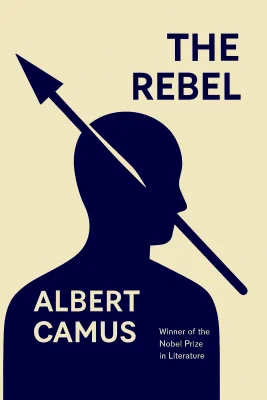
The Rebel
Categories
Nonfiction, Philosophy, History, Politics, Classics, Essays, Literature, 20th Century, France, French Literature
Content Type
Book
Binding
Paperback
Year
1991
Publisher
Vintage
Language
English
ASIN
0679733841
ISBN
0679733841
ISBN13
9780679733843
File Download
PDF | EPUB
The Rebel Plot Summary
Introduction
# The Spirit of Rebellion: Human Dignity Against Absurdity Human rebellion emerges from a fundamental confrontation with the absurd conditions of existence, yet it carries within itself the seeds of both liberation and tyranny. This philosophical investigation traces the evolution of rebellious consciousness from its metaphysical origins through its historical manifestations, revealing how the noble impulse to affirm human dignity can transform into the very oppression it initially sought to overcome. The analysis demonstrates that rebellion, when severed from its ethical foundations and pursued as an absolute end, inevitably leads to nihilism and violence. The examination proceeds through a rigorous dialectical method, analyzing the internal contradictions that drive rebellious movements toward their own negation. By tracing the logical progression from individual revolt against injustice to collective revolutionary terror, this exploration reveals the tragic paradox at the heart of modern political movements. The investigation challenges readers to recognize how the pursuit of absolute justice, divorced from human compassion and moral limits, becomes indistinguishable from the tyranny it claims to oppose.
Chapter 1: Metaphysical Rebellion: The Noble Origins of Human Protest
Metaphysical rebellion begins with humanity's refusal to accept the fundamental conditions of existence, particularly mortality and suffering. This form of revolt differs fundamentally from political rebellion because it challenges not merely human authority but the very structure of reality itself. The metaphysical rebel confronts what appears to be an unjust universe and demands that existence justify itself according to human standards of meaning and value. The rebellion manifests initially as a cry against death and meaninglessness, seeking to establish human dignity in defiance of cosmic indifference. This protest contains within itself an implicit affirmation of values, for one cannot rebel against injustice without presupposing some standard of justice. The rebel simultaneously denies the legitimacy of current conditions while affirming the possibility of better ones, creating a tension between negation and affirmation that drives the rebellious consciousness forward. Historical examples illuminate this dynamic through figures like Prometheus, who represents the archetypal rebel stealing fire from the gods to benefit humanity. The Promethean gesture embodies both the nobility and the danger of metaphysical rebellion, as it challenges divine authority while accepting the consequences of that challenge. This mythological framework establishes the pattern that will recur throughout the analysis of modern rebellious movements. The metaphysical dimension of rebellion reveals itself most clearly in the works of literary figures who articulated humanity's protest against existence itself. These voices express the fundamental human refusal to accept mortality and suffering as final words on the human condition. Their rebellion takes the form of artistic creation, attempting to establish human meaning in opposition to cosmic silence. Yet metaphysical rebellion contains an inherent instability that drives it toward more extreme positions. The rebel who begins by demanding justice from the universe may end by rejecting the universe entirely, moving from protest to nihilistic negation. This transformation marks the crucial turning point where rebellion begins to devour its own moral foundations.
Chapter 2: Revolutionary Transformation: How Rebellion Becomes Tyranny
The transition from personal rebellion to collective revolutionary action represents a critical transformation in the nature of rebellious consciousness. Individual revolt, rooted in personal experience of injustice, maintains a connection to concrete human suffering and specific moral grievances. Revolutionary movements, however, abstract these grievances into universal principles that claim to justify unlimited action in pursuit of absolute goals. This transformation occurs through a process of logical extension whereby the rebel's initial "no" to specific injustices becomes a comprehensive rejection of existing social and political arrangements. The individual rebel's demand for personal dignity expands into a demand for universal human dignity, creating the ideological foundation for revolutionary politics. The movement from particular to universal, while seemingly noble, introduces dangerous abstractions that can justify violence against actual human beings in the name of humanity itself. Revolutionary consciousness emerges when rebels conclude that individual resistance is insufficient to address systemic injustice. The recognition that oppression is structural rather than accidental leads to the conviction that only total transformation of society can satisfy the demands of justice. This conviction, however reasonable it may appear, marks the beginning of rebellion's transformation into its opposite. The French Revolution exemplifies this transformation most clearly, beginning with specific grievances against royal authority and evolving into an attempt to reconstruct society according to abstract principles of reason and virtue. The revolutionaries' commitment to these principles ultimately led them to justify terror as a necessary means of purifying society and eliminating obstacles to the reign of virtue. The logic of revolutionary transformation reveals itself as inherently unstable because it demands the impossible: the creation of a perfect society through imperfect means. The gap between revolutionary ideals and available methods creates a tension that can only be resolved through escalating violence or the abandonment of revolutionary goals. Most revolutionary movements choose violence, believing that sufficient force can bridge the gap between ideal and reality.
Chapter 3: The Paradox of Absolute Justice: Why Revolution Destroys Freedom
The relationship between justice and freedom in revolutionary thought reveals fundamental contradictions that undermine the coherence of absolute rebellion. Revolutionary movements typically claim to pursue both perfect justice and perfect freedom simultaneously, failing to recognize that these goals may be mutually incompatible when pursued as absolutes. The demand for absolute justice requires the power to remake society completely, while the demand for absolute freedom requires the absence of such concentrated power. Revolutionary justice, conceived as the complete elimination of inequality and oppression, necessarily involves the suppression of those forces and individuals deemed obstacles to the just society. This suppression, however temporary it may claim to be, requires the concentration of enormous power in the hands of revolutionary authorities. The exercise of such power inevitably conflicts with the freedom of those subject to it, creating a tension that revolutionary ideology attempts to resolve through various theoretical maneuvers. The concept of revolutionary freedom itself proves problematic when examined closely. Revolutionary movements typically define freedom not as the absence of constraint but as the realization of human potential within a rationally organized society. This positive conception of freedom justifies the temporary restriction of negative freedom in service of the higher freedom that will allegedly emerge from revolutionary transformation. Revolutionary theory attempts to resolve these contradictions by projecting their solution into the future. The revolutionary state claims to restrict freedom temporarily in order to create the conditions for greater freedom later; it claims to use unjust means temporarily in order to establish perfect justice permanently. But this temporal solution proves illusory because it assumes that political power, once concentrated, will voluntarily disperse itself when its historical mission is complete. Historical experience demonstrates that revolutionary attempts to reconcile absolute justice and absolute freedom consistently fail, typically resulting in the sacrifice of both to the demands of revolutionary power. The Russian Revolution exemplifies this pattern, beginning with promises of unprecedented freedom and justice but evolving into one of history's most oppressive systems. The gap between revolutionary promise and revolutionary performance reveals the impossibility of achieving absolute goals through political means. The recognition of these limits suggests the need for a more modest understanding of political possibility that acknowledges the permanent tension between competing values. Rather than seeking absolute solutions to human problems, political wisdom requires the acceptance of imperfect compromises that preserve space for human dignity without claiming to eliminate all sources of injustice and suffering.
Chapter 4: Historical Evidence: Totalitarian Outcomes of Absolute Rebellion
The twentieth century provides abundant evidence of the catastrophic consequences that follow from attempts to implement absolute revolutionary programs. The Russian and Chinese revolutions, along with various fascist movements, demonstrate how the pursuit of absolute goals through political means inevitably leads to unprecedented forms of oppression and violence. These historical experiences illuminate the practical implications of the theoretical contradictions inherent in absolute rebellion. The Russian Revolution exemplifies the transformation of rebellious idealism into bureaucratic tyranny with particular clarity. Beginning with genuine aspirations for human liberation and social justice, the revolutionary movement gradually evolved into a system that eliminated virtually all forms of individual freedom and dignity in the name of collective goals. The gap between revolutionary intention and revolutionary outcome reveals the impossibility of achieving absolute ends through political means. The revolutionary process in Russia demonstrates how the logic of absolute rebellion generates its own momentum independent of the original intentions of the revolutionaries. Each stage of the revolution created new problems that seemed to require more extreme solutions, leading to an escalating cycle of violence and repression. The temporary measures adopted to deal with immediate crises became permanent features of the revolutionary state, which found itself unable to relax its grip on society without risking the collapse of the entire revolutionary project. Similar patterns emerge in other revolutionary movements that have attempted to remake society according to abstract ideological principles. The Chinese Cultural Revolution, the Cambodian genocide, and various fascist experiments all demonstrate how the pursuit of ideological purity leads to the systematic destruction of human beings deemed obstacles to the revolutionary project. These experiences suggest that the problem lies not in the particular content of revolutionary ideologies but in their absolute character. The historical record indicates that revolutionary movements consistently underestimate the human costs of their transformative projects while overestimating their ability to control the forces they unleash. The revolutionary assumption that sufficient violence can overcome all obstacles to the ideal society proves consistently false, as violence tends to generate its own logic that eventually dominates and corrupts the original revolutionary goals. These historical lessons suggest the need for a fundamental reconsideration of the relationship between political action and human values. Rather than seeking to transform the world according to abstract principles, political wisdom requires the more modest goal of creating conditions within which human beings can pursue their own conception of dignity and meaning while respecting the equal rights of others to do the same.
Chapter 5: Creative Rebellion: Art and Moderation as Authentic Alternatives
Artistic creation represents rebellion in its purest form, offering a model for how human beings can transform reality without destroying it. The artist rebels against the world as given by creating alternative worlds that reveal hidden possibilities and suppressed truths. Unlike political revolution, which seeks to impose its vision through force, art achieves transformation through the voluntary participation of its audience. The artist's rebellion begins with a refusal to accept reality as final or complete. The painter isolates and transforms visual experience, the novelist creates characters more coherent than real people, the musician organizes sound into meaningful patterns that nature never provides. Each artistic act represents a small victory over chaos, mortality, and meaninglessness—not through denial of these conditions, but through their creative transformation. This transformative power distinguishes art from both escapist fantasy and documentary reproduction. Great art neither flees from reality nor simply mirrors it, but creates a tension between what is and what might be. The artist rebels against the given world while remaining faithful to human experience within that world. This creates works that are simultaneously realistic and transcendent, grounded in concrete experience yet pointing beyond immediate circumstances. The relationship between artistic and political rebellion reveals important differences in their approaches to change. Political rebellion seeks to eliminate contradictions through revolutionary action, while artistic rebellion preserves and explores contradictions through creative expression. The politician promises resolution; the artist offers illumination. The revolutionary demands commitment to a cause; the artist invites contemplation of possibilities. Modern totalitarian movements have consistently attacked artistic freedom because they recognize art's subversive potential. A genuine work of art creates a space of freedom that cannot be controlled by political authority. It suggests that reality might be other than it appears, that human experience contains depths and possibilities that escape ideological categorization. This makes authentic art inherently dangerous to systems that claim total knowledge and control. The lesson for rebellion more generally is that transformation need not require destruction. The artist demonstrates how human creativity can work with and through existing conditions to produce something genuinely new. This suggests possibilities for political and social change that preserve rather than eliminate the complexity and ambiguity of human experience.
Chapter 6: The Mediterranean Path: Embracing Limits While Affirming Dignity
The Mediterranean tradition offers a model for rebellion that remains connected to natural rhythms and human scale rather than losing itself in abstract historical projects. This tradition emphasizes the importance of place, community, and the concrete realities of human existence as sources of value that transcend political ideologies and historical movements. Mediterranean thought recognizes limits as creative rather than merely restrictive. The artist works within the constraints of materials and forms, the farmer within the cycles of seasons, the community within the boundaries of geography and tradition. These limitations do not prevent human flourishing but provide the structure within which flourishing becomes possible. Rebellion, similarly, finds its strength not in unlimited freedom but in the creative tension between human aspirations and natural boundaries. This perspective offers an alternative to both Germanic idealism with its emphasis on historical progress and Anglo-Saxon individualism with its focus on abstract rights. Instead of seeking to transcend the human condition through historical action or individual achievement, Mediterranean wisdom seeks to live fully within that condition while transforming it through art, community, and the cultivation of human relationships. The Mediterranean approach to rebellion emphasizes quality over quantity, depth over extension, beauty over power. It values the particular over the universal, the concrete over the abstract, the present over the future. This creates a form of resistance that is less dramatic than revolutionary action but potentially more enduring because it remains rooted in the permanent aspects of human experience. Contemporary relevance of this tradition lies in its offer of an alternative to the exhausted ideologies of both capitalism and socialism. Neither system adequately addresses human needs for community, beauty, and meaning that transcend economic categories. The Mediterranean spirit suggests possibilities for social organization that honor both individual dignity and collective solidarity without sacrificing either to the other. The challenge is to recover this wisdom without falling into nostalgia or romanticism. The Mediterranean tradition must be adapted to contemporary conditions while preserving its essential insights about the importance of limits, the value of beauty, and the necessity of maintaining human scale in social and political arrangements. This requires creative synthesis rather than simple restoration.
Summary
The investigation reveals that rebellion, while originating in the noble human refusal to accept injustice and meaninglessness, contains within itself the potential for transformation into the very tyranny it initially opposes. The key insight emerges from recognizing that absolute rebellion, in rejecting all transcendent values and limits, inevitably creates the conditions for unlimited violence and oppression in service of abstract ideological goals. The analysis demonstrates that authentic rebellion must maintain its connection to the human values that originally motivated the rebellious impulse, accepting moral limits even in the struggle against injustice. This work offers essential guidance for readers seeking to understand how noble aspirations can lead to catastrophic outcomes and how the human spirit might preserve its dignity without succumbing to the temptations of absolute solutions to the permanent problems of human existence.
Best Quote
“Every act of rebellion expresses a nostalgia for innocence and an appeal to the essence of being.” ― Albert Camus, The Rebel
Review Summary
Strengths: The review highlights Camus's deep philosophical and historical analysis of rebellion, noting his ability to challenge predominant ideas of his time. The reviewer appreciates Camus's focus on individual choices and responsibilities, and his exploration of the balance between justice and liberty. The text is described as thought-provoking and ahead of its time. Weaknesses: The review mentions the book's complexity, indicating it is not an easy read and requires supplementary reading to fully understand. This suggests it may not be accessible to all readers. Overall: The reader finds the book intellectually rewarding despite its challenges, recommending it for those interested in philosophical and historical perspectives on rebellion.
About Author

Albert Camus
Camus interrogates the tension between existential absurdity and moral responsibility, situating his works within a framework of human resilience and philosophical inquiry. His book "The Stranger" explores themes of alienation and societal indifference through its protagonist, Meursault, while "The Myth of Sisyphus" confronts the philosophical acceptance of life's inherent absurdity. These texts illustrate Camus' method of using narrative to probe existential questions, which he further develops in "The Plague," where he portrays human solidarity against unyielding natural and societal forces. Meanwhile, his essayistic style combines clarity and precision, emphasizing concrete experiences over abstract theorizing.\n\nFor readers, Camus' literature provides profound insights into human existence, encouraging an examination of personal and societal ethics in the face of life's absurdities. This bio of Camus offers a glimpse into his unique ability to blend narrative and philosophy, crafting stories that resonate with those seeking to understand the complexities of human conscience. His approach benefits individuals interested in existential and absurdist literature, inspiring a critical reflection on moral integrity and the courage to confront existential dilemmas.\n\nBeyond his literary achievements, Camus' recognition as a Nobel laureate underscores his impact on modern literature. His works challenge readers to contemplate the moral imperatives of the human spirit, making them invaluable for both philosophical study and personal growth. His exploration of themes like revolt and solidarity, especially during tumultuous times, situates his contributions as pivotal in understanding not just literature but the human condition itself.
Read moreDownload PDF & EPUB
To save this Black List summary for later, download the free PDF and EPUB. You can print it out, or read offline at your convenience.
The Rebel
by Albert Camus
